At or near the surface
Grading, clearing, demolition, patching and finishing, mostly at the surface or just below it. The ground is shaped, not trenched.
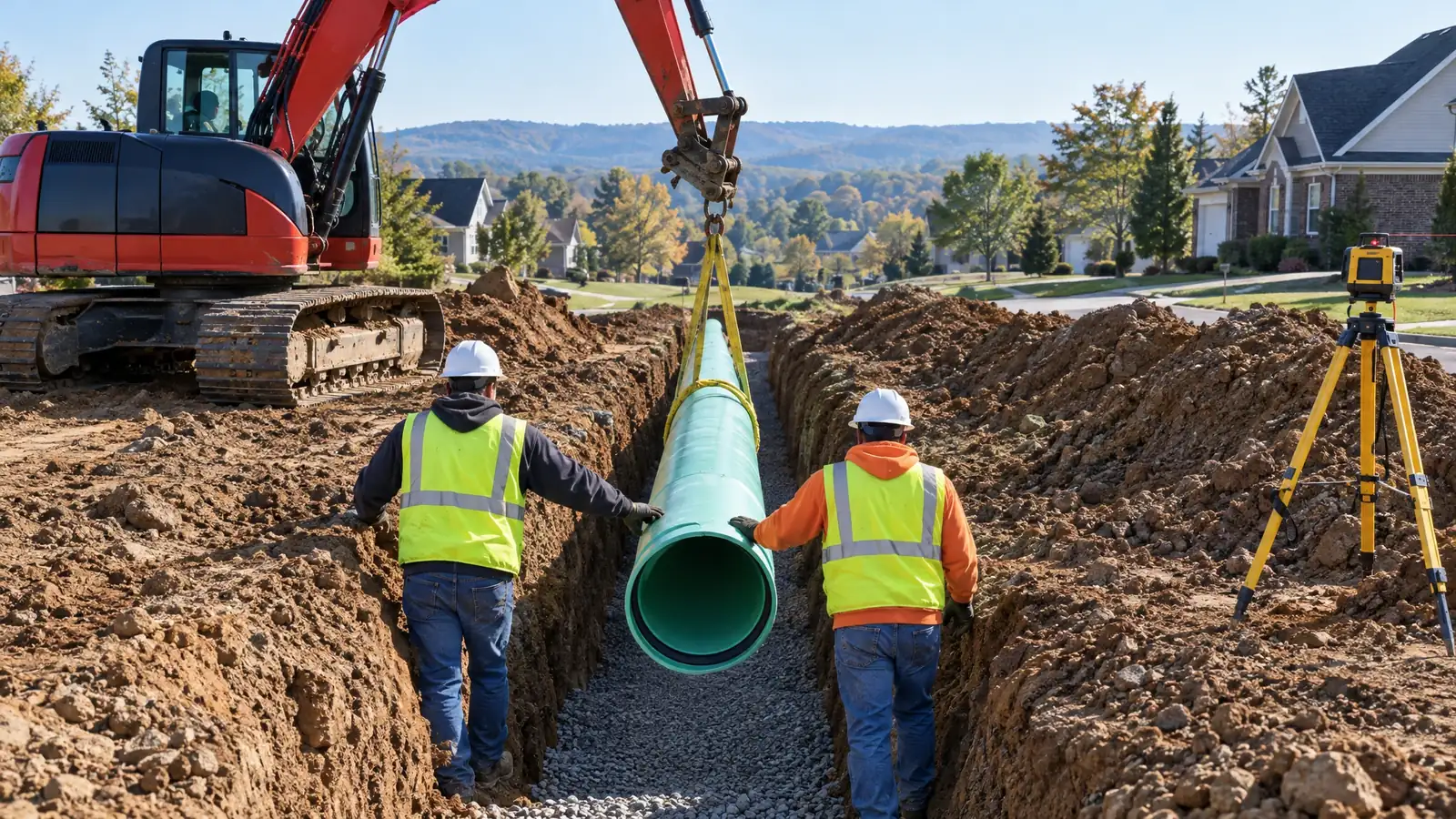
From the 811 call to the last piece of sod, the same six steps apply to one service line or a whole subdivision.
We coordinate the 811 request, walk the marks and find any private lines so we know what is down there before a bucket moves.
We agree the route, depth, grade, method, access, permits and restoration, in writing, before work starts.
The trench is cut or the bore is drilled, with sloping, shoring or a trench box wherever depth calls for it.
Pipe or conduit is set to grade on proper bedding, joined, traced and connected at each end.
Lines are tested as the job requires, then backfilled and compacted in lifts so the ground does not sink later.
Spoil is hauled or spread, and sod, stone, concrete or asphalt is put back so the property looks like itself.
Each job falls into one of four depth classes, and each is planned differently.
Grading, clearing, demolition, patching and finishing, mostly at the surface or just below it. The ground is shaped, not trenched.
A typical utility trench for water, conduit, sewer laterals and drains, dug to the depth the utility or the code sets and closed in compacted lifts.
Basements, lift stations, fire lines and deep sewers. Deeper digs get sloped sides, shoring or a trench box, and a plan for water and spoil.
Directional drilling, jack and bore and pipe bursting work from small entry and exit pits, leaving the surface between them undisturbed.
Yes. A single service line for a home and a multi-phase site utility package use the same careful approach, with equipment and crews sized to the work.
Send the form on this page or call (615) 393-6985. We usually start with a conversation and a site visit, then explain the scope and the price before work begins.
A single home service can take days, while larger projects take longer. Permits, utility connections and inspections often control the finish date more than the digging does.
Often. Taps, right-of-way work, septic systems, grading and building work all have their own permits, and we help you find out what applies at your address.
Tell us what you are building, fixing or draining and we will suggest a site visit and a plan. The lines get located before the bucket moves.
Tell us what you are building, fixing or draining and we will reply with a suggested site visit and a plan. The lines get located before the bucket moves.
Prefer to talk? Call us(615) 393-6985