Horizontal Directional Drilling in Nashville and Middle Tennessee
Steerable drilling that installs conduit and pressure pipe under driveways, roads, creeks, trees and landscaping with only small entry and exit pits.
- Trenchless, Boring and Locating
- Under it, not through it
- Middle Tennessee
Horizontal Directional Drilling (HDD), explained.
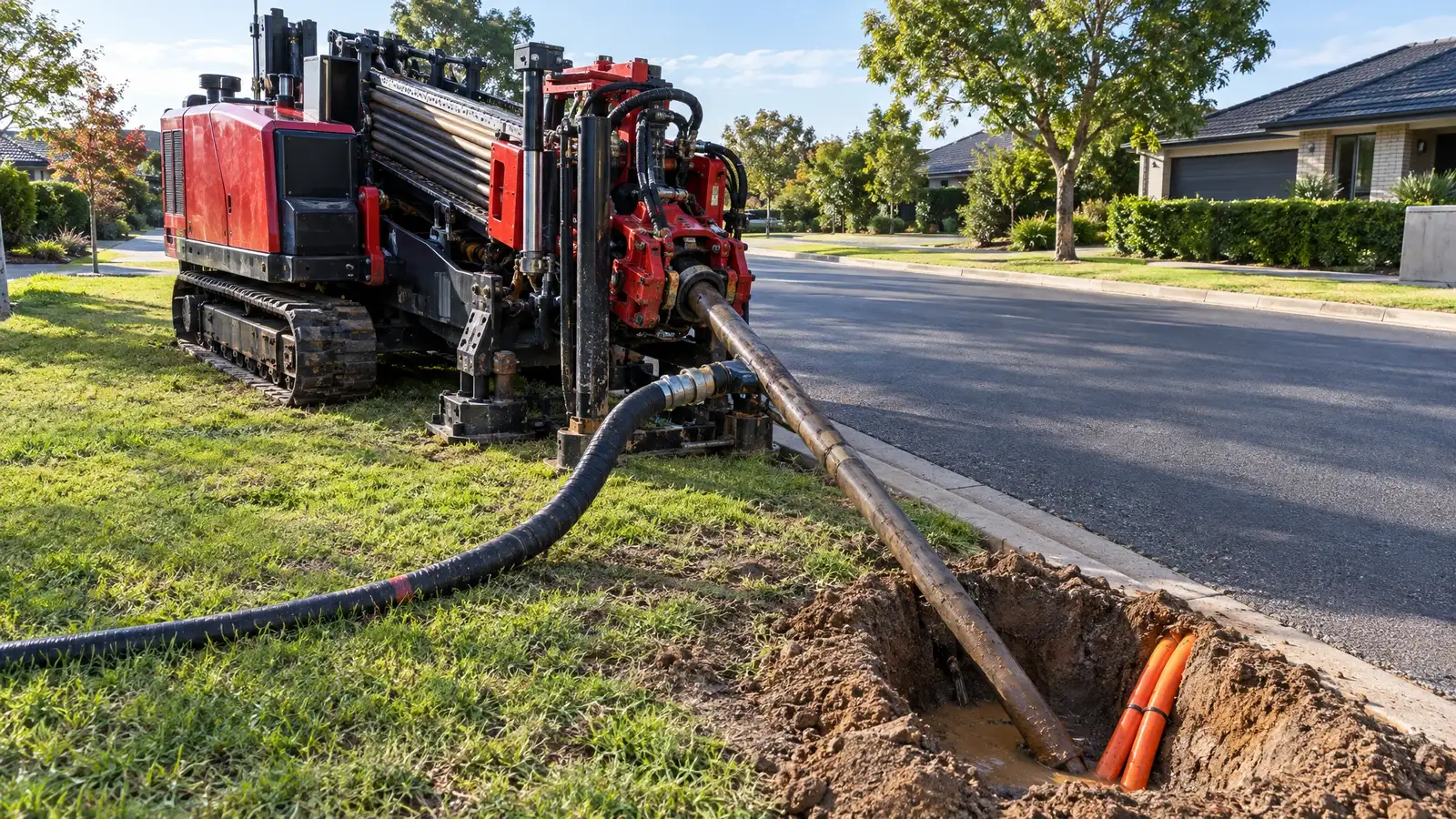
Horizontal directional drilling, or HDD, installs pipe and conduit along a planned underground path without opening a trench. A drill rig steers a small bit from an entry pit to an exit point, a reamer enlarges the hole and the product pipe is pulled back through. The ground between the two pits is never dug up.
That makes HDD the right tool when the route crosses something you cannot or would rather not cut: a road, a driveway, a creek, mature trees, a finished patio. We plan the bore path from the locates and the soil, track the bit while drilling and pull the pipe or conduit in once the hole is ready.
Signs this service fits
- A line must cross a road or driveway without cutting it
- Mature trees or landscaping line the route
- A creek or wetland edge must be crossed
- A long run of conduit or water line is needed with minimal disruption
A good fit, and what to know.
We would rather you hear the limits from us than discover them later.
A good fit when
- The route crosses something expensive to cut
- Soils are suitable for drilling
- Pipe or conduit will be flexible, like HDPE
Worth knowing
- Rock, cobbles and loose soils may limit boring
- Exact grade for gravity pipe is better handled by trenching or other methods
Why do it this way.
Minimal surface damage
Only small pits are dug; driveways, lawns and roots stay intact.
Crosses obstacles
Roads, streams and structures can be passed under.
Faster on long runs
Long straight crossings often go quicker than trenching.
Tracked path
The bit location is monitored so the route stays where it was planned.
From first look to finished ground.
A clear sequence for every job.
- 01
Plan the bore
Entry and exit points, depth and the path are planned around locates and obstacles.
- 02
Pilot bore
A steerable bit drills the pilot path and is tracked as it goes.
- 03
Ream and pull
The hole is enlarged in passes and the conduit or pipe is pulled back through.
- 04
Close the pits
Entry and exit pits are backfilled and the surface is restored.
Services that go together.
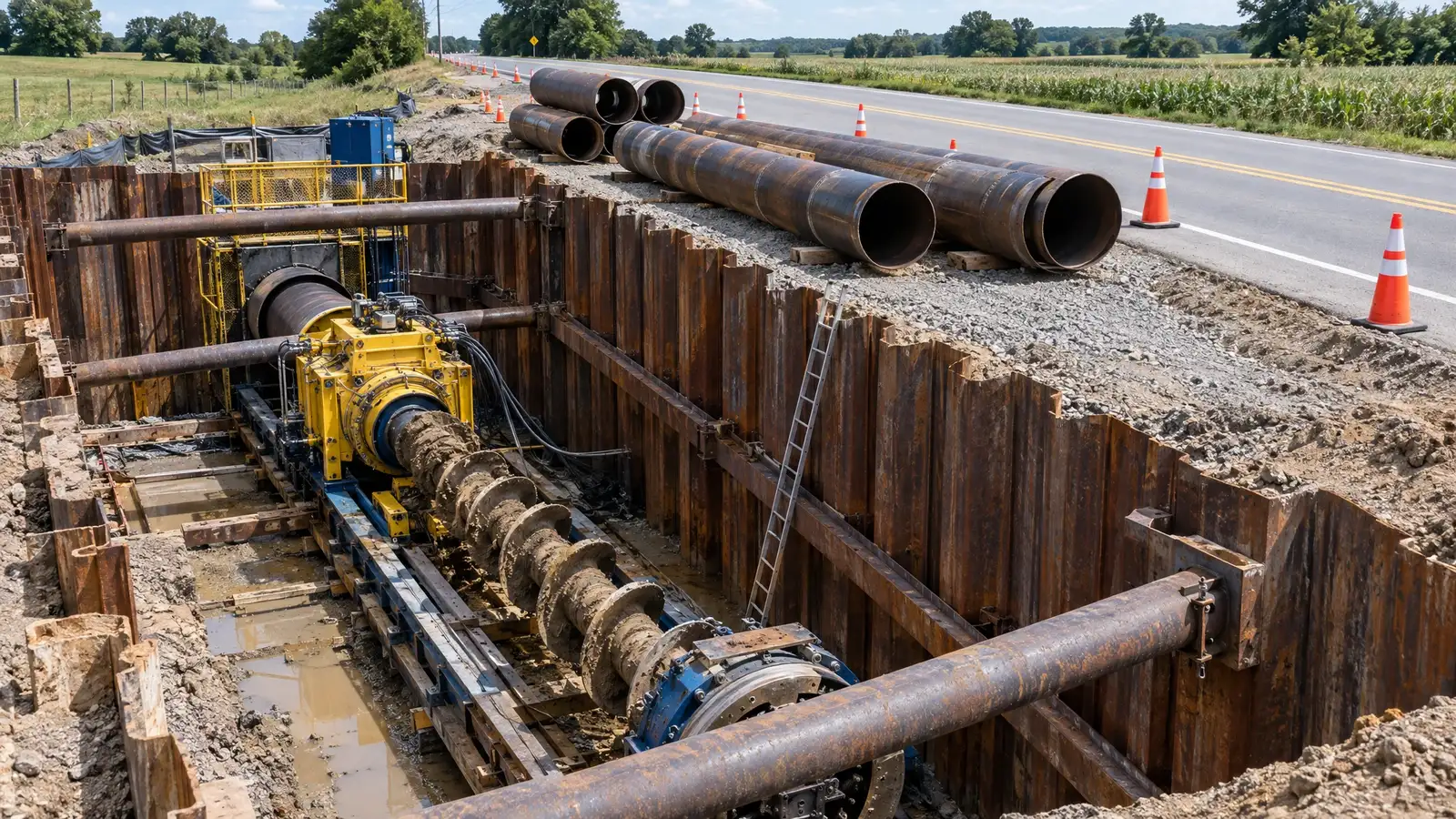 C-02TrenchlessJack & Bore CrossingsAuger boring under roads, rail and drives to push steel casing and carrier pipe in a straight line, with no road cut and tightly…Trenchless bore
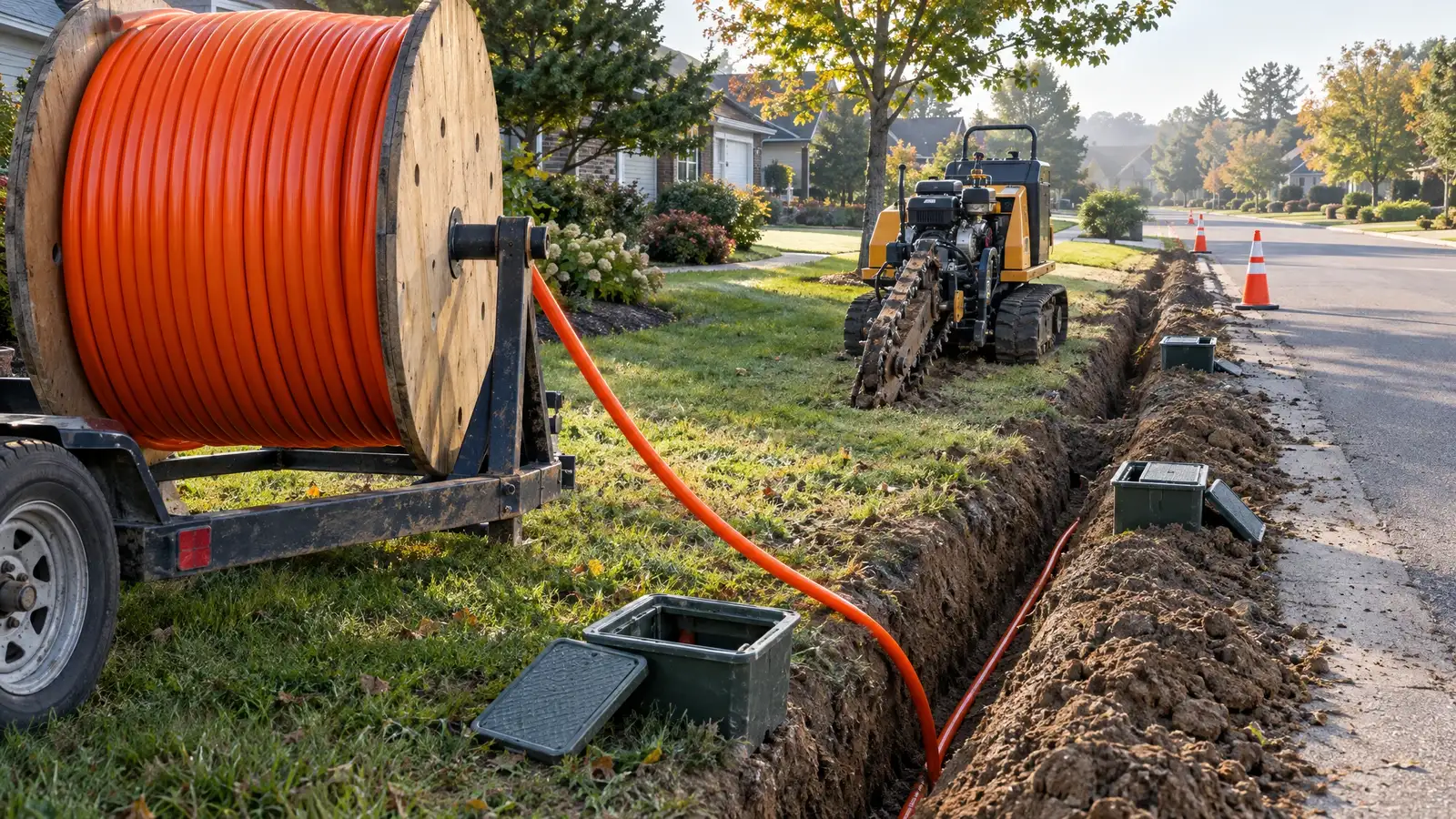 A-06Utility LinesFiber & TelecomTrenching, boring and handhole installation for fiber optic, cable and communications conduit to homes, farms and commercial buildings.Shallow trench
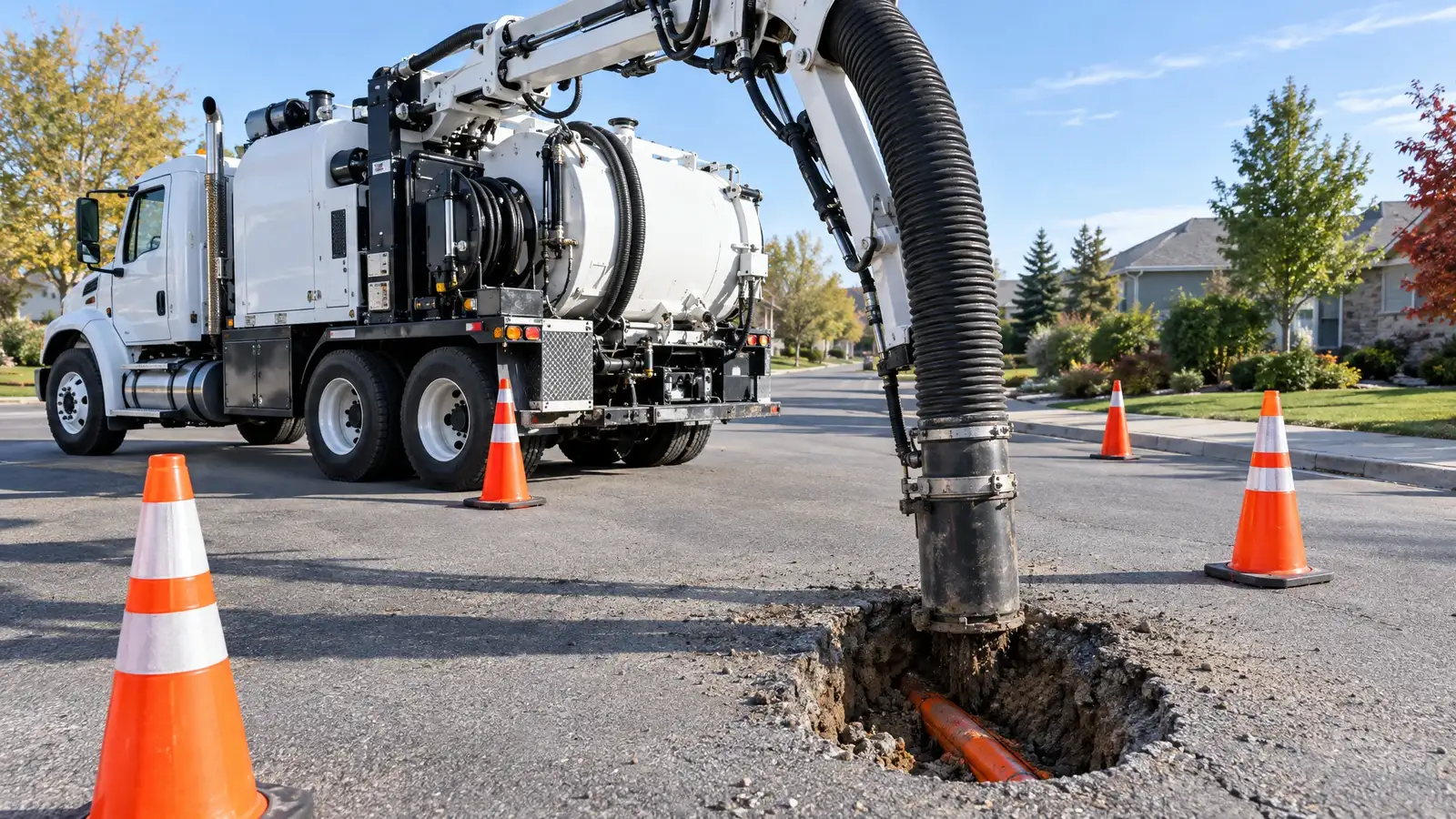 C-05TrenchlessVacuum ExcavationNon-destructive digging with air or water and a vacuum truck to expose buried utilities safely, confirm depth and prevent line strikes.Shallow trench
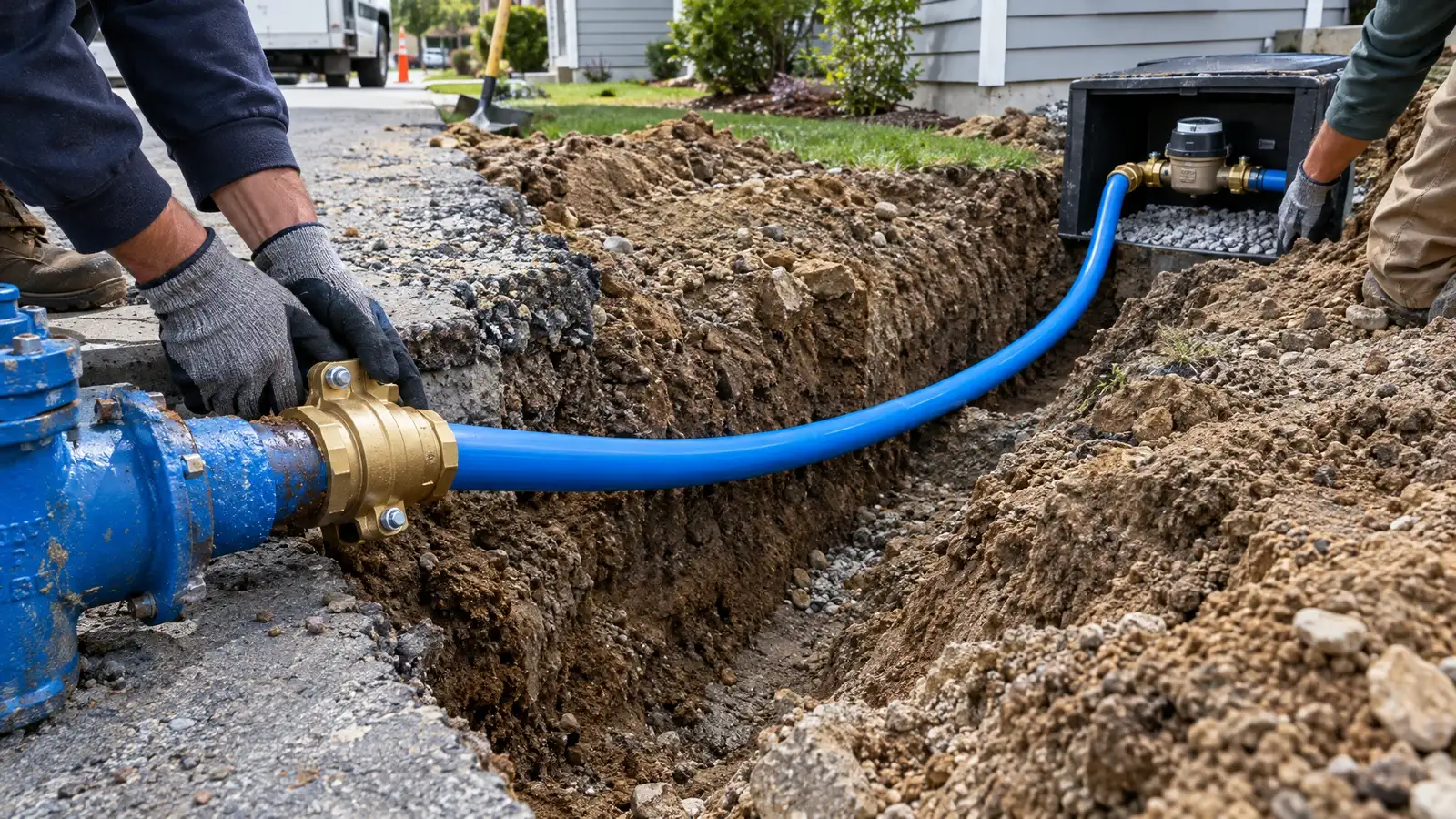 A-02Utility LinesWater LinesNew water service lines and private water mains trenched, laid and backfilled from the meter or main to your home, building or outbuilding.Shallow trench
Read more on this topic.
What Is Horizontal Directional Drilling?How HDD works, what it can install and where it fits.2 min read Directional Boring vs Open TrenchWhen boring beats trenching, when trenching wins and how to decide for your route.2 min read 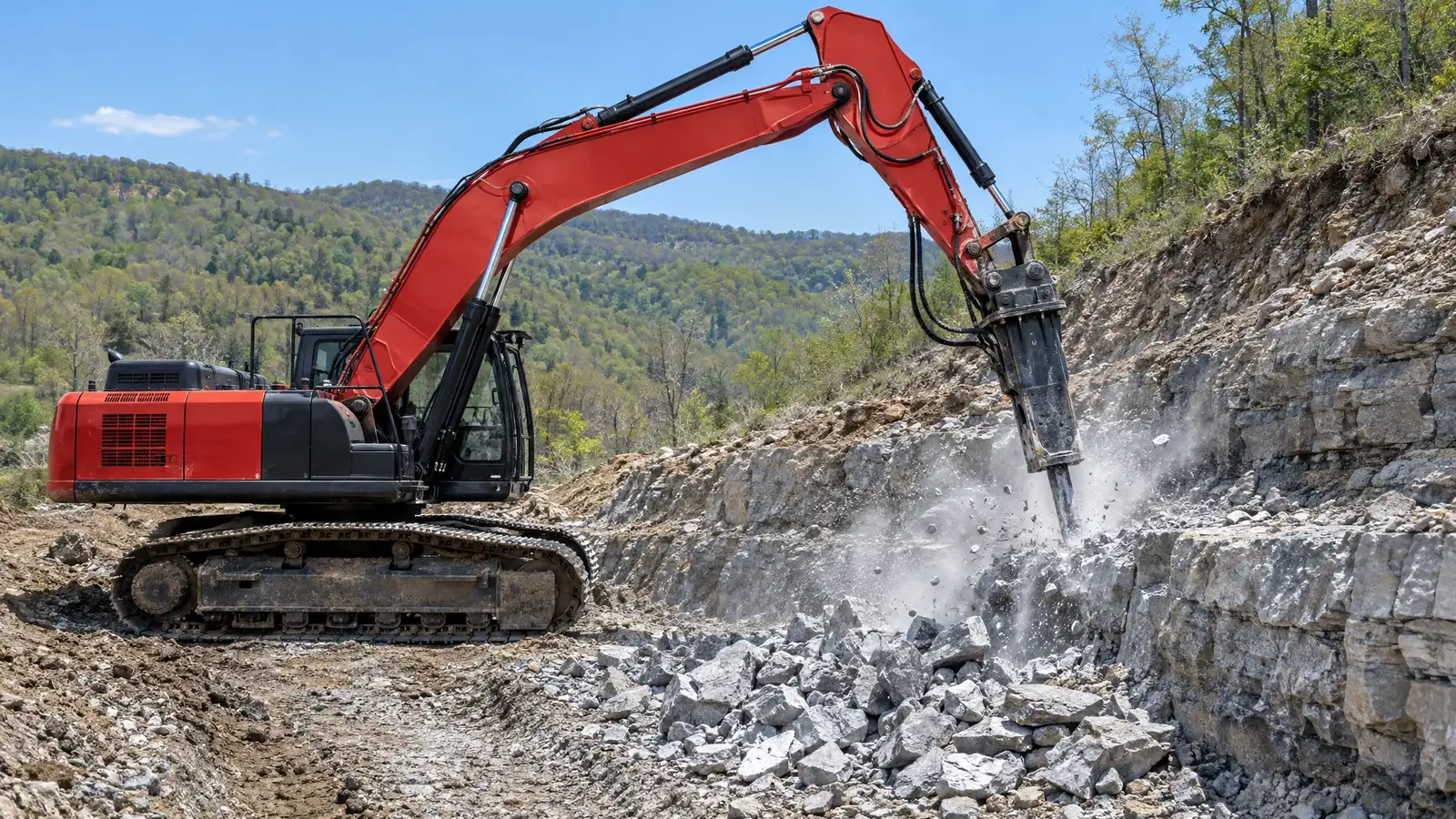 When Boring Is Not the AnswerHonest limits of boring and trenchless methods, and what to do instead.2 min read
Directional Drilling FAQ.
What can HDD not do?
It struggles in solid rock, heavy cobbles and very loose, running ground, and it is not good for gravity sewer where precise grade matters. We tell you when another method fits better.
How deep does a bore go?
Depth follows the design and what the route must cross. We set it from the locates, utility requirements and soil.
Can you bore under my driveway?
Often yes, and it is one of the most common uses. We check soil, depth and existing lines before drilling.
Directional Drilling across Middle Tennessee.
Pick your city for its page.
Call 811. Then call us.
Tell us what you are building, fixing or draining and we will suggest a site visit and a plan. The lines get located before the bucket moves.