Vacuum Excavation and Potholing in Nashville and Middle TN
Non-destructive digging with air or water and a vacuum truck to expose buried utilities safely, confirm depth and prevent line strikes.
- Trenchless, Boring and Locating
- Standard utility trench
- Middle Tennessee
Vacuum Excavation and Potholing, explained.
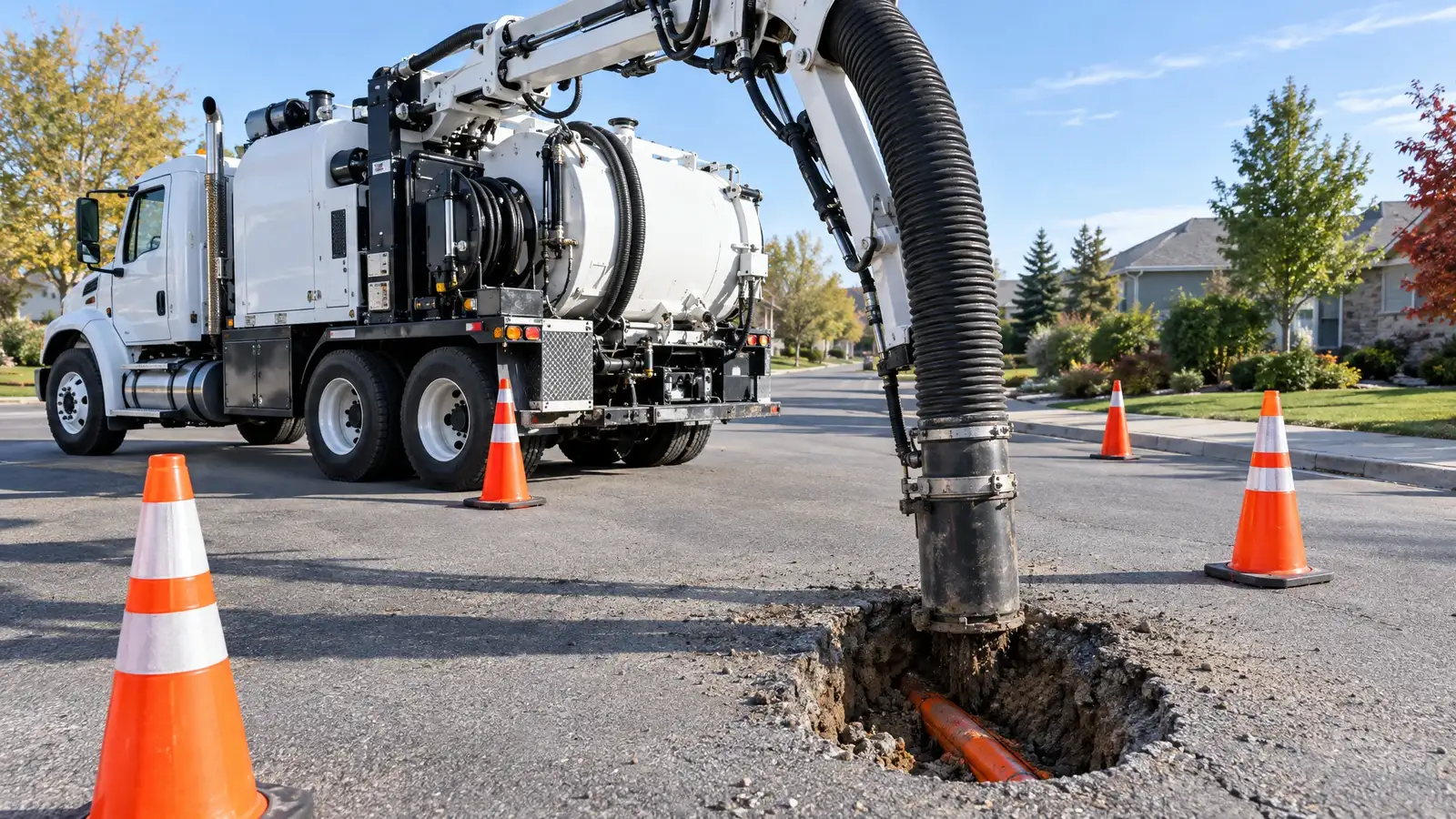
Utility marks tell you roughly where a line is, but not exactly how deep, and the accuracy of paint on the ground varies. Potholing with a vacuum excavator opens a small, clean hole that exposes the actual line so its depth and position can be verified before heavy digging or boring begins.
A vacuum truck loosens soil with air or water and sucks it into a tank, which avoids striking the pipe with a bucket or shovel. We use it ahead of trenches, bores and foundation work, around crowded intersections and wherever damaging a line would be costly or dangerous.
Signs this service fits
- A bore or trench crosses existing utilities
- Digging near a known gas, fiber or electric line
- A crowded corridor with many lines
- Verification is required by the plan or the utility
A good fit, and what to know.
We would rather you hear the limits from us than discover them later.
A good fit when
- Existing lines are close to the planned work
- A plan or utility calls for verification
- A strike would be costly or dangerous
Worth knowing
- It verifies lines that are marked; unmarked or abandoned lines can still be a surprise
- Large excavations still need conventional equipment
Why do it this way.
Fewer strikes
Soil is removed without hitting the pipe.
Verified depth
Marks become measured facts.
Small, clean holes
Minimal disturbance in pavement or lawn.
Better planning
Bore paths and trenches are designed on verified data.
From first look to finished ground.
A clear sequence for every job.
- 01
Review the marks
Locates and plans show where lines are expected.
- 02
Dig the pothole
A small round hole is cut by air or water and vacuum, down to the line.
- 03
Record it
The line’s depth, size and position are measured and noted.
- 04
Backfill
The hole is refilled and patched, with the verified data used for the main work.
Services that go together.
 C-06TrenchlessUtility Locating & 811Requesting locates, walking the marks, reviewing plans and mapping private lines so excavation starts with a clear picture of what is buried.Surface work
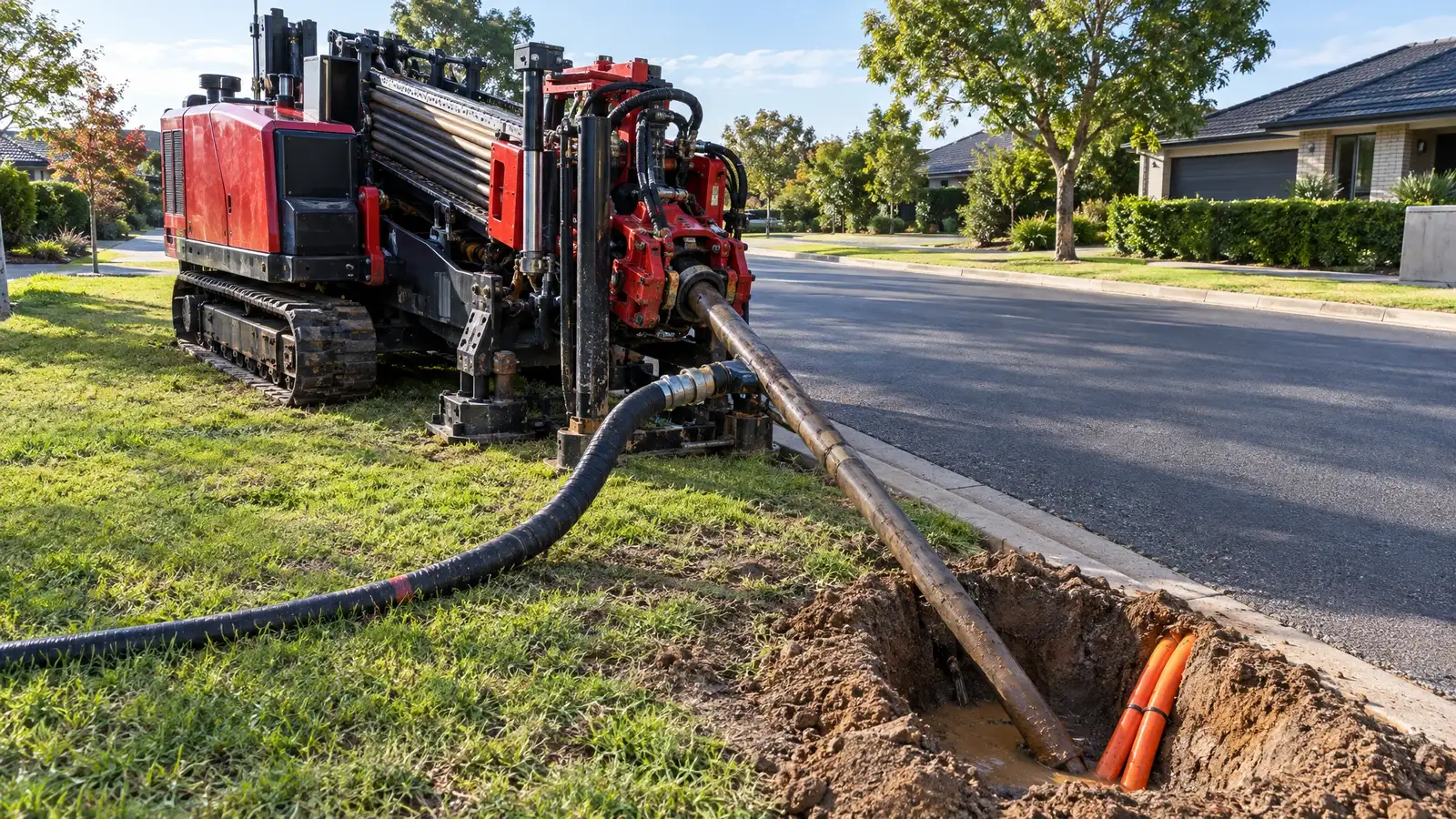 C-01TrenchlessDirectional DrillingSteerable drilling that installs conduit and pressure pipe under driveways, roads, creeks, trees and landscaping with only small entry and exit pits.Trenchless bore
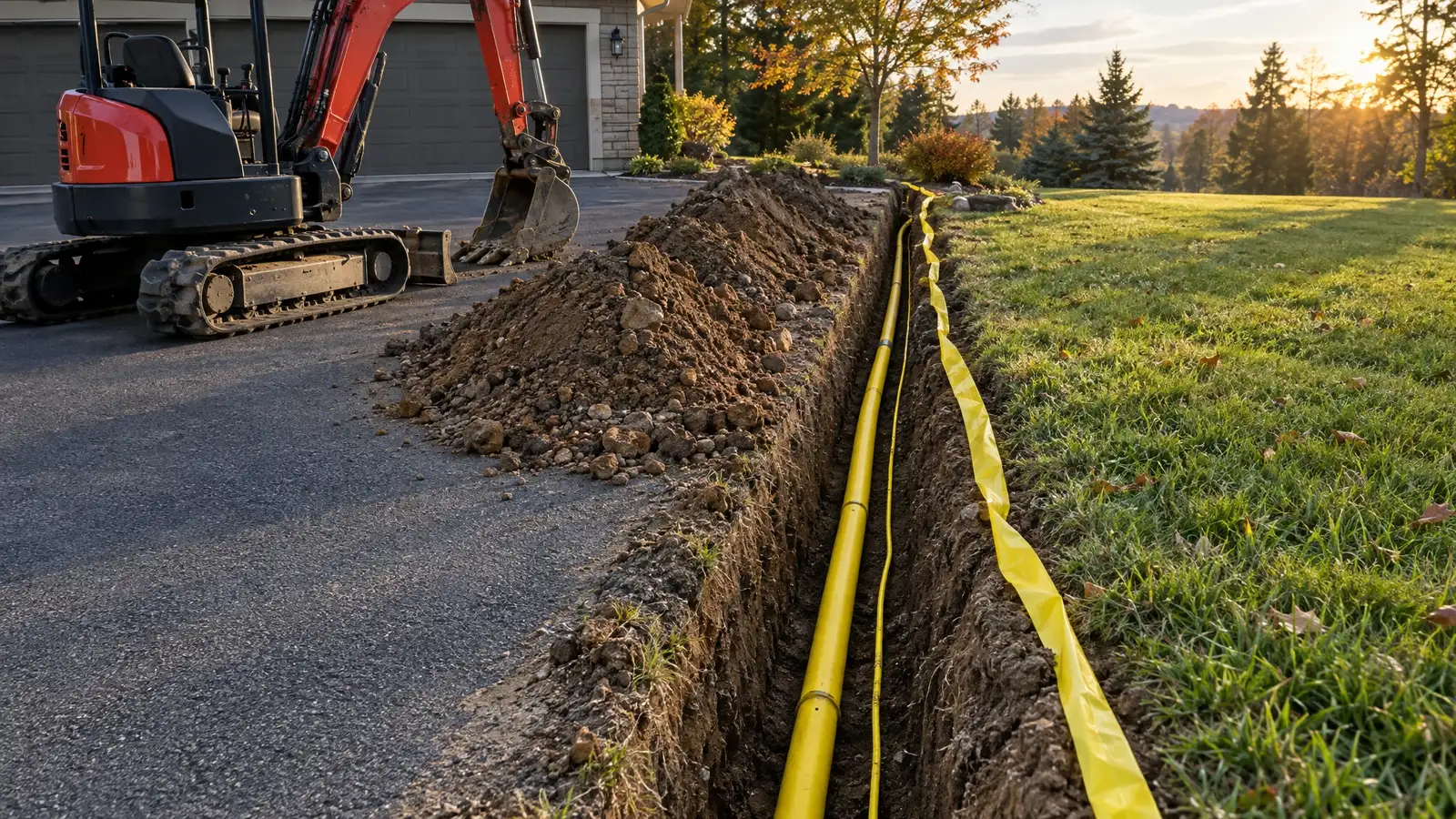 A-07Utility LinesGas Line TrenchingExcavation, bedding and backfill for underground gas service and yard lines, prepared for the gas utility or a qualified gas contractor to install and…Shallow trench
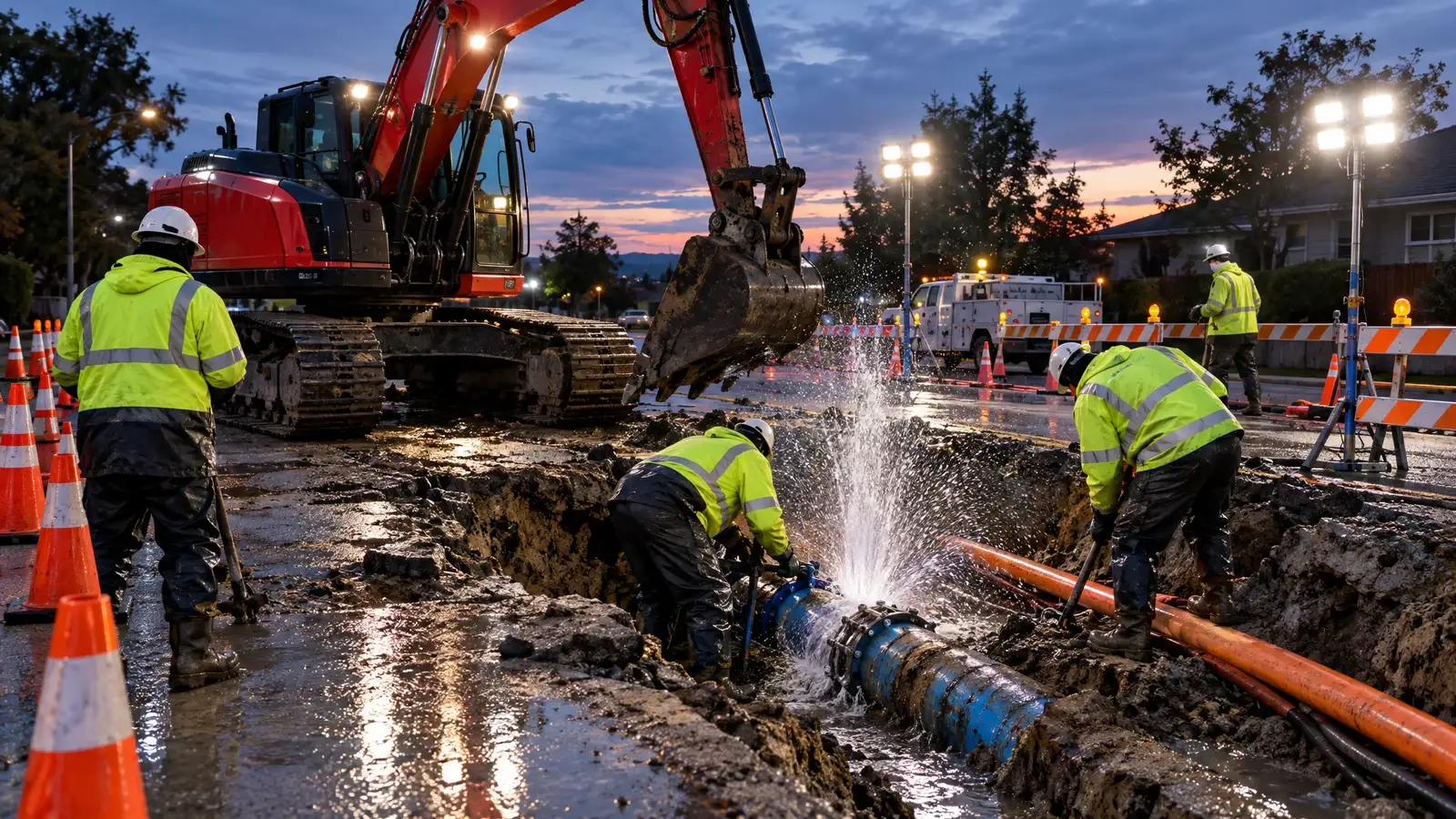 D-07RepairUtility Strike RepairExcavation and repair support when a buried water, sewer, conduit or communications line has been hit, with an emphasis on safety and calling the…Shallow trench
Read more on this topic.
Potholing and Vacuum Excavation ExplainedHow crews see a buried line without hitting it.2 min read What Happens When a Utility Line Is StruckThe right steps after a strike, line by line, and why some are urgent.2 min read How to Call 811 Before You DigStep by step: what 811 is, when to call, what happens next and how to read the marks.2 min read Vacuum Excavation FAQ.
Is potholing required?
Sometimes by plan, owner or utility, and it is good practice anywhere a strike would be serious. We recommend it near critical lines.
What do you do with the soil?
It is collected in the truck’s tank and hauled off or reused, depending on the site.
Does vacuum excavation damage pavement?
The hole is small and neatly cut, and it is patched afterward. It is far less destructive than open digging.
Vacuum Excavation across Middle Tennessee.
Pick your city for its page.
Call 811. Then call us.
Tell us what you are building, fixing or draining and we will suggest a site visit and a plan. The lines get located before the bucket moves.