Sewer Main and Lateral Installation in Nashville, TN
New private sewer mains and building laterals set to a laser-checked grade, bedded in stone and connected to the public sewer or a septic system.
- Utility Line Installation
- Standard utility trench
- Middle Tennessee
Sewer Main and Lateral Installation, explained.
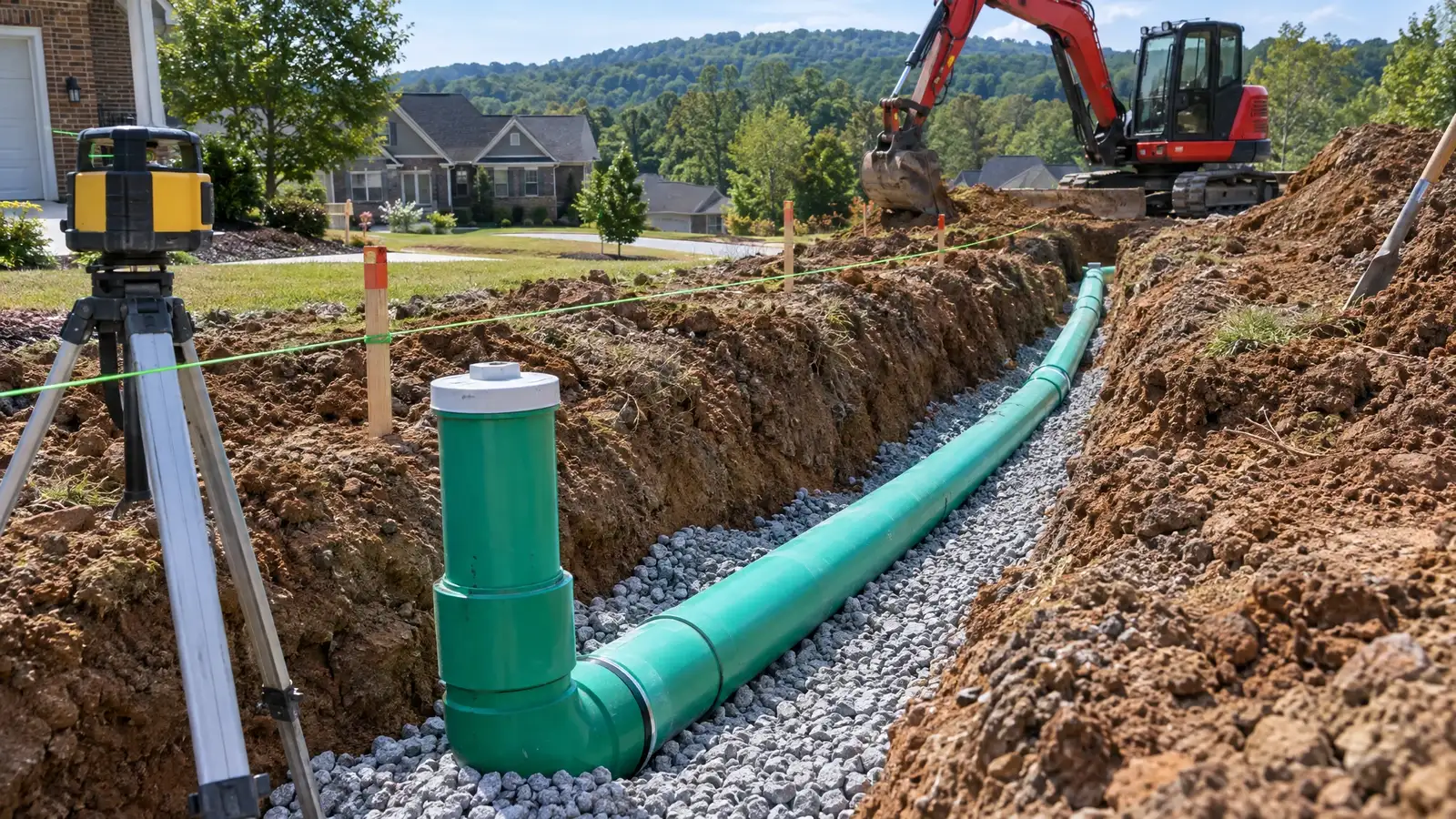
A sewer line works because it slopes. Wastewater leaves the building through a lateral and moves by gravity to the public main or to a septic tank, so a line laid flat or with a dip will clog long before it should. The skill in sewer installation is trench depth, a steady grade, solid bedding and joints that stay tight.
We cut the trench to the required fall, lay PVC or other approved pipe on stone bedding, set cleanouts where the plan calls for them and connect to the building drain and to the main or the tank. Grade is checked with a laser or string line as the pipe goes in, and the line is tested as the local authority requires.
Signs this service fits
- A new building needs its sewer lateral
- A lot is being developed with a private sewer main
- An addition or accessory building needs its own drain line
- An old line is being replaced rather than repaired
A good fit, and what to know.
We would rather you hear the limits from us than discover them later.
A good fit when
- The building and the connection point are both known
- You need grade checked and documented as the pipe goes in
- A builder wants the lateral in before the slab or driveway
Worth knowing
- The public sewer tap is often completed by the utility or its approved contractor
- Rock, a deep main or a low building can change the design
Why do it this way.
Continuous fall
No bellies or flat runs where solids can settle.
Stone bedding
Crushed stone supports the pipe and spreads load evenly.
Cleanouts where they matter
Access points are placed so the line can be cleared or inspected later.
Clean connections
Taps, wyes and building connections are made carefully and checked.
Before and after: failed sewer to restored yard
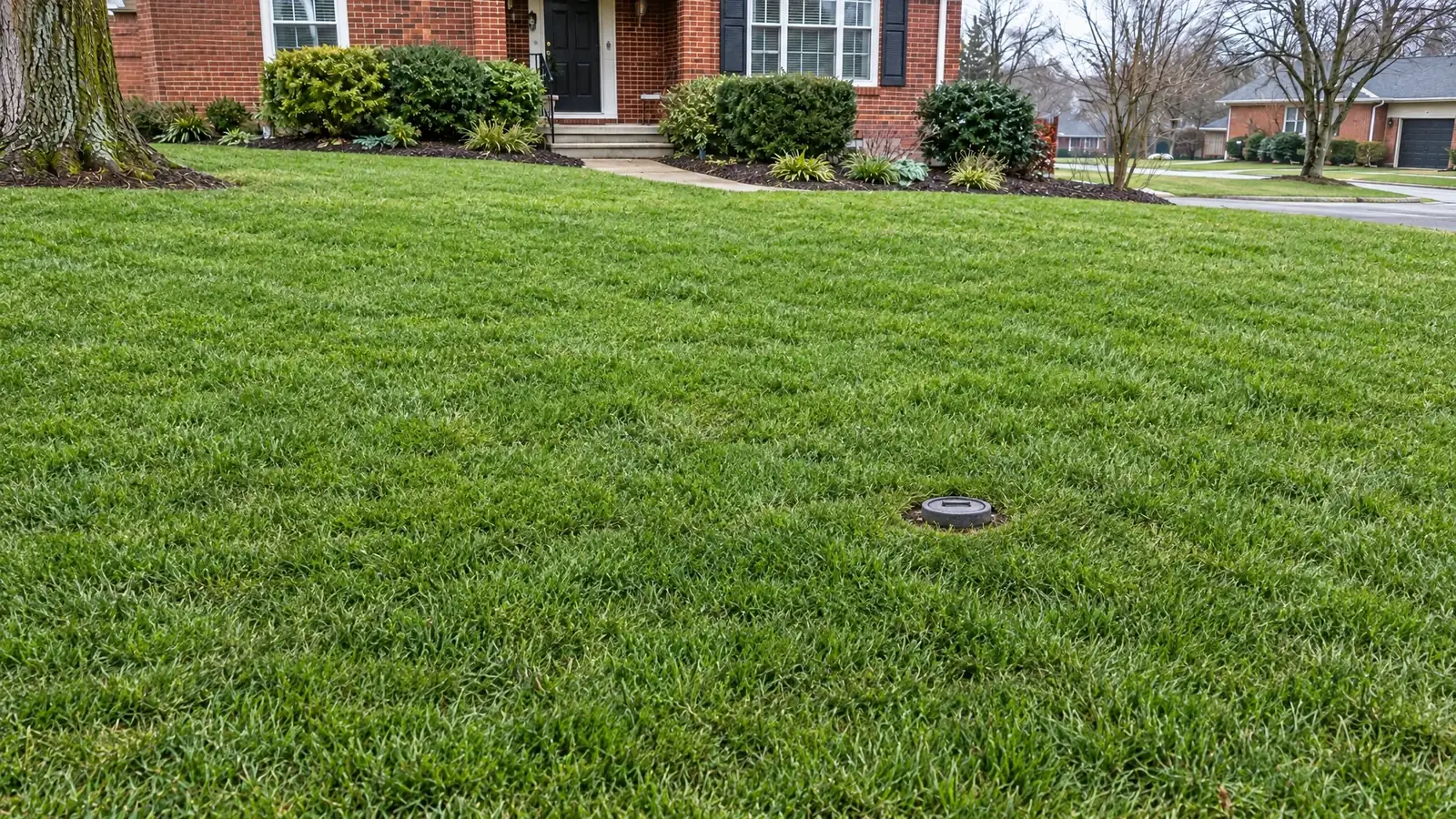
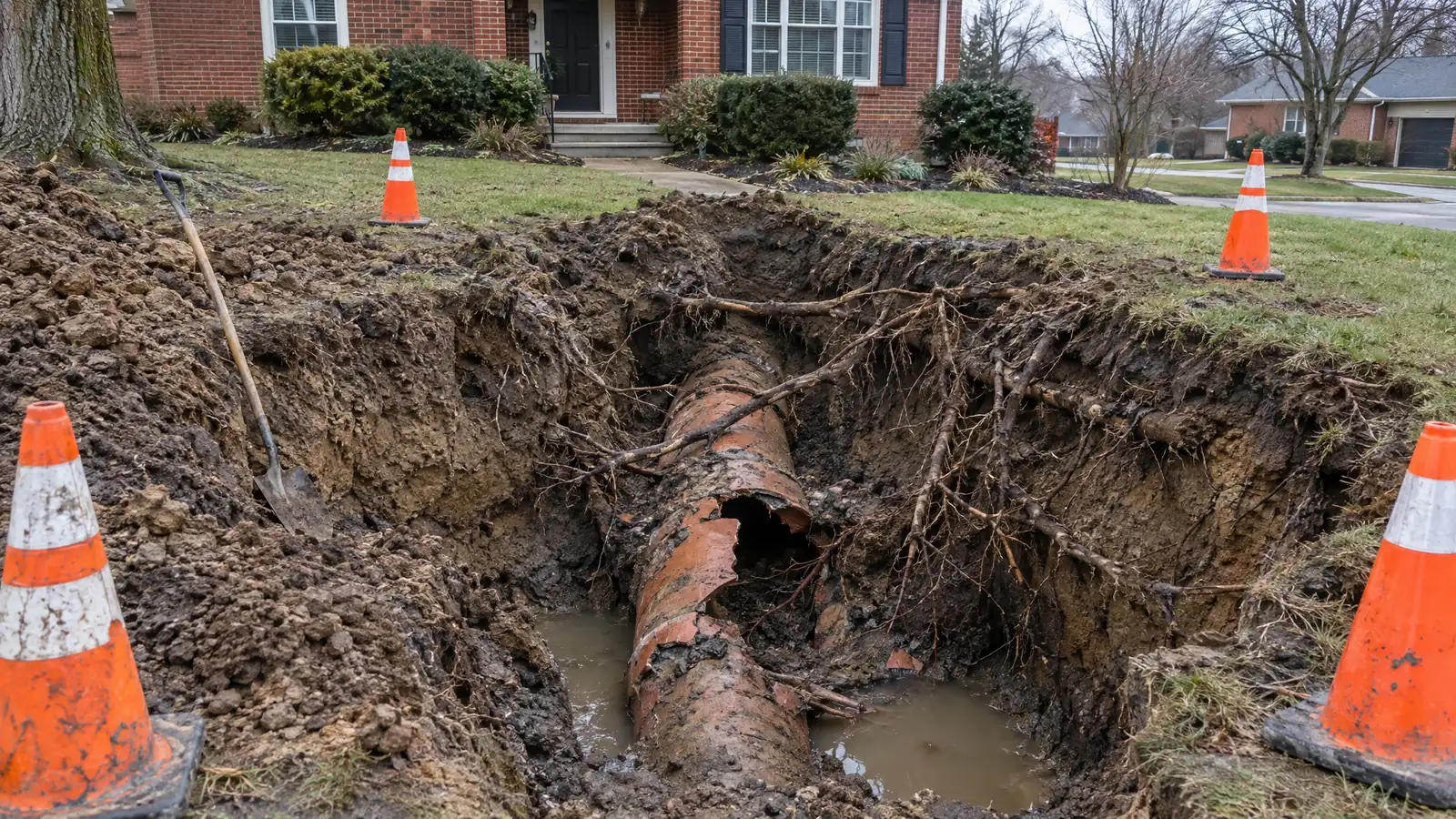 AfterBefore
Illustrative scene created to show a typical condition before and after the work. Drag the handle to slide between them.
From first look to finished ground.
A clear sequence for every job.
- 01
Set the grade
Invert elevations are worked out from the building drain to the connection so the fall is continuous.
- 02
Cut and bed
The trench is excavated, the bottom is trimmed to grade and stone bedding is placed.
- 03
Lay and check
Pipe is joined section by section and checked with a laser or string line, with cleanouts installed.
- 04
Test and backfill
The line is tested as required, then backfilled in lifts and the surface restored.
Services that go together.
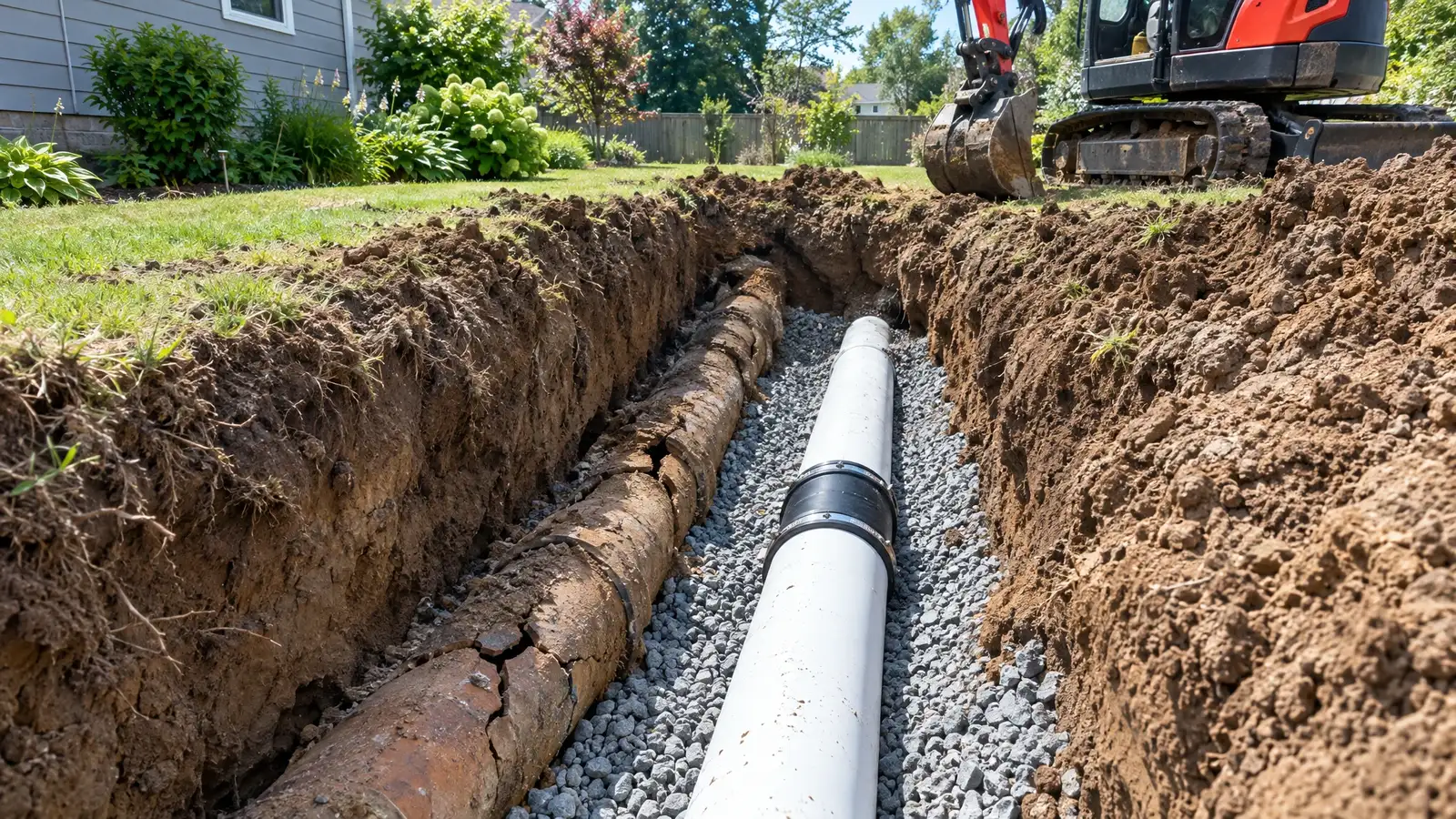 D-01RepairSewer Repair & ReplacementTargeted excavation and replacement of broken, collapsed or root-infested sewer lines, from a short spot repair to a full lateral replacement.Deep excavation
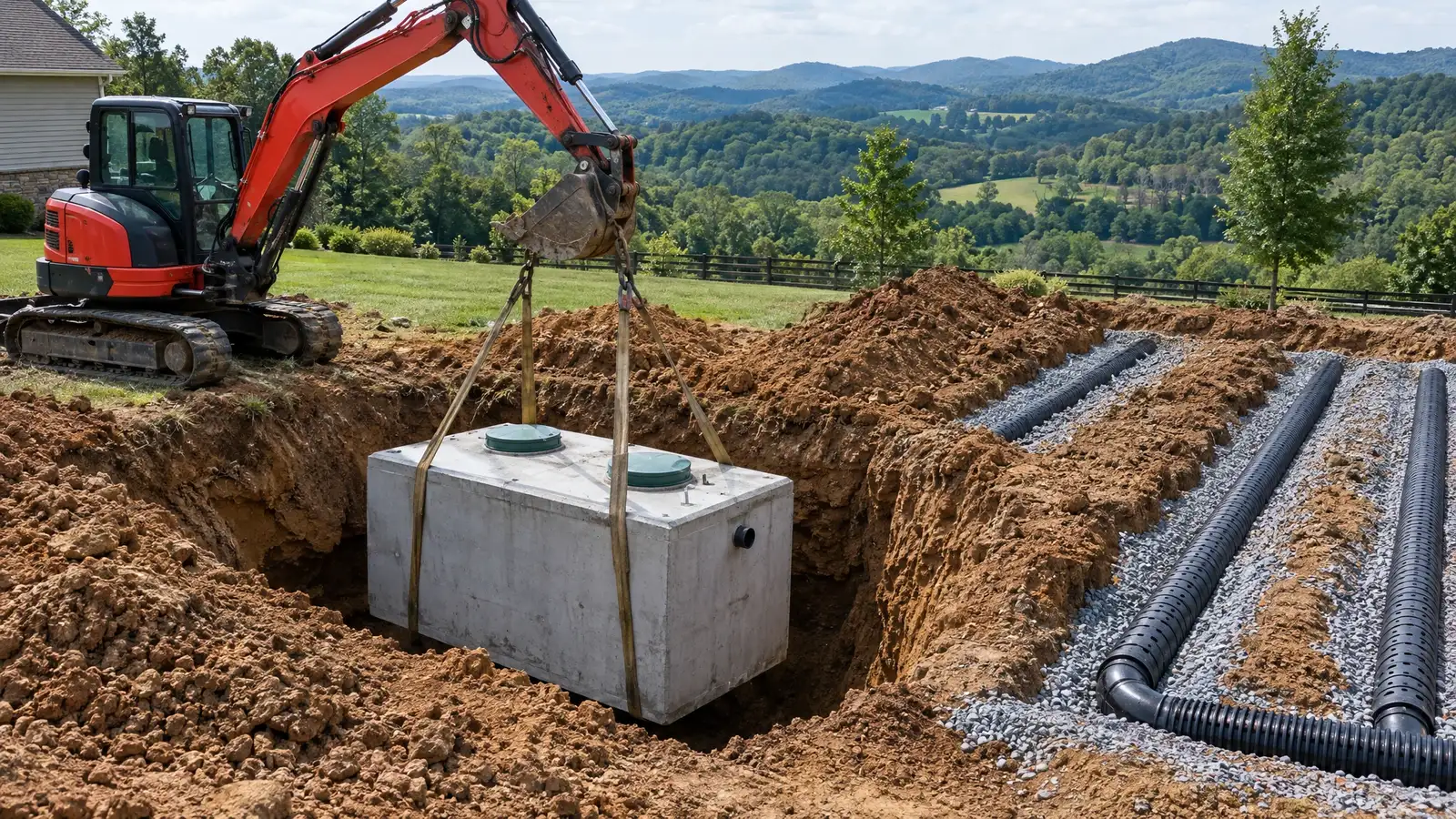 A-11Utility LinesSeptic SystemsExcavation, tank setting and drain field construction for new and replacement septic systems on properties without a public sewer.Deep excavation
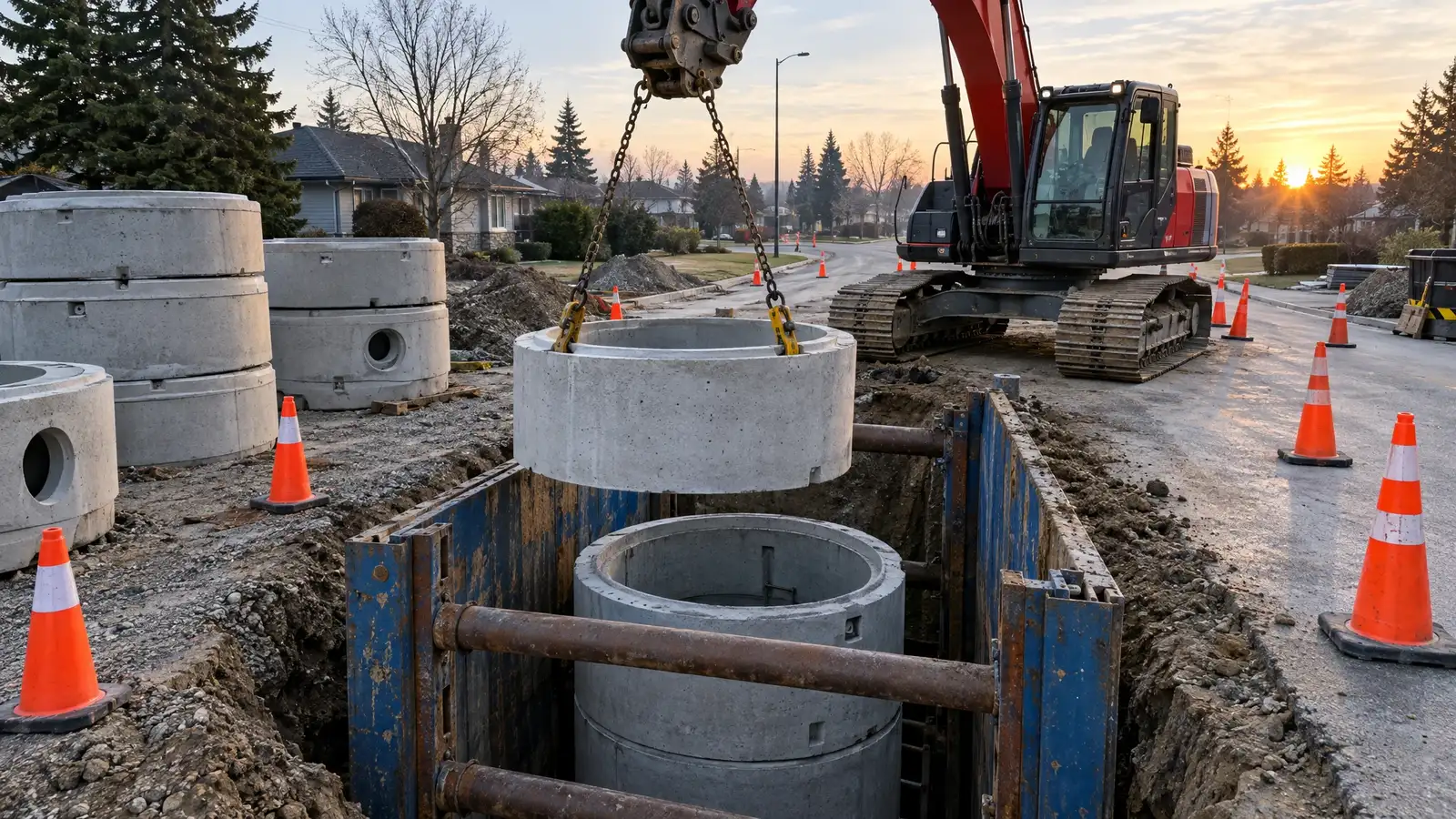 A-10Utility LinesManholes & Catch BasinsPrecast manholes, drop inlets and catch basins set on prepared bases and tied into sewer and storm lines on development and commercial sites.Deep excavation
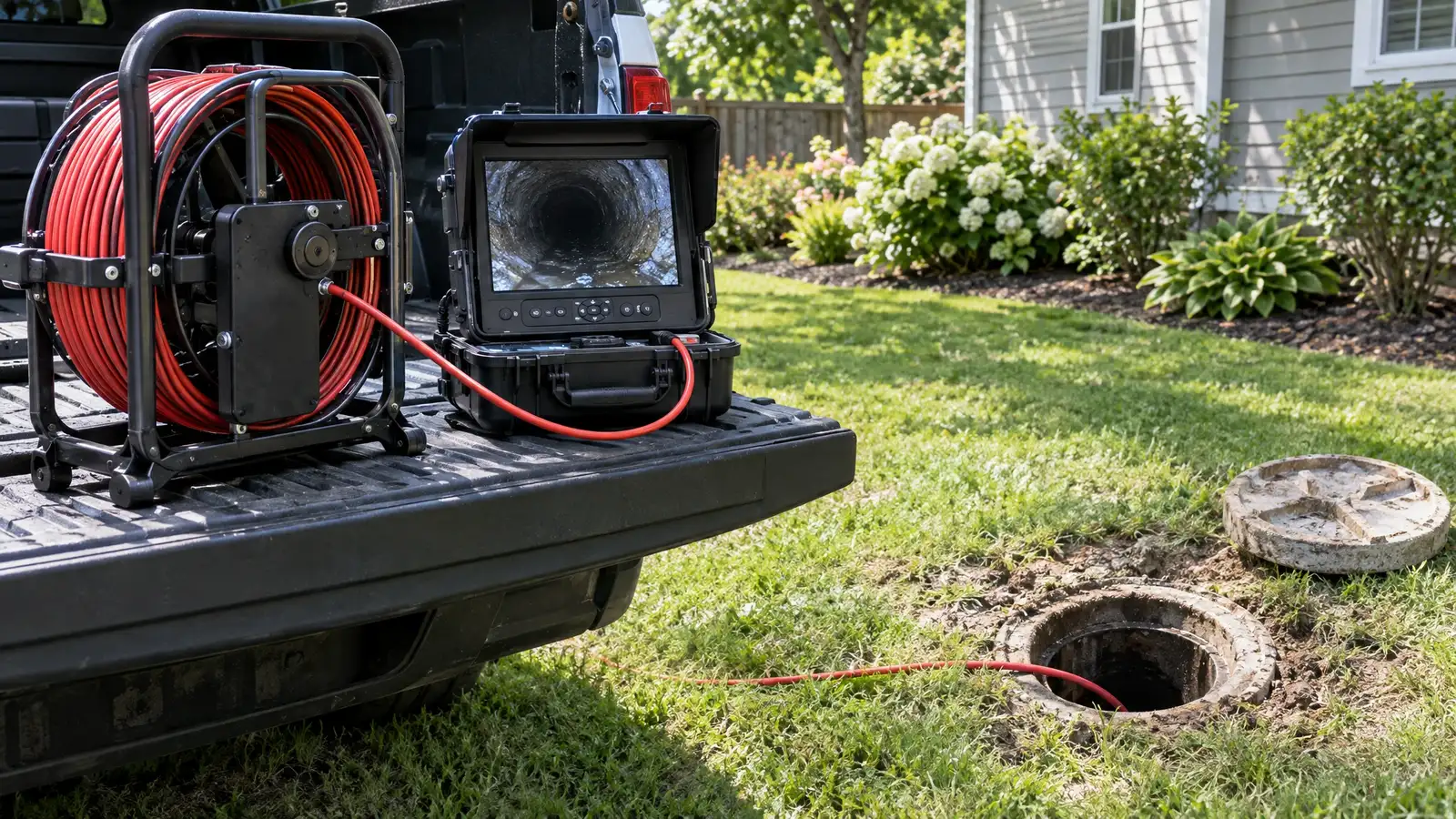 C-07TrenchlessCamera & Pre-Dig SurveysRecorded camera inspections of sewer and drain lines, with locating, to find defects, confirm routes and choose between lining, bursting and a targeted dig.Trenchless bore
Read more on this topic.
How Underground Utilities Are Laid OutWhere the water, sewer, storm, power and data lines usually run, and why the layout is rarely a straight line.2 min read  The Anatomy of a Utility TrenchWhat goes into a well-built trench, layer by layer, and why each layer matters.2 min read Pipe Bedding and Backfill ExplainedWhy the stone around a pipe matters as much as the pipe, and what proper backfill looks like.2 min read
Sewer Lines FAQ.
How much slope does a sewer line need?
A steady downhill fall, set by code for the pipe size. We work out the exact fall for your run and check it as the pipe is laid.
Can the line connect to the street sewer?
Usually yes at an approved tap point, with the utility’s permit and inspection. We explain the process and who completes the connection.
What if the building drain is too shallow?
Sometimes the building is higher or lower than the main. Options include a deeper tie-in, a different route or a pumped system, and we review them with you before digging.
Sewer Lines across Middle Tennessee.
Pick your city for its page.
Call 811. Then call us.
Tell us what you are building, fixing or draining and we will suggest a site visit and a plan. The lines get located before the bucket moves.