Commercial Site Utility Work in Nashville and Middle TN
Underground water, sewer, storm, fire protection and conduit for commercial pad sites, built to plan and scheduled with the general contractor.
- By Project Type
- Deep dig, protected
- Middle Tennessee
Commercial Site Utility Work, explained.
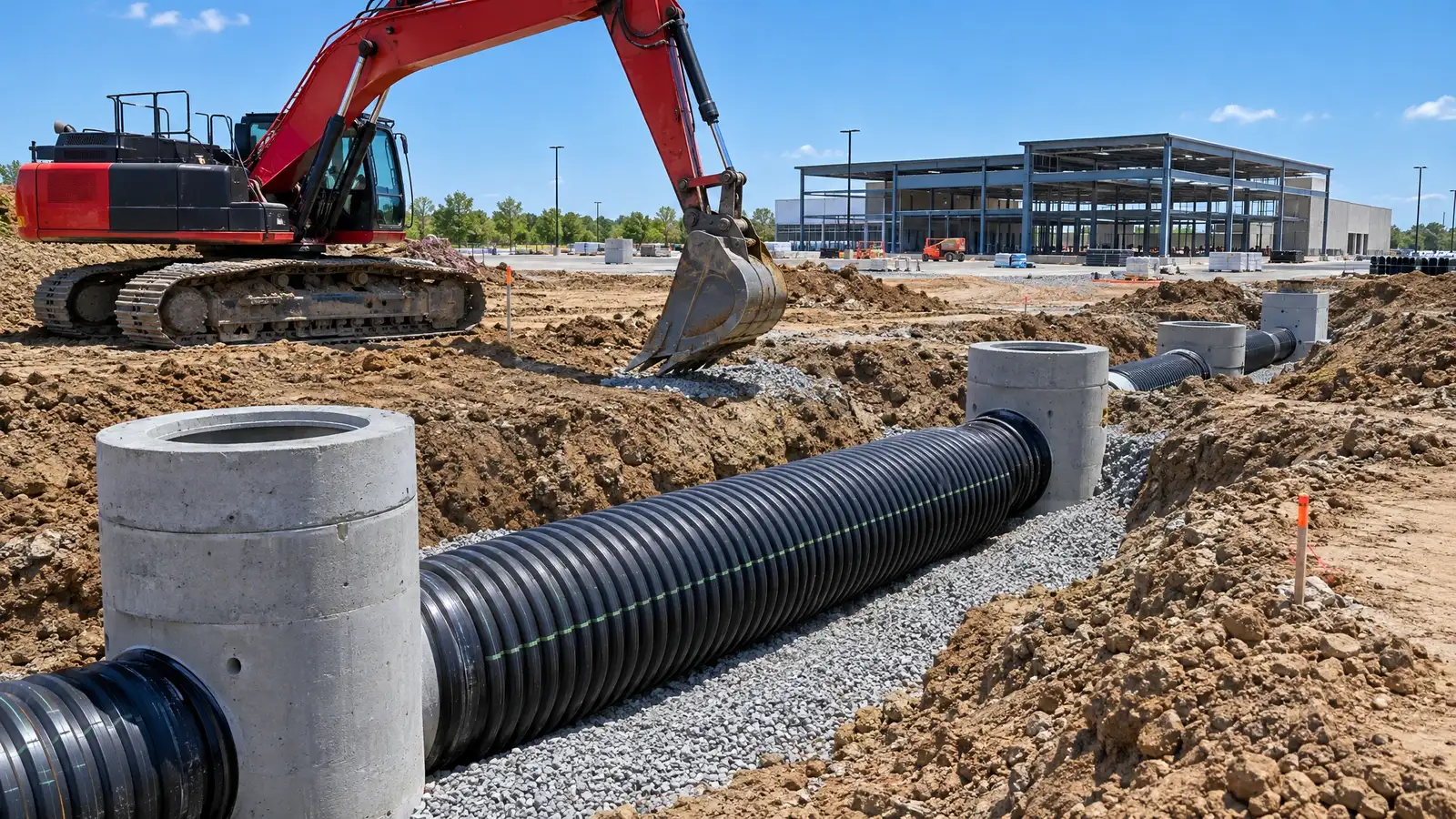
Commercial sites bring larger pipe, deeper trenches, more structures and tighter schedules. Storm and sanitary lines, fire service, domestic water and conduit all have to reach the building at the right elevations, and each of them has inspection hold points.
We build the underground package from the civil drawings: excavation, bedding, pipe, manholes, inlets, thrust restraint and backfill, coordinated with the general contractor and the site superintendent. We work to the plan’s elevations, support inspections and keep the site safe for the trades working around us.
Signs this service fits
- A commercial pad site needs underground utilities
- A multi-family or retail development is under construction
- An industrial building needs site utilities
- A parking lot needs storm structures
A good fit, and what to know.
We would rather you hear the limits from us than discover them later.
A good fit when
- Civil plans and a schedule exist
- The GC needs a reliable underground sub
- The site has machine access and space for pipe and structures
Worth knowing
- Inspections, utility approvals and weather drive the schedule
- Rock and groundwater can change deep utility work
Why do it this way.
Built to civil plans
Elevations and slopes follow the drawings.
Scheduled with the GC
Trenching follows the site’s phasing.
Inspection-ready
Work is staged for hold points and testing.
Safe around other trades
Open trenches are protected and sequenced.
From first look to finished ground.
A clear sequence for every job.
- 01
Review the civil plans
We take off quantities and review elevations, utilities crossings and phasing.
- 02
Mobilize and set out
Stakes, benchmarks and access routes are confirmed with the GC.
- 03
Build the lines
Storm, sanitary, water, fire and conduit are installed to plan with structures and inspections.
- 04
Close and hand off
Trenches are backfilled and compacted, grades checked and the site handed off for paving and finishes.
Services that go together.
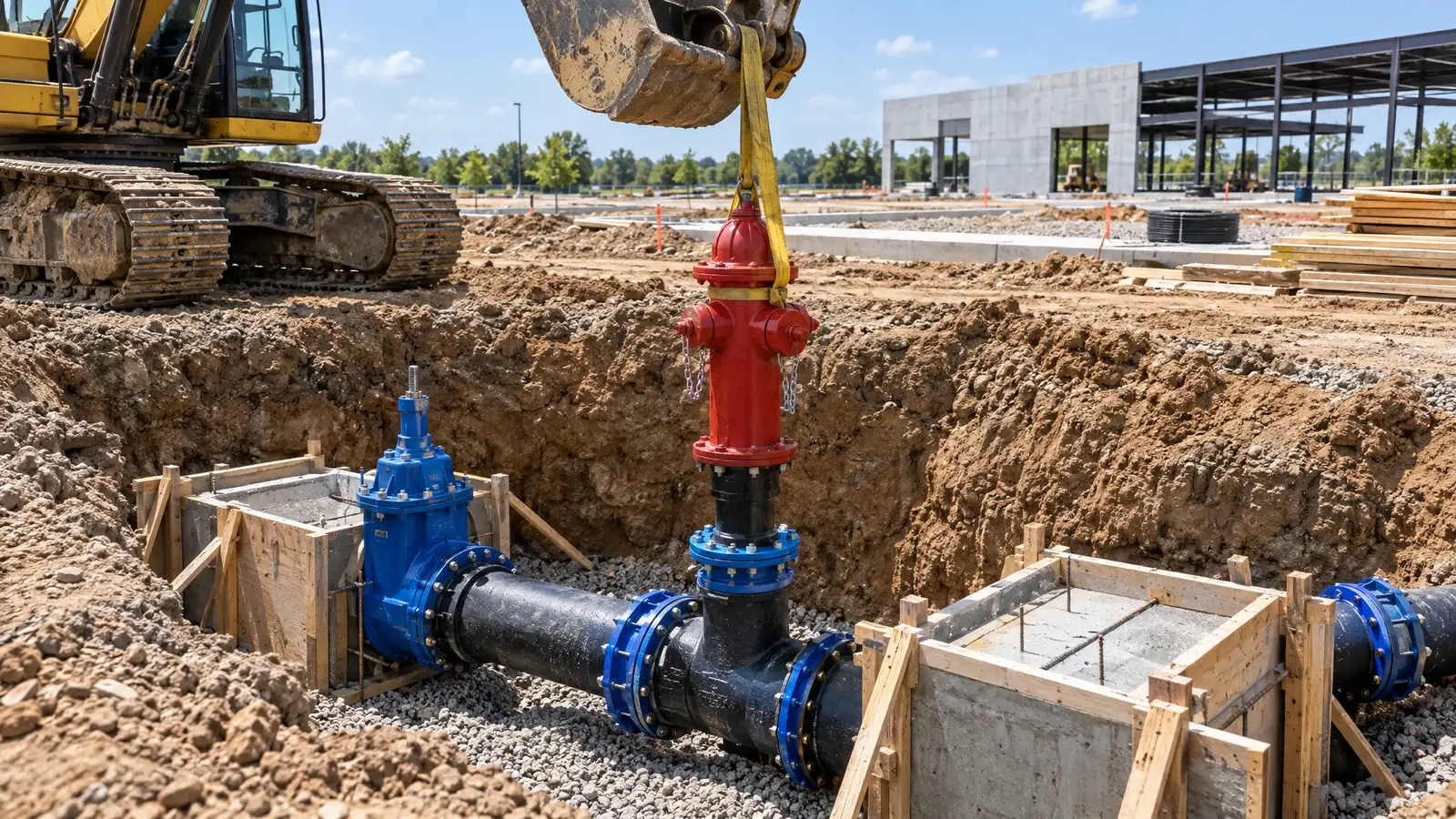 A-08Utility LinesFire Lines & HydrantsExcavation, large-diameter pipe laying, thrust blocking and hydrant setting for private fire lines and site hydrants on commercial and multi-family properties.Deep excavation
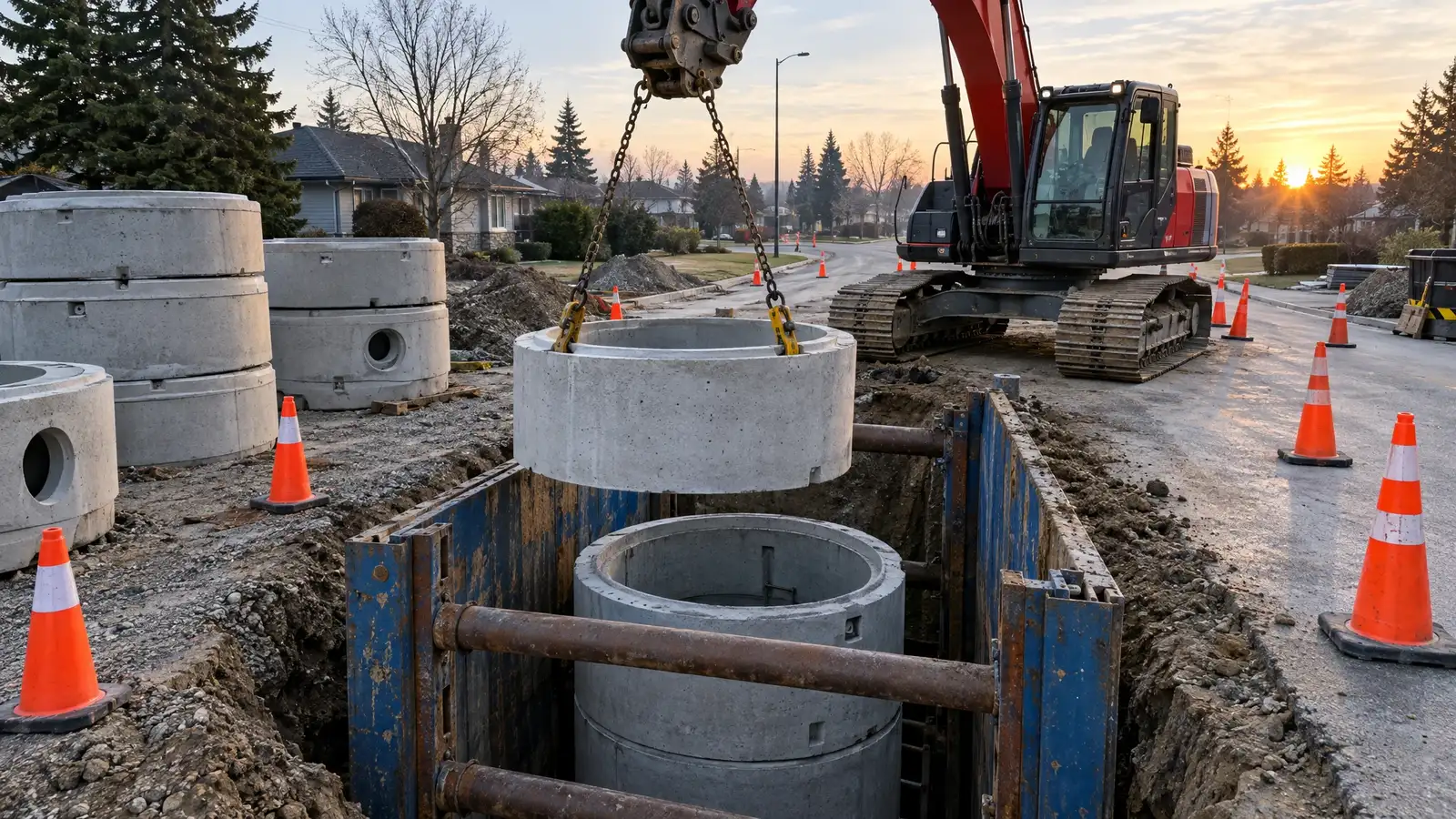 A-10Utility LinesManholes & Catch BasinsPrecast manholes, drop inlets and catch basins set on prepared bases and tied into sewer and storm lines on development and commercial sites.Deep excavation
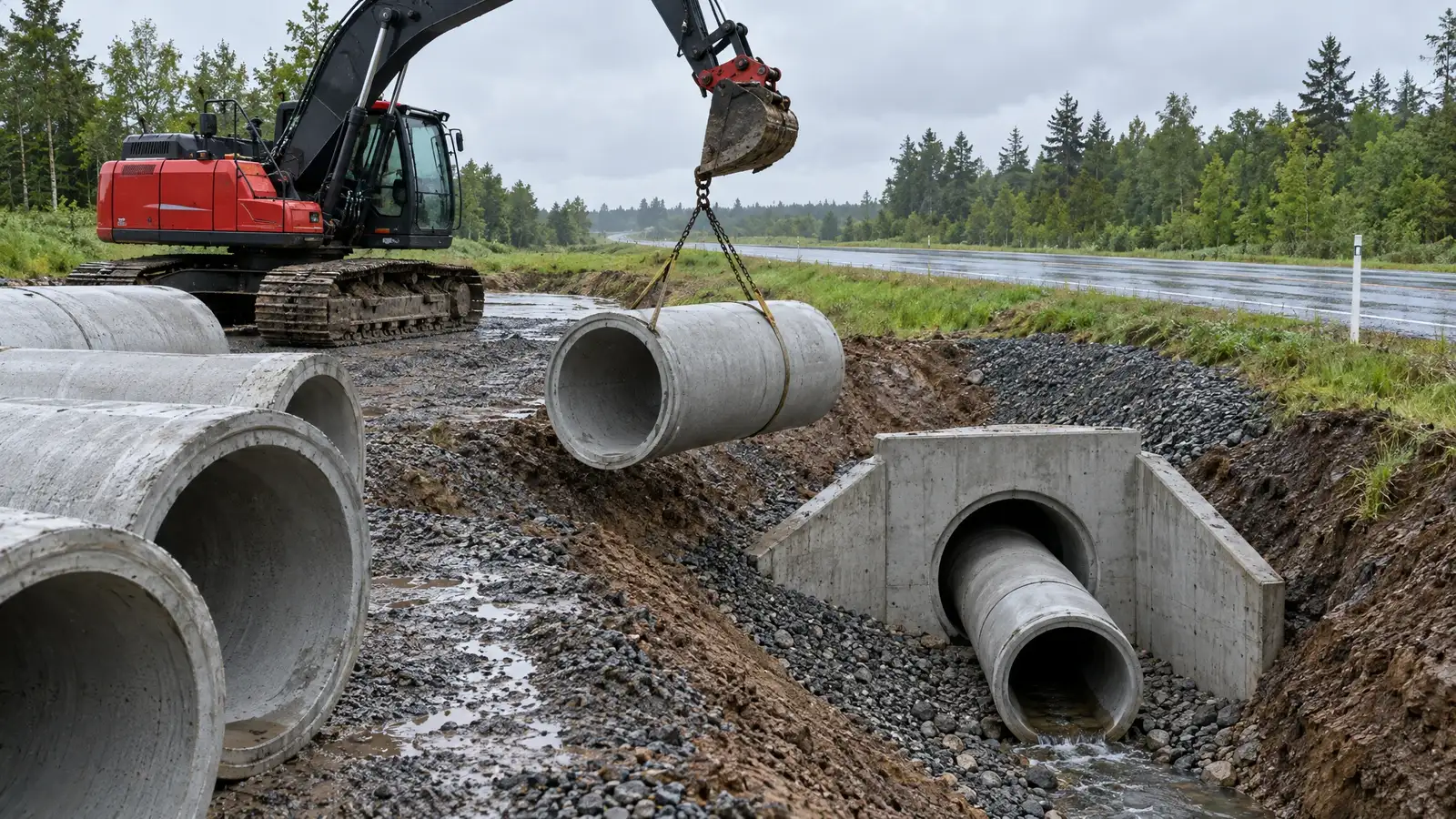 A-04Utility LinesStorm Drains & CulvertsStorm pipe, driveway culverts, headwalls and inlets installed to carry rain and runoff away from buildings, roads and low spots.Deep excavation
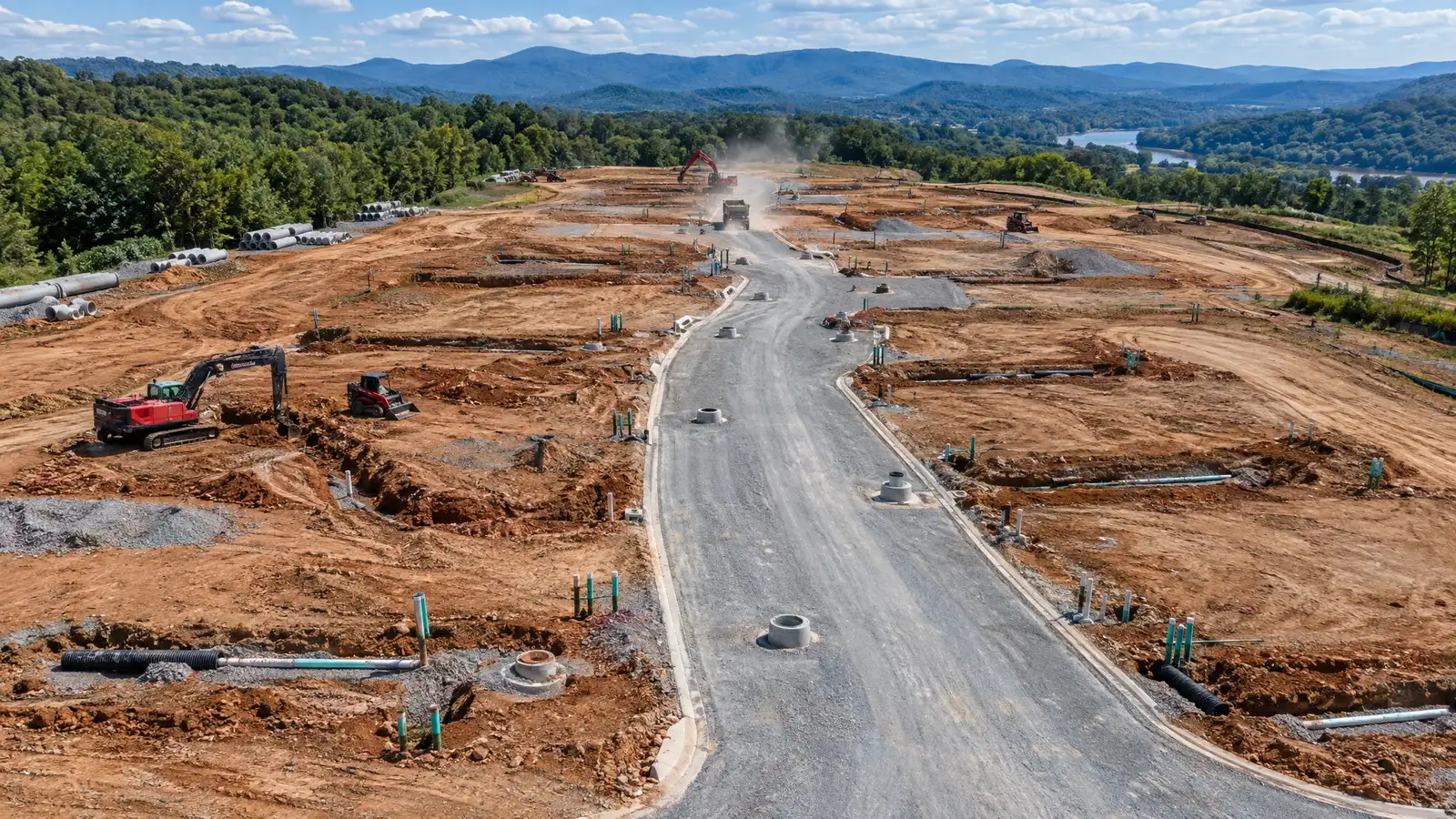 E-03ProjectsSubdivision UtilitiesUnderground sewer, water, storm, conduit and street-base work for residential subdivisions, built lot by lot and street by street.Deep excavation
Read more on this topic.
What Affects the Cost of Utility WorkThe factors that move a price up or down, so you can compare bids on equal terms.2 min read  How to Compare Excavation BidsA fair way to line up different proposals and spot what is missing.2 min read Timeline for a Utility Installation ProjectThe stages from first call to finished lot, and what slows each one down.2 min read
Commercial Site Utilities FAQ.
Do you work from civil drawings?
Yes. We build to the plan elevations and specifications, and we coordinate questions with the engineer through the general contractor.
Can you work in phases?
Yes. We can sequence trenching around site phasing, other trades and inspections.
Do you handle inspections?
We schedule our work around the inspections the plan requires, and we make the work available for them.
Commercial Site Utilities across Middle Tennessee.
Pick your city for its page.
Call 811. Then call us.
Tell us what you are building, fixing or draining and we will suggest a site visit and a plan. The lines get located before the bucket moves.