
At or near the surface
Grading, clearing, demolition, patching and finishing, mostly at the surface or just below it. The ground is shaped, not trenched.
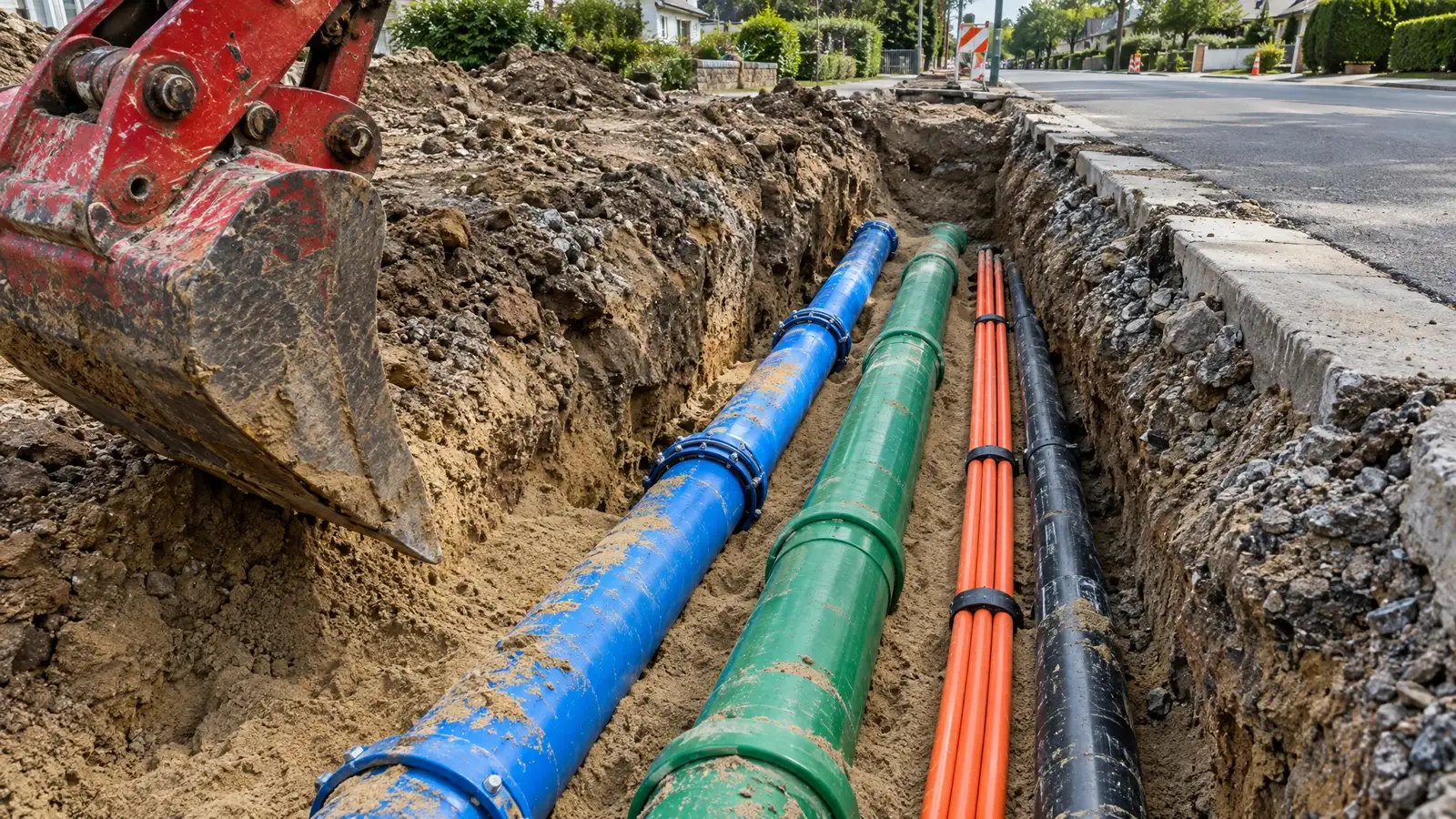
Water, sewer, storm drains, gas, electric and fiber, each in its own paint color and its own layer of ground. Scan the cross-section and see how a lot is wired for life.
An illustration of a typical lot. Real depths, routes and materials vary by utility, city and site.
Tap a line to see how it is built and which services touch it.
Electrical conduit protects wire from soil, rock and future digging. A licensed electrician pulls and connects the wire. We dig, lay conduit and sweeps, add warning tape and backfill.
Often the shallowest line. Depth follows the electrical plan and the utility.
ServicesWe label every service with one of four depth classes.
Grading, clearing, demolition, patching and finishing, mostly at the surface or just below it. The ground is shaped, not trenched.
A typical utility trench for water, conduit, sewer laterals and drains, dug to the depth the utility or the code sets and closed in compacted lifts.
Basements, lift stations, fire lines and deep sewers. Deeper digs get sloped sides, shoring or a trench box, and a plan for water and spoil.
Directional drilling, jack and bore and pipe bursting work from small entry and exit pits, leaving the surface between them undisturbed.
See a color on your lawn or street? Tap it.
 How to Call 811 Before You DigStep by step: what 811 is, when to call, what happens next and how to read the marks.2 min read
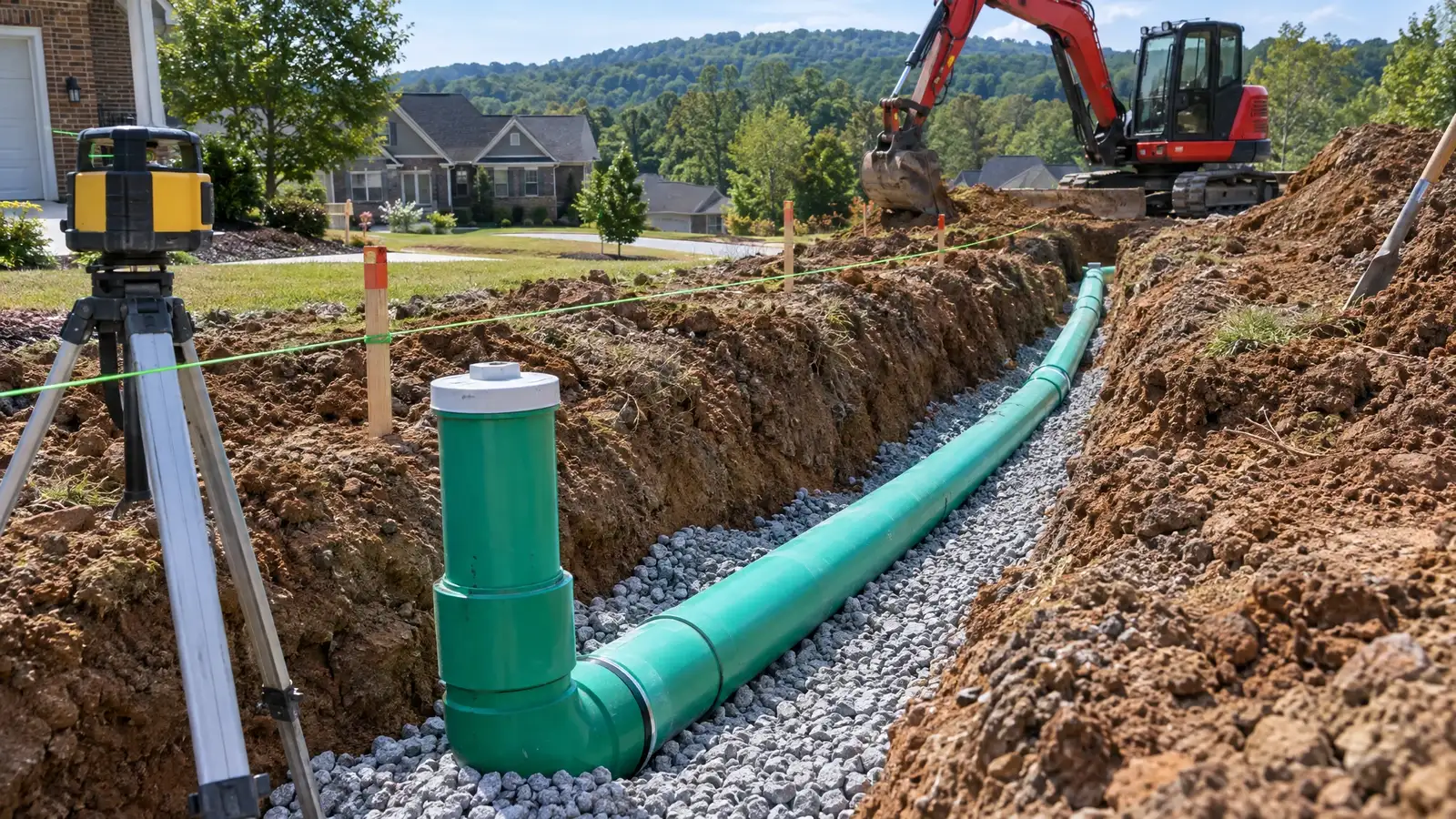 How Underground Utilities Are Laid OutWhere the water, sewer, storm, power and data lines usually run, and why the layout is rarely a straight line.2 min read Utility Easements and Who Owns What LineEasements, rights-of-way and meters explained, with a practical guide to who owns which line.2 min read
Tell us what you are building, fixing or draining and we will suggest a site visit and a plan. The lines get located before the bucket moves.
Tell us what you are building, fixing or draining and we will reply with a suggested site visit and a plan. The lines get located before the bucket moves.
Prefer to talk? Call us(615) 393-6985