Pond and Pool Excavation in Nashville and Middle Tennessee
Excavation for ponds, swimming pools and water features, with shaped banks, correct depths and a plan for spoil and drainage.
- Excavation and Site Work
- Deep dig, protected
- Middle Tennessee
Pond and Pool Excavation, explained.
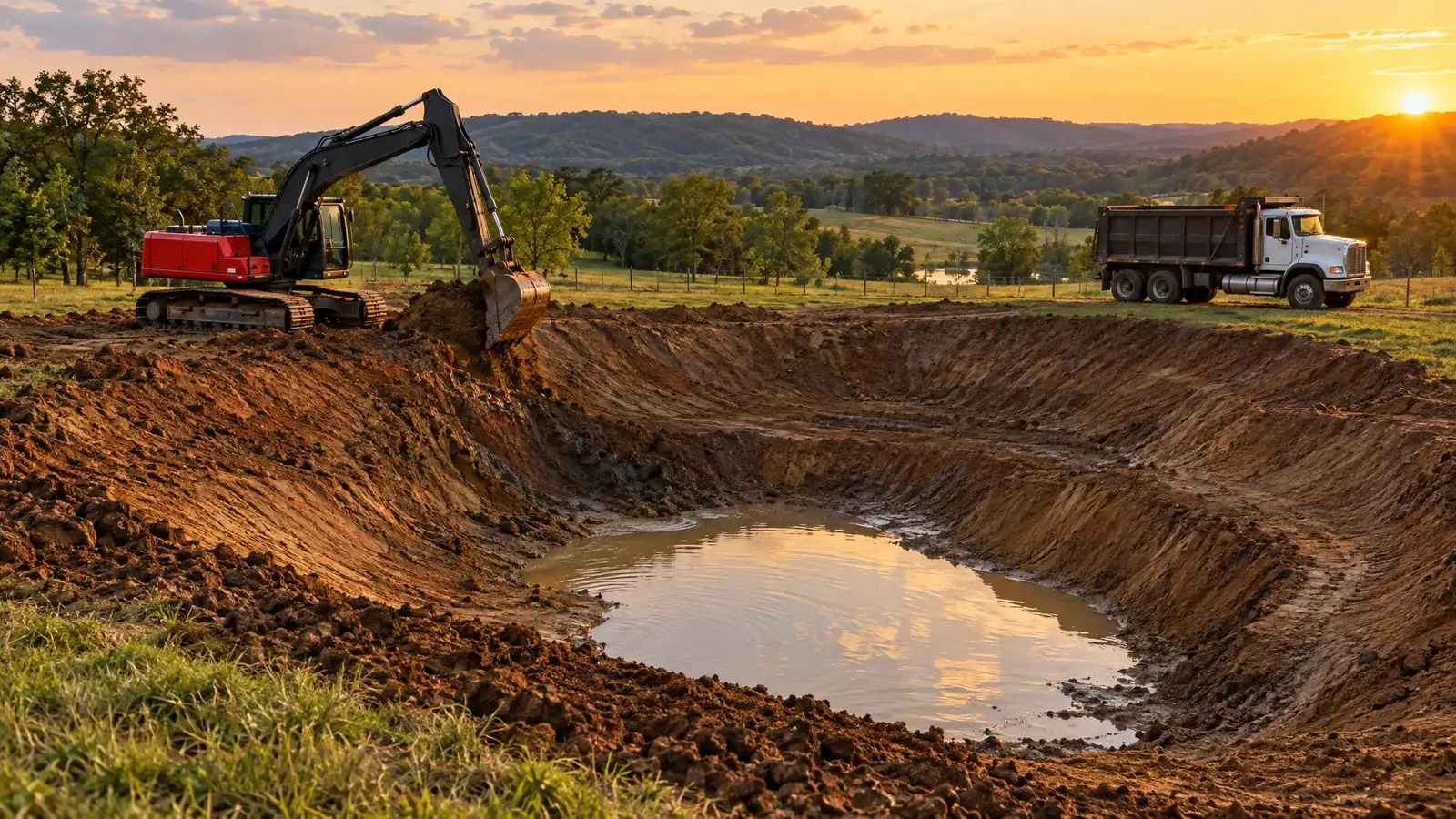
A pond or a pool begins as a hole, and the hole has to be right: the correct depth, the right bank slope, a level bottom or a planned slope and a way to handle a huge amount of soil. For ponds, the soil and clay content decide whether the basin will hold water. For pools, the excavation must match the shell and leave room for plumbing and forms.
We lay out the shape, dig to the design, form banks or pool walls and stockpile or haul spoil. For ponds, we help sort out what to do about overflow and where runoff will enter. For pools, we coordinate with the pool builder so the dig is ready when they are.
Signs this service fits
- You want a pond on a farm or lot
- A pool is planned and needs excavating
- A water feature or retention basin is part of a site plan
- A silted pond needs to be dug out
A good fit, and what to know.
We would rather you hear the limits from us than discover them later.
A good fit when
- There is a design or a clear goal for the water feature
- You have room for the spoil or a plan to haul it
- A pool builder or pond designer is ready to take over
Worth knowing
- Soil, groundwater and rock decide what is possible
- Some ponds require engineering or approval
Why do it this way.
Shaped to the design
Depths and slopes follow the plan.
Soil handled
Large volumes are moved without wrecking the site.
Overflow considered
Ponds get a planned way for excess water to leave.
Coordinated with builders
Pool digs are timed with the pool crew.
From first look to finished ground.
A clear sequence for every job.
- 01
Lay out and locate
The shape is staked, utilities are located and the spoil plan is made.
- 02
Dig the basin
Excavation proceeds to the design depth, shaping banks and shelves.
- 03
Manage the soil
Soil is stockpiled, spread or hauled according to the plan.
- 04
Hand off or finish
Pools are ready for the builder; ponds are graded, with outlets and banks stabilized.
Services that go together.
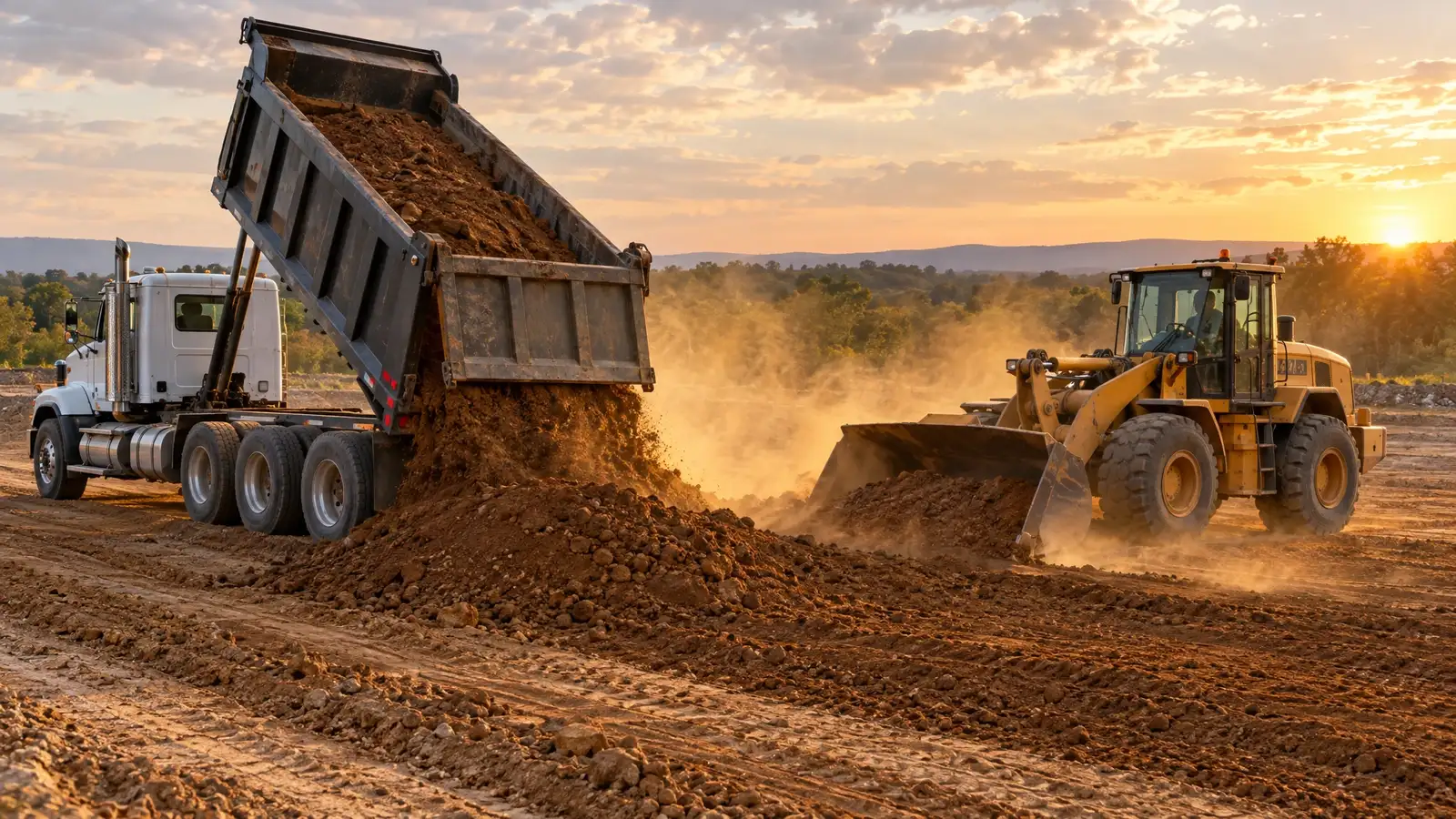 B-12ExcavationFill Dirt & HaulingHauling excess soil off site, delivering fill dirt, topsoil and stone, and spreading and compacting material where you need it.Surface work
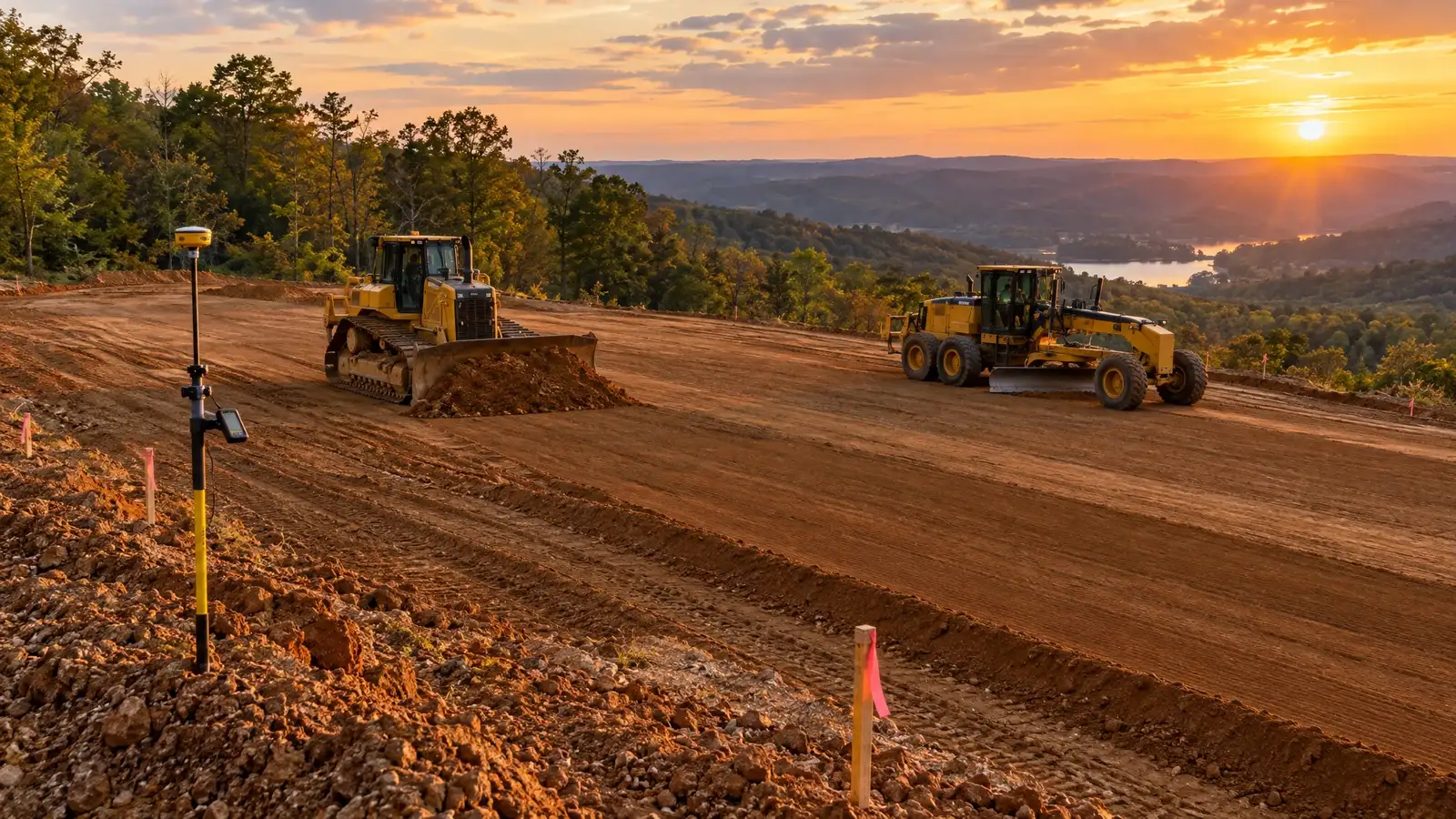 B-03ExcavationSite Grading & PadsCut-and-fill grading, pad building and rough grading for homes, shops, barns and commercial buildings, shaped for drainage and ready for the next trade.Surface work
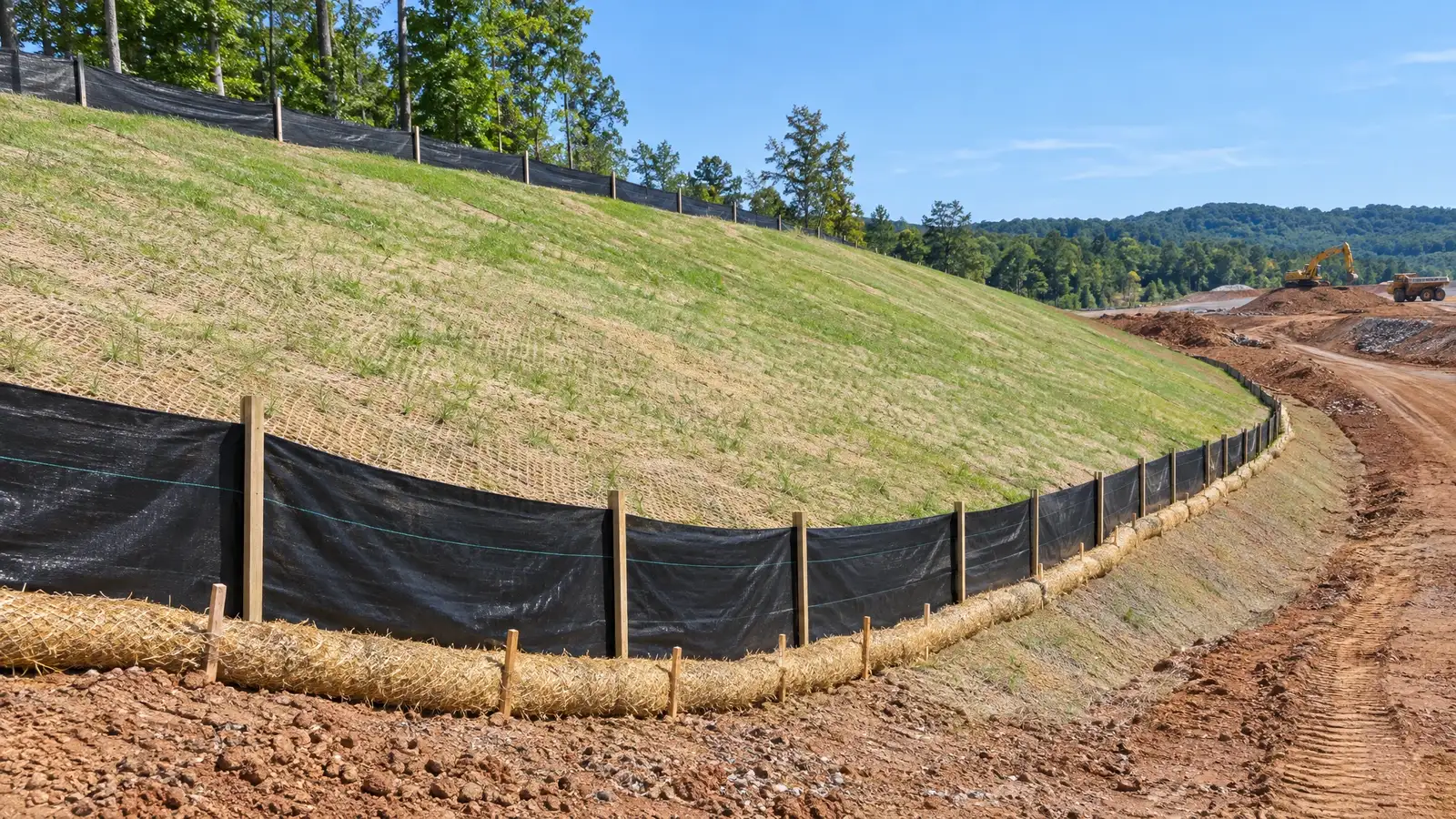 B-13ExcavationErosion ControlSilt fence, wattles, construction entrances, matting and seeding to hold disturbed soil in place during and after construction.Surface work
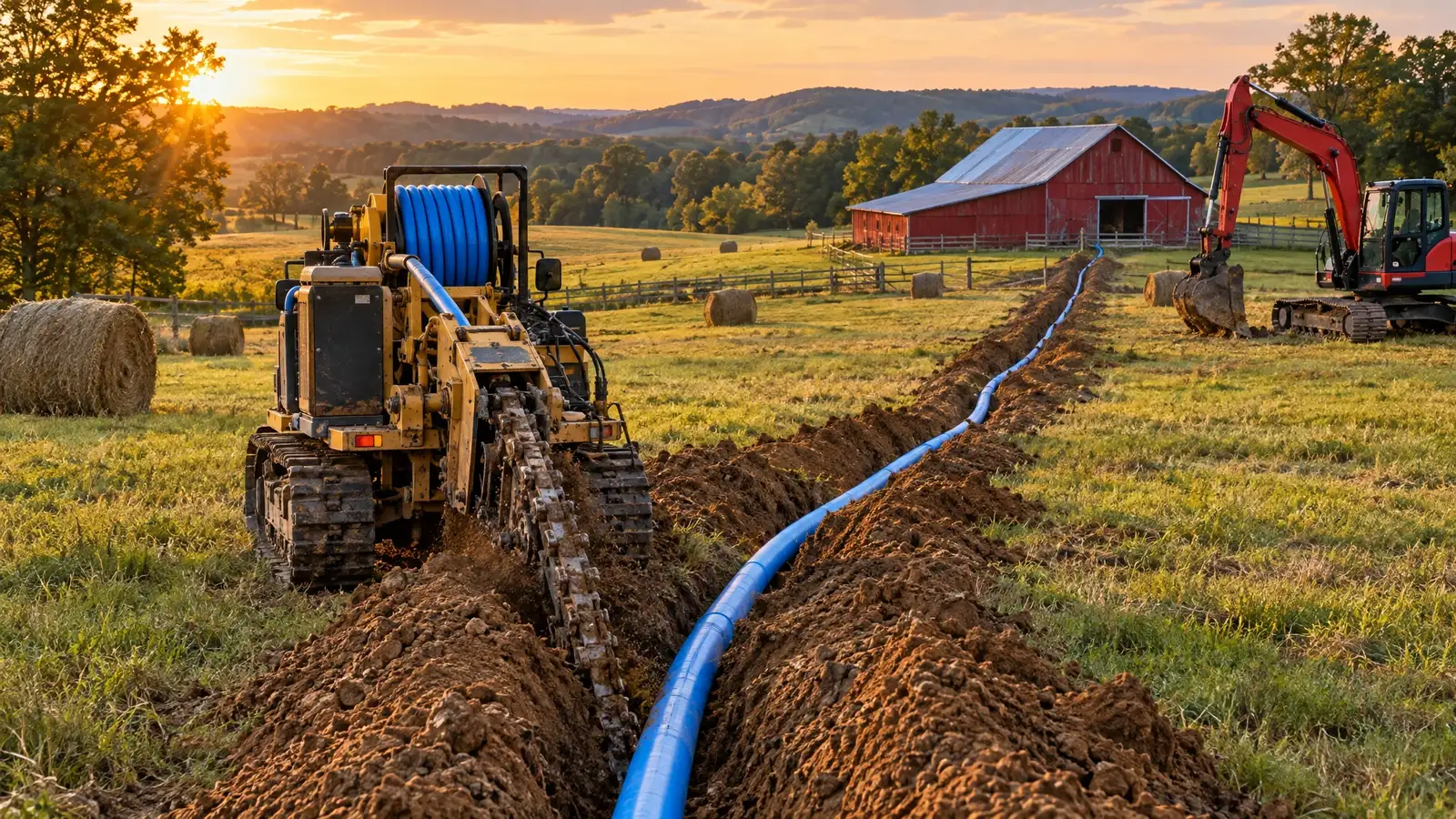 E-05ProjectsRural & Farm Utility LinesLong-distance water, electric conduit and communications lines to barns, shops, wells, homes and fields, with trenching, boring and gate and fence crossings.Shallow trench
Read more on this topic.
How Much Dirt Comes Out of a Trench?The math of cubic yards, swell and truckloads, with an example you can follow.2 min read 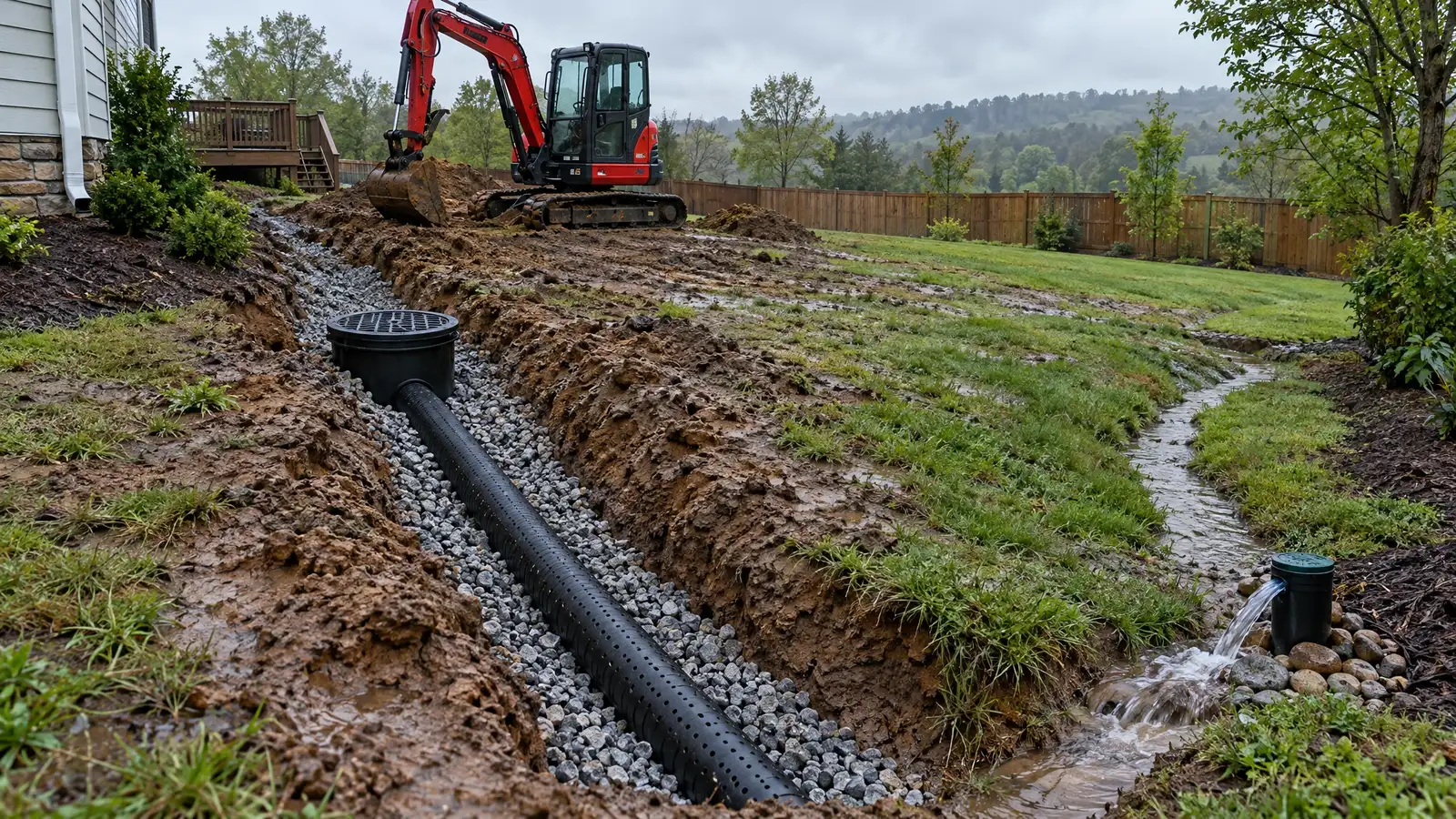 Clay Soil and Your Utility LinesHow Middle Tennessee clay affects trenches, drainage and settling.2 min read
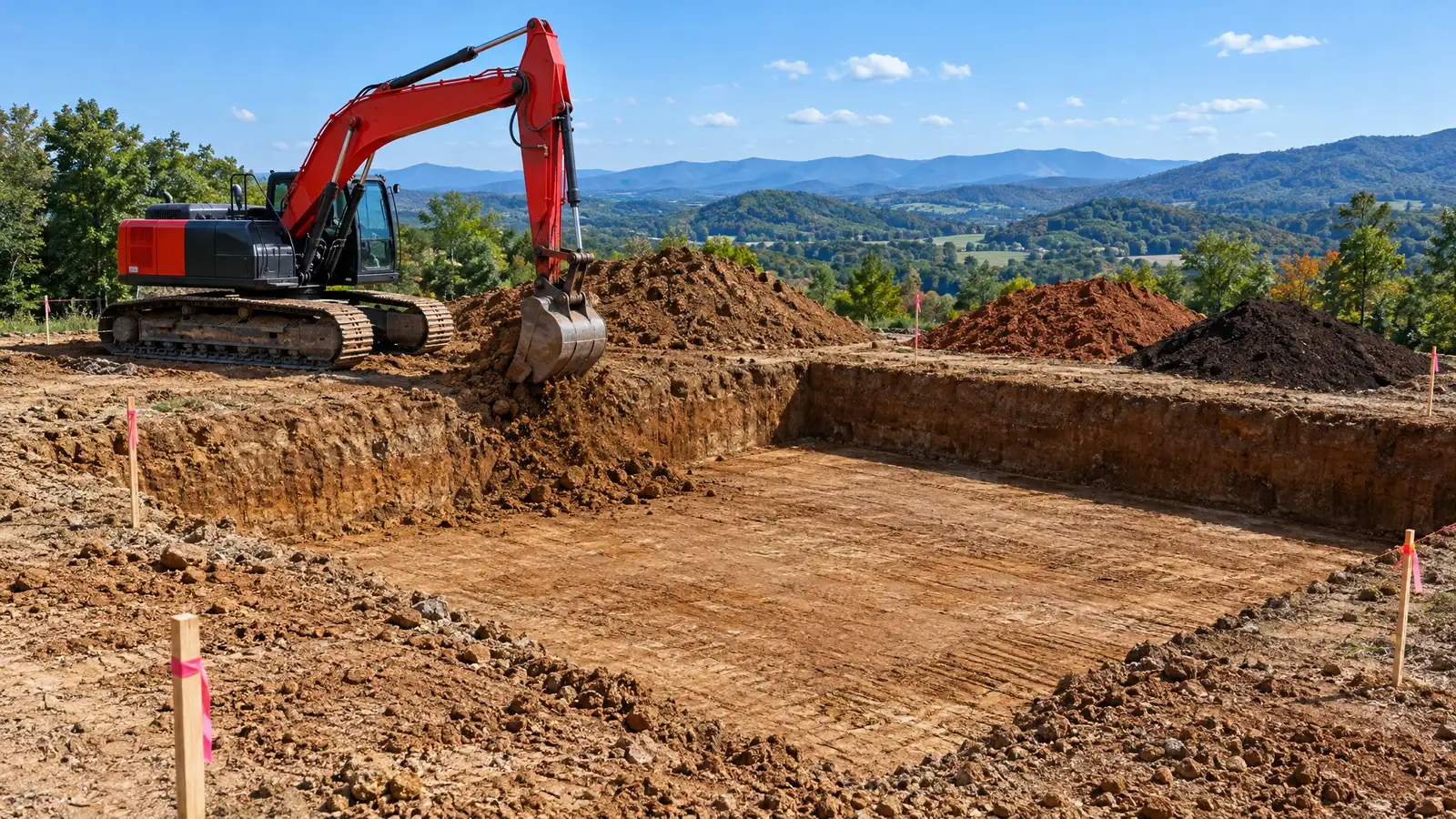 Types of Excavators and What Each One DoesMini excavators, midsize machines, backhoes, trenchers, loaders and dozers, and how a contractor picks the right one.2 min read
Pond & Pool Excavation FAQ.
Will my pond hold water?
It depends on the soil. Clay-rich soil often holds well, while sandy or rocky soil may leak. We look at the site and discuss options before digging.
How deep should a pond be?
Depth depends on purpose and local conditions. Fish ponds, irrigation ponds and decorative ponds have different needs, and we help you pick a design.
Do I need a permit?
Sometimes. Larger ponds, work near streams or dam structures can require approval, and we help you find out what applies.
Pond & Pool Excavation across Middle Tennessee.
Pick your city for its page.
Call 811. Then call us.
Tell us what you are building, fixing or draining and we will suggest a site visit and a plan. The lines get located before the bucket moves.