Pipe Bursting and Trenchless Pipe Replacement in Nashville, TN
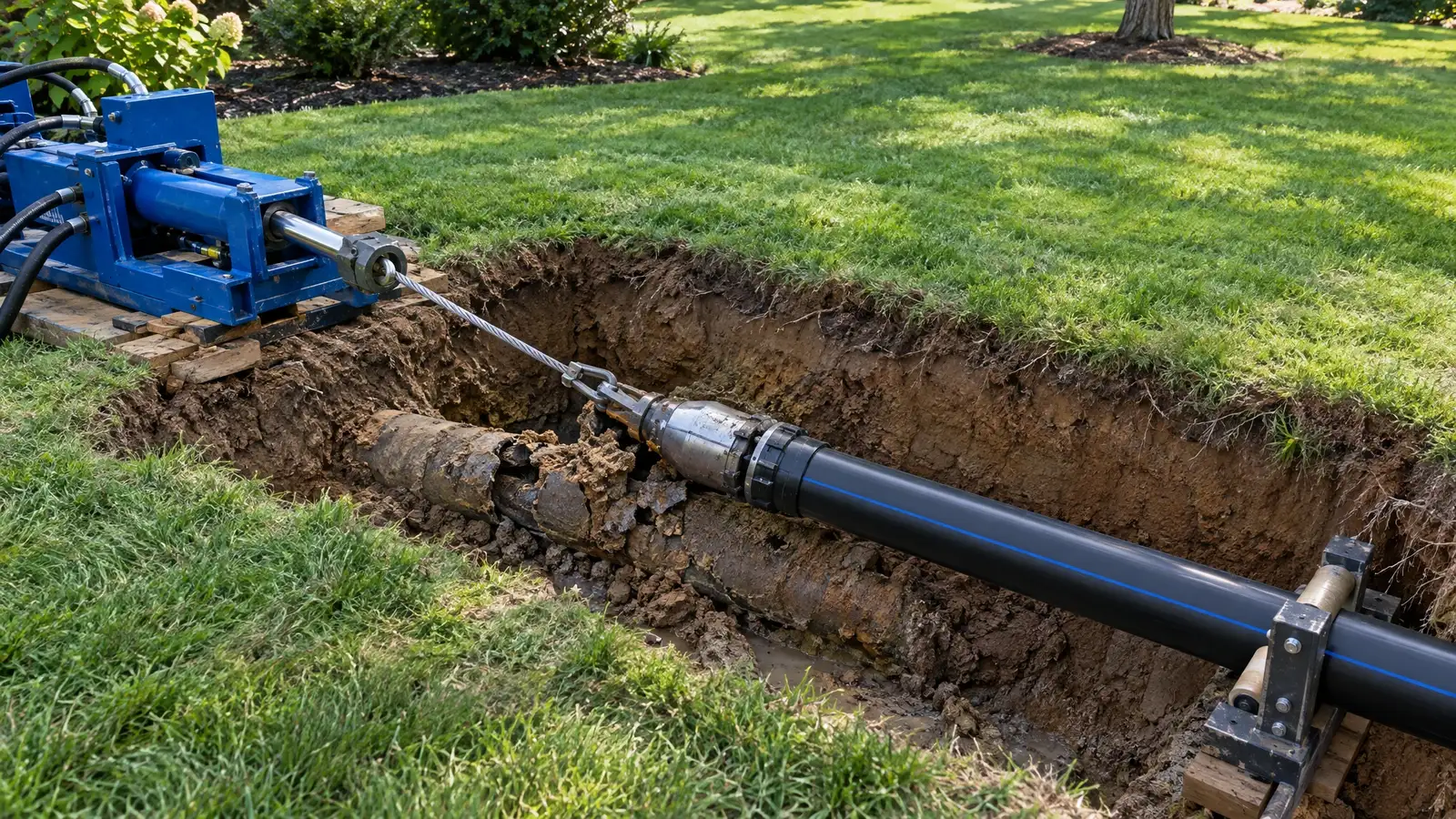
Replace old sewer and water lines with new pipe by pulling a bursting head through the old pipe, leaving the yard intact except for two small pits.
- Trenchless, Boring and Locating
- Under it, not through it
- Middle Tennessee
Pipe Bursting and Trenchless Replacement, explained.
Pipe bursting replaces a failed underground pipe by following its own path. A hydraulic machine pulls a bursting head through the old pipe, which fractures it outward into the soil, and the new pipe, usually HDPE, is pulled in behind it. The result is a brand new pipe at the same size or larger, installed from two small pits.
It is a strong choice for pipe that is too far gone to line: collapsed sections, severe offsets and old clay, cast iron or fiber lines. It works best when the path of the old pipe is acceptable and the new pipe can be joined at both ends and at service connections.
Signs this service fits
- An old pipe is collapsed, deformed or too damaged to line
- A sewer lateral must be replaced, not just repaired
- You want a new pipe but not a trench through the yard
- A water service line needs replacing with minimal digging
A good fit, and what to know.
We would rather you hear the limits from us than discover them later.
A good fit when
- The old pipe’s path is acceptable
- Service connections can be exposed at small pits
- Camera inspection shows lining is not an option
Worth knowing
- Close crossings by other utilities can rule out bursting
- A few service pits are normally still required
Why do it this way.
New pipe, old path
A fresh pipe replaces the old without a full trench.
Can upsize
The new pipe can often be larger than the old.
Solves collapsed pipe
Collapses that block lining can be passed by bursting.
Small disturbance
Mainly two pits and any service connections.
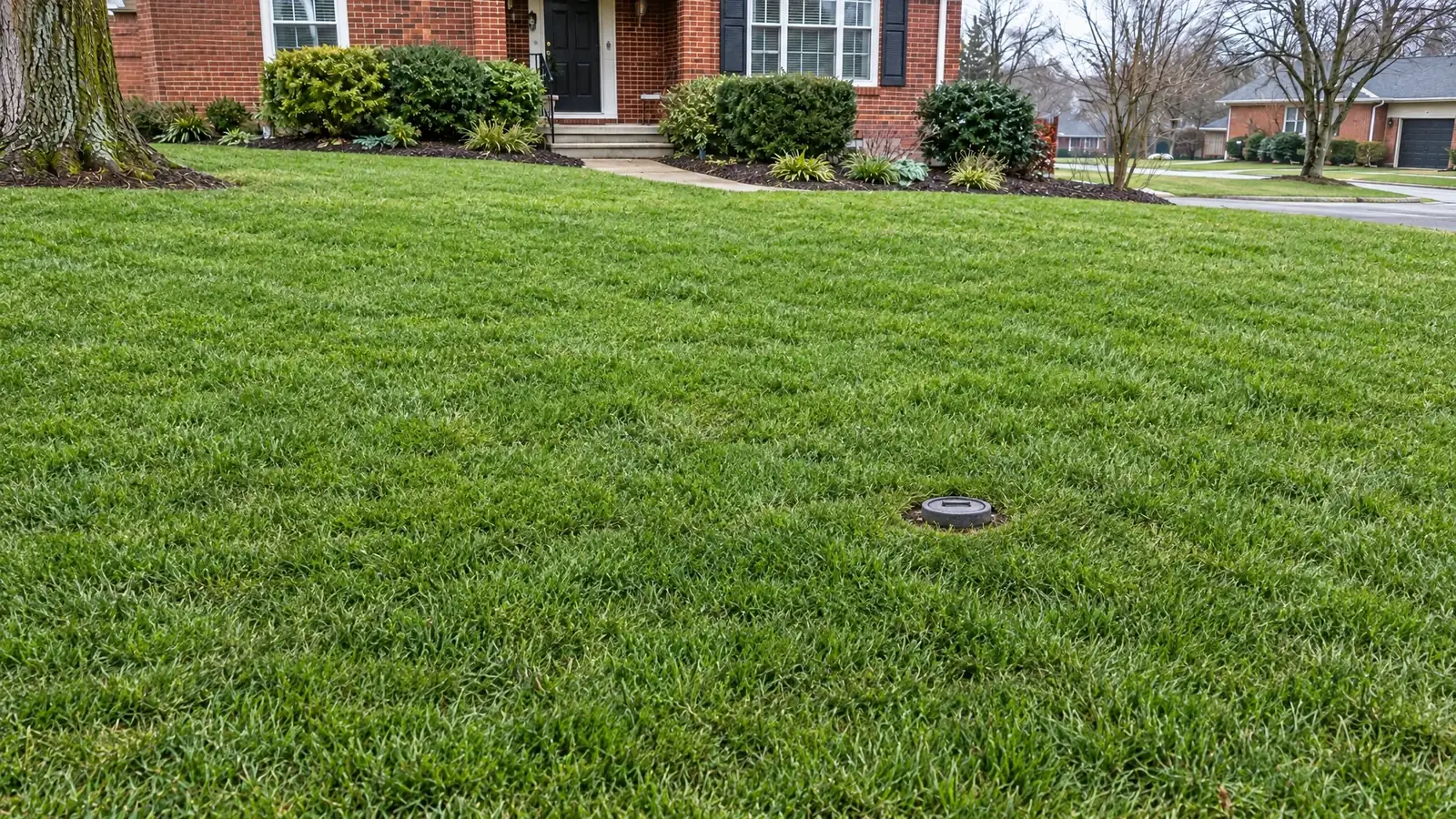
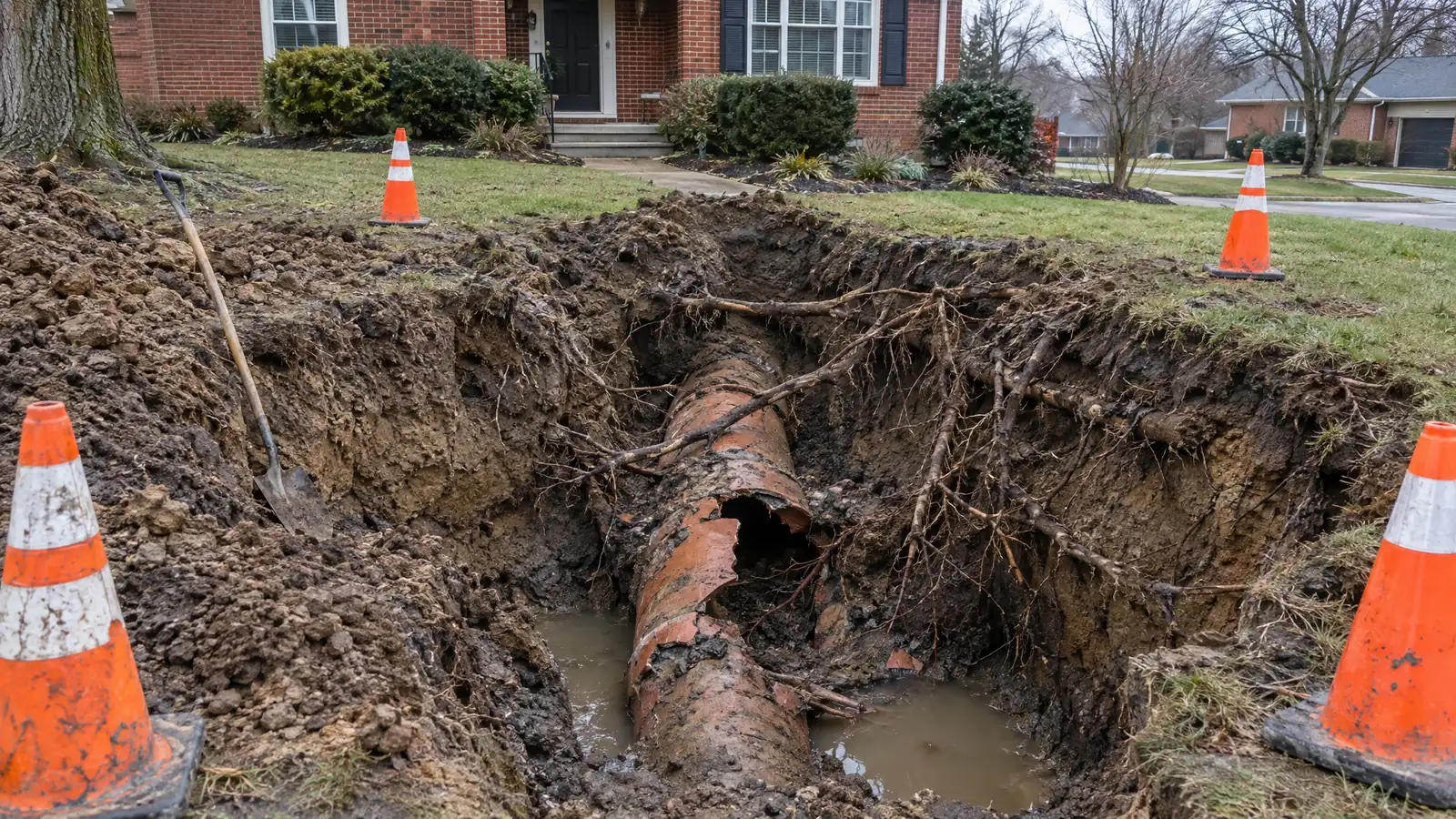
Before and after: failed sewer to restored yard
 AfterBefore
Illustrative scene created to show a typical condition before and after the work. Drag the handle to slide between them.
From first look to finished ground.
A clear sequence for every job.
- 01
Inspect and plan
Camera, locate and measurement identify the path, depth and service connections.
- 02
Dig the pits
An entry pit and a pulling pit are excavated, with the connection points exposed.
- 03
Burst and pull
The head breaks the old pipe outward while the new pipe is pulled in behind.
- 04
Reconnect and restore
Services are reconnected, the pipe is tested and the pits are backfilled and restored.
Services that go together.
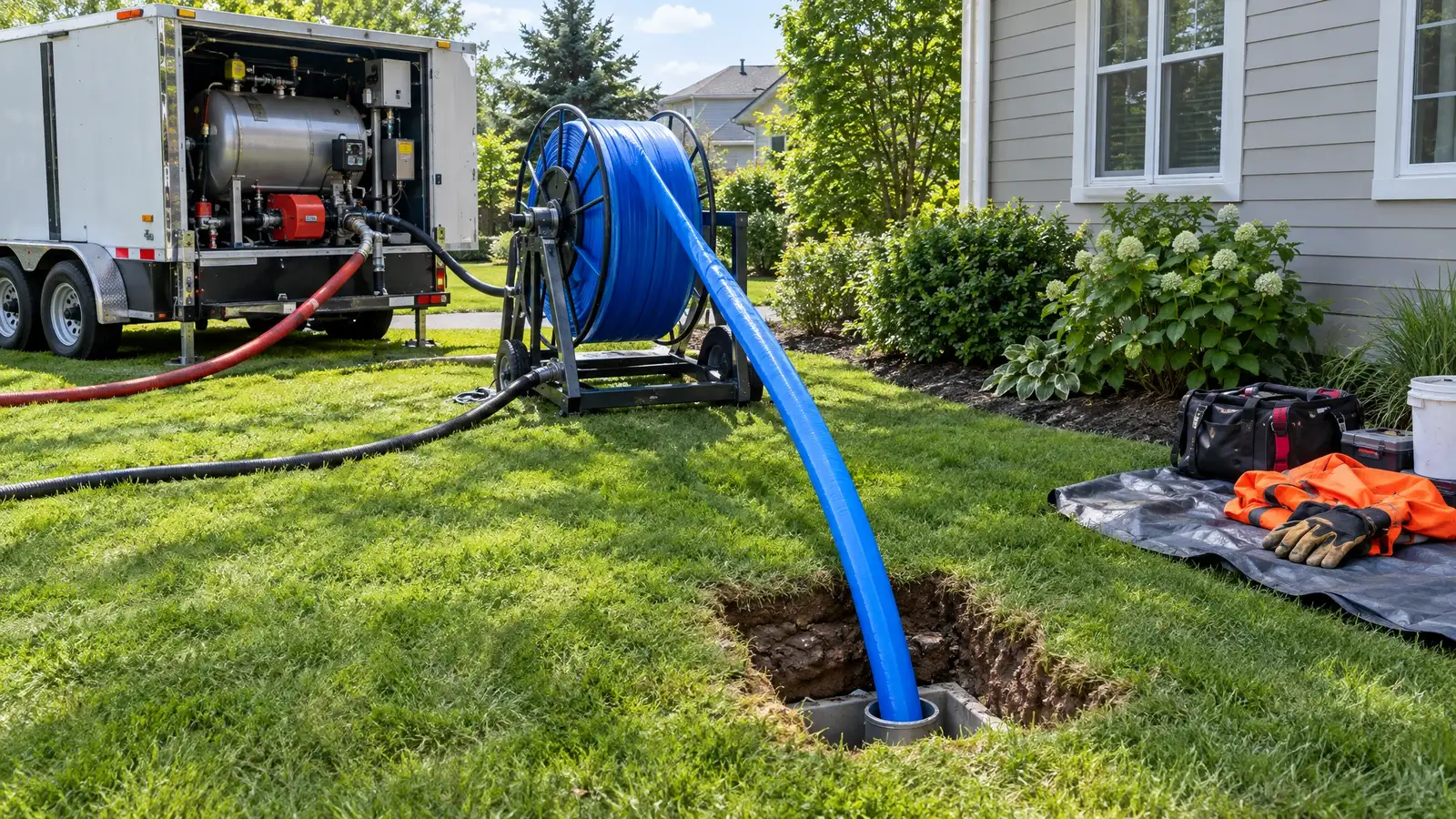 C-03TrenchlessTrenchless Pipe RepairNo-dig repair for failing sewer and drain lines, including pipe lining and bursting, planned from a camera inspection and delivered with minimal digging.Trenchless bore
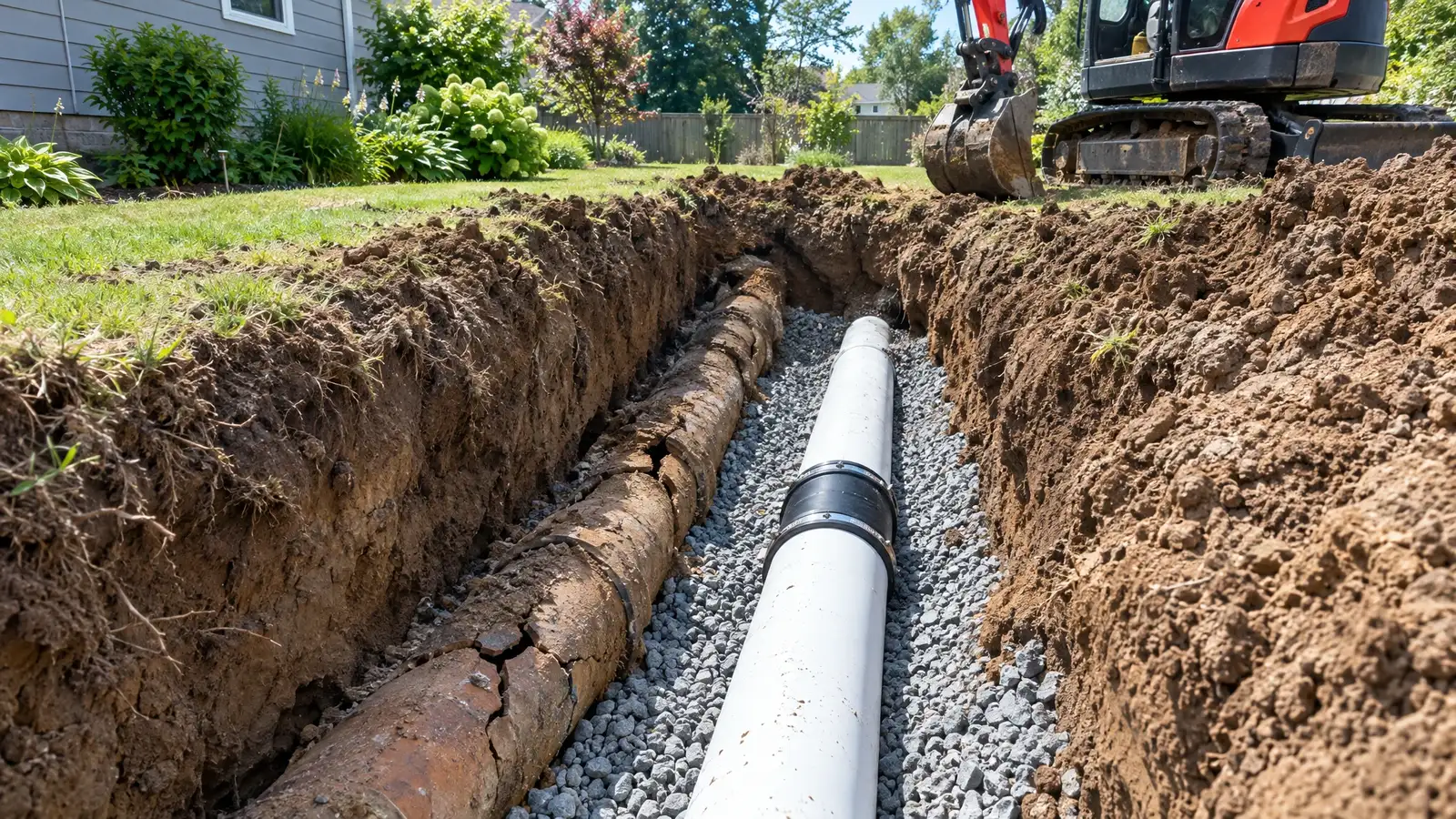 D-01RepairSewer Repair & ReplacementTargeted excavation and replacement of broken, collapsed or root-infested sewer lines, from a short spot repair to a full lateral replacement.Deep excavation
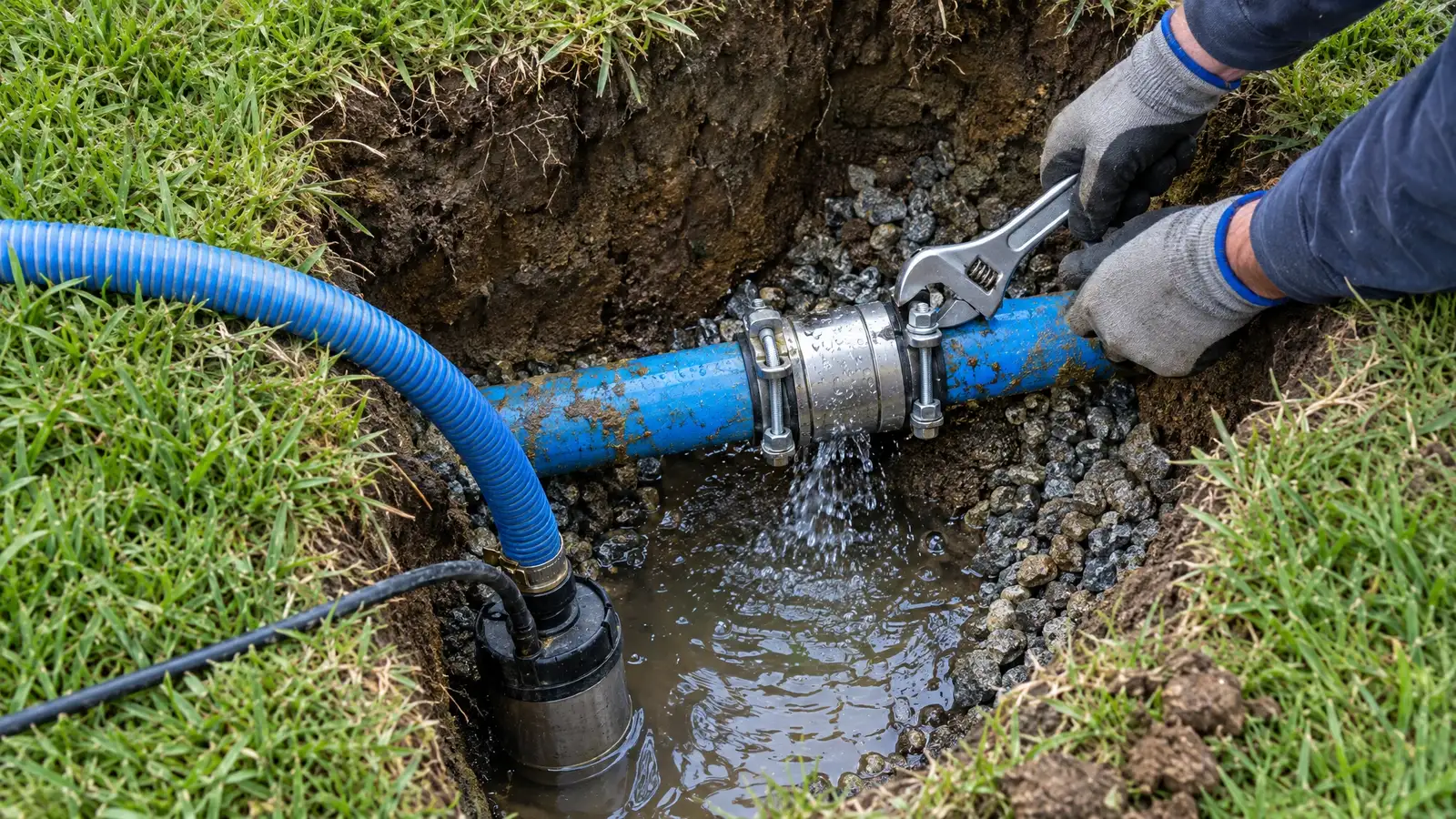 D-02RepairWater Line Leak RepairExcavation to expose and repair leaking underground water service lines and private water mains, from a pinhole at a fitting to a failed section…Shallow trench
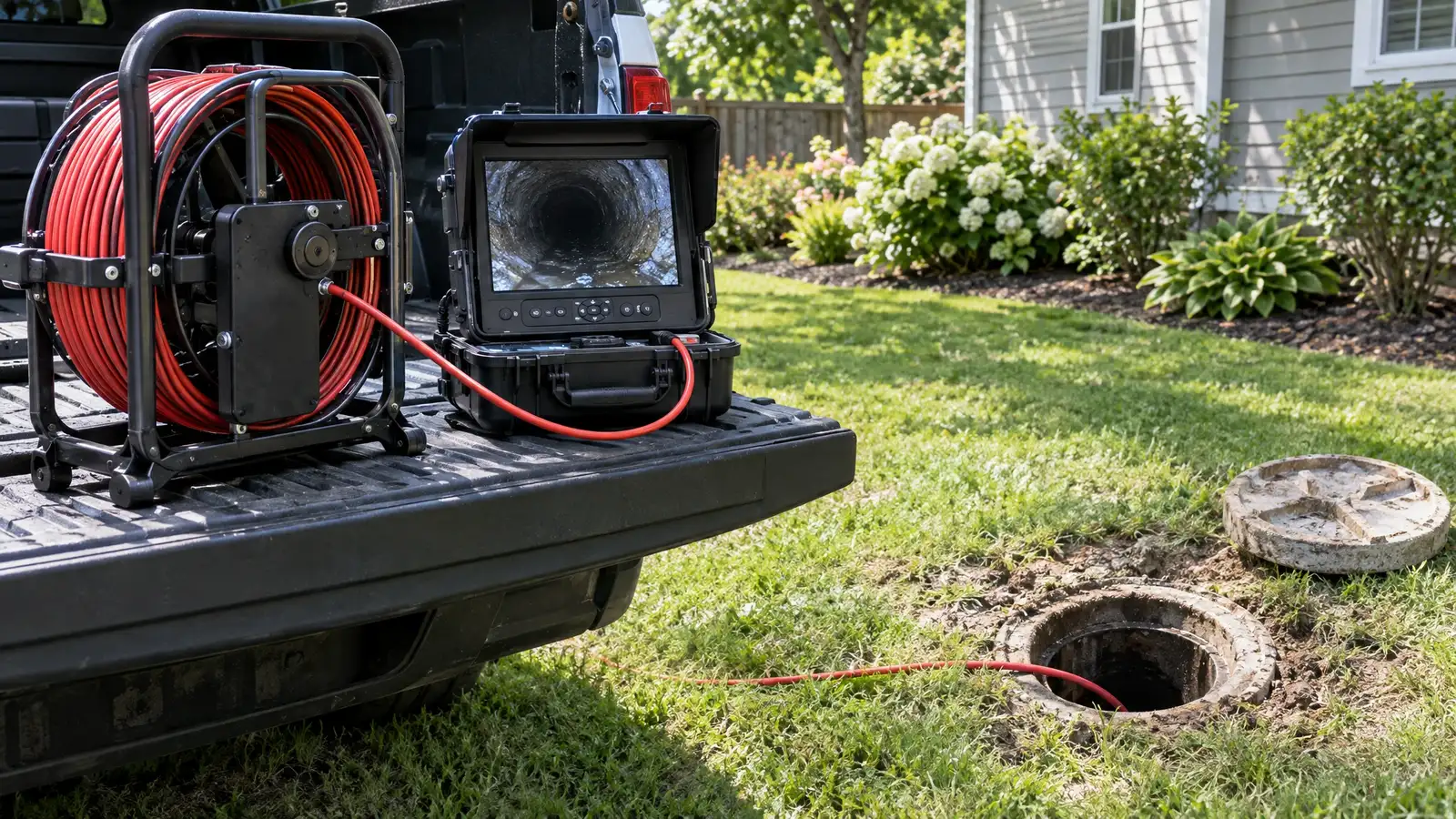 C-07TrenchlessCamera & Pre-Dig SurveysRecorded camera inspections of sewer and drain lines, with locating, to find defects, confirm routes and choose between lining, bursting and a targeted dig.Trenchless bore
Read more on this topic.
Pipe Bursting ExplainedHow a pipe is replaced by pulling a new one through the old one.2 min read 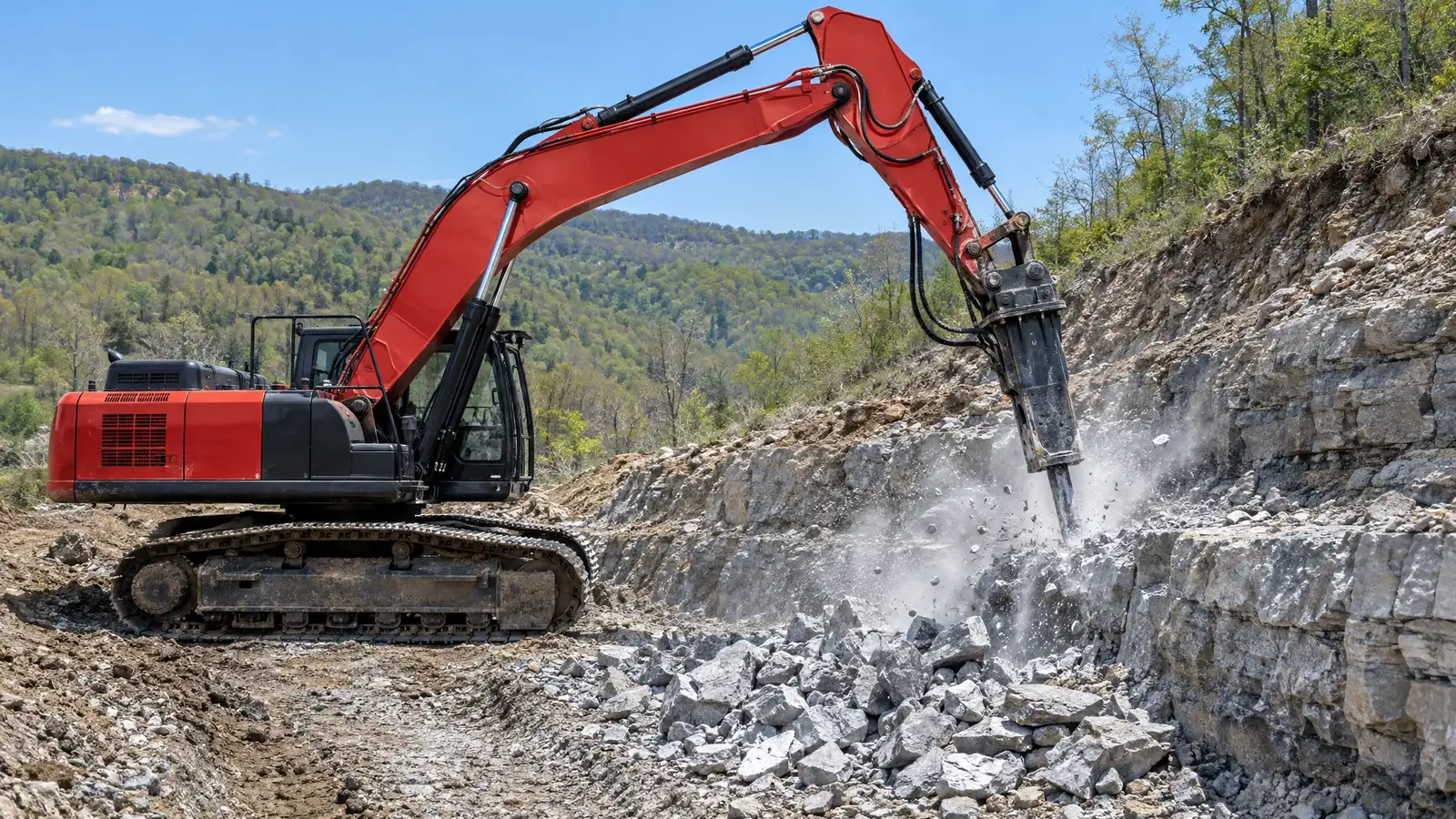 When Boring Is Not the AnswerHonest limits of boring and trenchless methods, and what to do instead.2 min read
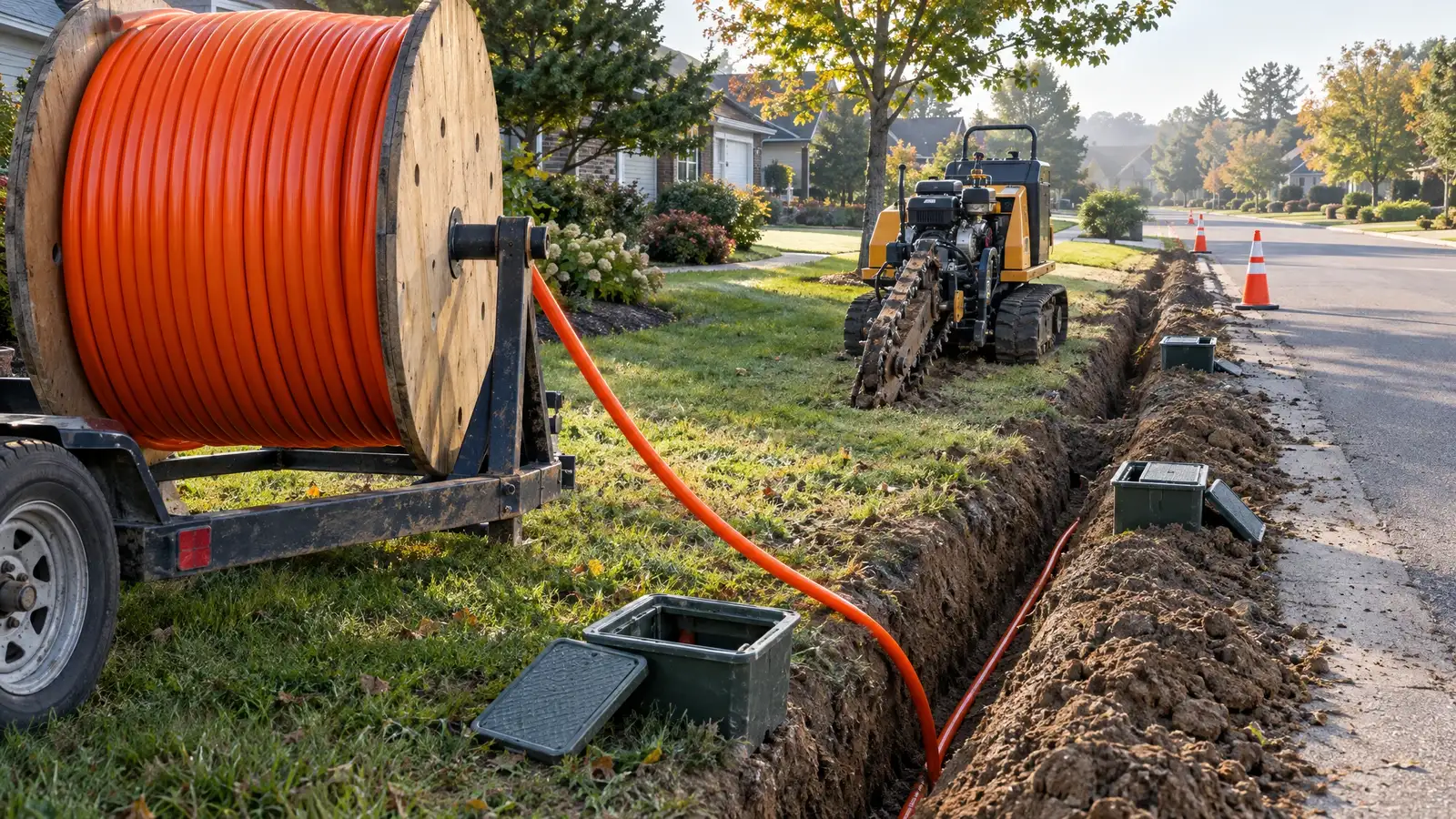 Directional Boring vs Open TrenchWhen boring beats trenching, when trenching wins and how to decide for your route.2 min read
Pipe Bursting FAQ.
Is pipe bursting safe for nearby utilities?
Nearby lines must be located and, where close, exposed or protected, because the burst pushes soil outward. We check clearances before choosing this method.
Can the new pipe be bigger?
Often yes, within limits set by the old pipe, the soil and the design.
When is bursting not a good idea?
Where other utilities cross very close, where the old pipe is encased in concrete or where the path is unacceptable. We review the findings and explain what fits.
Pipe Bursting across Middle Tennessee.
Pick your city for its page.
Call 811. Then call us.
Tell us what you are building, fixing or draining and we will suggest a site visit and a plan. The lines get located before the bucket moves.