Trenching Services in Nashville and Middle Tennessee
Trenching by trencher or excavator for water, sewer, electrical, communications, irrigation and drainage lines, with clean backfill and restoration.
- Excavation and Site Work
- Standard utility trench
- Middle Tennessee
Trenching Services, explained.
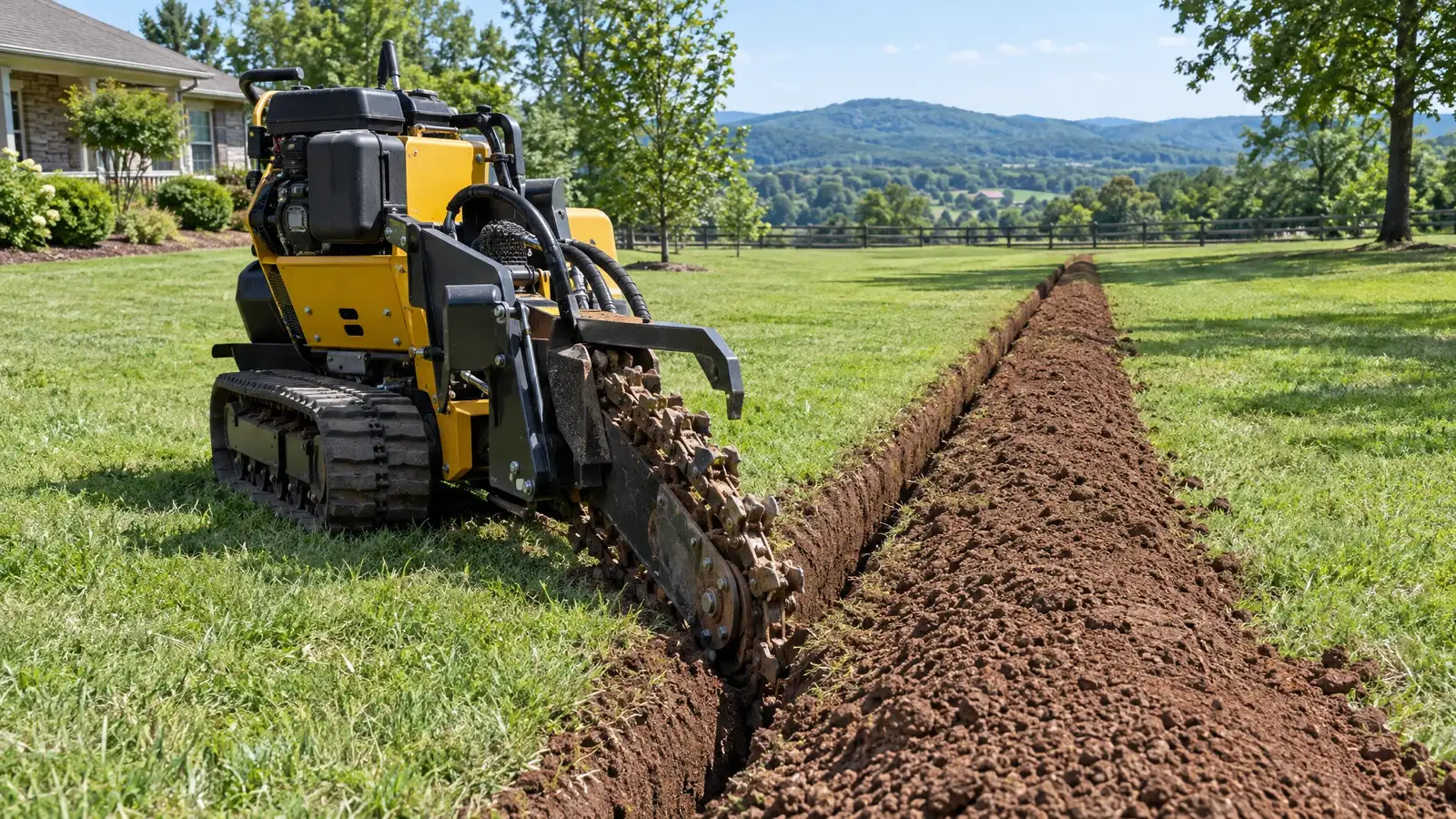
A good trench is boring in the best way: the same width all the way, a flat bottom at the right depth and walls that do not collapse. That consistency is what lets pipe or conduit sit evenly, and what keeps the surface from sinking later.
We choose between a chain trencher, a rock wheel and an excavator based on the soil, the length and the surroundings. A trencher is quick and narrow across open lawn, while an excavator gives more control around roots, rock and existing lines. We lay out the route, dig it, hold it for the install and close it in compacted lifts.
Signs this service fits
- A line must run from the street or a panel to a building
- Irrigation or lighting needs buried runs
- A drain pipe needs a defined path
- A long run across open ground must be dug efficiently
A good fit, and what to know.
We would rather you hear the limits from us than discover them later.
A good fit when
- The route is known and the surface is accessible
- You want trench work done by a team that backfills and restores
- A long straight run needs consistent depth
Worth knowing
- Rock, roots and utilities can change the method and the pace
- Deep trenches need protective systems and more working room
Why do it this way.
Clean, narrow cuts
Less spoil and less lawn disturbed.
Even depth
A consistent bottom gives pipe and conduit uniform support.
Method matched to site
Soil and obstacles decide the tool, not habit.
Compacted closure
Lifts of backfill reduce settling.
From first look to finished ground.
A clear sequence for every job.
- 01
Mark the route
The path is laid out and checked against locates, trees, drives and obstacles.
- 02
Pick the method
A trencher, rock wheel or excavator is chosen for the soil and the surroundings.
- 03
Dig and trim
The trench is cut to depth and width and the bottom is trimmed flat.
- 04
Close and restore
After the install, the trench is backfilled in lifts and the surface restored.
Services that go together.
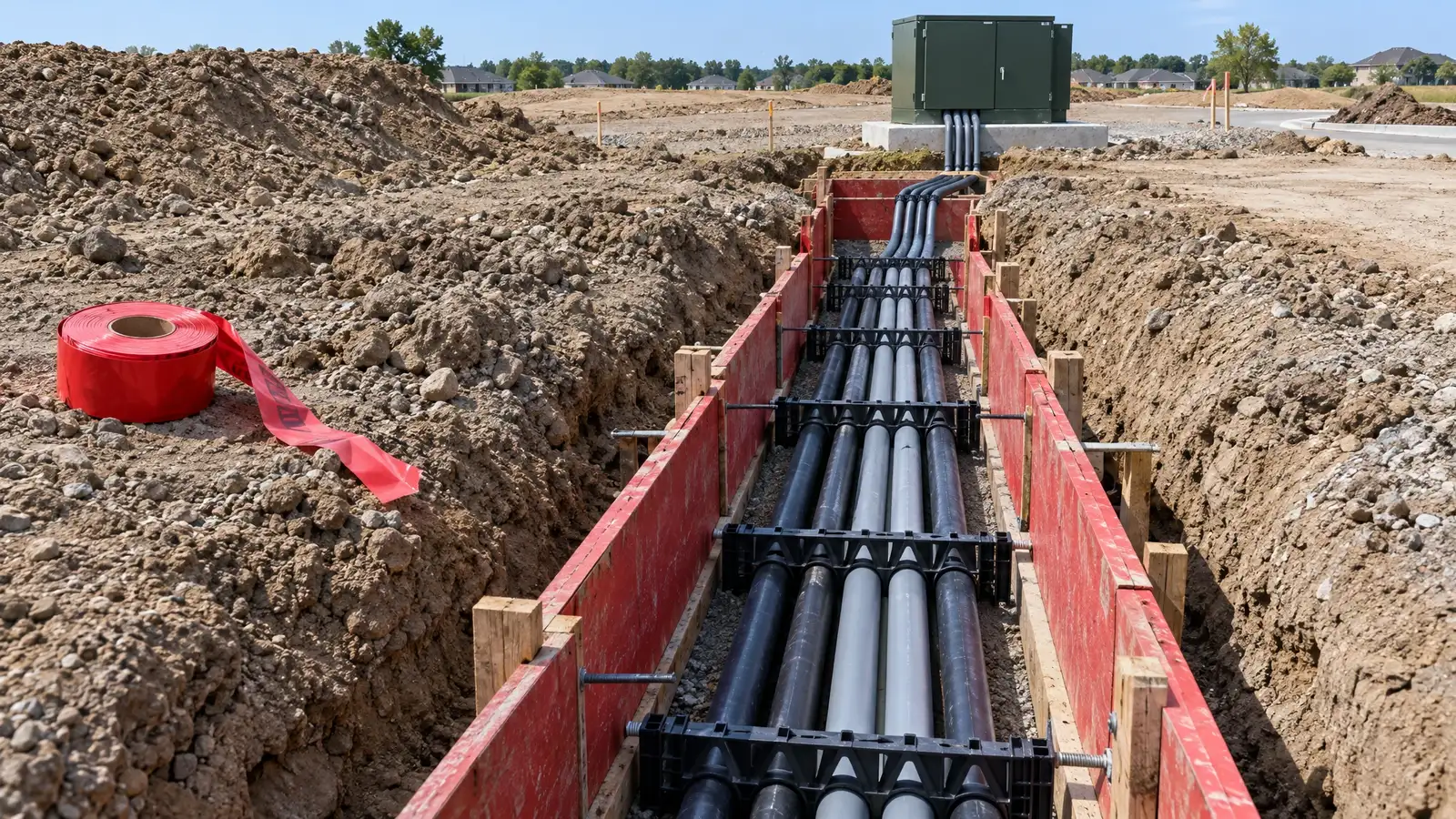 A-05Utility LinesElectrical ConduitTrenching, conduit and duct bank installation for service entrances, outbuildings, lighting, EV chargers and commercial power, ready for the licensed electrician.Shallow trench
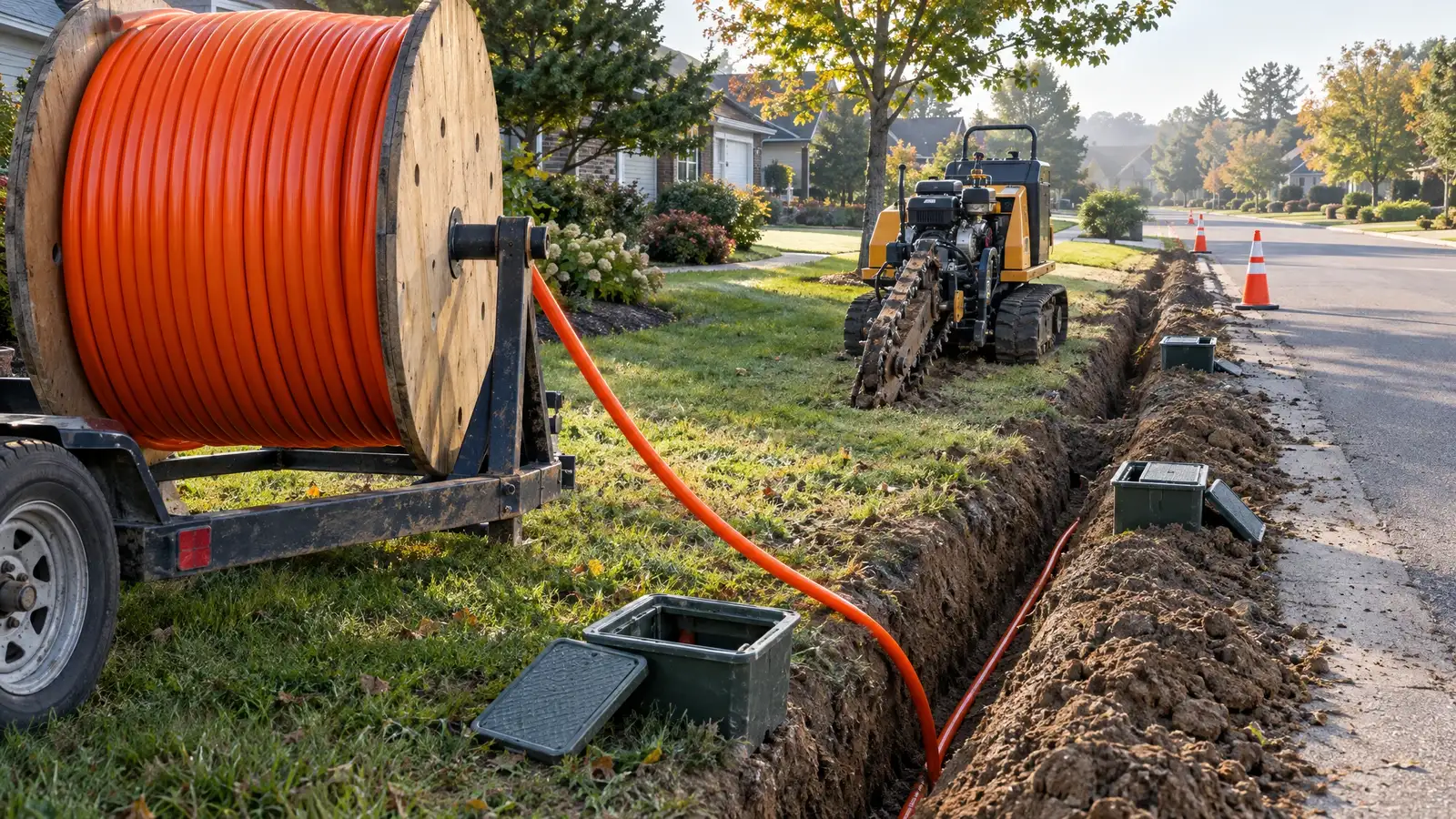 A-06Utility LinesFiber & TelecomTrenching, boring and handhole installation for fiber optic, cable and communications conduit to homes, farms and commercial buildings.Shallow trench
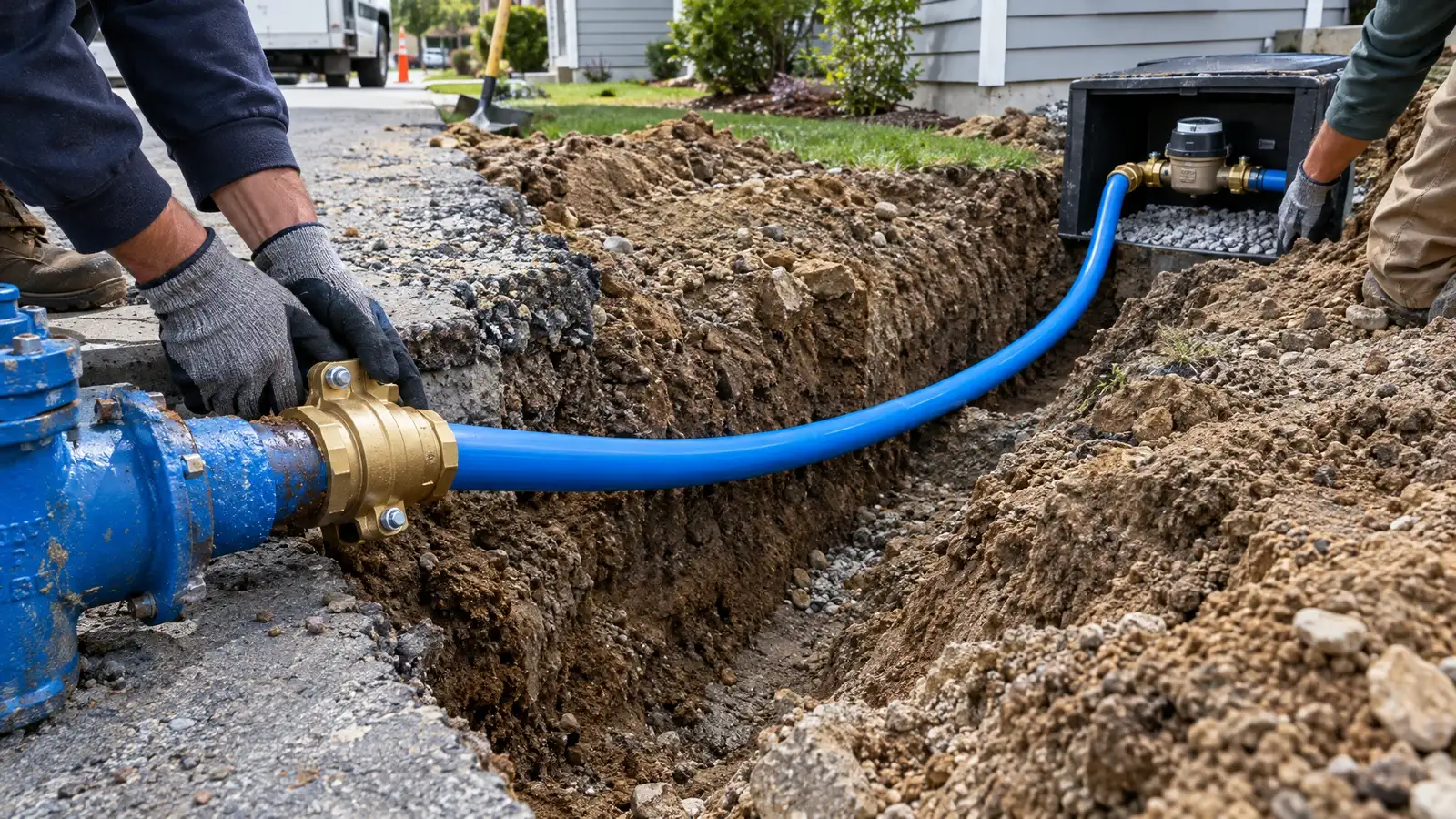 A-02Utility LinesWater LinesNew water service lines and private water mains trenched, laid and backfilled from the meter or main to your home, building or outbuilding.Shallow trench
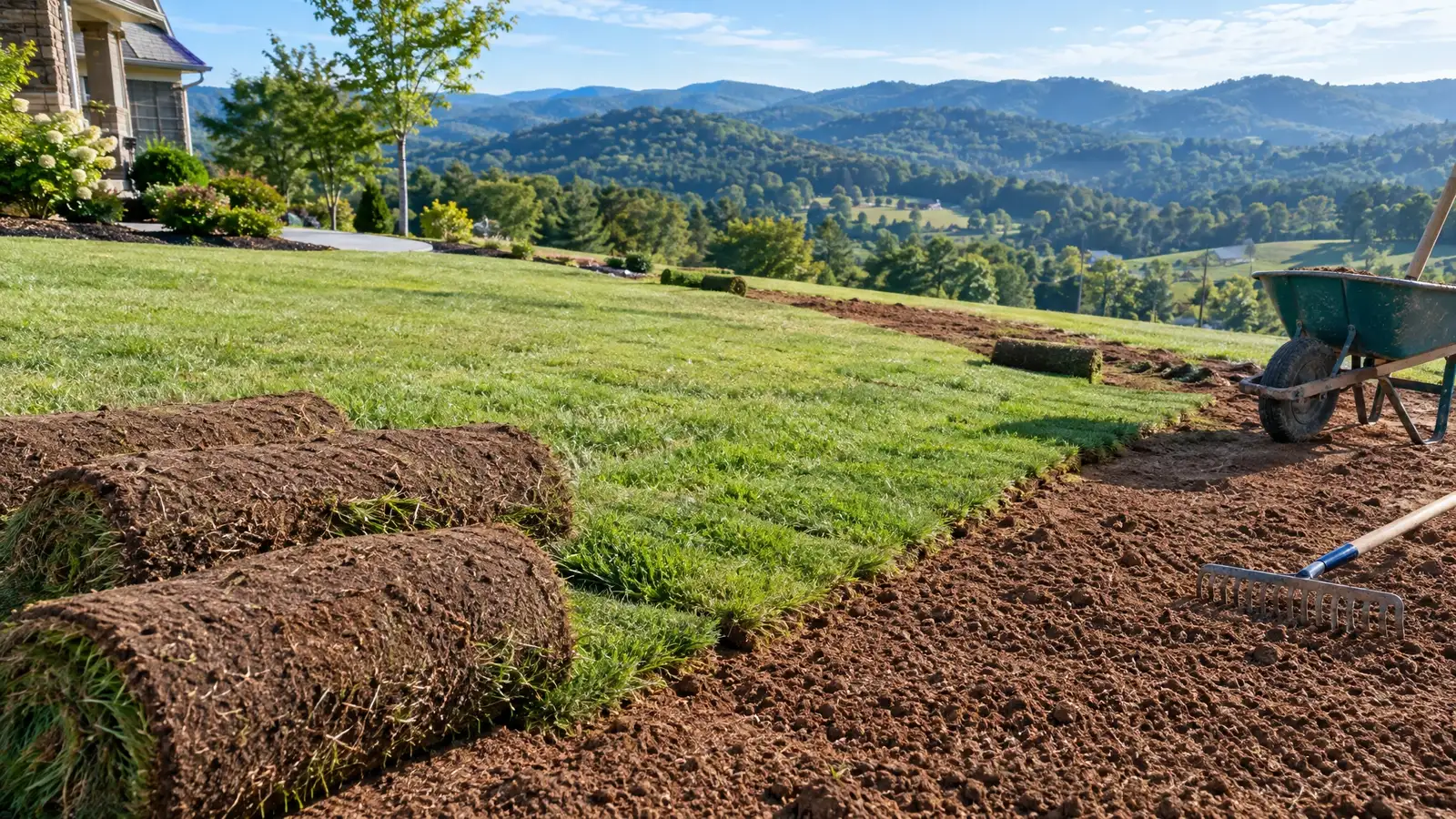 D-11RepairSod & Landscape RestorationTopsoil, grading, sod, seed and mulch to restore lawns and beds after trenching, excavation and utility work.Surface work
Read more on this topic.
The Anatomy of a Utility TrenchWhat goes into a well-built trench, layer by layer, and why each layer matters.2 min read 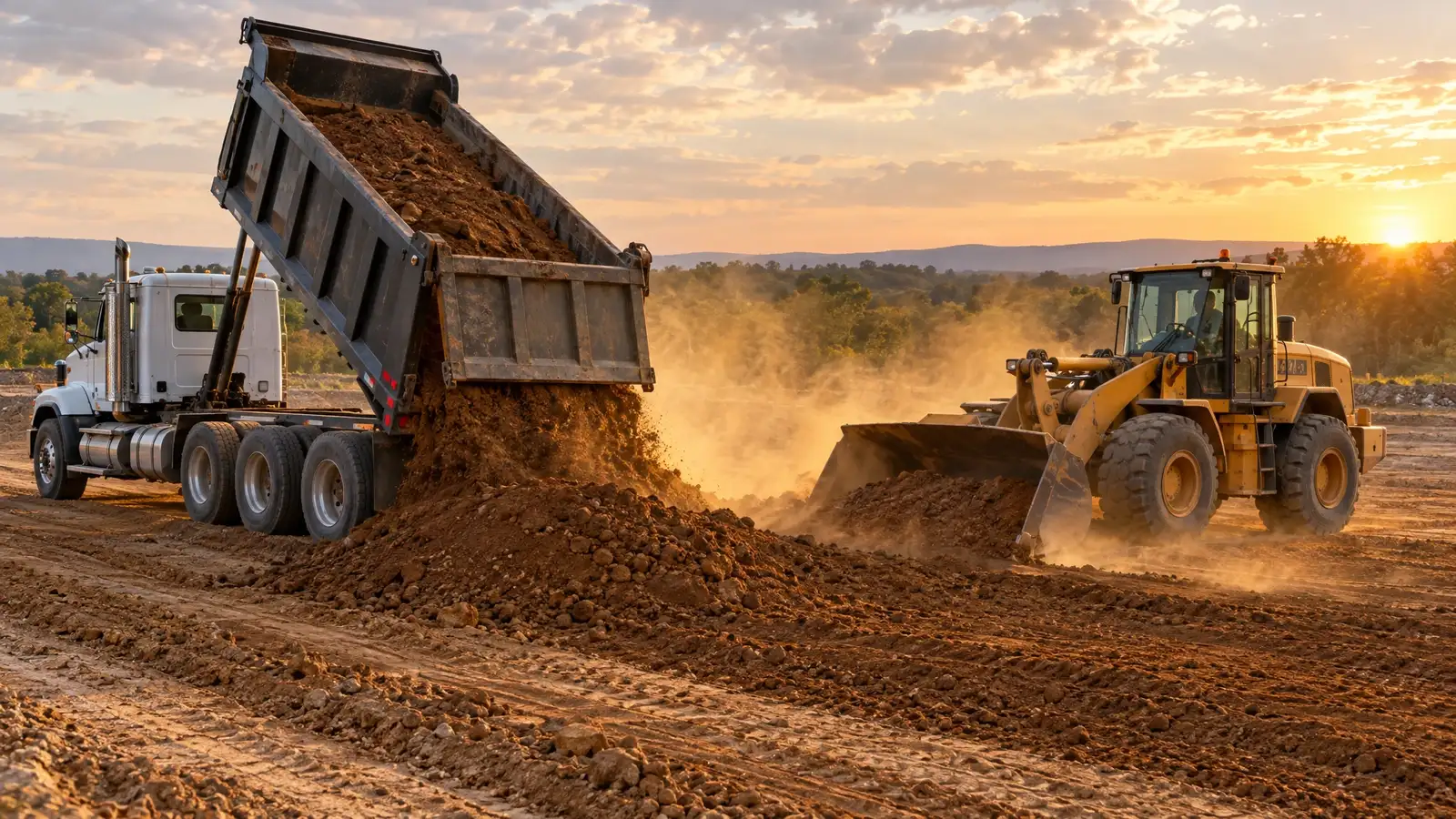 How Much Dirt Comes Out of a Trench?The math of cubic yards, swell and truckloads, with an example you can follow.2 min read Trench Safety Basics for HomeownersWhy trenches are dangerous, what the safety rules generally say and why a deep trench is no place for a…2 min read
Trenching FAQ.
How wide is a typical trench?
It depends on the pipe or conduit and the depth. Narrow trenches mean less disturbance, but the trench must still be wide enough to work in and compact around the pipe.
Can you trench through rock?
Sometimes with a rock wheel or hydraulic hammer, depending on the rock. We test the route early and explain options.
How do you protect my lawn?
We use mats or tarps for spoil where it helps, keep the cut as narrow as the job allows and restore with sod or seed afterward.
Trenching across Middle Tennessee.
Pick your city for its page.
Call 811. Then call us.
Tell us what you are building, fixing or draining and we will suggest a site visit and a plan. The lines get located before the bucket moves.