Pavement Cut and Patch Restoration in Nashville and Middle TN
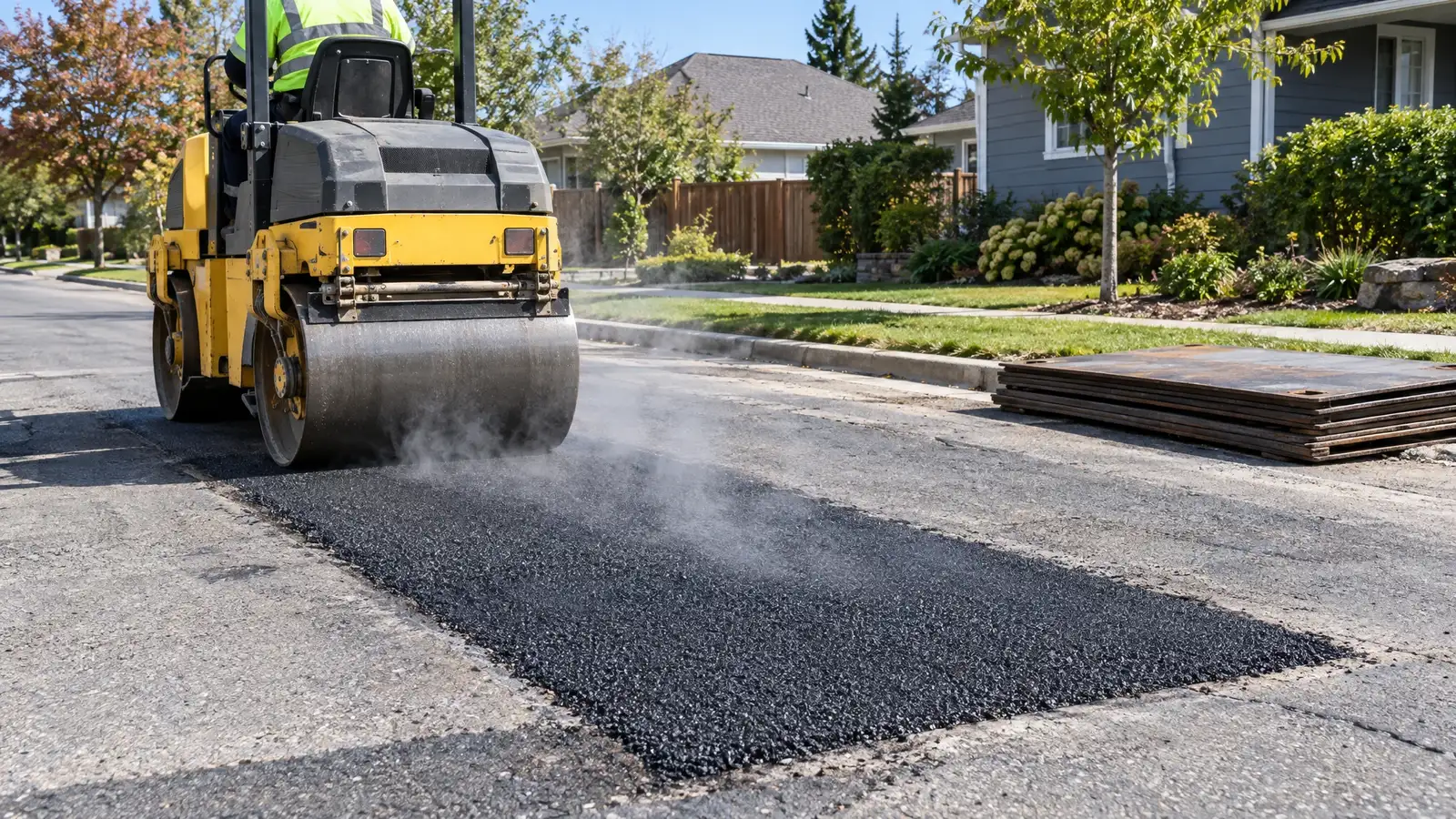
Saw cutting, base repair and asphalt or concrete patching where utility trenches cross streets, drives and parking areas.
- Repair, Drainage and Restoration
- At or near the surface
- Middle Tennessee
Pavement Cut and Patch Restoration, explained.
When a trench crosses pavement, the patch is what everybody sees, and what the road owner inspects. A good patch starts with a straight saw cut, a compacted stone or flowable fill base and the right thickness of asphalt or concrete, tied into the existing surface.
We cut clean edges, remove the old surface, bring the base back to grade in compacted lifts, place hot mix asphalt or concrete and compact and finish it. On public roads, the road owner sets the patch standard, and we follow it.
Signs this service fits
- A trench crossing a street, drive or lot must be closed
- An old trench patch has settled
- A pavement cut was made for a repair
- A permit requires restoration to a standard
A good fit, and what to know.
We would rather you hear the limits from us than discover them later.
A good fit when
- There is a cut or a failing patch to fix
- You want a patch that meets the owner’s standard
- Dig and restoration should be handled by the same crew
Worth knowing
- Public roads require permits and follow strict standards
- Weather and temperature affect when asphalt can be placed
Why do it this way.
Straight edges
Saw cuts look cleaner and bond better.
A base that holds
Stone or flowable fill prevents sinking.
Standard-compliant
Public road patches follow the owner’s specification.
Tied in smoothly
The patch is flush with the surrounding pavement.
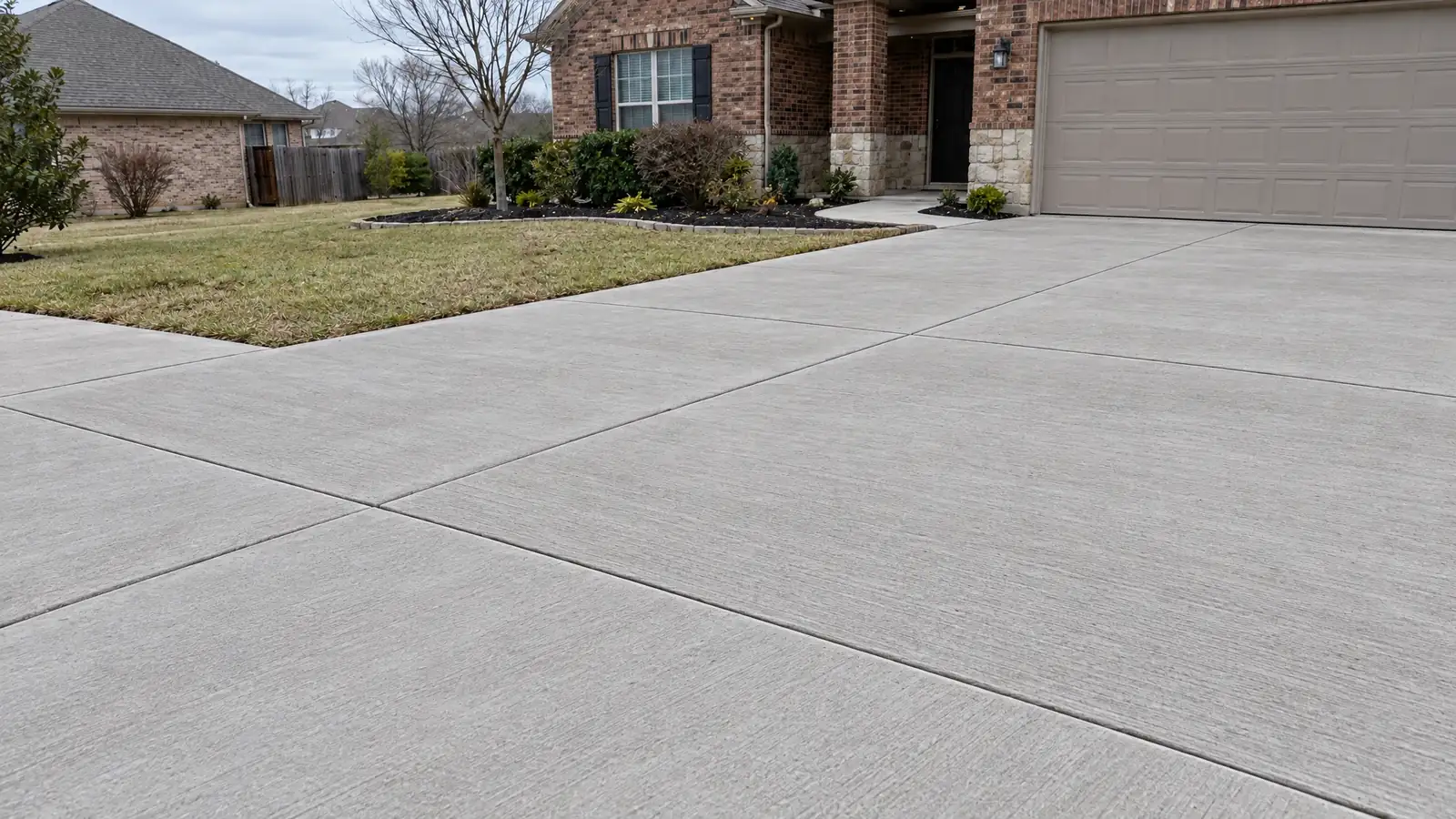
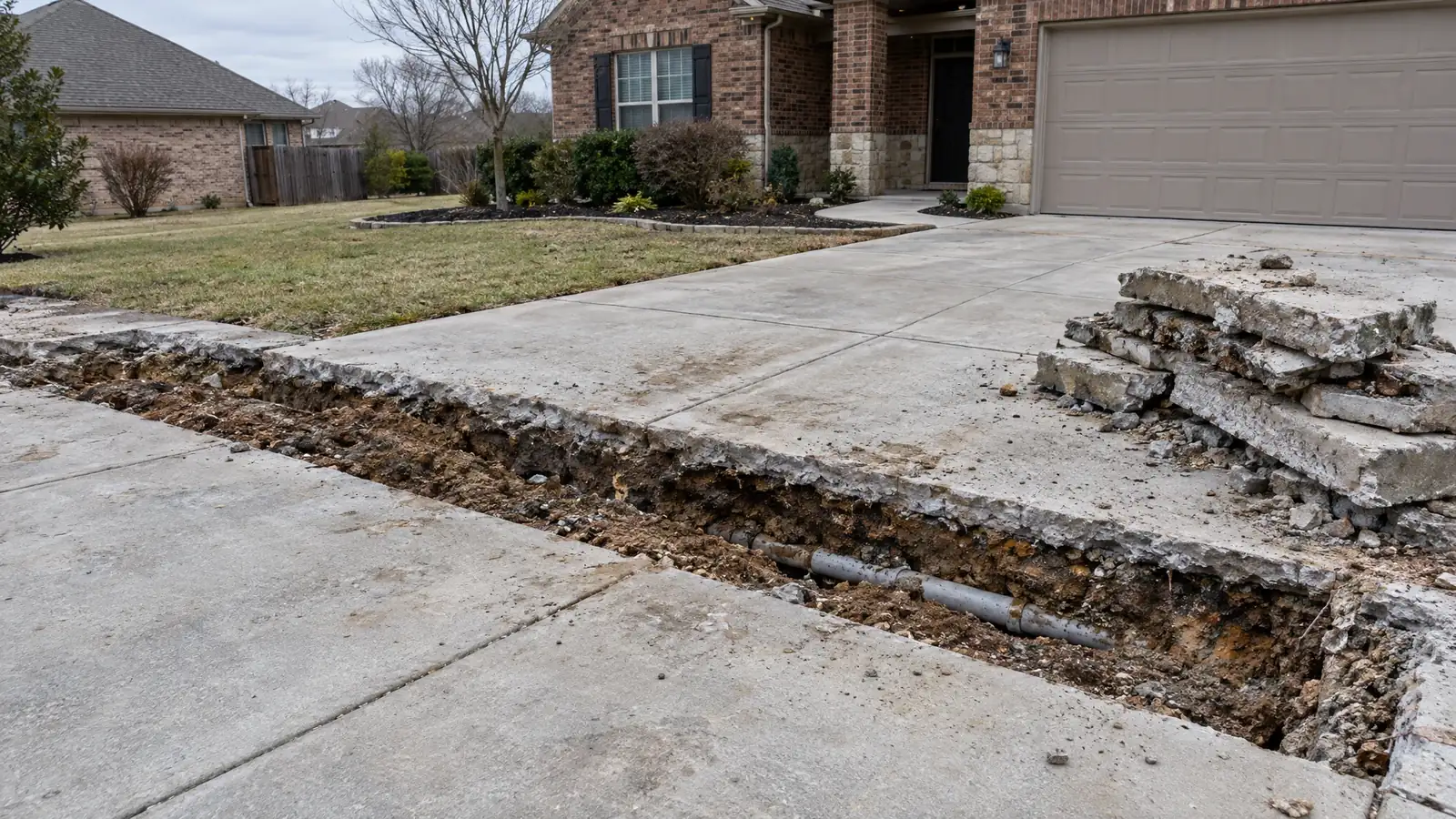
Before and after: cut driveway to clean patch
 AfterBefore
Illustrative scene created to show a typical condition before and after the work. Drag the handle to slide between them.
From first look to finished ground.
A clear sequence for every job.
- 01
Cut
The pavement is saw cut in straight lines wider than the trench.
- 02
Rebuild the base
The trench is backfilled and compacted with stone or flowable fill in lifts.
- 03
Place the surface
Asphalt or concrete is placed to the required thickness and matched to grade.
- 04
Compact and seal
The patch is compacted or finished and the edges are sealed where required.
Services that go together.
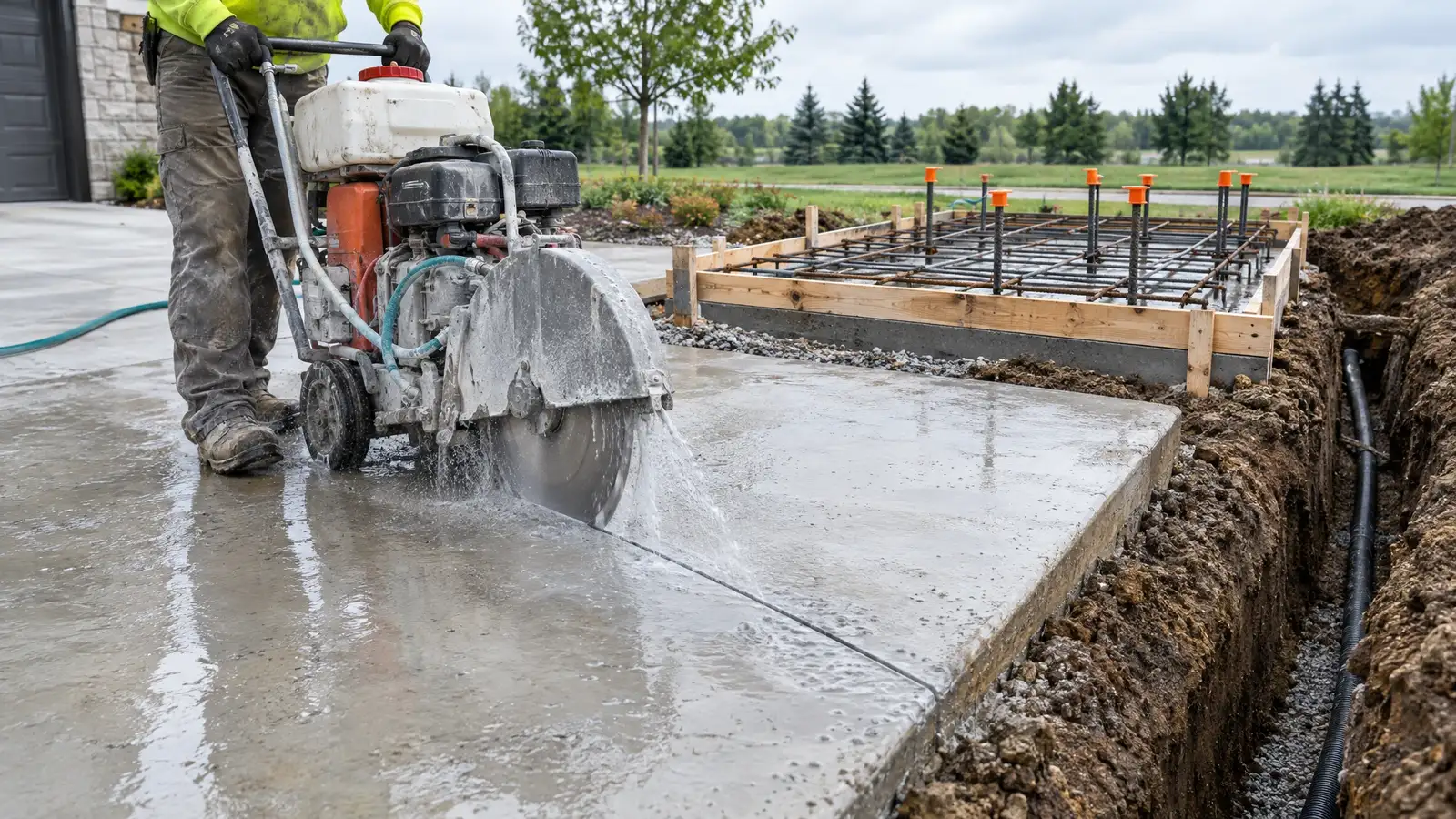 D-08RepairConcrete for Utility WorkSaw cutting, removal, forming and pouring of concrete for utility trench crossings, thrust blocks, equipment pads, vaults and driveway repair.Surface work
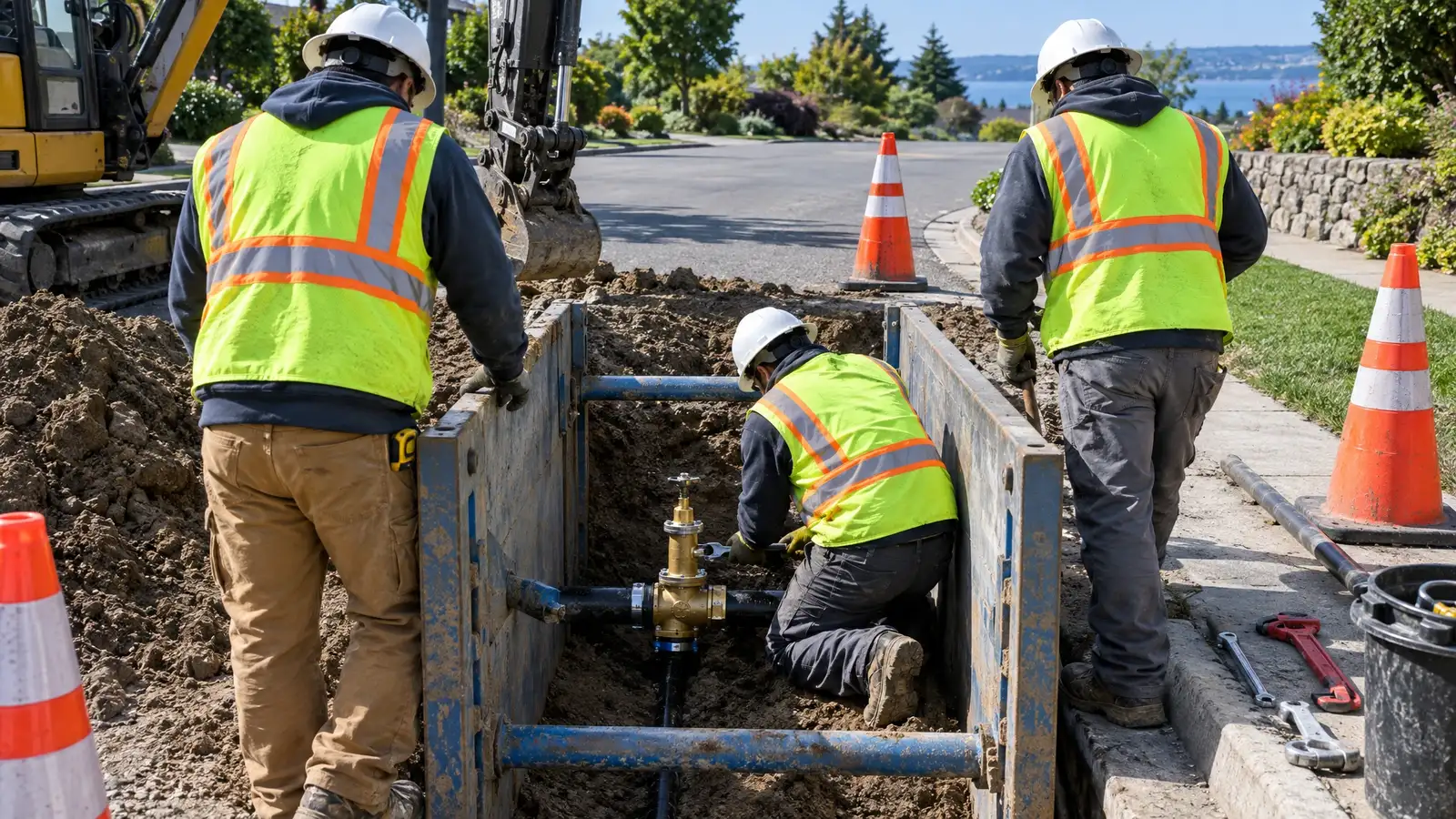 A-12Utility LinesTie-Ins & ConnectionsExcavation, shoring and trench work at tap points and connections, safely exposing existing mains and services so connections can be made.Shallow trench
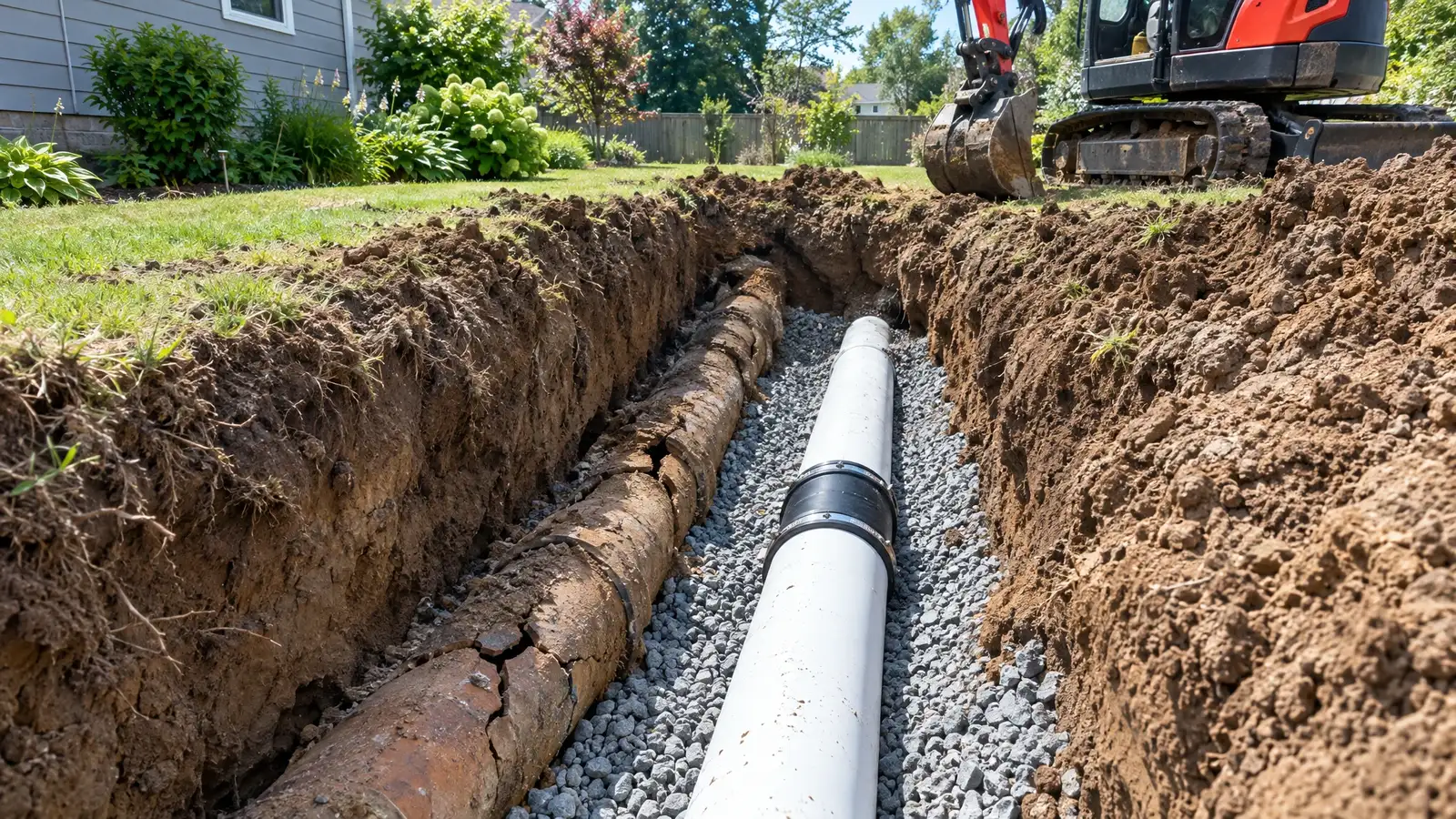 D-01RepairSewer Repair & ReplacementTargeted excavation and replacement of broken, collapsed or root-infested sewer lines, from a short spot repair to a full lateral replacement.Deep excavation
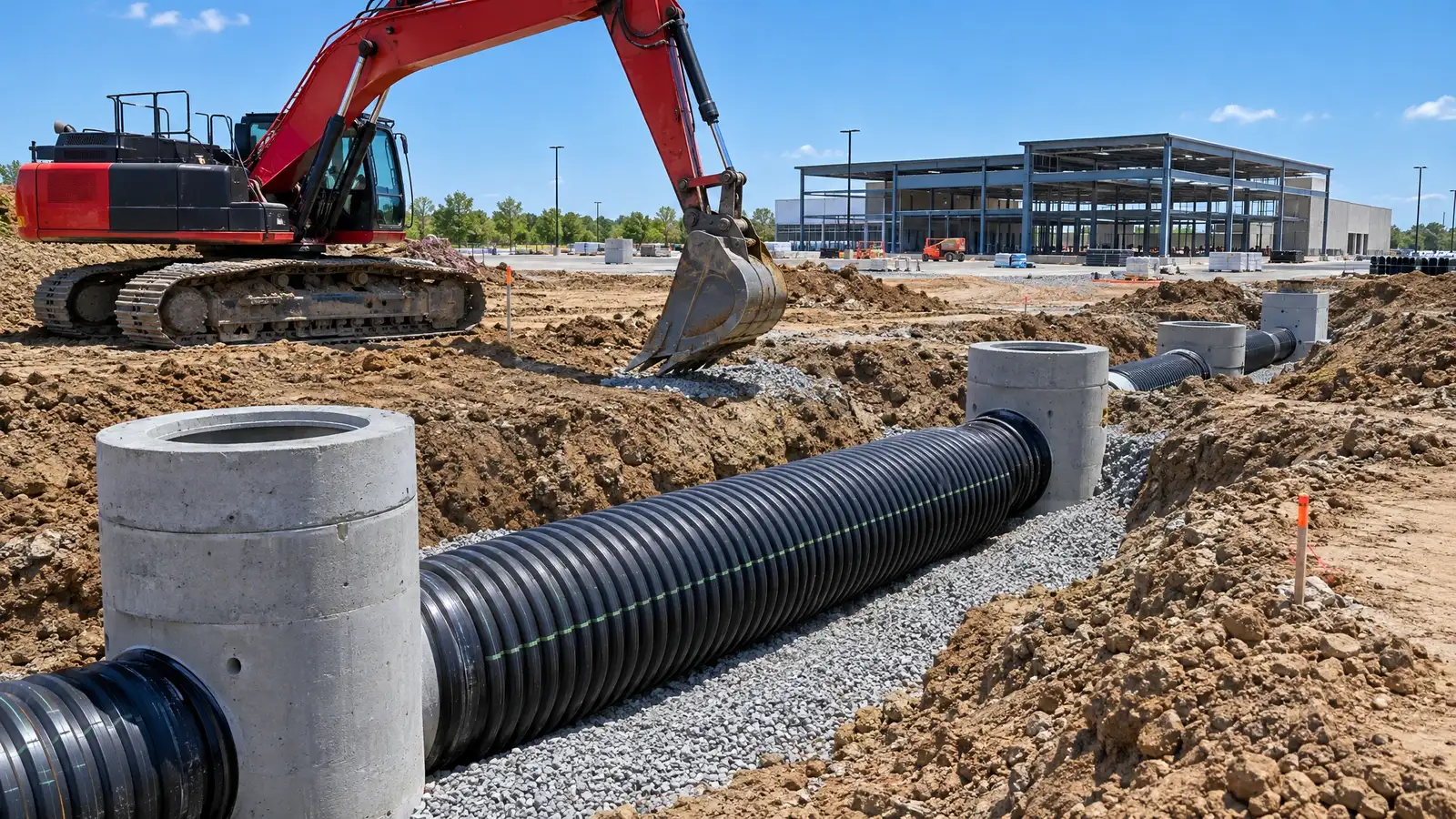 E-02ProjectsCommercial Site UtilitiesUnderground water, sewer, storm, fire protection and conduit for commercial pad sites, built to plan and scheduled with the general contractor.Deep excavation
Read more on this topic.
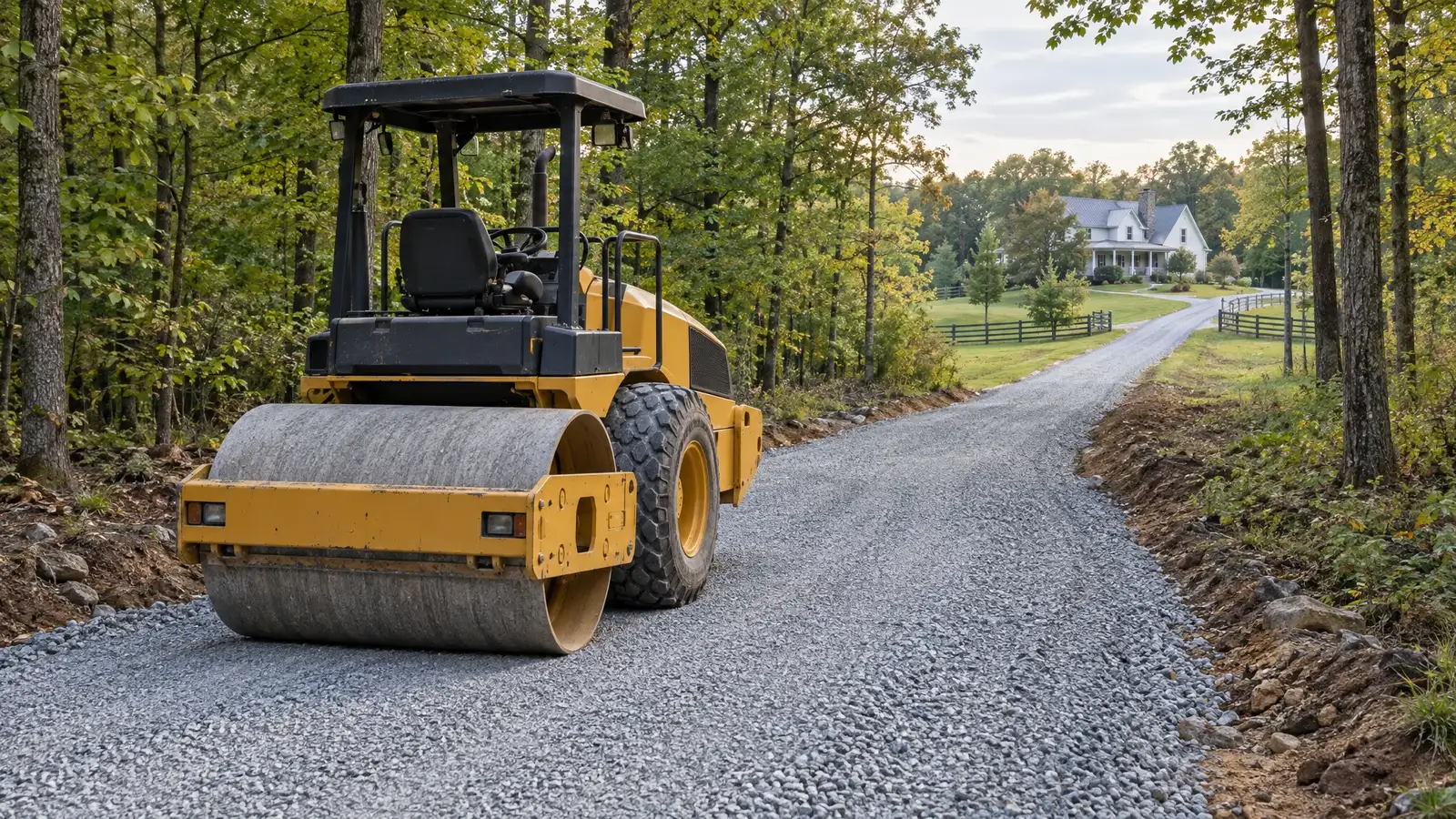 Compaction and Settling After BackfillWhy backfilled areas sink, and how compaction in lifts prevents it.2 min read
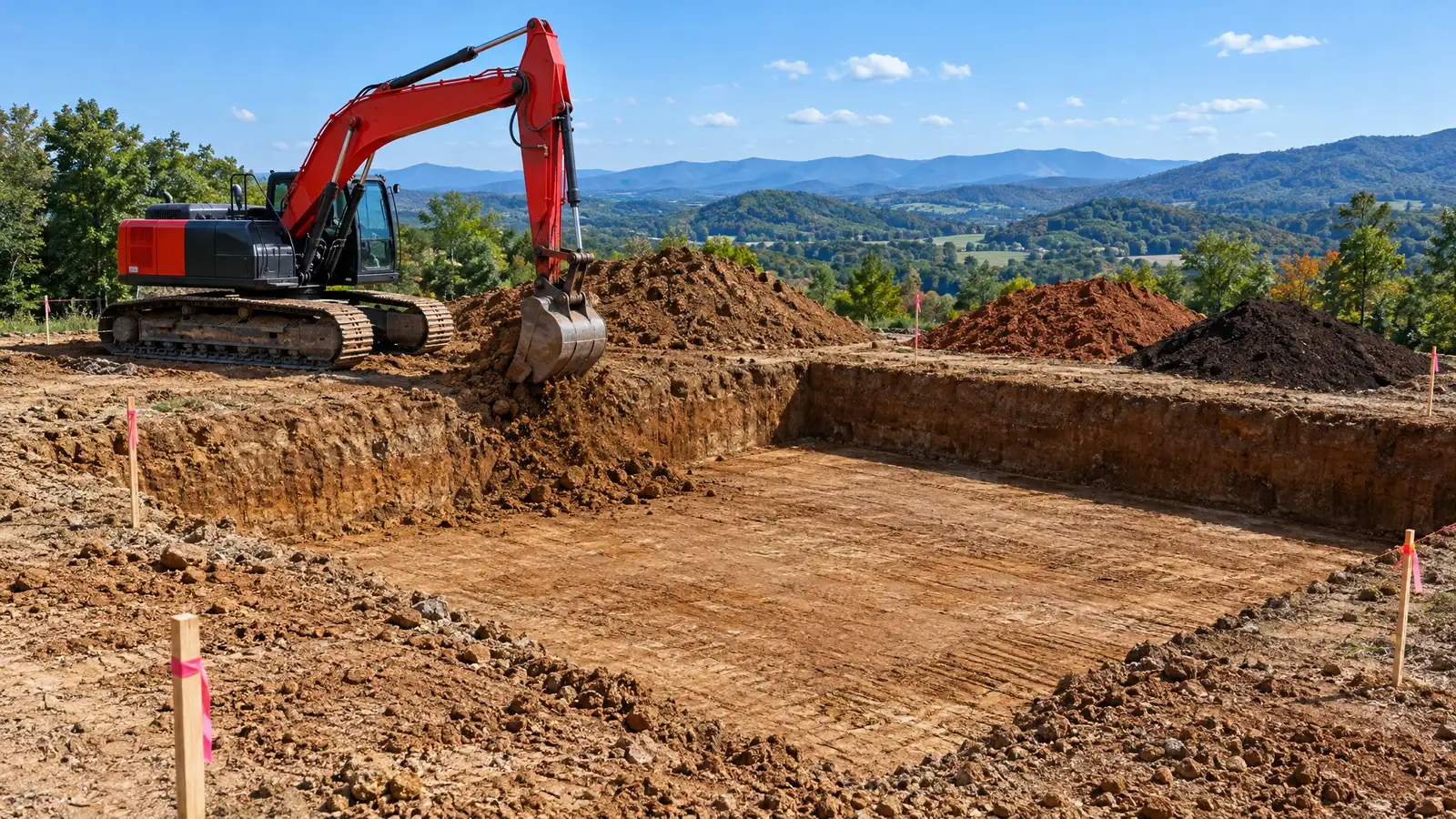 Permits for Underground Utility and Excavation WorkWhat kinds of permits apply, who issues them and how to avoid delays.2 min read
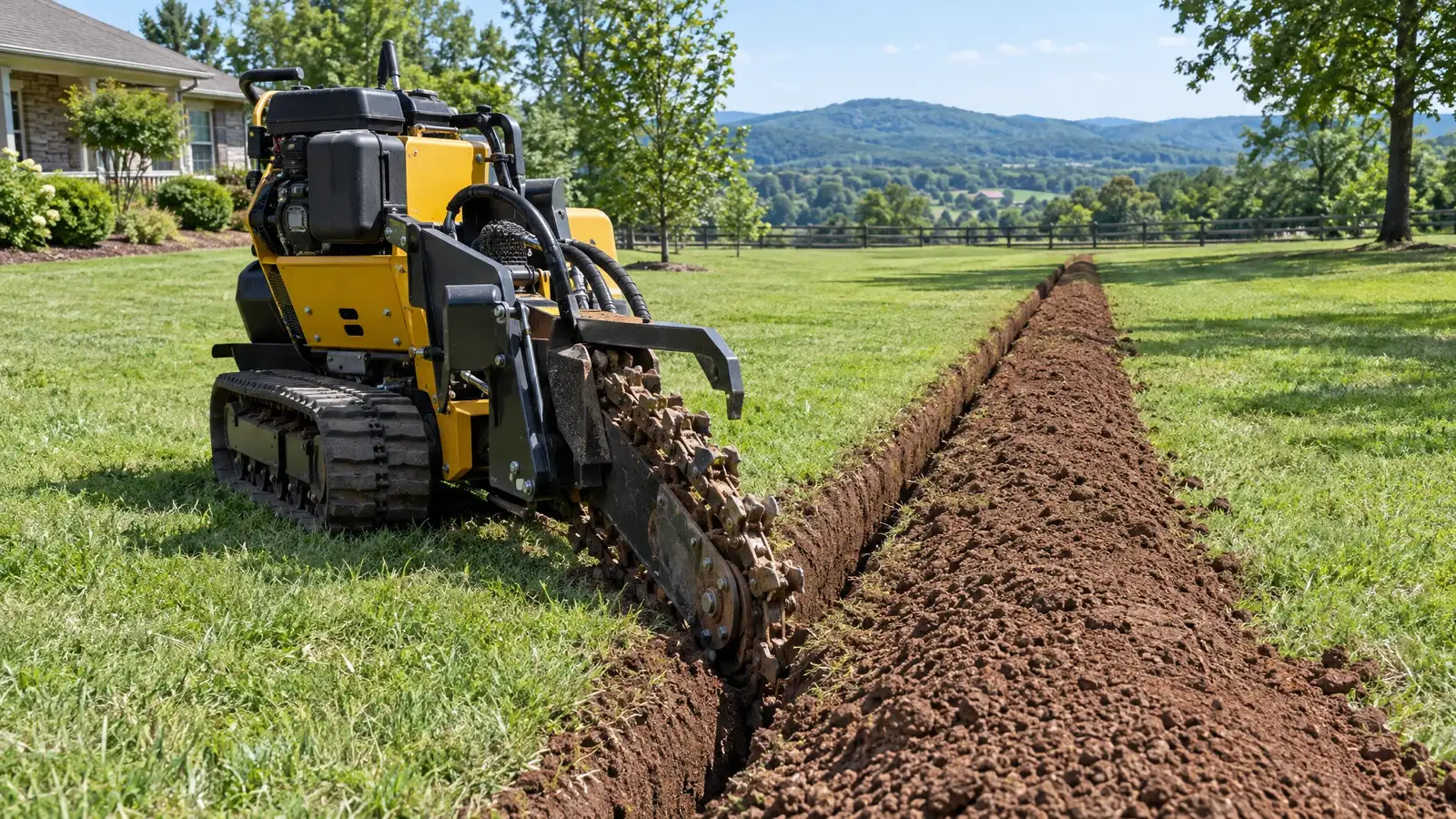 The Anatomy of a Utility TrenchWhat goes into a well-built trench, layer by layer, and why each layer matters.2 min read
Pavement Patching FAQ.
Why do trench patches sink?
Usually the backfill was not compacted in lifts, or water softened the base. Proper compaction and fill choice prevent most settling.
Who sets the standard for a road patch?
The road owner, such as the city, county or state, sets it. We follow its specification and inspection process.
Can you patch right away?
Often a temporary patch is placed first, and a permanent patch follows after the base settles. We follow the road owner’s requirements.
Pavement Patching across Middle Tennessee.
Pick your city for its page.
Call 811. Then call us.
Tell us what you are building, fixing or draining and we will suggest a site visit and a plan. The lines get located before the bucket moves.