Erosion Control and Site Stabilization in Nashville and Middle TN
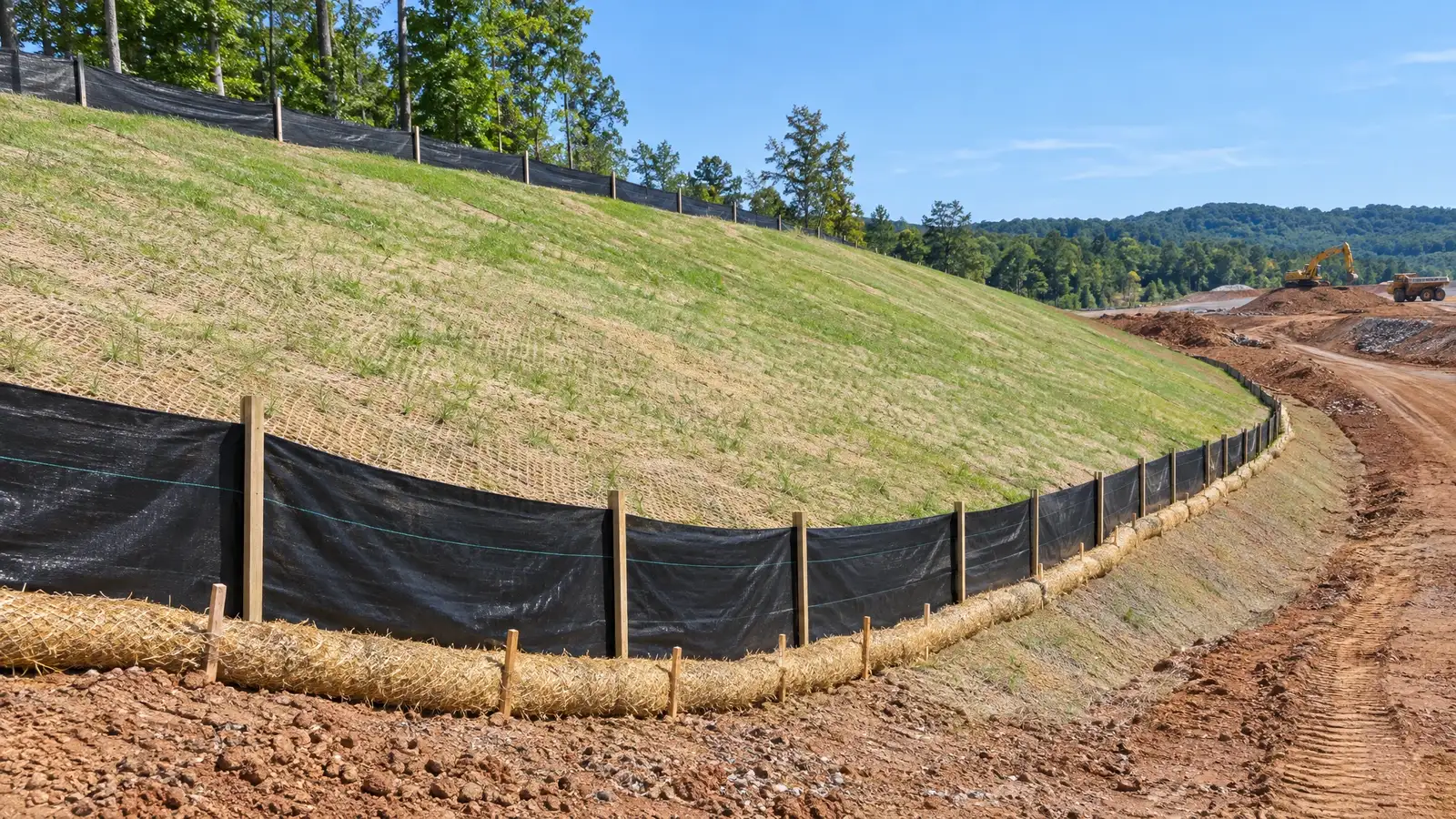
Silt fence, wattles, construction entrances, matting and seeding to hold disturbed soil in place during and after construction.
- Excavation and Site Work
- At or near the surface
- Middle Tennessee
Erosion Control and Site Stabilization, explained.
When topsoil is stripped and a lot is graded, the next rain can wash tons of soil downhill. That soil muddies streets, fills ditches and ends up in creeks, which is why most construction sites need erosion and sediment controls and why many jurisdictions require them.
We install silt fence and wattles at the downhill edges, build stabilized construction entrances, place matting on slopes and seed or straw disturbed areas. Controls are put in before heavy digging begins and maintained through the job, and we help you meet the requirements that apply to your site.
Signs this service fits
- A construction site is being opened up
- A permit or plan calls for erosion controls
- A slope keeps washing after grading
- A neighbor or inspector has raised a runoff concern
A good fit, and what to know.
We would rather you hear the limits from us than discover them later.
A good fit when
- Ground is about to be disturbed or already has been
- You want controls that meet a plan or permit
- You need maintenance as well as installation
Worth knowing
- Large sites follow formal stormwater plans and inspections
- Heavy storms can overwhelm temporary controls, which is why inspection matters
Why do it this way.
In place before the first cut
Controls work only if they are there before the rain.
Entrances that keep mud off the road
Stone entrances cut down on tracking.
Slopes covered quickly
Seed and matting establish cover as soon as possible.
Support for compliance
We help satisfy permit and plan requirements.
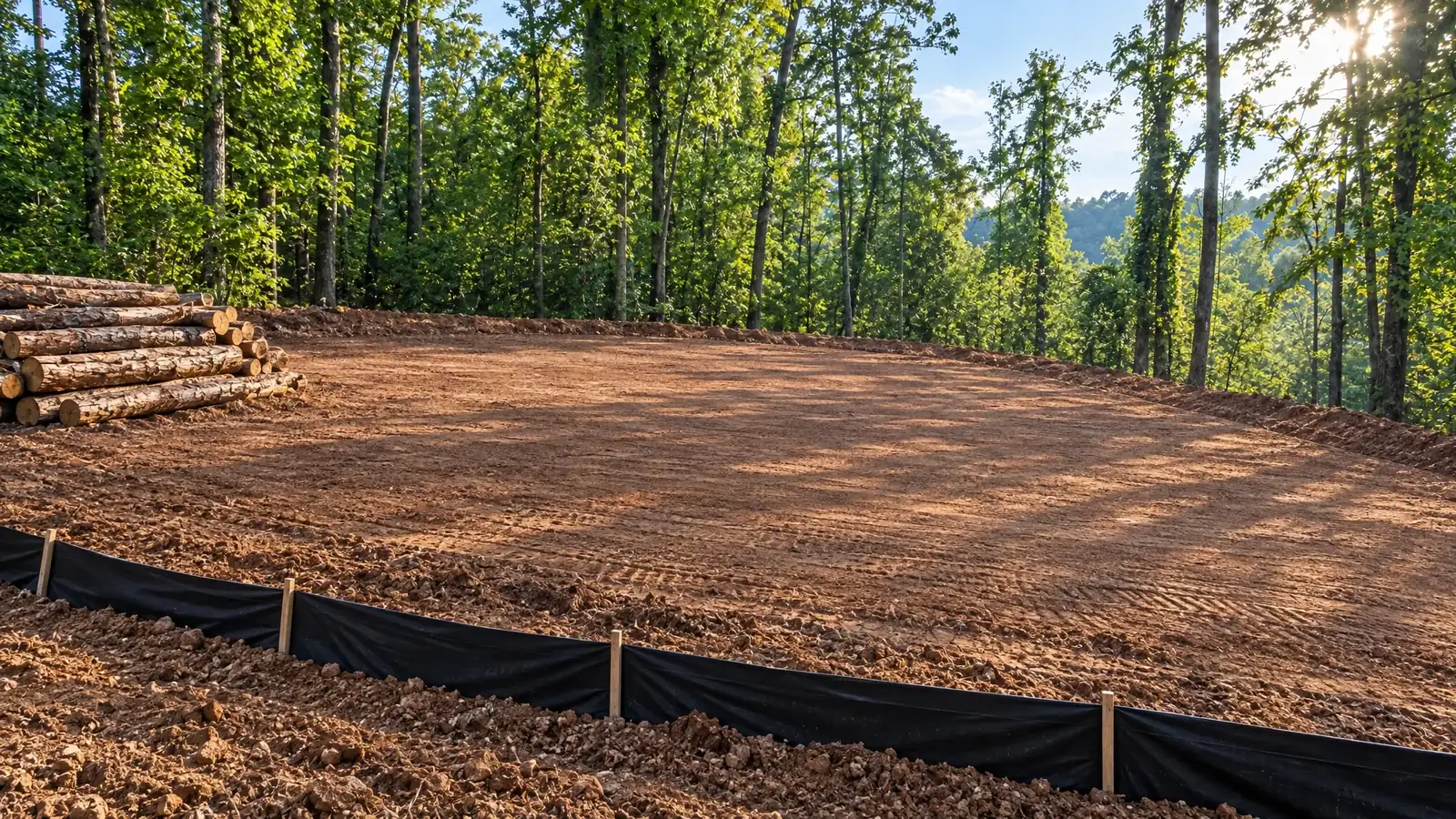
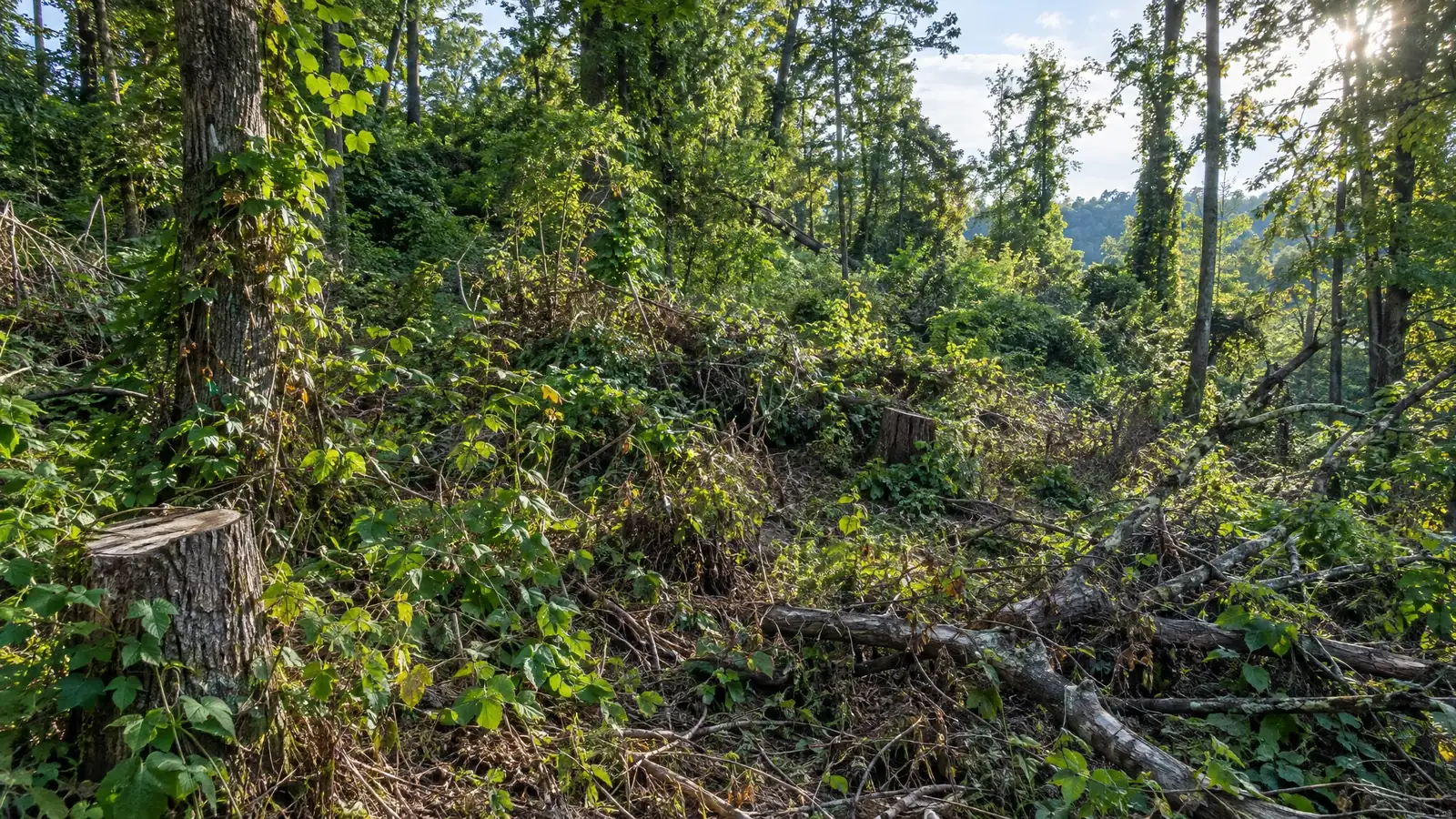
Before and after: overgrown to building pad
 AfterBefore
Illustrative scene created to show a typical condition before and after the work. Drag the handle to slide between them.
From first look to finished ground.
A clear sequence for every job.
- 01
Review the requirements
Plans, permits and the lay of the land show where controls are needed.
- 02
Install before digging
Silt fence, wattles and entrances go in at the start.
- 03
Protect slopes
Matting, straw and seeding stabilize exposed ground.
- 04
Inspect and maintain
Controls are checked after rain and repaired through the job.
Services that go together.
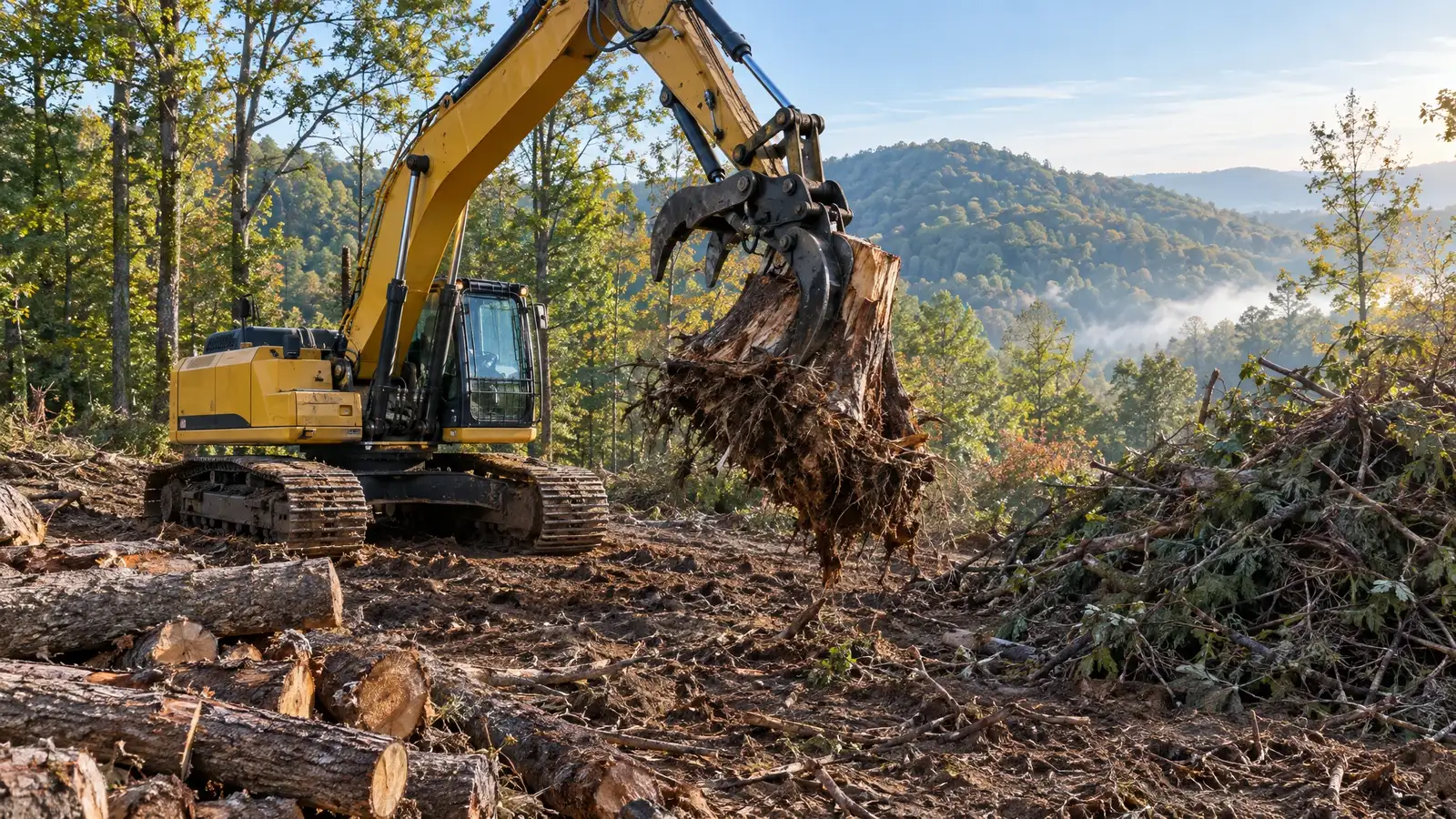 B-07ExcavationLand ClearingClearing of brush, trees and stumps for building sites, pastures, driveways and utility corridors, with debris hauled or processed.Surface work
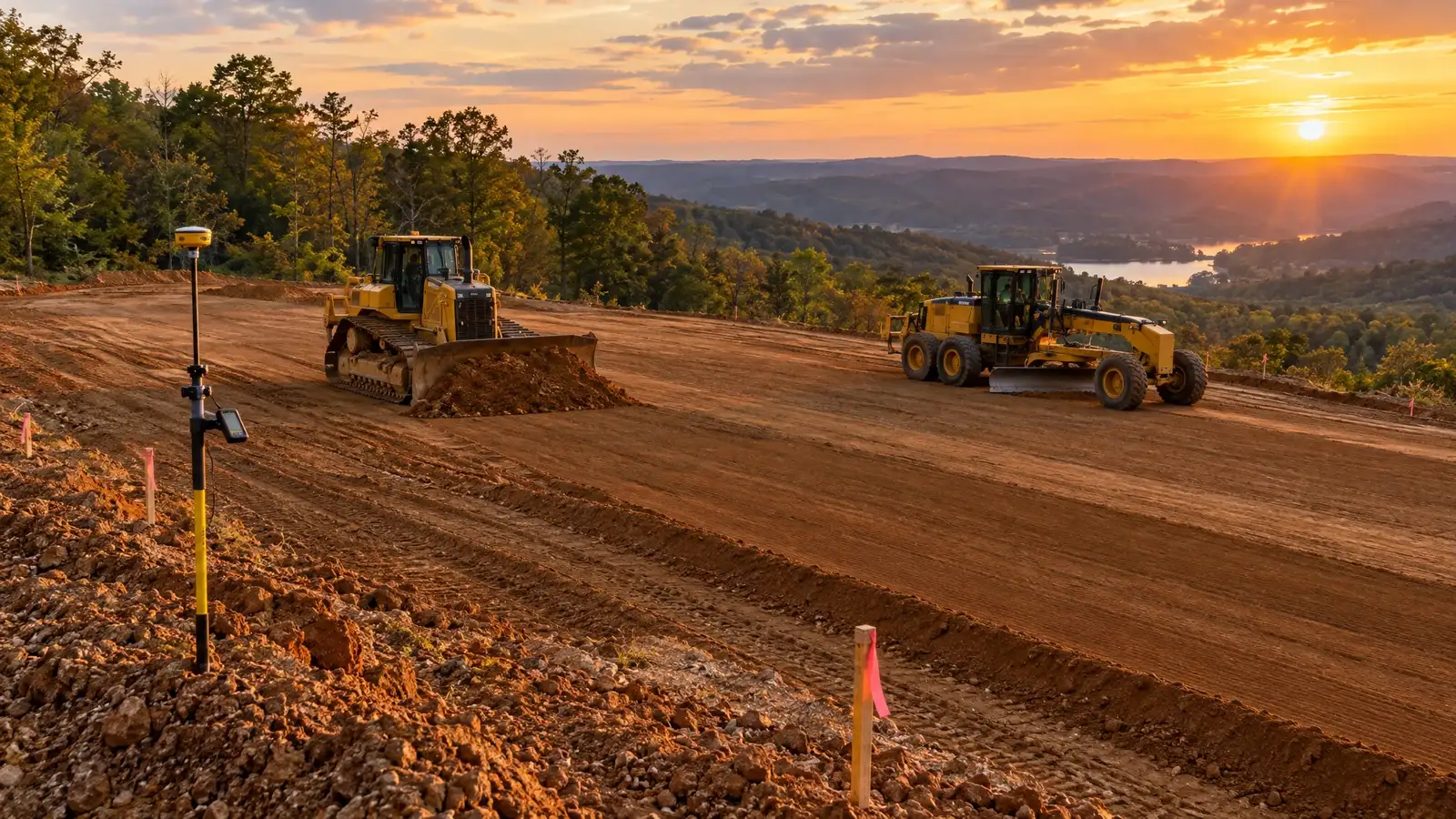 B-03ExcavationSite Grading & PadsCut-and-fill grading, pad building and rough grading for homes, shops, barns and commercial buildings, shaped for drainage and ready for the next trade.Surface work
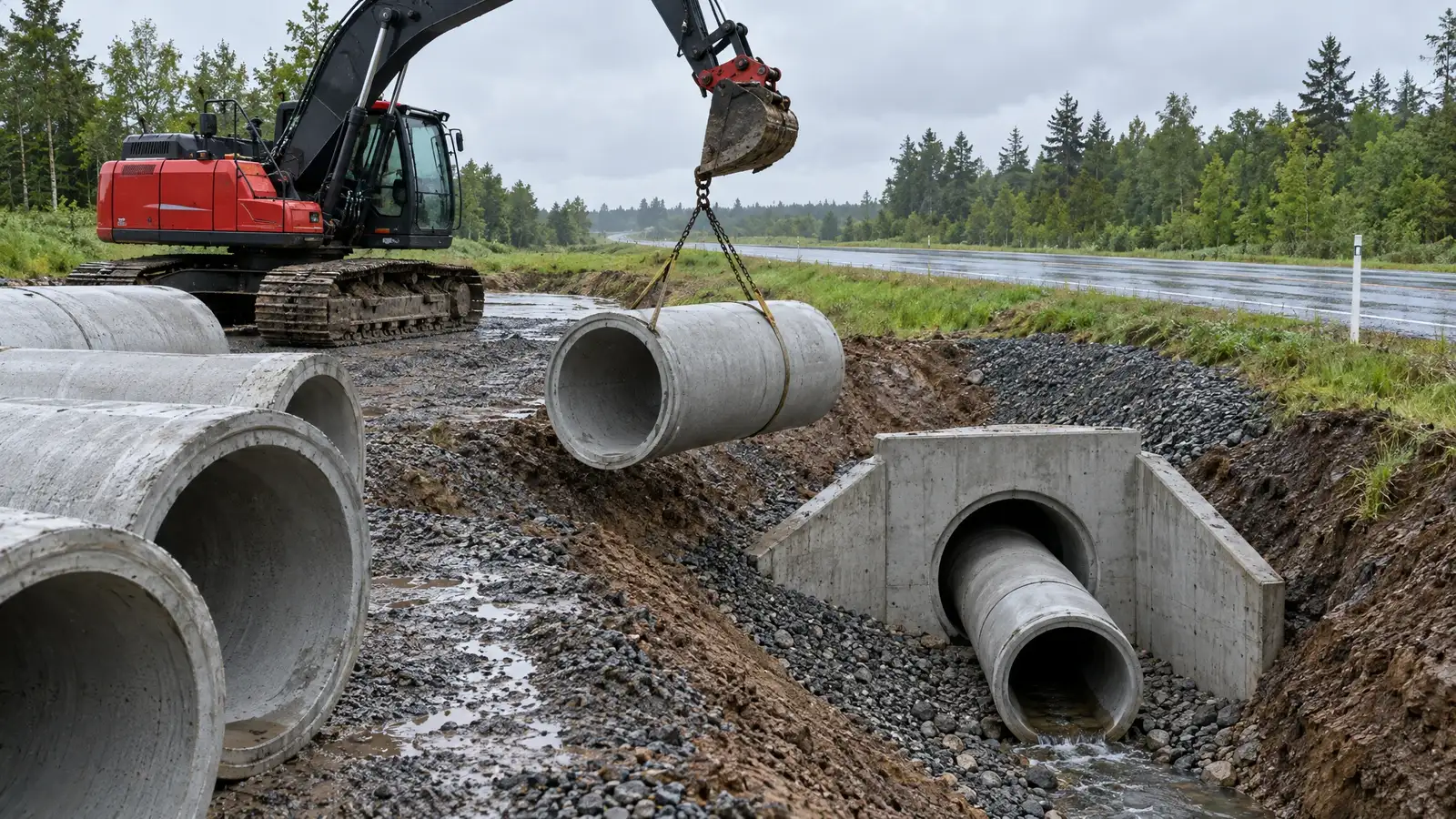 A-04Utility LinesStorm Drains & CulvertsStorm pipe, driveway culverts, headwalls and inlets installed to carry rain and runoff away from buildings, roads and low spots.Deep excavation
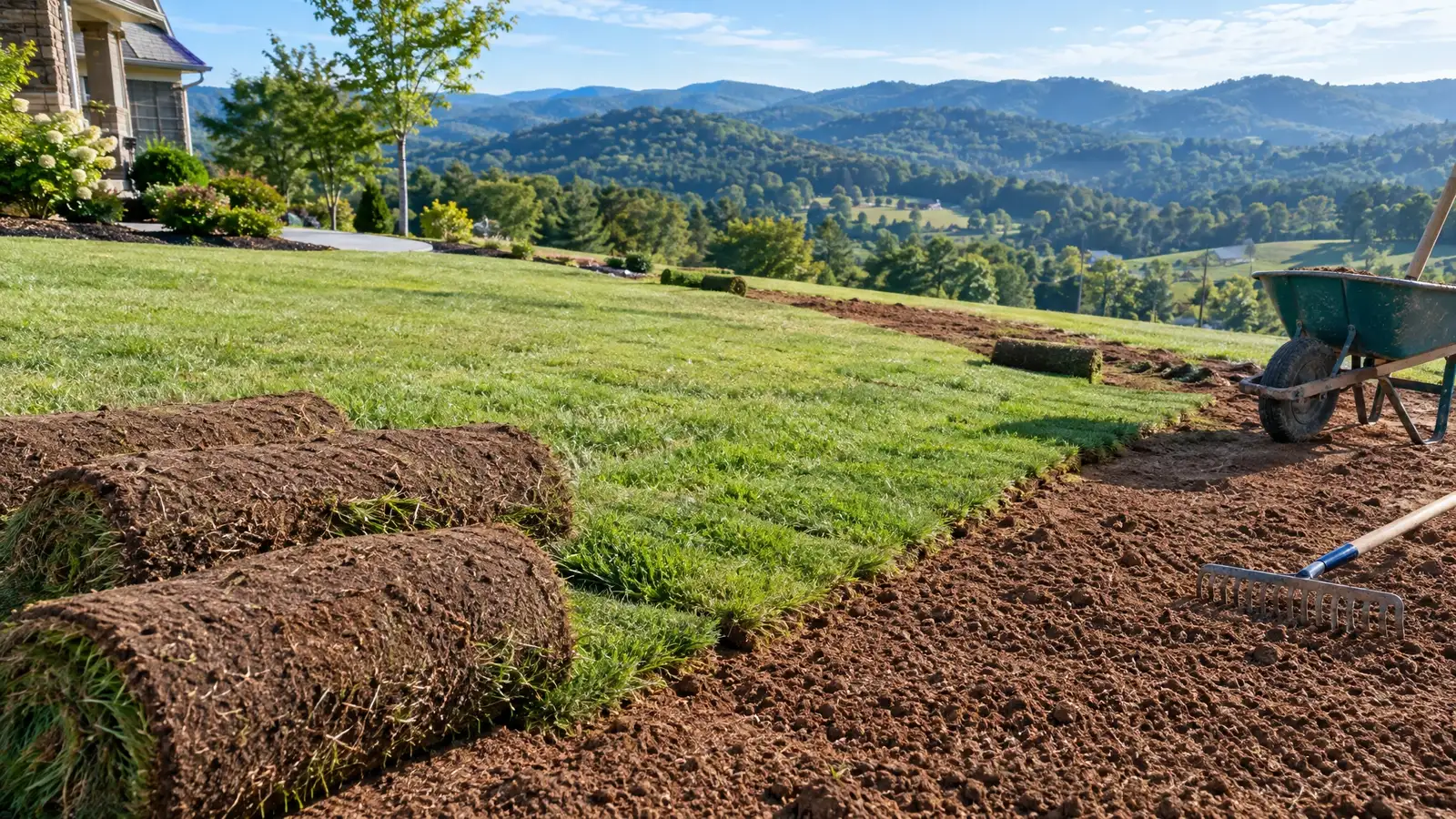 D-11RepairSod & Landscape RestorationTopsoil, grading, sod, seed and mulch to restore lawns and beds after trenching, excavation and utility work.Surface work
Read more on this topic.
Site Grading and Drainage BasicsHow slope, swales and outlets keep water away from buildings.2 min read 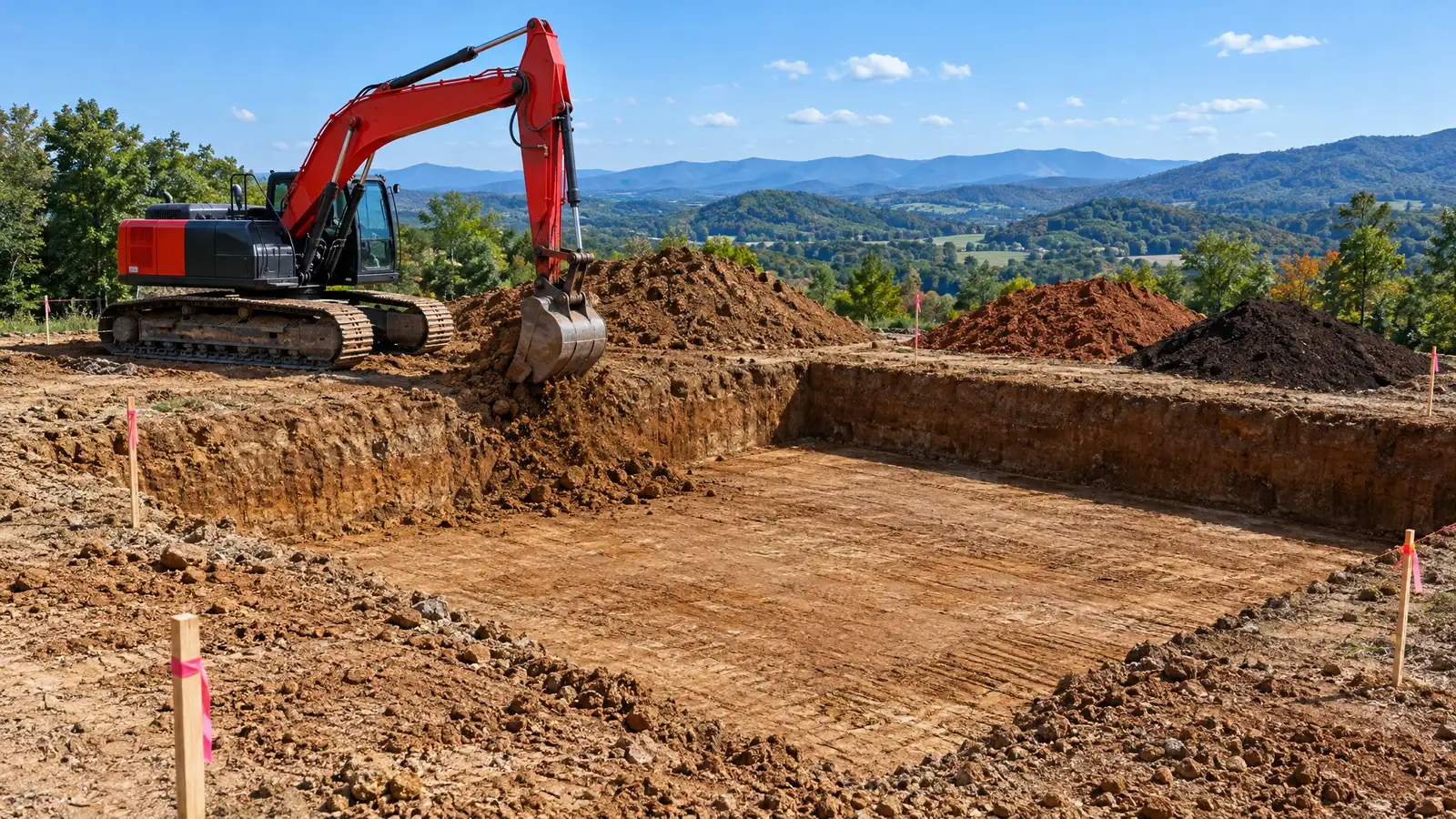 Permits for Underground Utility and Excavation WorkWhat kinds of permits apply, who issues them and how to avoid delays.2 min read Spring Rain and Wet TrenchesHow heavy rain affects excavation, and how contractors manage water on site.2 min read
Erosion Control FAQ.
Do I need erosion control for a small lot?
Often yes. Requirements depend on the amount of disturbed ground and the local rules, and we can help you check.
How long does silt fence last?
It depends on the product, the site and the weather, and it needs inspection and repair. It is a temporary control, not a permanent one.
What is the best way to stabilize a slope?
Seed with straw or matting is common, and steeper or more exposed slopes may need stronger measures. We recommend based on slope and soil.
Erosion Control across Middle Tennessee.
Pick your city for its page.
Call 811. Then call us.
Tell us what you are building, fixing or draining and we will suggest a site visit and a plan. The lines get located before the bucket moves.