Concrete Cutting, Patching and Utility Pads in Nashville, TN
Saw cutting, removal, forming and pouring of concrete for utility trench crossings, thrust blocks, equipment pads, vaults and driveway repair.
- Repair, Drainage and Restoration
- At or near the surface
- Middle Tennessee
Concrete Cutting, Patching and Utility Pads, explained.
Utility and excavation work often runs into concrete: a driveway in the path of a trench, a slab that must be cut for a line, a pad for a transformer or a pump, a thrust block behind a pipe bend. Cutting and pouring it back properly is part of the job, and it determines how the finished work looks and lasts.
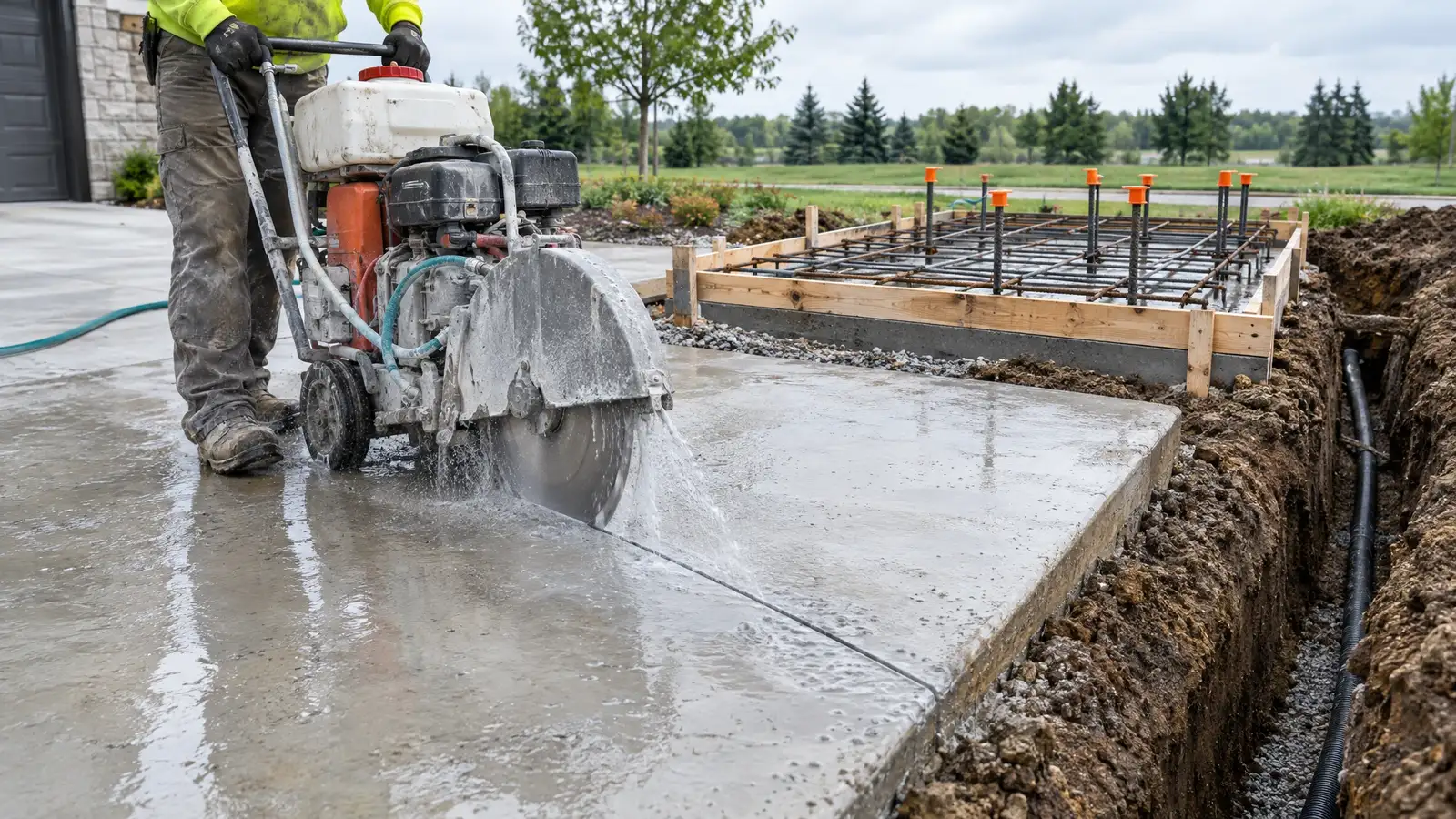
We saw-cut clean edges, remove and haul the broken concrete, prepare the base, form and pour the patch or pad, and finish it to match the surrounding surface. For utilities, we also pour thrust blocks and vault and equipment pads to the plan.
Signs this service fits
- A driveway or walk must be cut for a trench
- A utility needs a concrete pad or thrust block
- A slab must be patched after repair
- A broken slab or apron needs replacement
A good fit, and what to know.
We would rather you hear the limits from us than discover them later.
A good fit when
- Concrete is in the path of utility or excavation work
- You want the cutting, pour and finish handled together
- A utility structure needs a concrete pad or block
Worth knowing
- Large decorative or structural concrete is a different specialty
- New concrete will not perfectly match old concrete in color
Why do it this way.
Clean cuts
Saw lines make the patch look intentional, not ragged.
Built on a good base
Compacted stone prevents settling.
Reinforced when needed
Rebar or mesh where the design calls for it.
Utility structures too
Thrust blocks, vault and equipment pads.
Before and after: cut driveway to clean patch
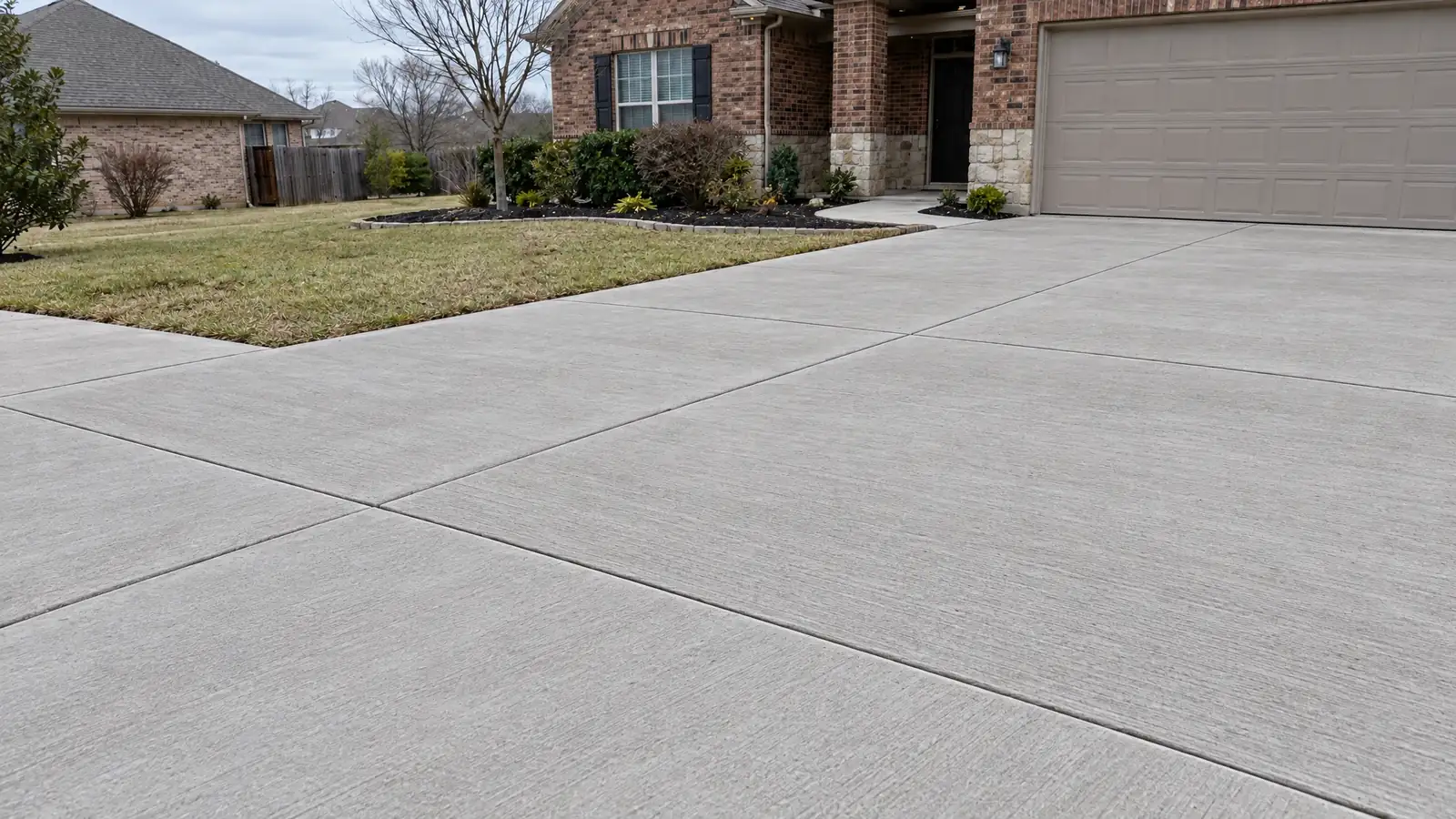
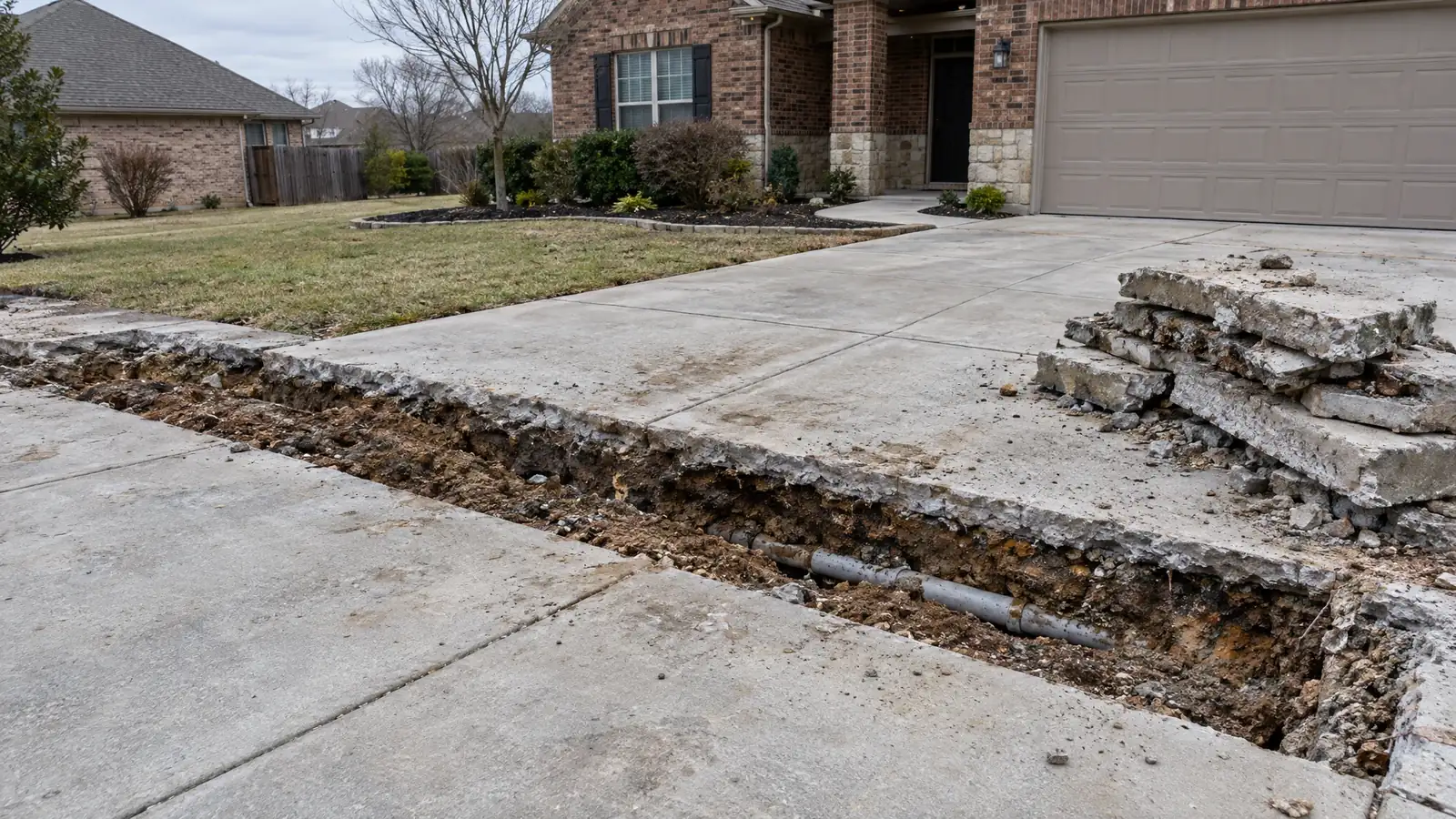 AfterBefore
Illustrative scene created to show a typical condition before and after the work. Drag the handle to slide between them.
From first look to finished ground.
A clear sequence for every job.
- 01
Mark and saw cut
Clean straight cuts keep the repair neat and the surrounding slab stable.
- 02
Remove and prepare
Concrete is broken out and hauled and the base is rebuilt and compacted.
- 03
Form and pour
Forms, reinforcement and concrete are placed to the required thickness.
- 04
Finish and cure
The surface is finished to match, cured and protected.
Services that go together.
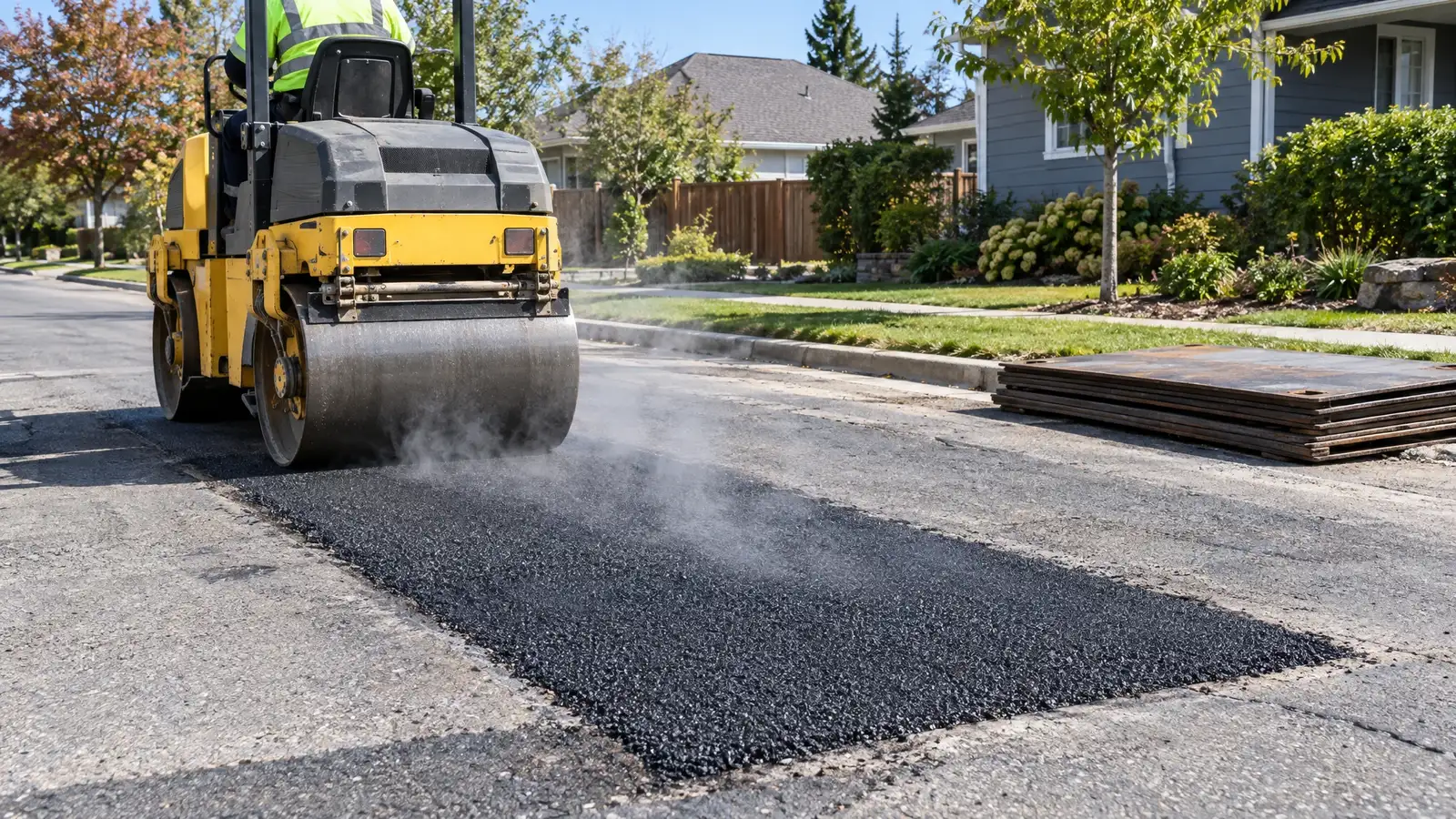 D-10RepairPavement PatchingSaw cutting, base repair and asphalt or concrete patching where utility trenches cross streets, drives and parking areas.Surface work
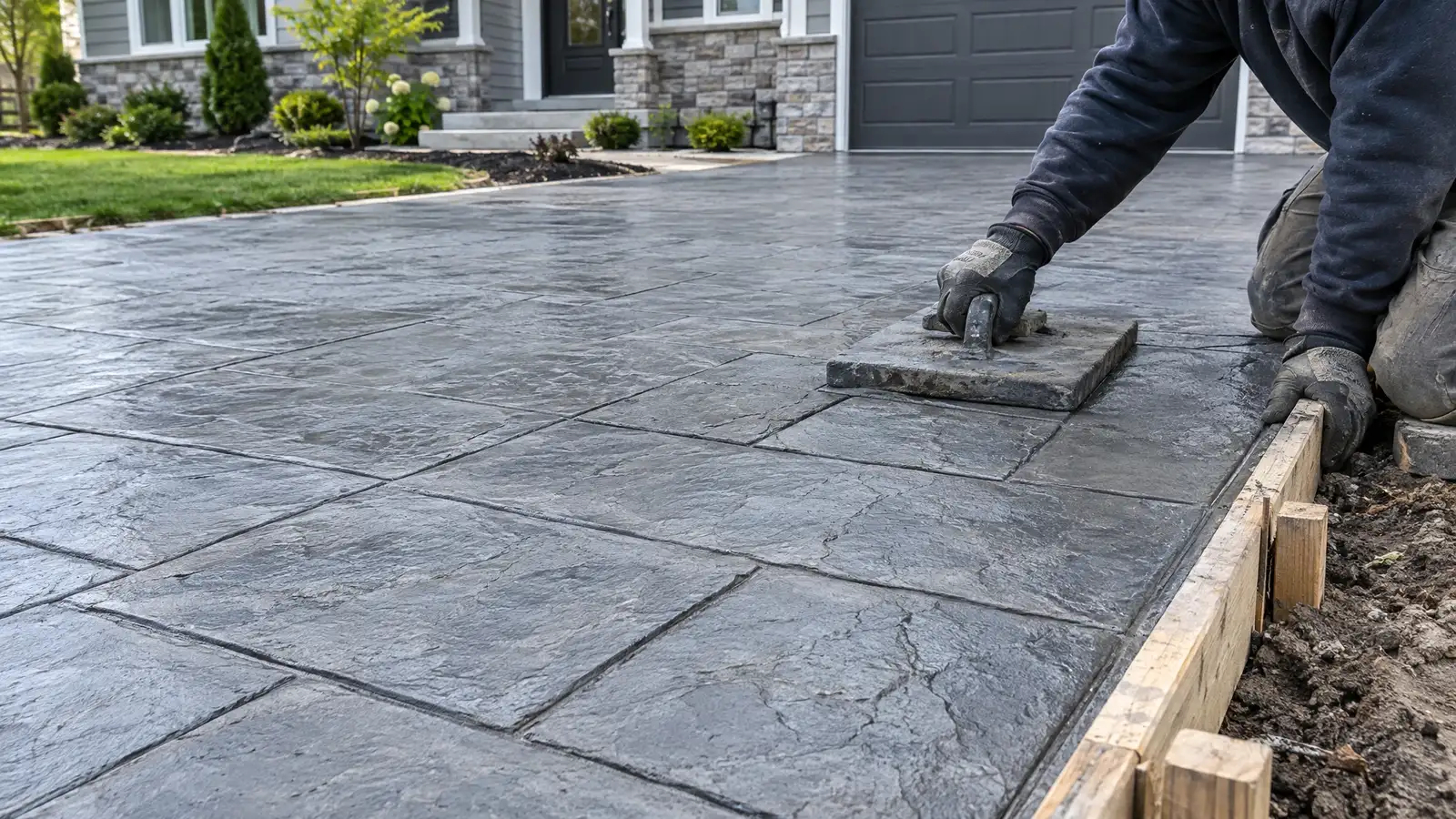 D-09RepairStamped Concrete RestorationRestoring stamped and decorative concrete patios, drives and walkways after utility or excavation work, with pattern, color and texture matched as closely as possible.Surface work
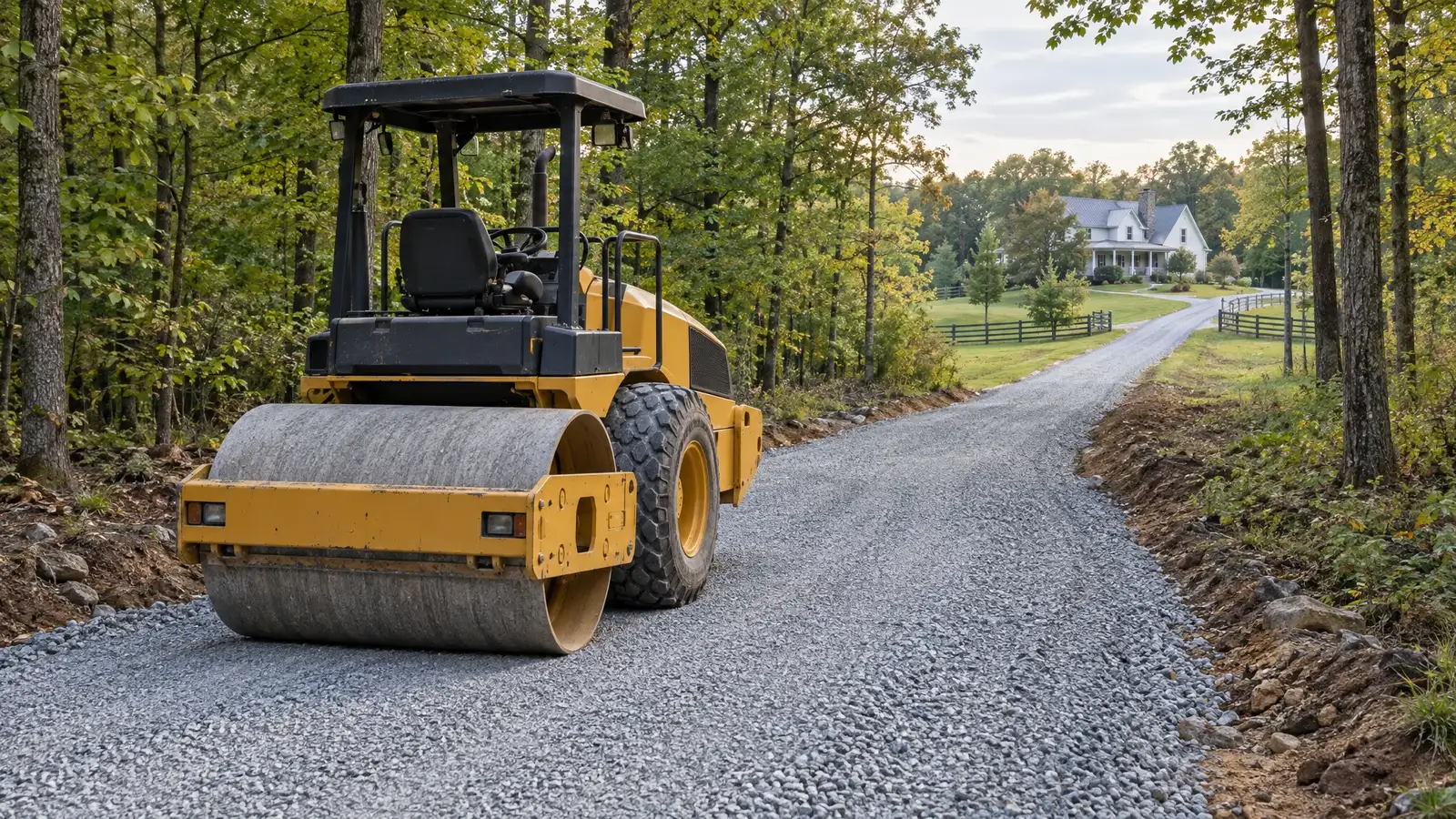 B-10ExcavationDriveway & Road BaseExcavation, stone base and compaction for new driveways, farm roads and private roads, ready for gravel, asphalt or concrete.Surface work
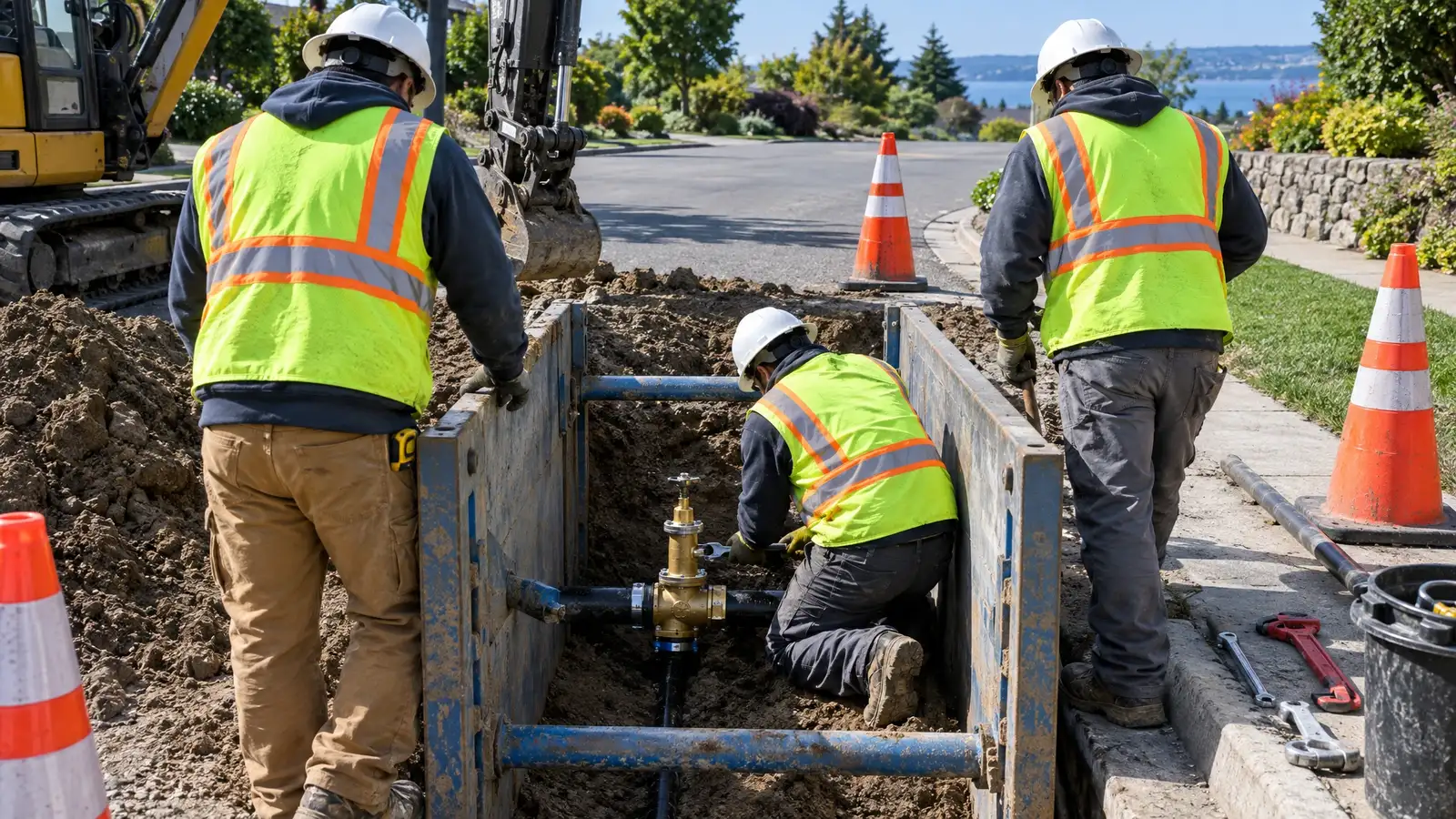 A-12Utility LinesTie-Ins & ConnectionsExcavation, shoring and trench work at tap points and connections, safely exposing existing mains and services so connections can be made.Shallow trench
Read more on this topic.
 The Anatomy of a Utility TrenchWhat goes into a well-built trench, layer by layer, and why each layer matters.2 min read Compaction and Settling After BackfillWhy backfilled areas sink, and how compaction in lifts prevents it.2 min read
 Permits for Underground Utility and Excavation WorkWhat kinds of permits apply, who issues them and how to avoid delays.2 min read
Concrete for Utility Work FAQ.
Will the patch match my driveway?
We match texture and level as closely as we can. Color can vary with age, since new concrete usually looks different from old.
How long before I can drive on it?
Concrete needs time to cure. We give guidance for foot traffic and vehicles based on the mix and the weather.
Why do patches sometimes crack?
A weak base, no control joints or heavy loads too early are common causes. Proper base, joints and cure time reduce the risk.
Concrete for Utility Work across Middle Tennessee.
Pick your city for its page.
Call 811. Then call us.
Tell us what you are building, fixing or draining and we will suggest a site visit and a plan. The lines get located before the bucket moves.