
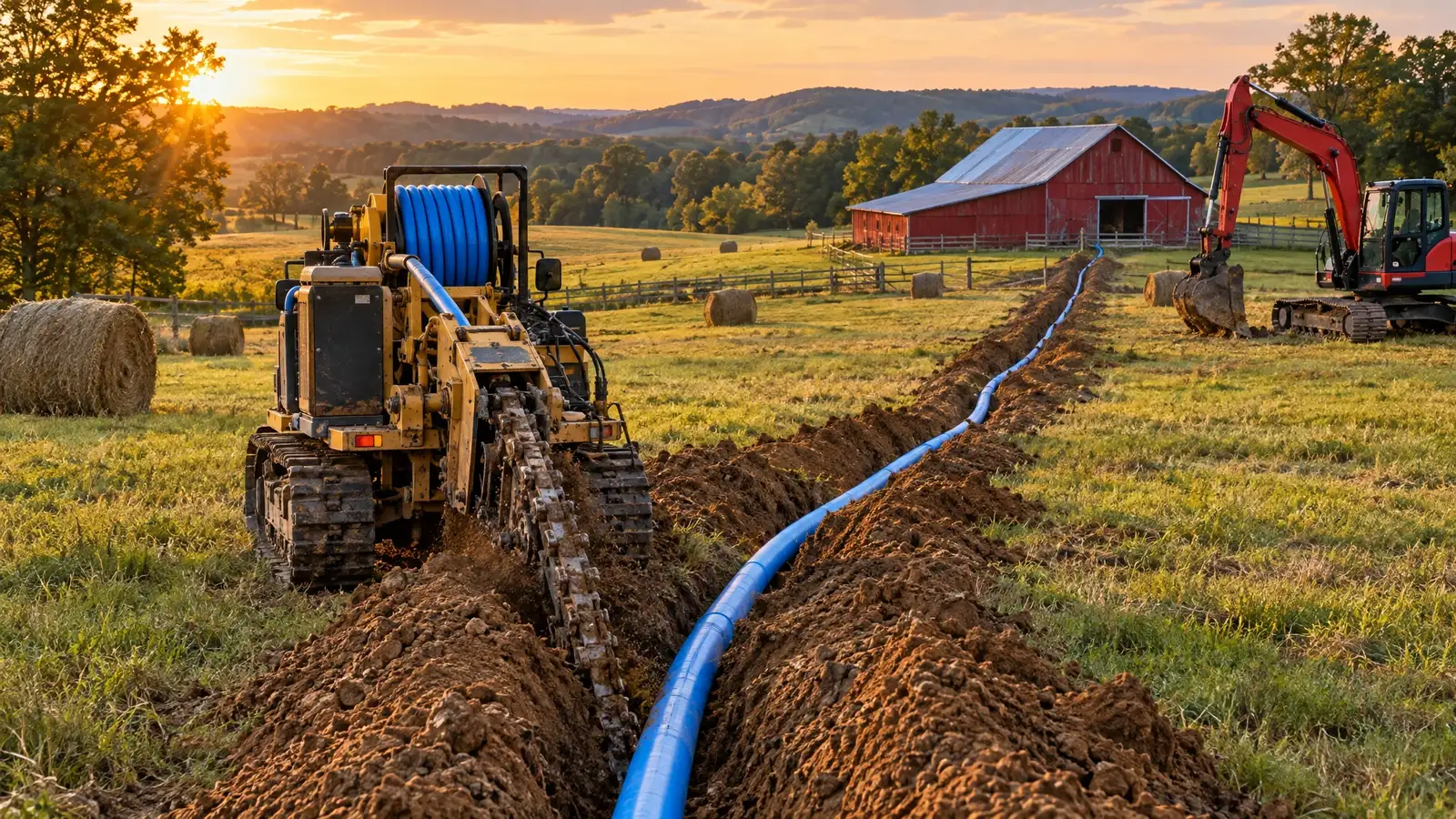
Rural and Farm Utility Lines in Middle Tennessee
Long-distance water, electric conduit and communications lines to barns, shops, wells, homes and fields, with trenching, boring and gate and fence crossings.
- By Project Type
- Standard utility trench
- Middle Tennessee
Rural and Farm Utility Lines, explained.
On a farm or rural lot, the distance from the road to the building can be hundreds of feet or more. Water to a barn, power to a shop, conduit for fiber to a home: each of these runs across pasture, creeks, fence lines and driveways, and each has to be dug, laid and restored.
We choose between trenching and boring based on what the route crosses, plan the run so livestock and equipment are not blocked longer than necessary and install the pipe or conduit with tracer wire and marking tape. We also help locate and verify existing lines such as old water lines and buried power, which are often undocumented.
Signs this service fits
- A barn, shop or second home needs water or power
- A well needs to be connected to a house
- Fiber conduit must reach a rural home
- An old farm line needs replacing
A good fit, and what to know.
We would rather you hear the limits from us than discover them later.
A good fit when
- There is a clear destination and route
- You need long runs done efficiently
- Crossings would be costly to open cut
Worth knowing
- Rock and creeks can limit trenching and call for boring
- Long runs may need approvals from neighbors or easement holders
Why do it this way.
Right method per segment
Trench where it is easy, bore where it is not.
Livestock-aware
Gates and timing planned to keep animals safe.
Traceable lines
Tracer wire and tape for future locating.
Pasture restored
Seeded and finished as part of the job.
From first look to finished ground.
A clear sequence for every job.
- 01
Walk the route
We walk the ground, mark crossings and agree on the route and timing.
- 02
Trench or bore
Open ground is trenched, and crossings are bored.
- 03
Lay the line
Pipe or conduit is installed with tracer wire, tape and fittings at stub-ups.
- 04
Restore
Fences, gates and pasture are put back and seeded.
Services that go together.
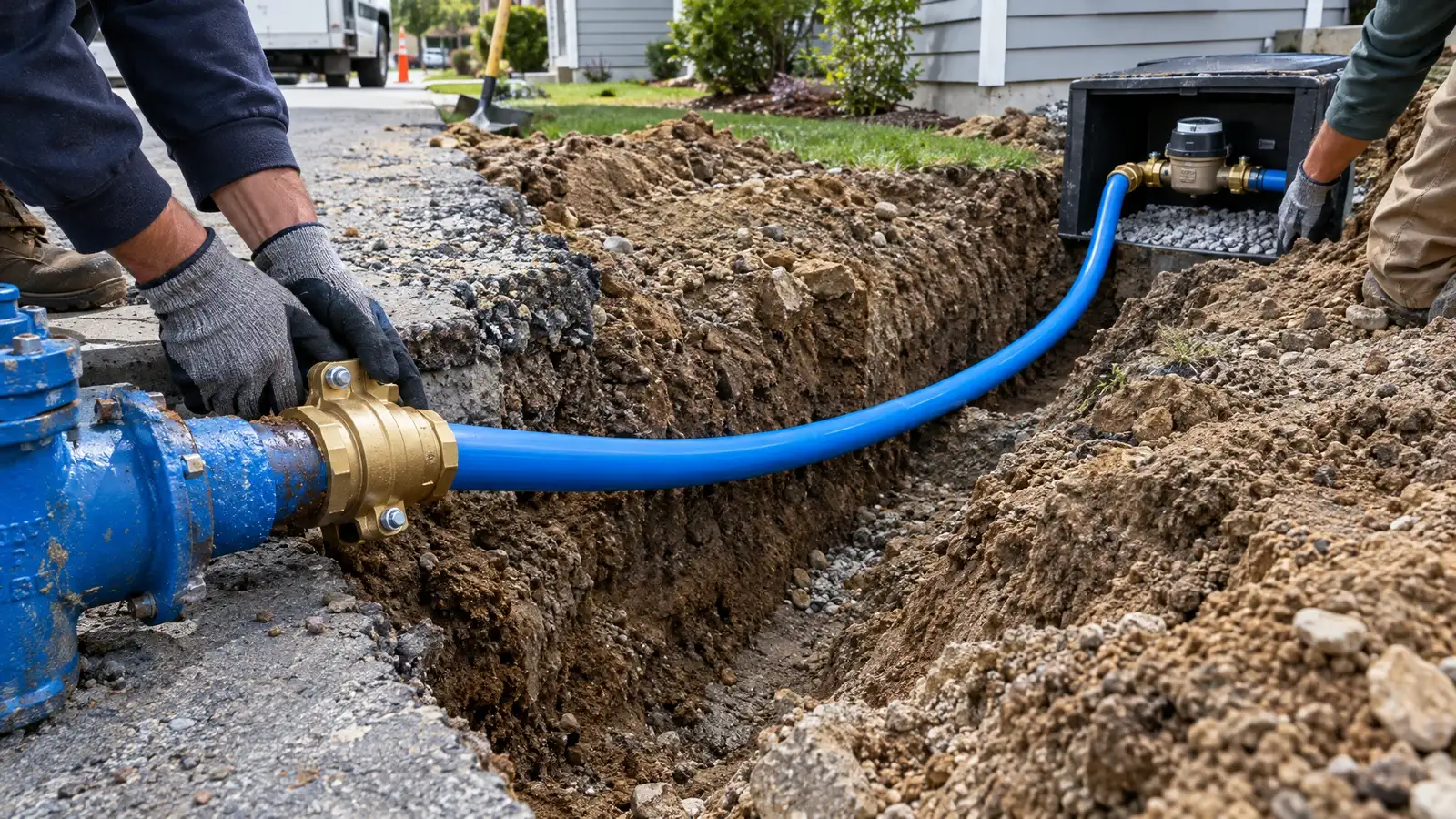 A-02Utility LinesWater LinesNew water service lines and private water mains trenched, laid and backfilled from the meter or main to your home, building or outbuilding.Shallow trench
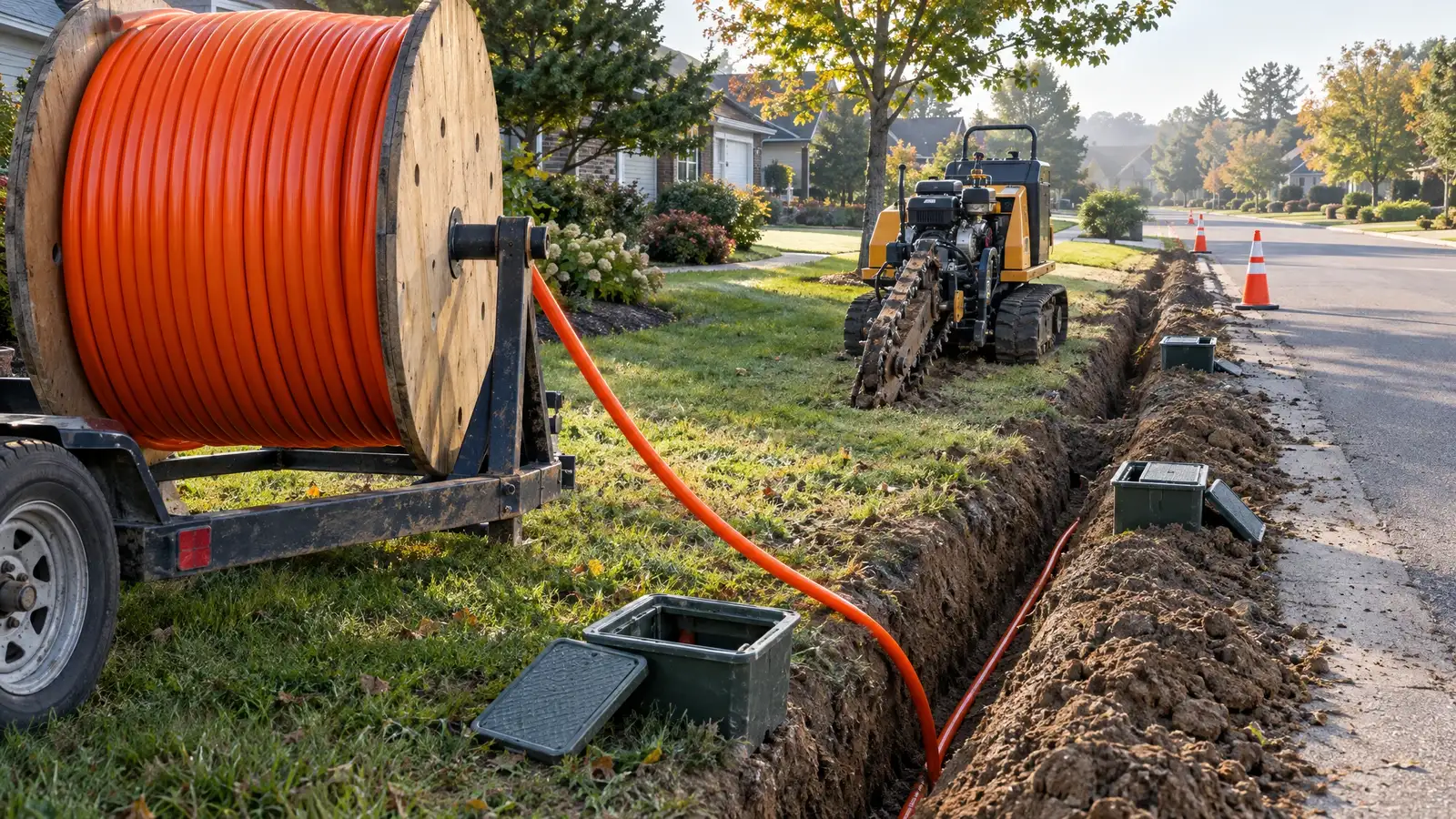 A-06Utility LinesFiber & TelecomTrenching, boring and handhole installation for fiber optic, cable and communications conduit to homes, farms and commercial buildings.Shallow trench
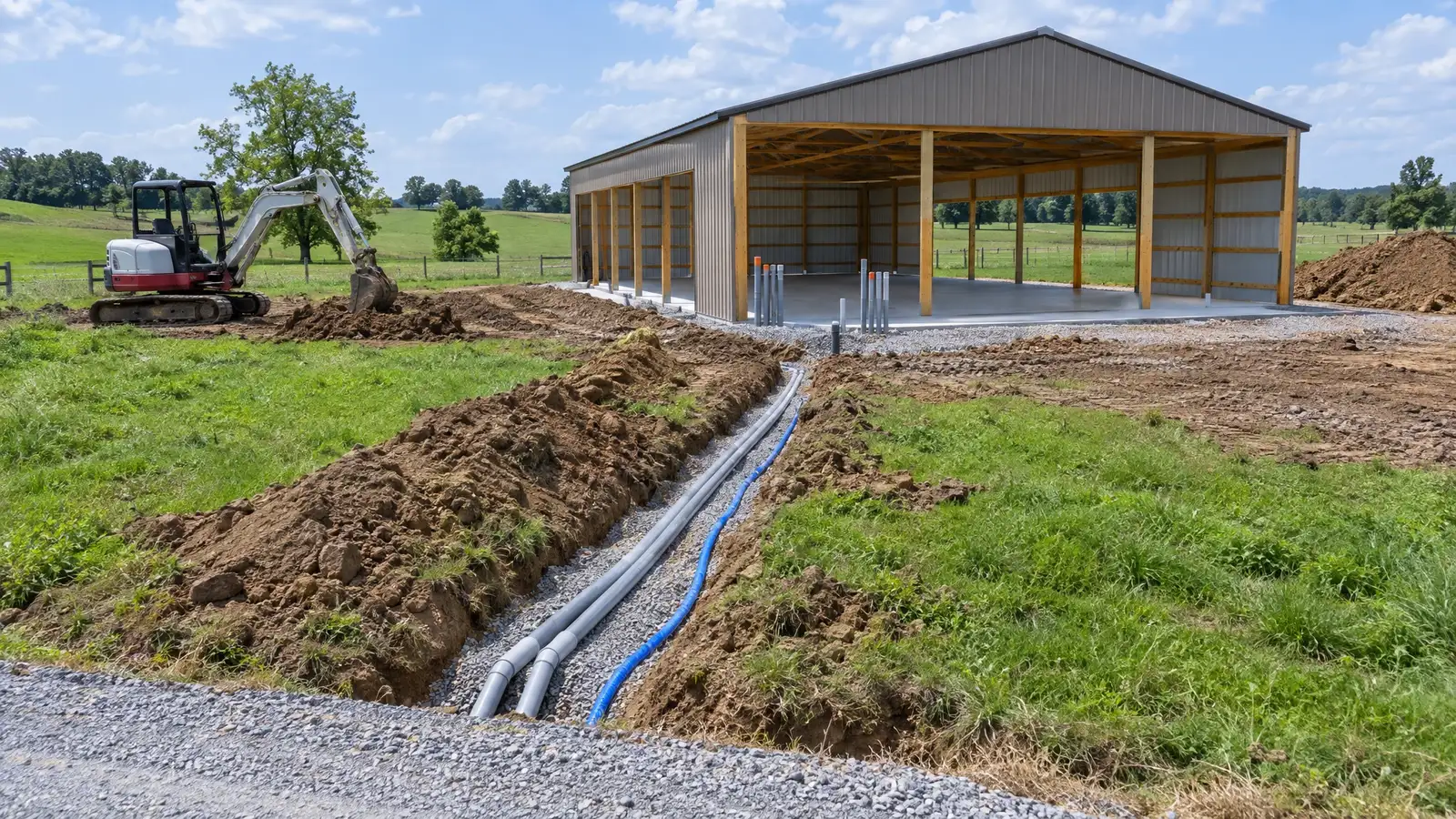 E-06ProjectsShop, Barn & ADU UtilitiesTrenching, conduit, water, drain and septic work for pole barns, workshops, detached garages, guest houses and accessory dwellings.Shallow trench
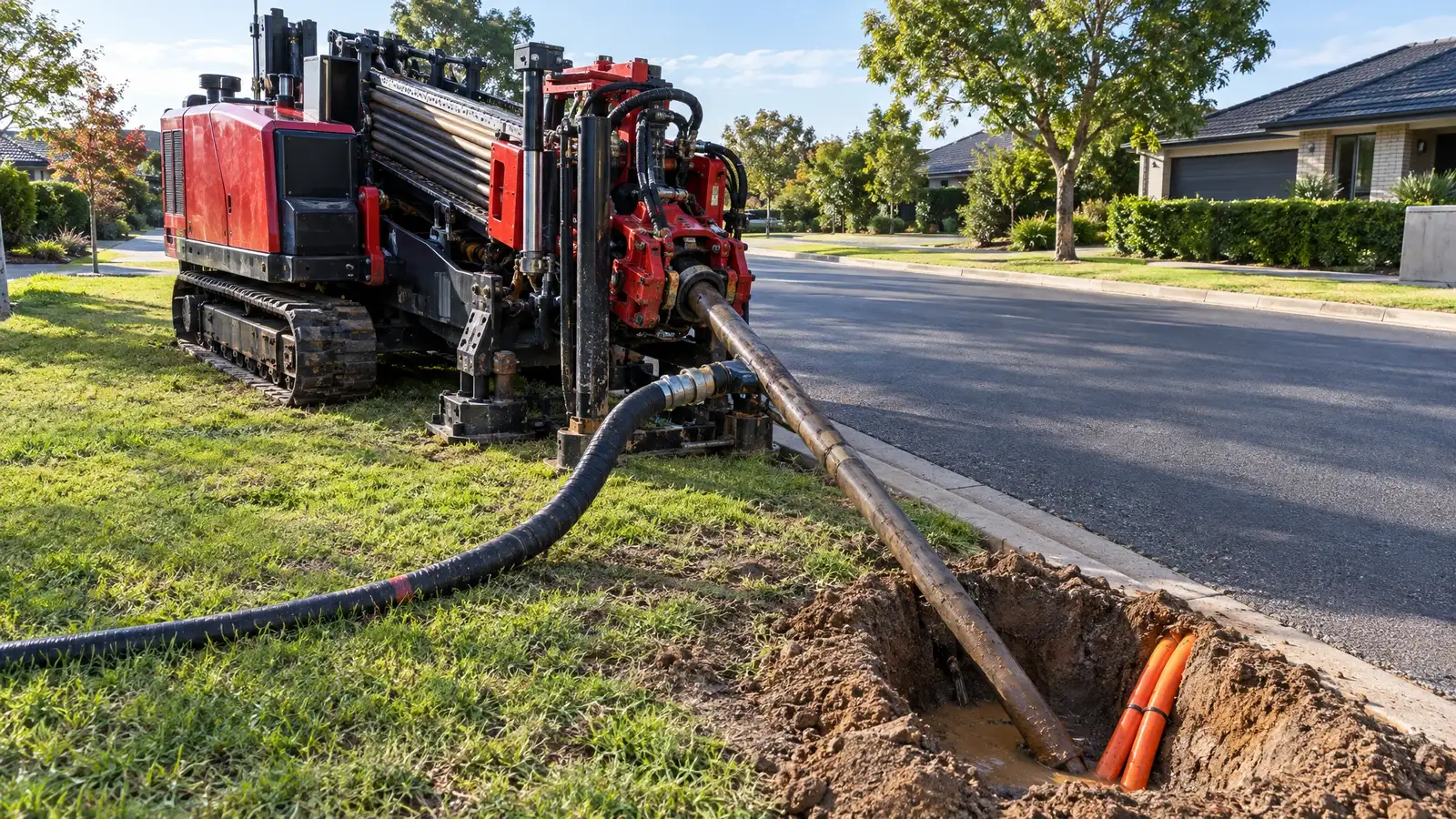 C-01TrenchlessDirectional DrillingSteerable drilling that installs conduit and pressure pipe under driveways, roads, creeks, trees and landscaping with only small entry and exit pits.Trenchless bore
Read more on this topic.
Utility Planning for a Barn, Shop or ADUWhat to decide before the first shovel goes in for a detached building.2 min read Directional Boring vs Open TrenchWhen boring beats trenching, when trenching wins and how to decide for your route.2 min read 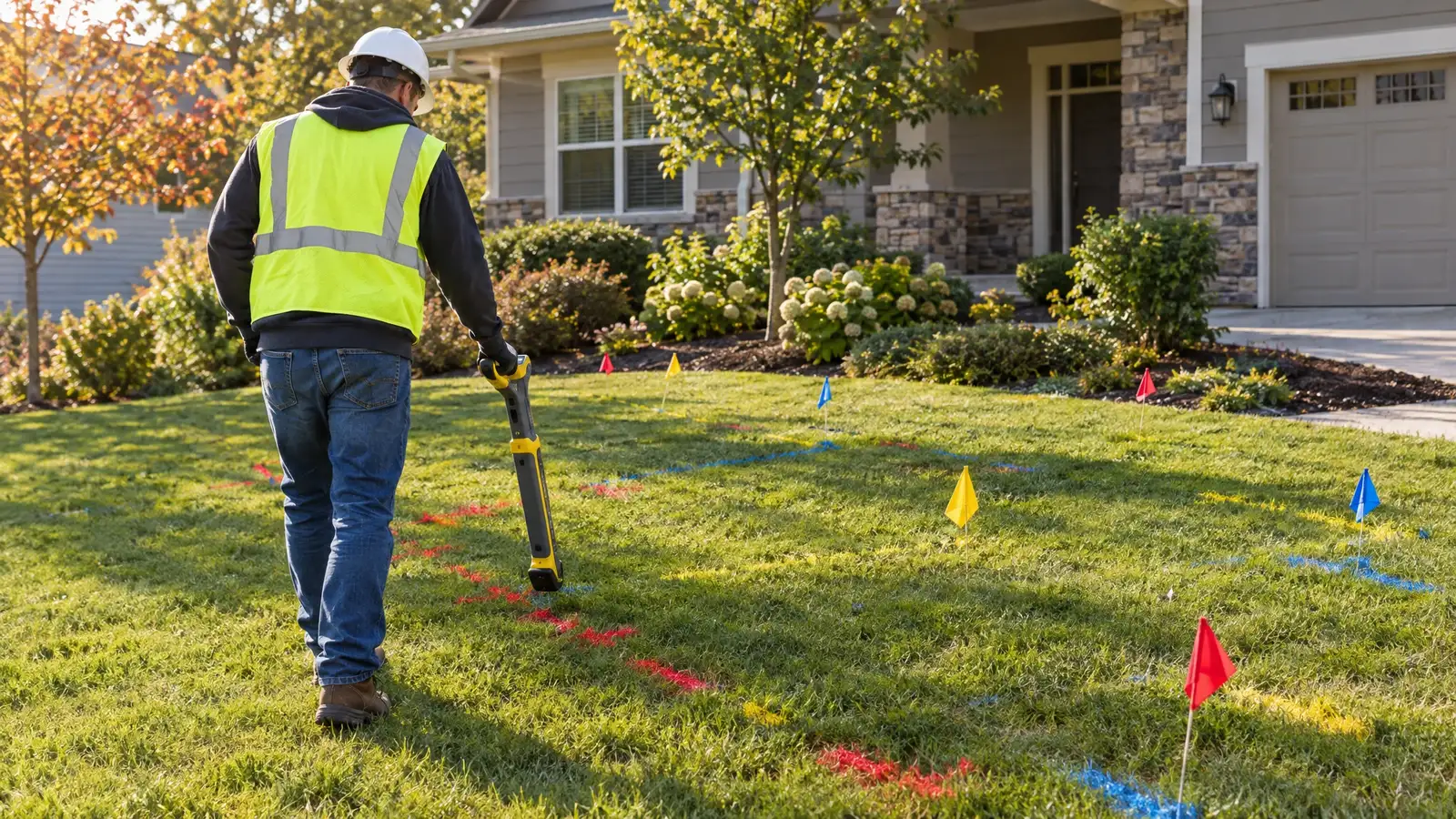 Utility Easements and Who Owns What LineEasements, rights-of-way and meters explained, with a practical guide to who owns which line.2 min read
Rural & Farm Utility Lines FAQ.
How do you cross creeks and fences?
Fences and gates are worked around or temporarily moved, and creeks are crossed by boring or by approved methods. We review options before starting.
Can you find old lines on my farm?
We can trace many buried lines with locators, and verify them with careful digging. Old lines are often undocumented, so we are cautious.
How do you protect livestock?
We plan trench openings so they are short and fenced off, and we close them each day when animals have access.
Rural & Farm Utility Lines across Middle Tennessee.
Pick your city for its page.
Call 811. Then call us.
Tell us what you are building, fixing or draining and we will suggest a site visit and a plan. The lines get located before the bucket moves.