Septic Repair and Drain Field Service in Nashville and Middle TN
Excavation and repair for septic tanks, risers, distribution boxes, lines and drain fields that are failing, damaged or backing up.
- Repair, Drainage and Restoration
- Deep dig, protected
- Middle Tennessee
Septic Repair and Drain Field Service, explained.
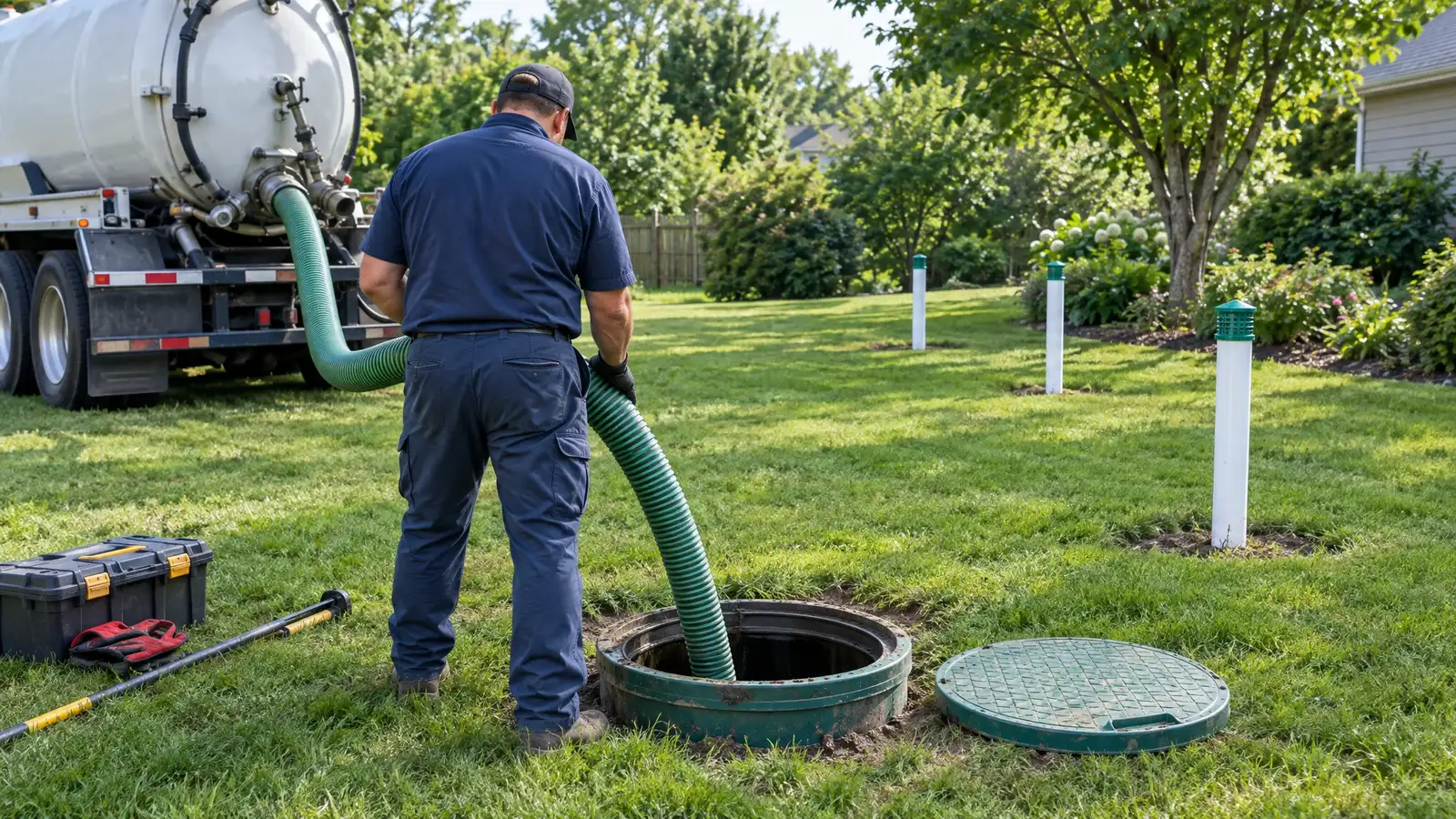
Septic systems usually give warnings before they fail: slow drains, gurgling, wet or unusually green patches over the field, odors and backups. The cause might be a full tank, a broken line, a clogged distribution box, a crushed pipe or a drain field that can no longer absorb water.
We uncover the tank, risers, boxes and lines to find where the problem is. Repairs range from replacing a broken pipe or baffle to rebuilding a section of the field. A failing field is a bigger decision, and we explain the options, including when repair is not enough and a replacement is the answer.
Signs this service fits
- Drains are slow and the tank has been pumped
- There are wet or smelly areas over the field
- A line or box is damaged or has collapsed
- Sewage backs up into the home
A good fit, and what to know.
We would rather you hear the limits from us than discover them later.
A good fit when
- Signs of septic trouble are present
- Components can be located and exposed
- You want clear options before major work
Worth knowing
- Septic work is regulated and often needs permits
- Some failures are caused by soil or water table conditions that cannot be fully repaired
Why do it this way.
Find the real problem
Not every backup means a failed field.
Repair when possible
Smaller failures are fixed without a full replacement.
Honest options
When replacement is needed, we say so.
Field protected
Machine traffic is limited on and near the field.
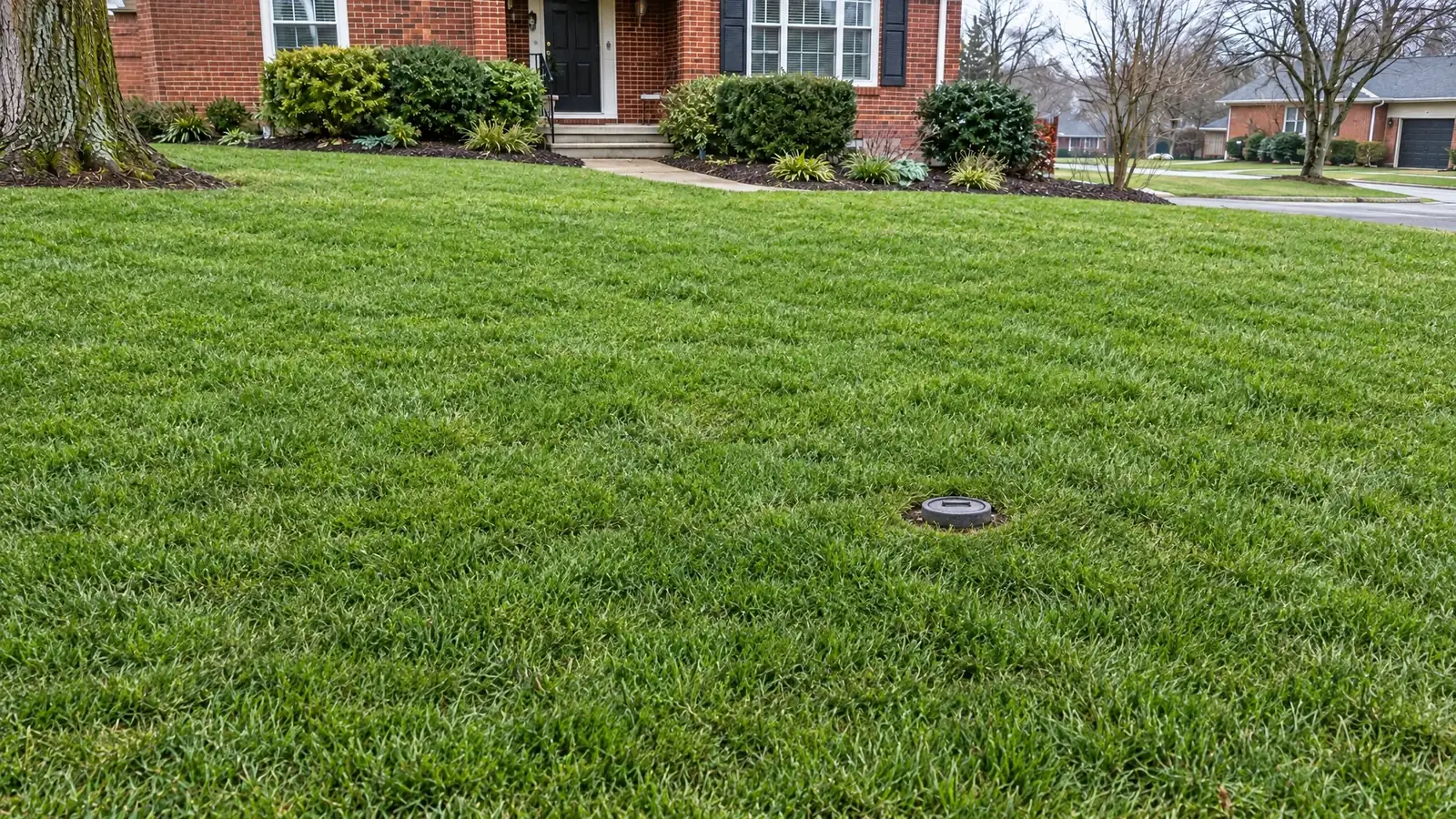
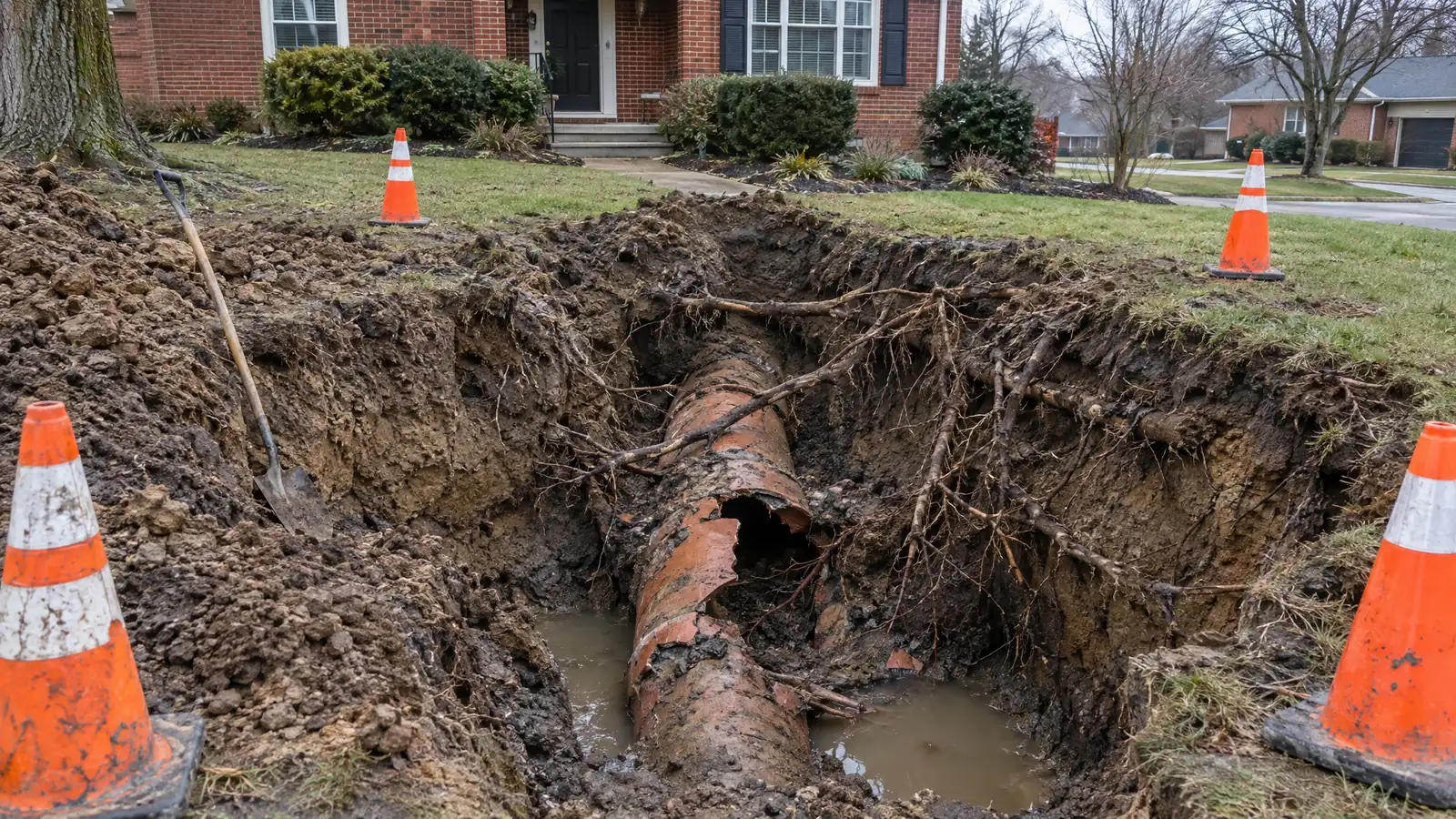
Before and after: failed sewer to restored yard
 AfterBefore
Illustrative scene created to show a typical condition before and after the work. Drag the handle to slide between them.
From first look to finished ground.
A clear sequence for every job.
- 01
Locate and uncover
Components are located and exposed with careful digging.
- 02
Diagnose
Tank, boxes, lines and the field are checked to find the failure.
- 03
Repair or rebuild
Broken pipe, boxes or sections of the field are repaired or replaced.
- 04
Restore
Lids, risers and the surface are restored, and equipment is kept off the field.
Services that go together.
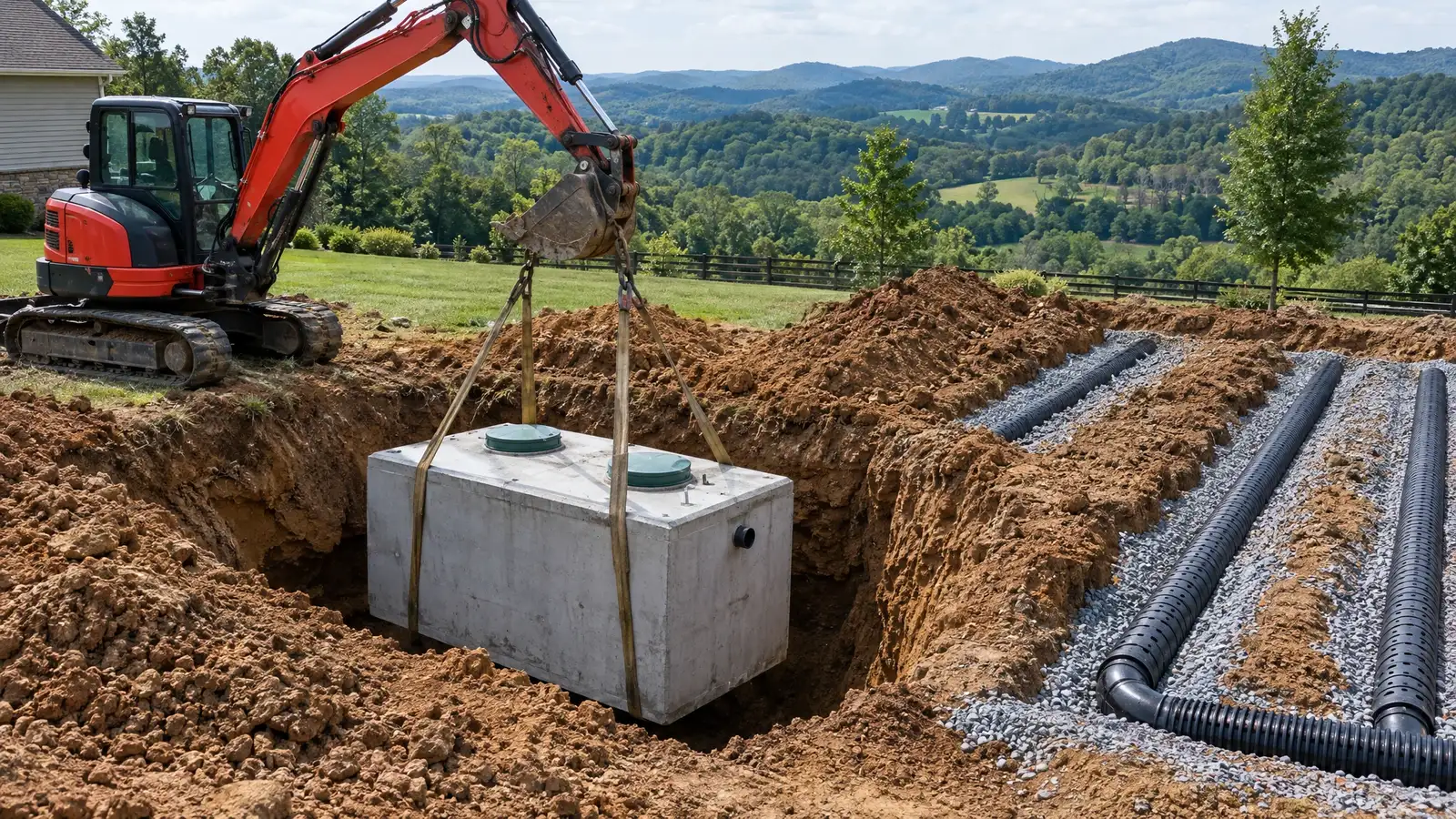 A-11Utility LinesSeptic SystemsExcavation, tank setting and drain field construction for new and replacement septic systems on properties without a public sewer.Deep excavation
 E-05ProjectsRural & Farm Utility LinesLong-distance water, electric conduit and communications lines to barns, shops, wells, homes and fields, with trenching, boring and gate and fence crossings.Shallow trench
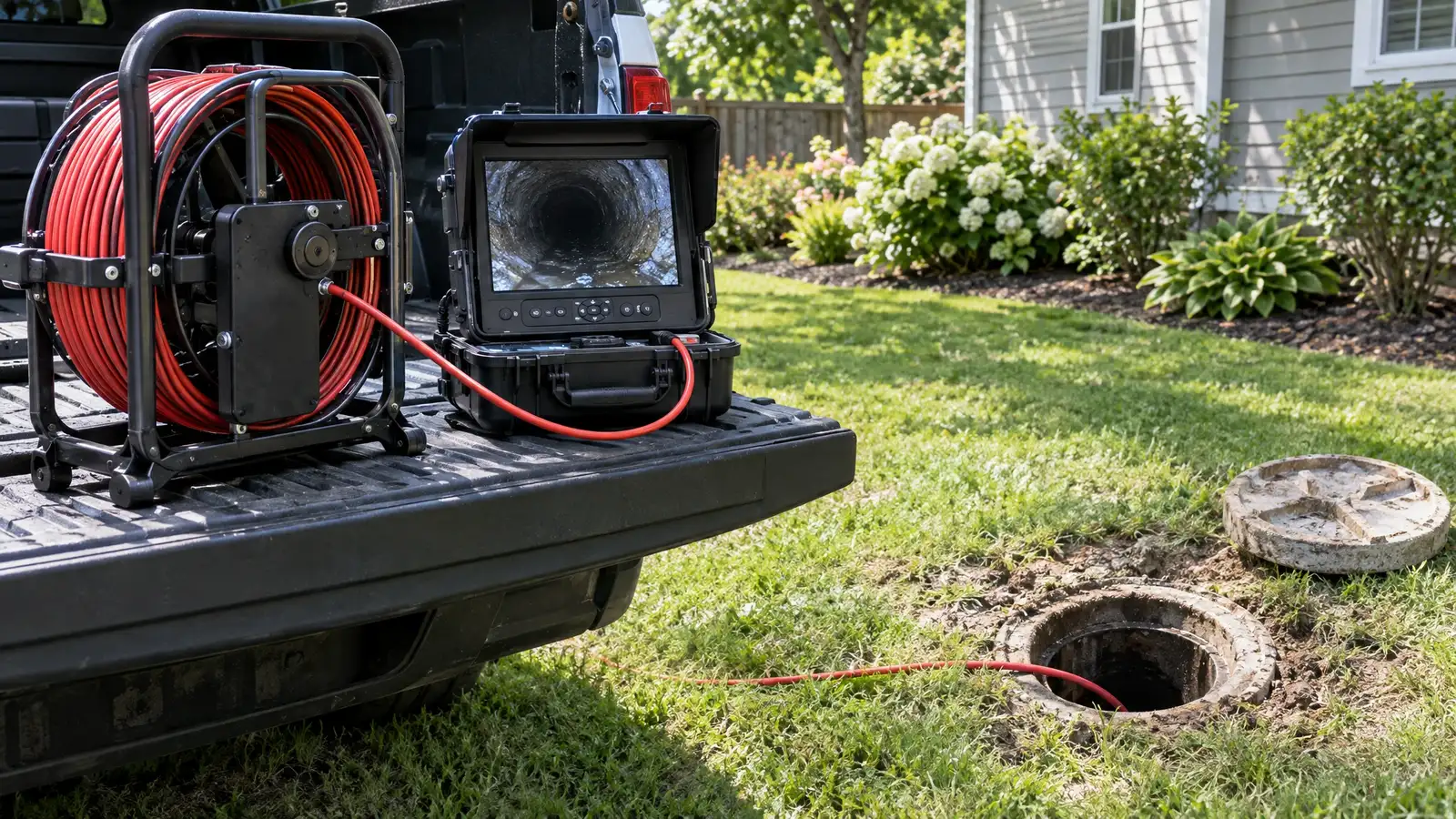 C-07TrenchlessCamera & Pre-Dig SurveysRecorded camera inspections of sewer and drain lines, with locating, to find defects, confirm routes and choose between lining, bursting and a targeted dig.Trenchless bore
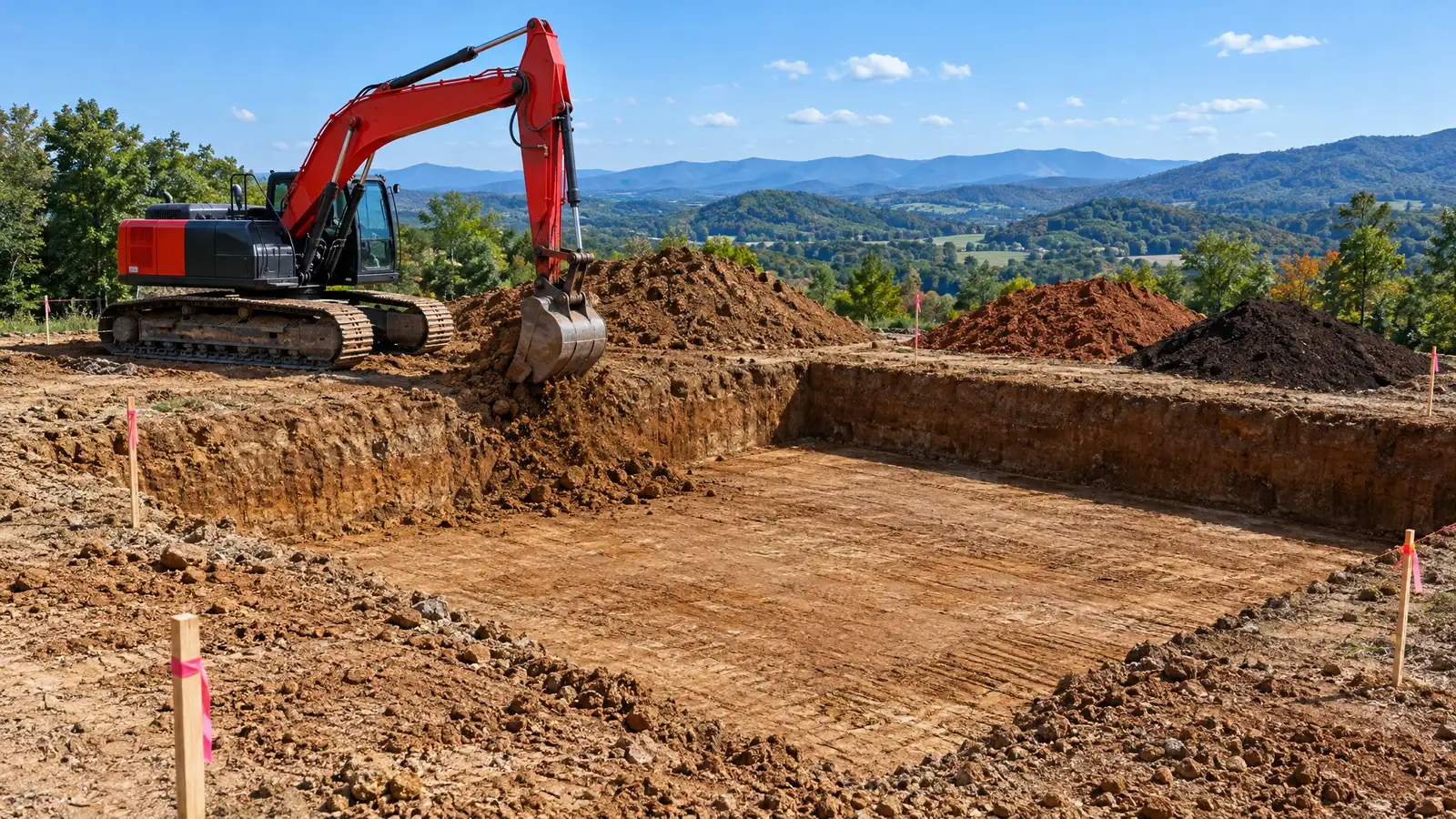 B-01ExcavationExcavation ContractorFull-service excavation for building pads, basements, utilities, drainage and site work, planned around locates, soil and safe digging practice.Deep excavation
Read more on this topic.
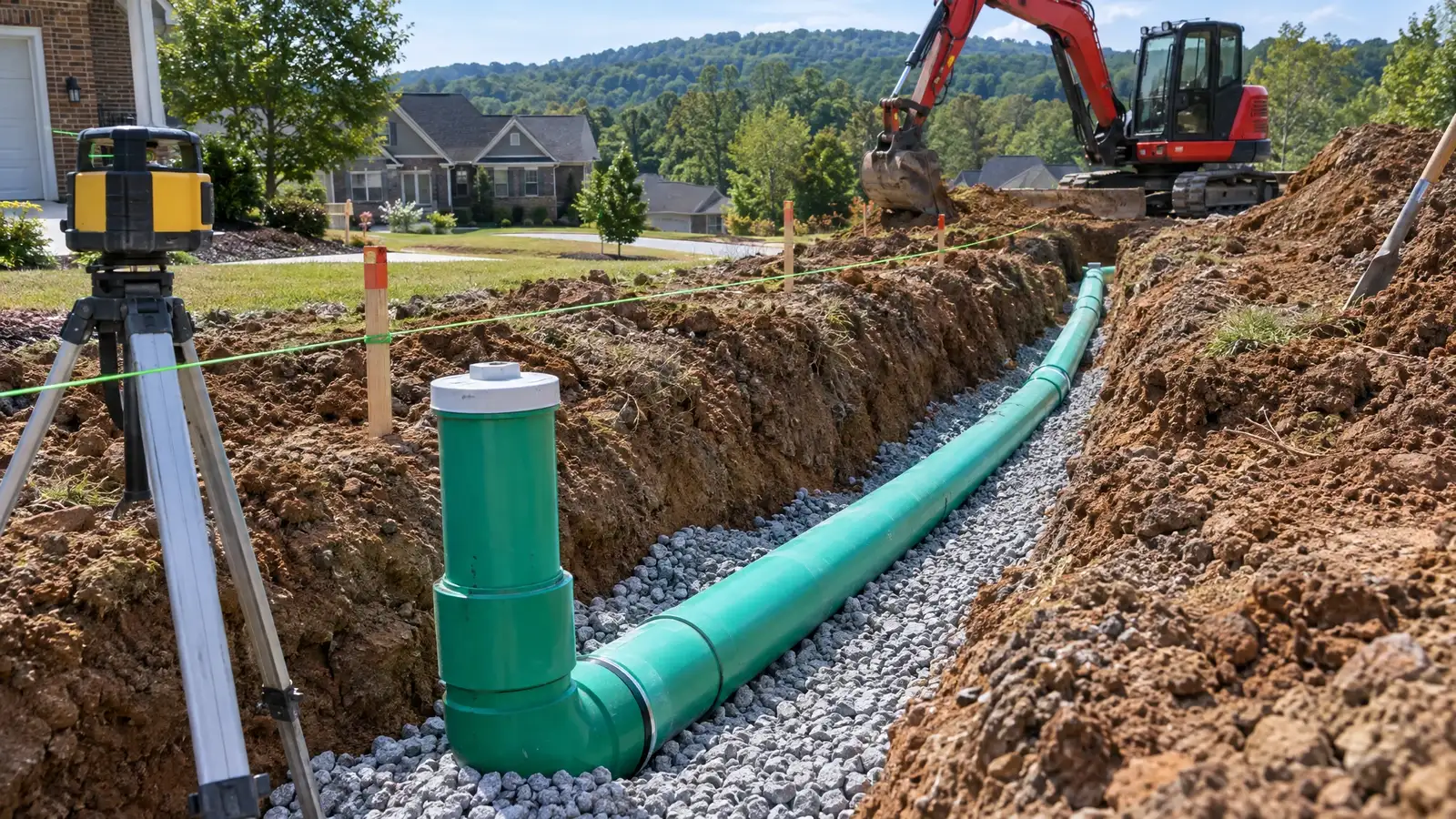 How Underground Utilities Are Laid OutWhere the water, sewer, storm, power and data lines usually run, and why the layout is rarely a straight line.2 min read Permits for Underground Utility and Excavation WorkWhat kinds of permits apply, who issues them and how to avoid delays.2 min read
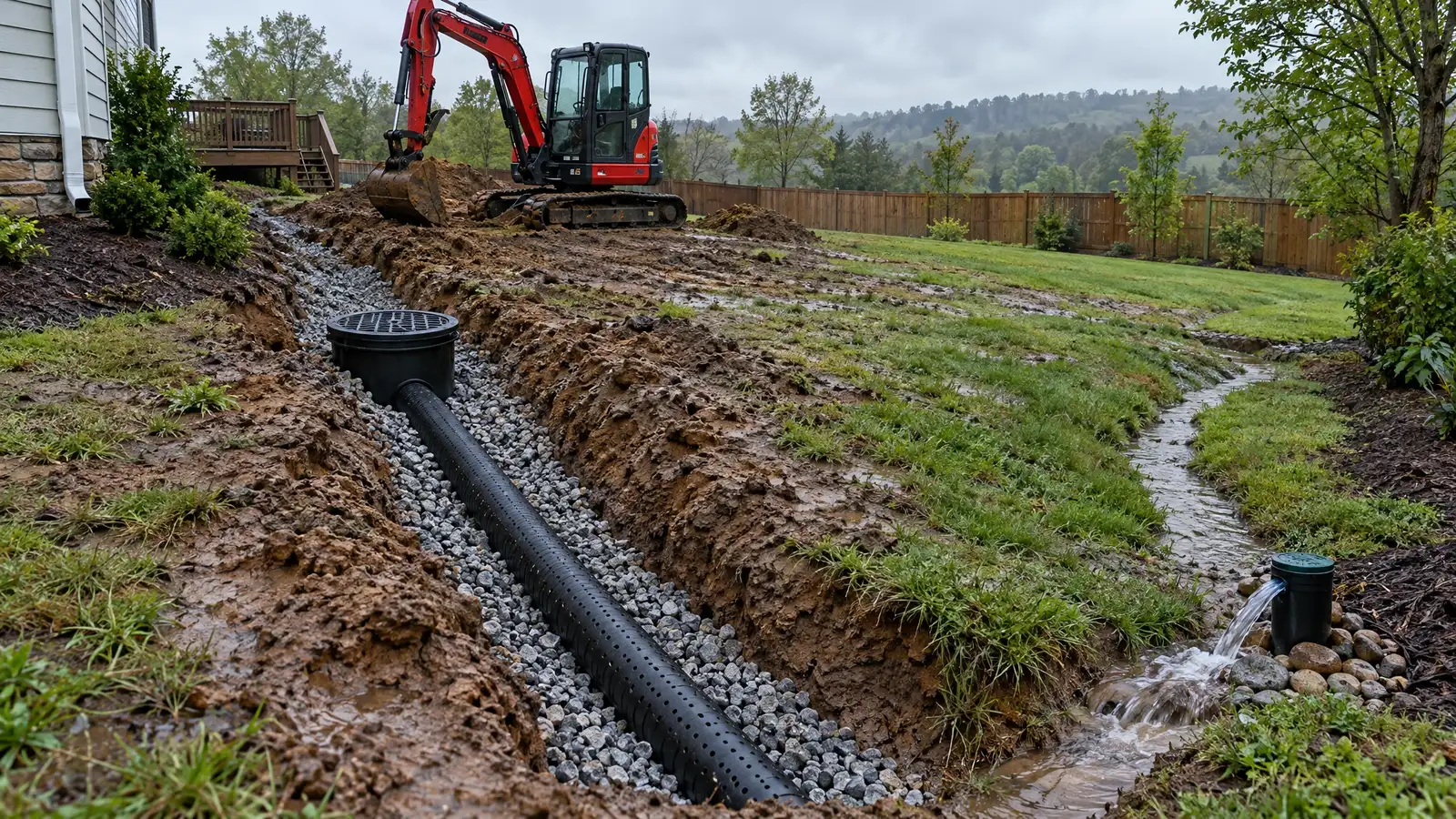 Clay Soil and Your Utility LinesHow Middle Tennessee clay affects trenches, drainage and settling.2 min read
Septic Repair FAQ.
What are signs of septic failure?
Slow drains, gurgling, odors, backups and wet or lush patches over the field are common signs.
Can a drain field be repaired?
Sometimes, depending on the cause and the soil. In other cases the field is at the end of its life, and replacement is the answer.
How often should a tank be pumped?
It varies with the tank size and household use. Many guidelines suggest every few years, and a professional can advise for your system.
Septic Repair across Middle Tennessee.
Pick your city for its page.
Call 811. Then call us.
Tell us what you are building, fixing or draining and we will suggest a site visit and a plan. The lines get located before the bucket moves.