French Drain Installation in Nashville and Middle Tennessee
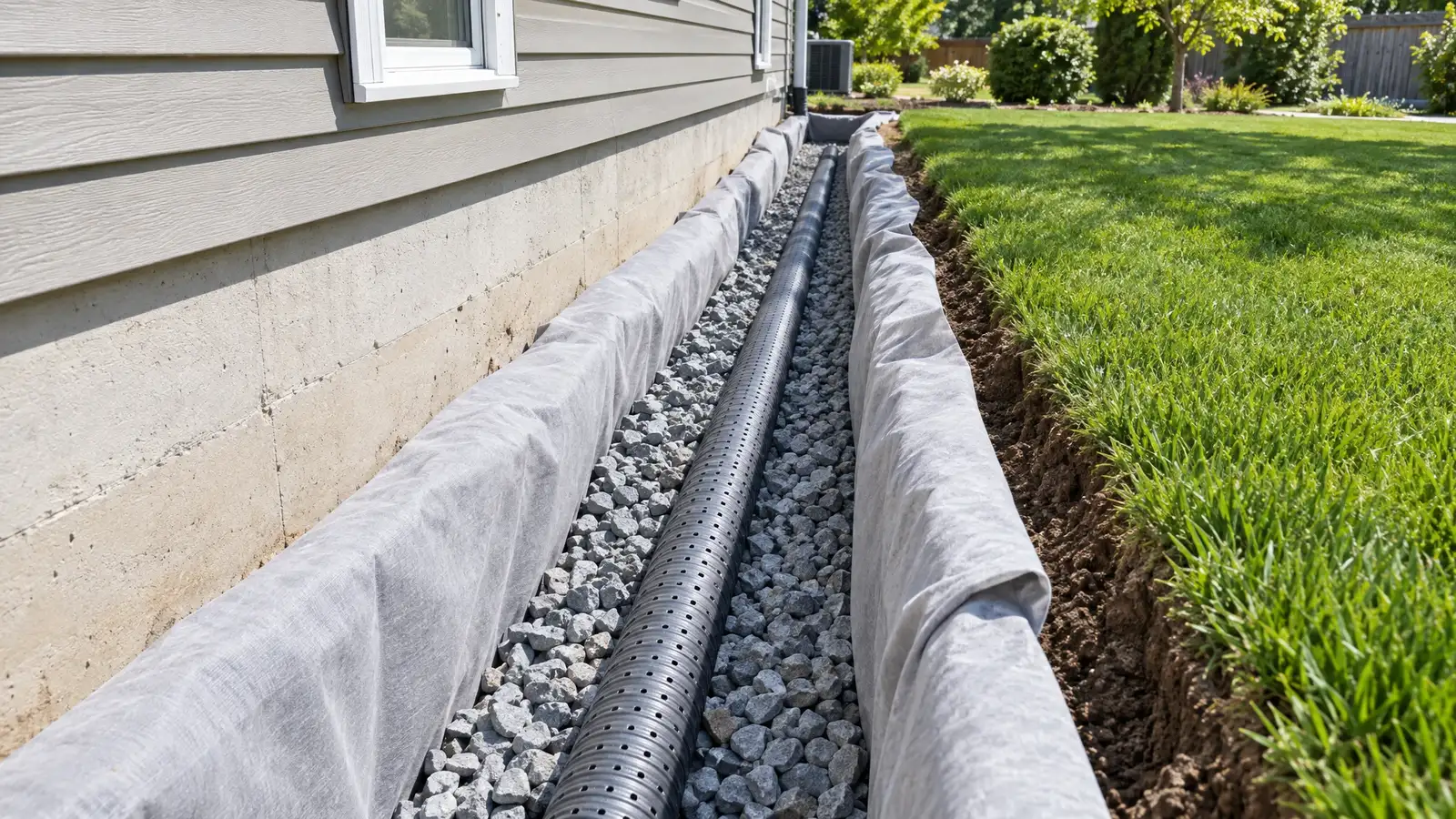
Fabric-lined trenches with perforated pipe and clean stone that intercept groundwater and carry it away from the house and the lawn.
- Repair, Drainage and Restoration
- Standard utility trench
- Middle Tennessee
French Drain Installation, explained.
A French drain is a trench lined with filter fabric, filled with clean stone and fitted with a perforated pipe that lies on a bed of stone. Water in the soil moves toward the stone, enters the pipe and flows downhill to an outlet. It works by giving water an easier path than the soil provides.
We dig the trench with a steady fall toward the outlet, line it with fabric, set the pipe on stone, cover it and wrap the fabric over the top before the final layer goes in. Details matter: grade, stone size, fabric type and a clear outlet are what separate a drain that works for years from one that clogs in a season.
Signs this service fits
- Water seeps toward a wall or into a basement
- A slope sends groundwater to the lawn
- A wet area stays soggy even without a low spot
- A retaining wall needs drainage behind it
A good fit, and what to know.
We would rather you hear the limits from us than discover them later.
A good fit when
- Groundwater, not just surface runoff, is the problem
- A downhill outlet is available
- You want the water managed with limited visible change
Worth knowing
- A French drain does not fix a leaking roof, a failing foundation or an outlet that does not exist
- On flat lots, a pumped system may be needed
Why do it this way.
Intercepts groundwater
Placed across the water’s path, it catches it before the house.
Continuous fall
Slope carries water to the outlet.
Clean stone and fabric
Reduces clogging from soil fines.
A defined outlet
Water exits at a stable, planned point.
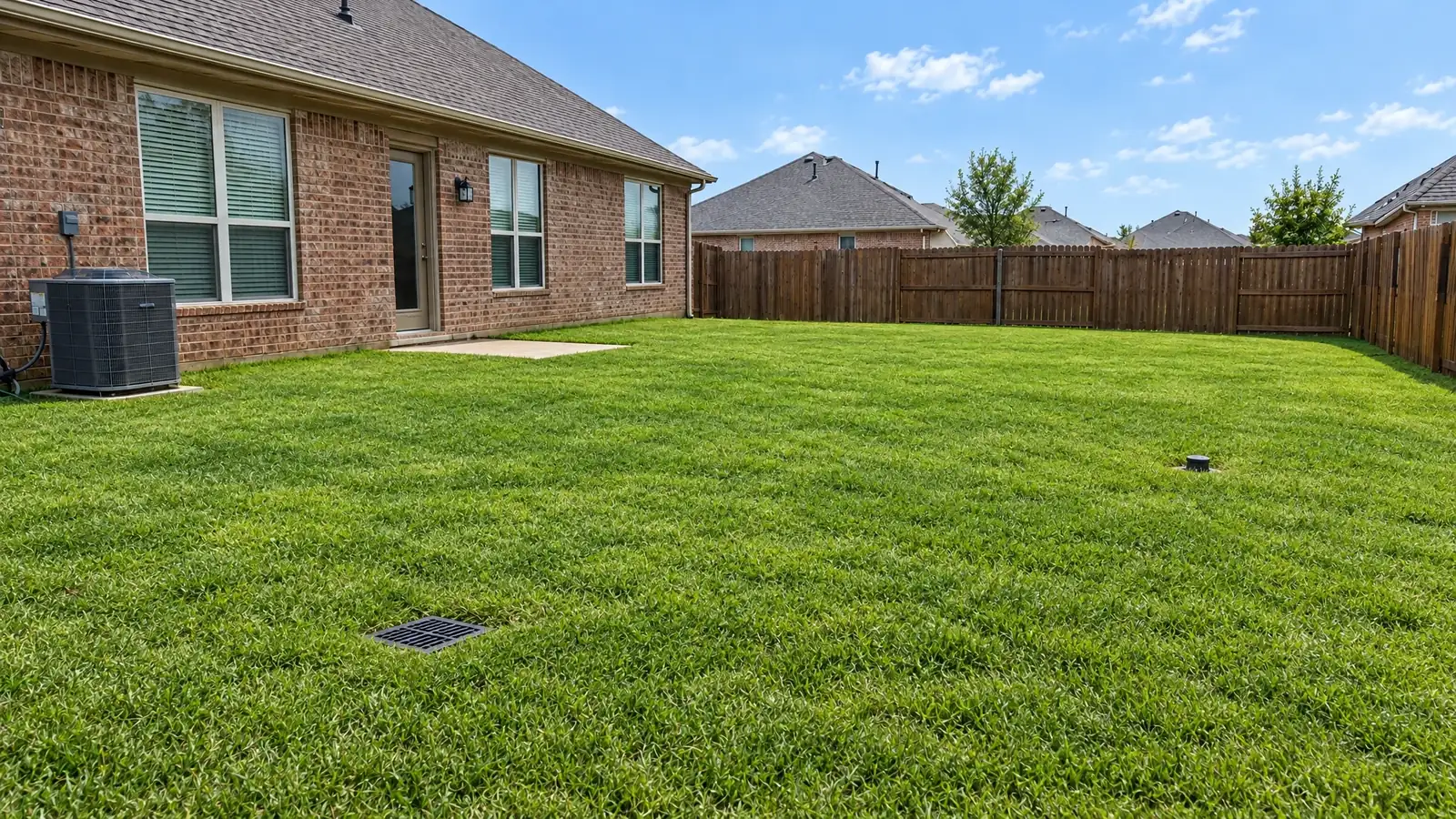
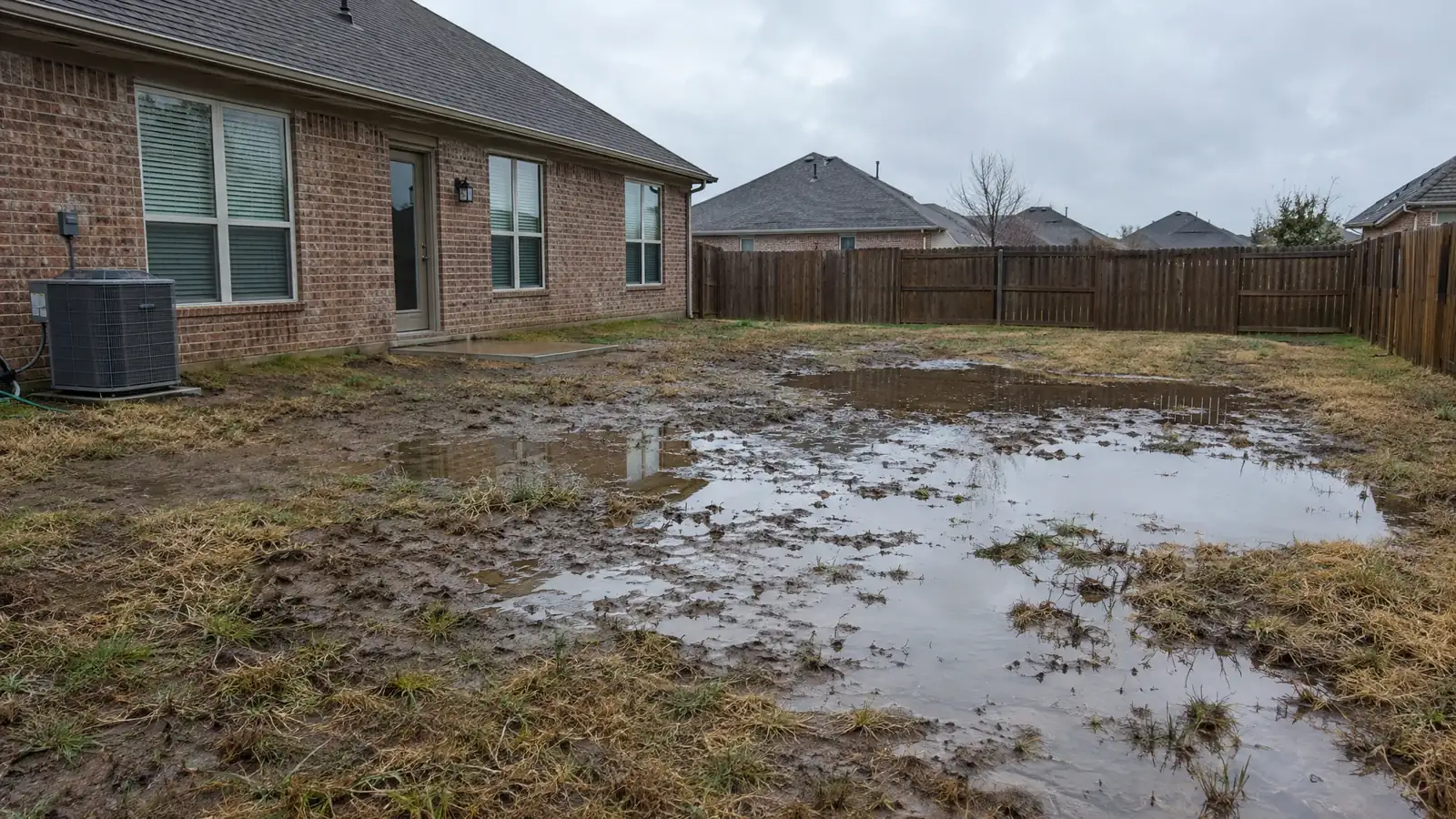
Before and after: soggy yard to dry yard
 AfterBefore
Illustrative scene created to show a typical condition before and after the work. Drag the handle to slide between them.
From first look to finished ground.
A clear sequence for every job.
- 01
Pick the route
The trench is laid out where groundwater is intercepted and a fall to the outlet is possible.
- 02
Dig and line
The trench is cut with a steady fall and lined with filter fabric.
- 03
Stone and pipe
Clean stone and perforated pipe are placed, then wrapped in fabric.
- 04
Cover and finish
The top is finished with stone, soil, sod or mulch, and the outlet is armored.
Services that go together.
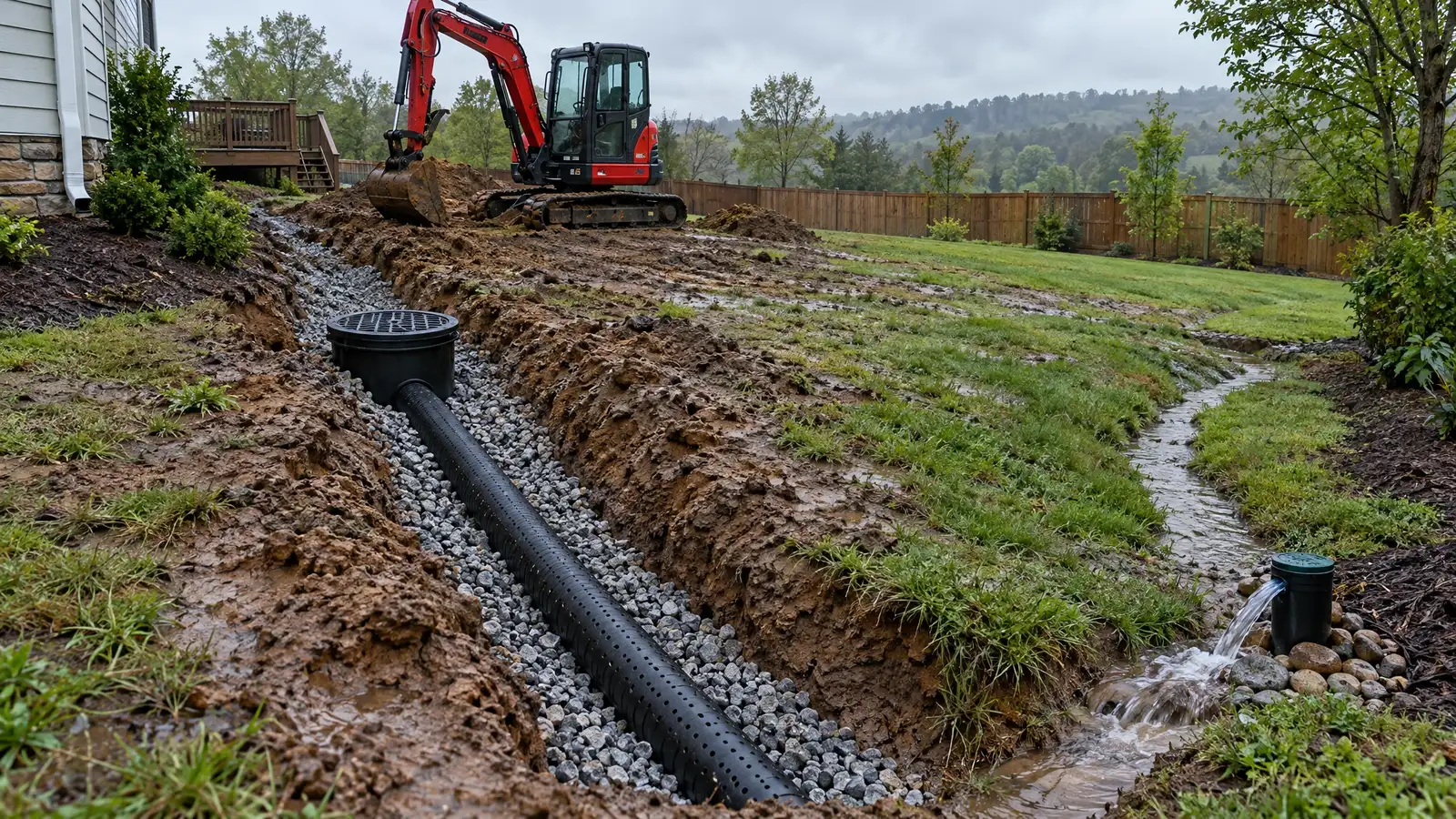 D-03RepairYard DrainageSurface and subsurface drainage built into the yard: regrading, swales, catch basins, drain pipe, French drains and downspout extensions.Shallow trench
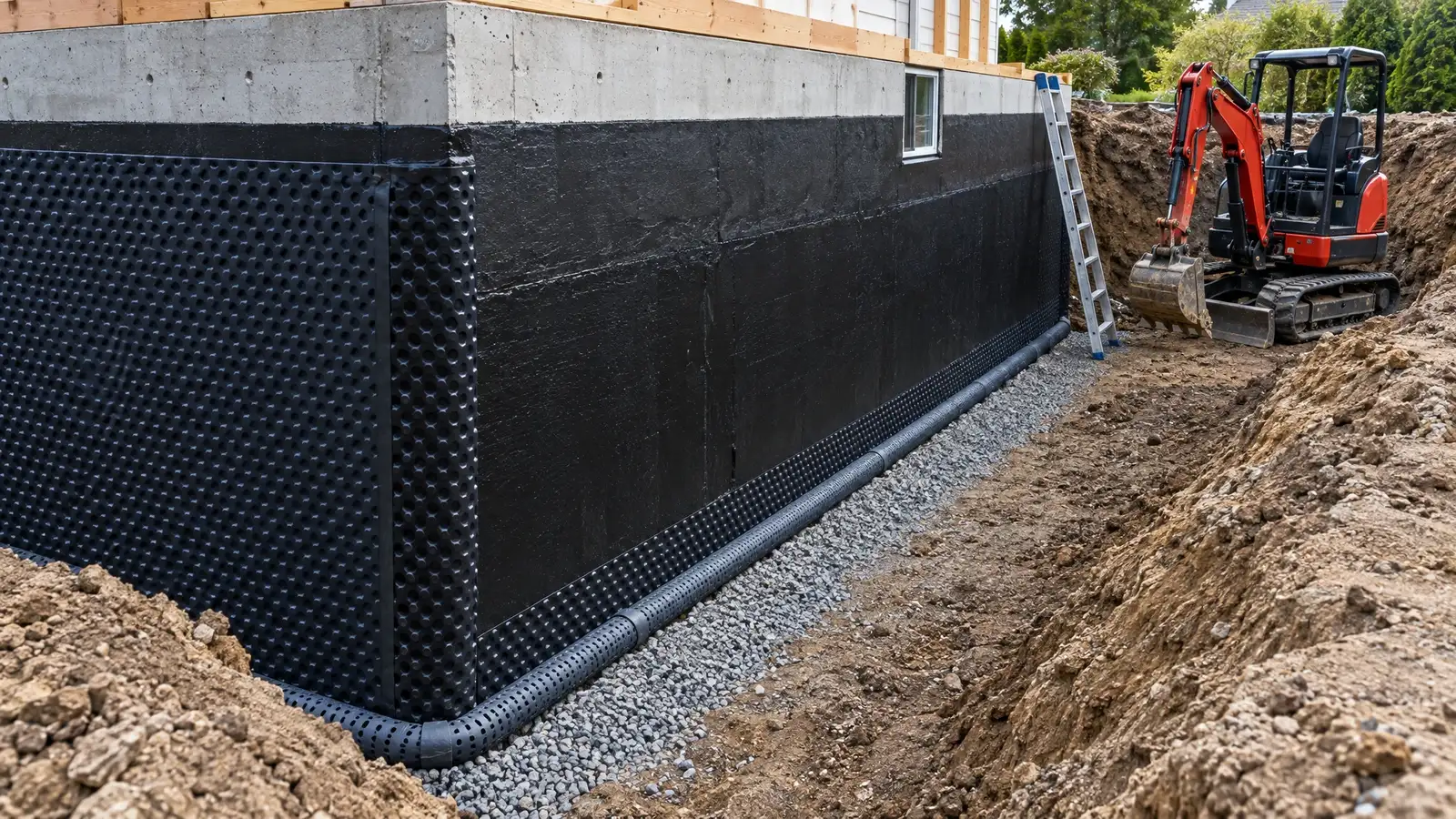 D-05RepairBasement WaterproofingExterior excavation, wall sealing and footing drains that keep groundwater and runoff out of basements and crawl spaces.Deep excavation
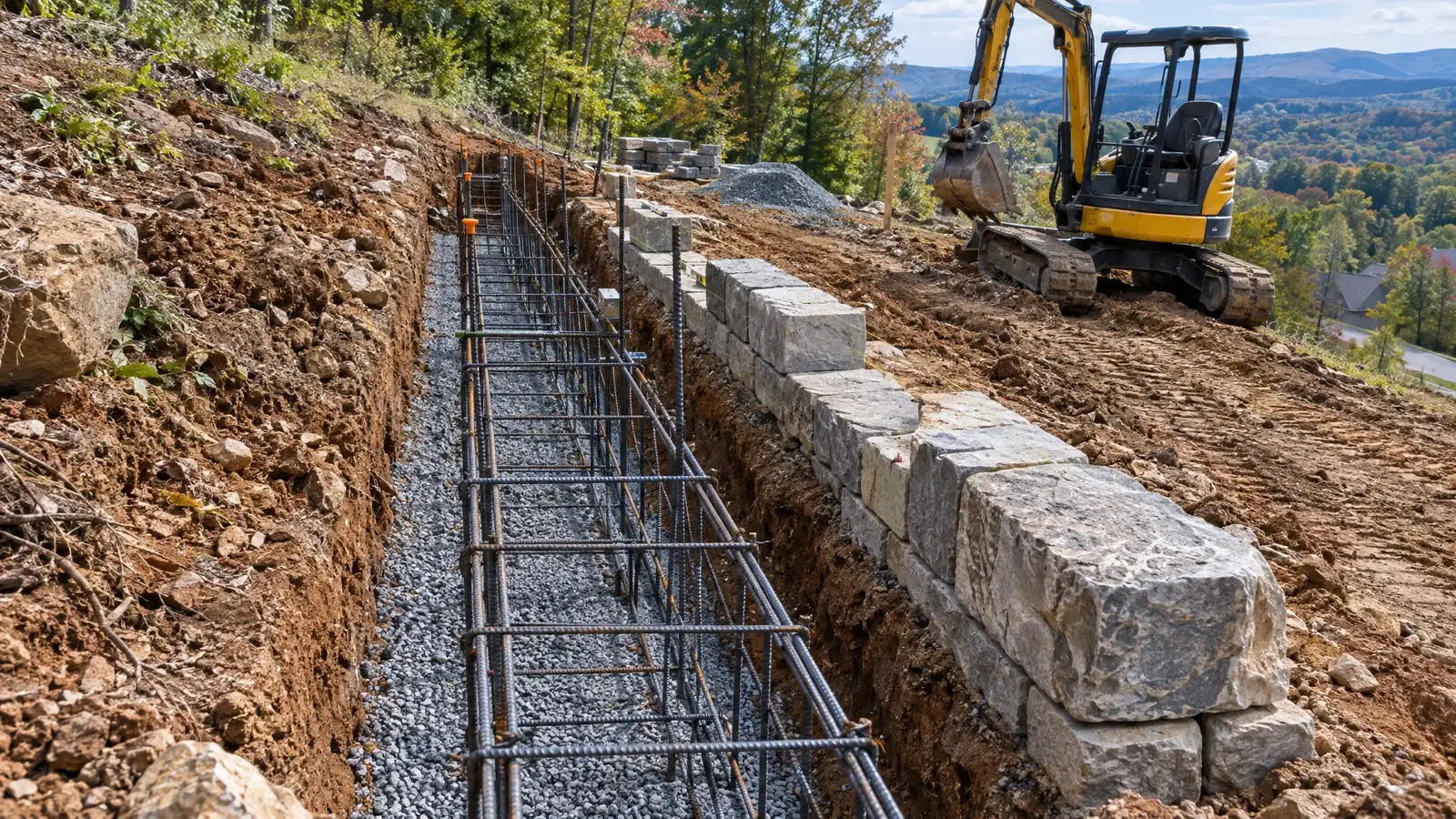 B-11ExcavationRetaining Walls & Masonry SupportExcavation, footing trenches, drainage stone and backfill for retaining walls, block and stone walls and masonry projects, built to be dug once and set…Deep excavation
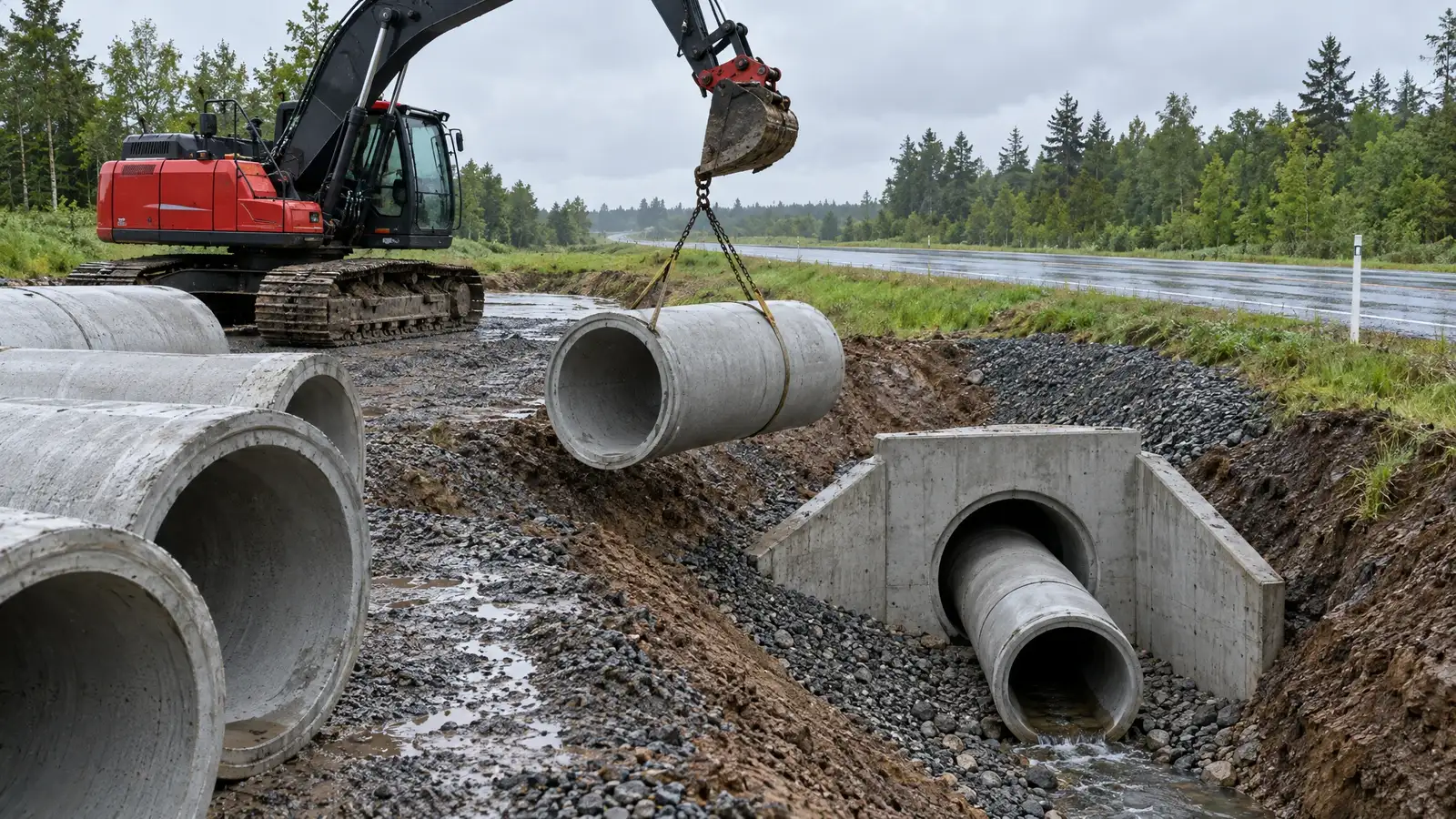 A-04Utility LinesStorm Drains & CulvertsStorm pipe, driveway culverts, headwalls and inlets installed to carry rain and runoff away from buildings, roads and low spots.Deep excavation
Read more on this topic.
 Site Grading and Drainage BasicsHow slope, swales and outlets keep water away from buildings.2 min read Spring Rain and Wet TrenchesHow heavy rain affects excavation, and how contractors manage water on site.2 min read Clay Soil and Your Utility LinesHow Middle Tennessee clay affects trenches, drainage and settling.2 min read
French Drains FAQ.
How deep is a French drain?
Depth depends on where the water is and where the outlet is. It must be deep enough to catch the water and shallow enough to drain by gravity.
Do French drains clog?
Any drain can clog over time. Clean stone, filter fabric, correct grade and a clear outlet greatly reduce it, and cleanouts help maintenance.
Where does the water go?
To a lower point on your property such as a swale or storm outlet, or to an approved discharge. We plan the outlet before we dig.
French Drains across Middle Tennessee.
Pick your city for its page.
Call 811. Then call us.
Tell us what you are building, fixing or draining and we will suggest a site visit and a plan. The lines get located before the bucket moves.