The short version
- Overhead power lines can arc without contact
- Keep equipment well clear of overhead lines
- Buried power lines may be shallow and are not always marked accurately
- Call the utility before working close
Overhead lines
Excavators, dump trucks and cranes can reach power lines easily. Electricity can arc across a gap without contact, and a machine in contact with a line can energize the ground around it. Rules call for minimum clearance distances that grow with voltage.
Look up before you raise a bucket or a dump bed, and ask the utility about de-energizing or covering lines when the work is close.
Buried lines
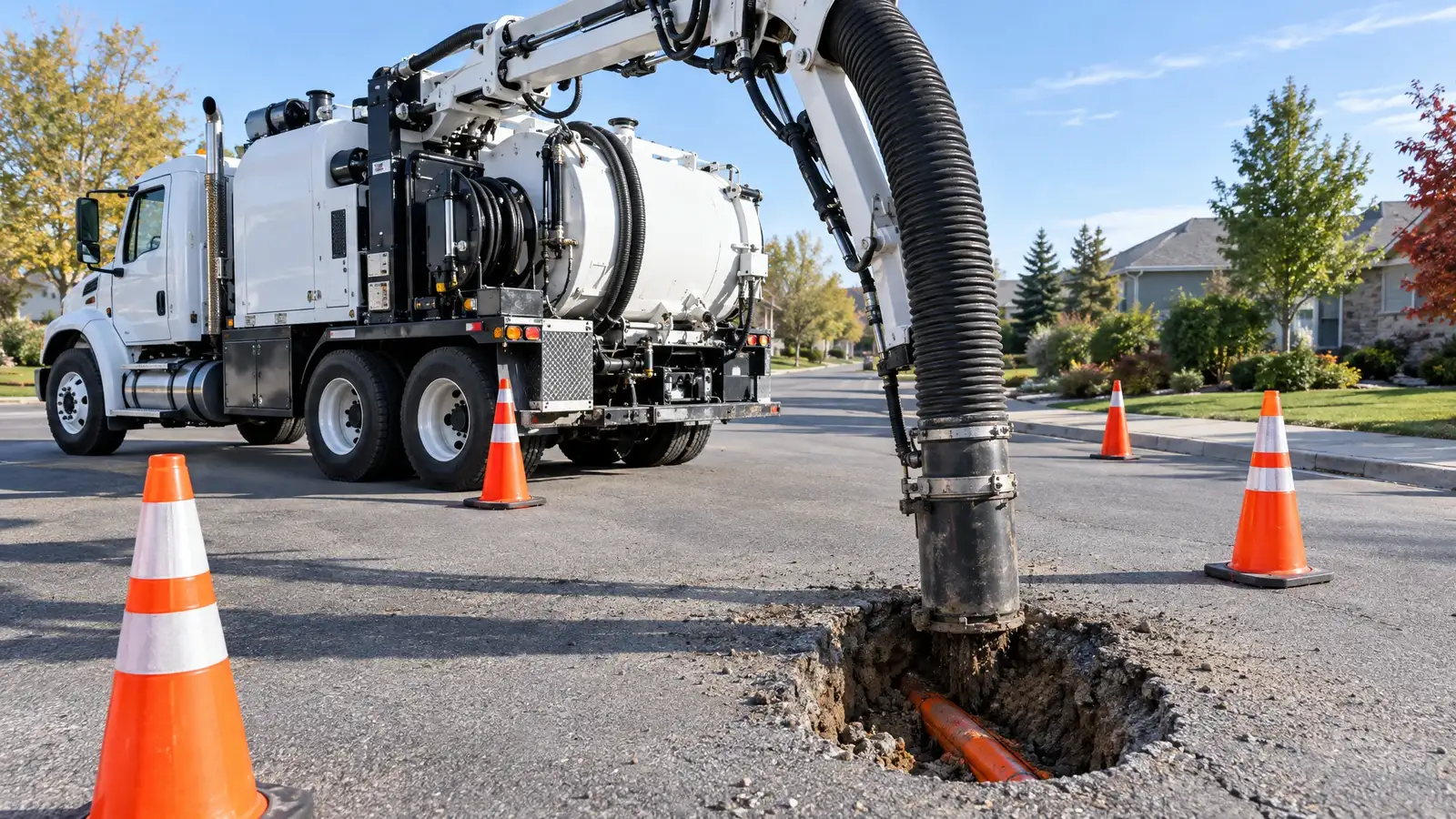
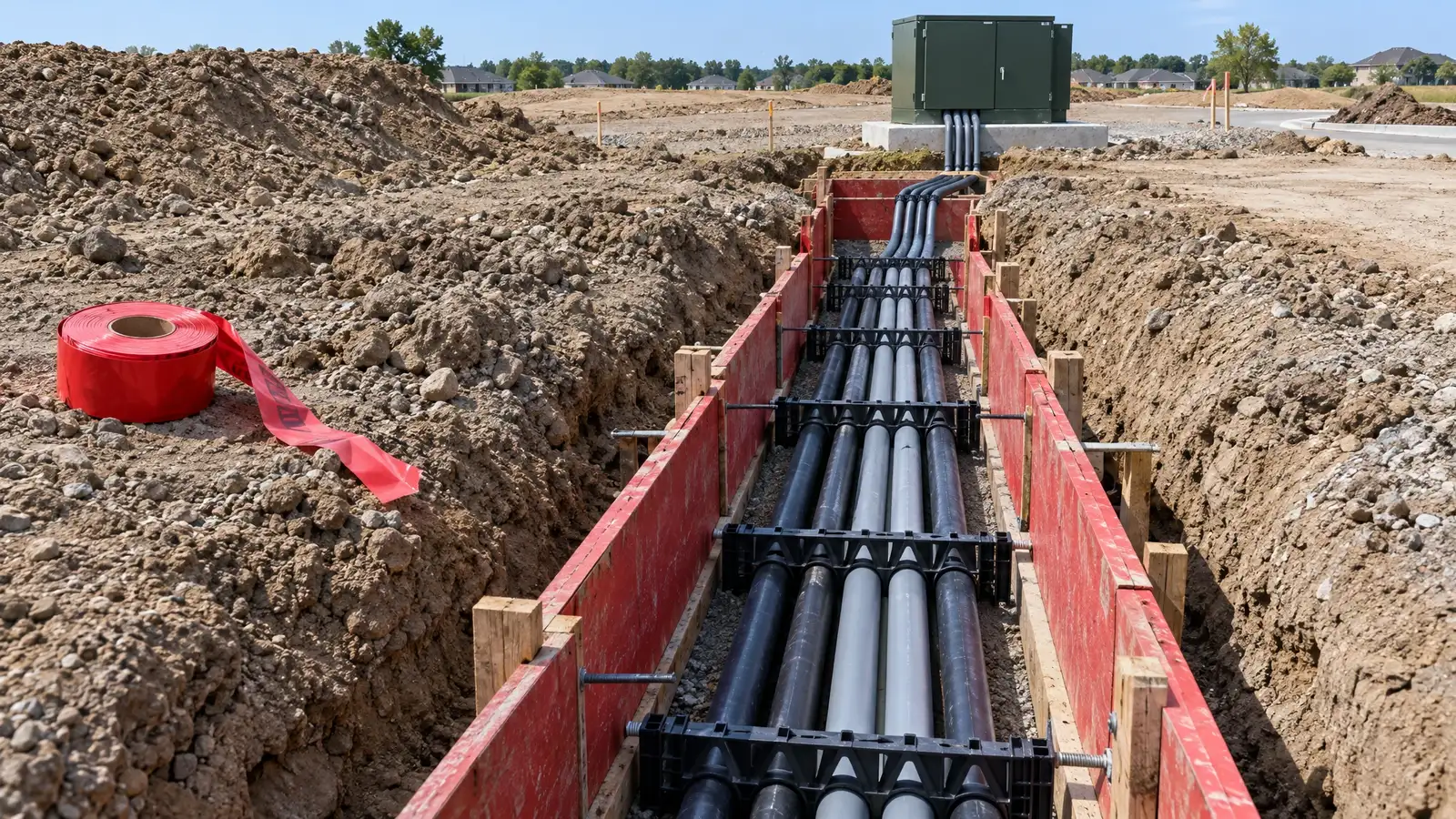
Buried electric lines run in conduit or directly in soil, depending on age and type. Depths vary and records can be incomplete. A struck energized line can cause an explosion of sparks, burns or electrocution.
Locates, potholing and hand digging near marks are the best protection.
If a machine contacts a line
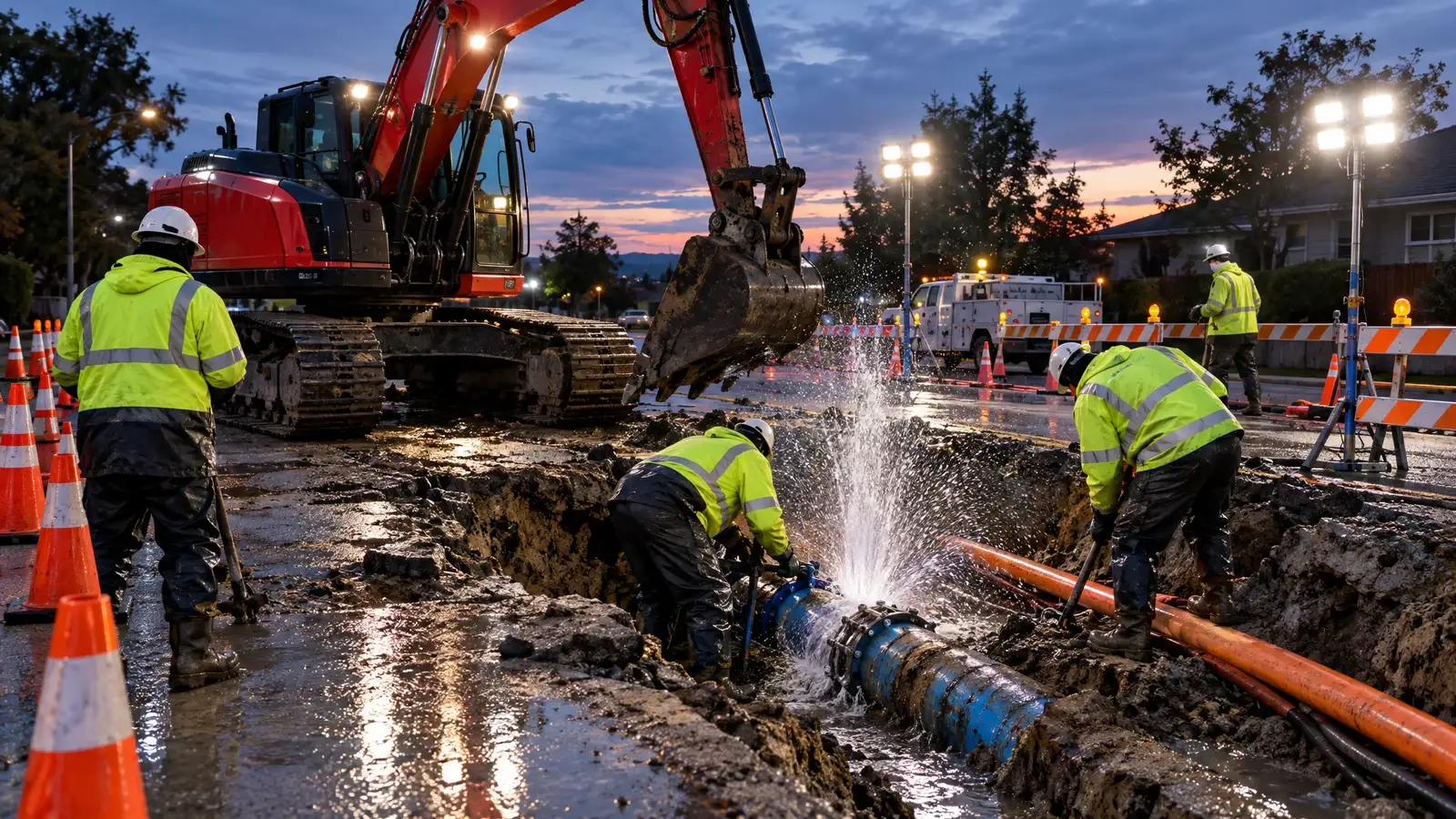
Stay in the cab if you can and call 911 and the utility. If you must leave because of fire, jump clear with feet together and shuffle away, without touching the machine and the ground at once. Do not let anyone approach until the utility says the line is de-energized.
Never assume a downed or damaged line is dead.
Planning around power
Route trenches away from poles, guy wires and transformers when possible. Coordinate with the utility for work near service drops. Cover and protect conduit and use tape above it.
For electric work itself, a licensed electrician is the right professional.
General information, not engineering, legal or safety advice. Rules and requirements vary by utility, city and county.