The short version
- Locates and permits come before digging
- Trenching and pipe laying can be quick once approved
- Inspections and utility connections set many of the dates
- Weather and rock are the usual delays
Before the dig
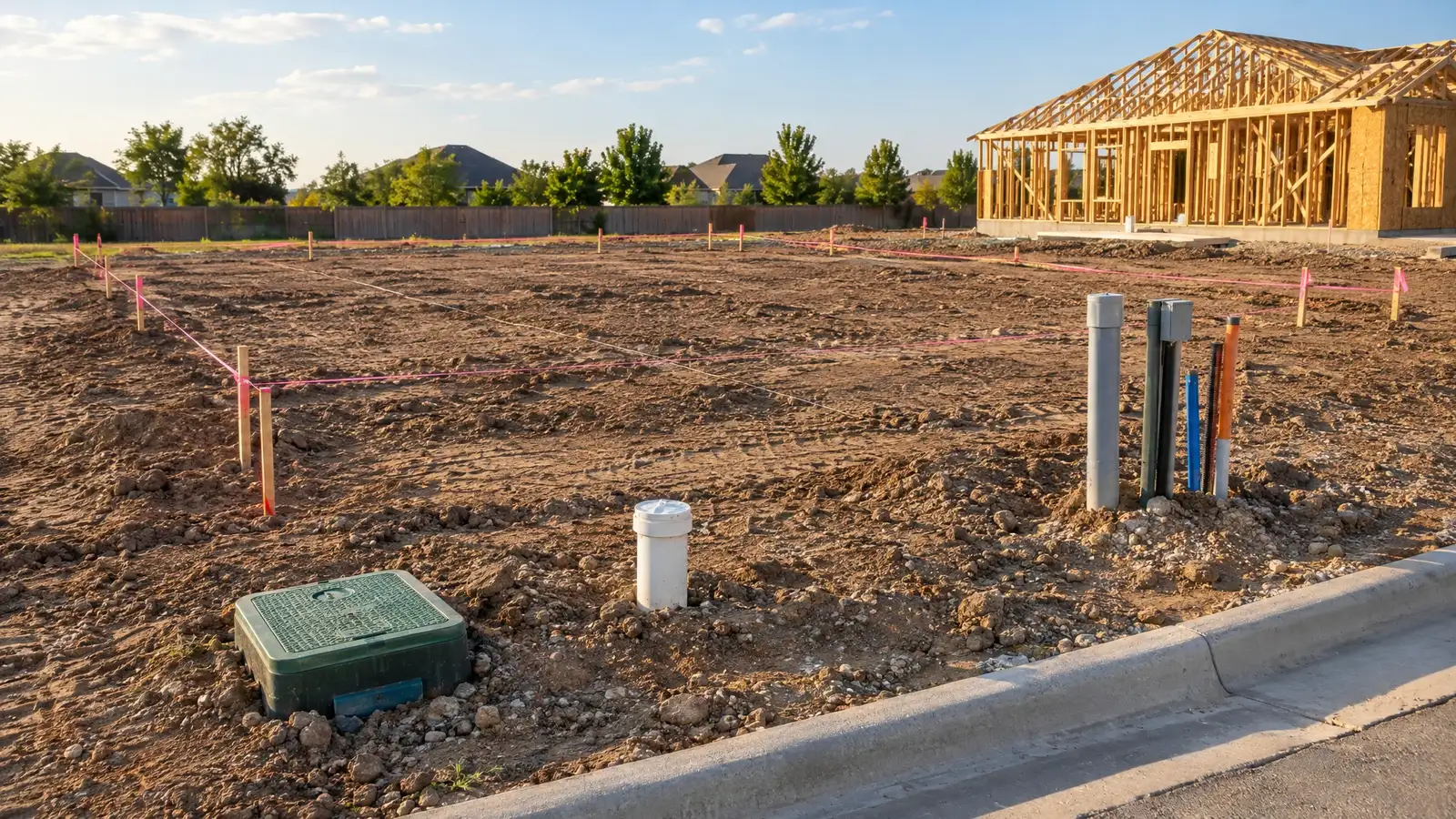
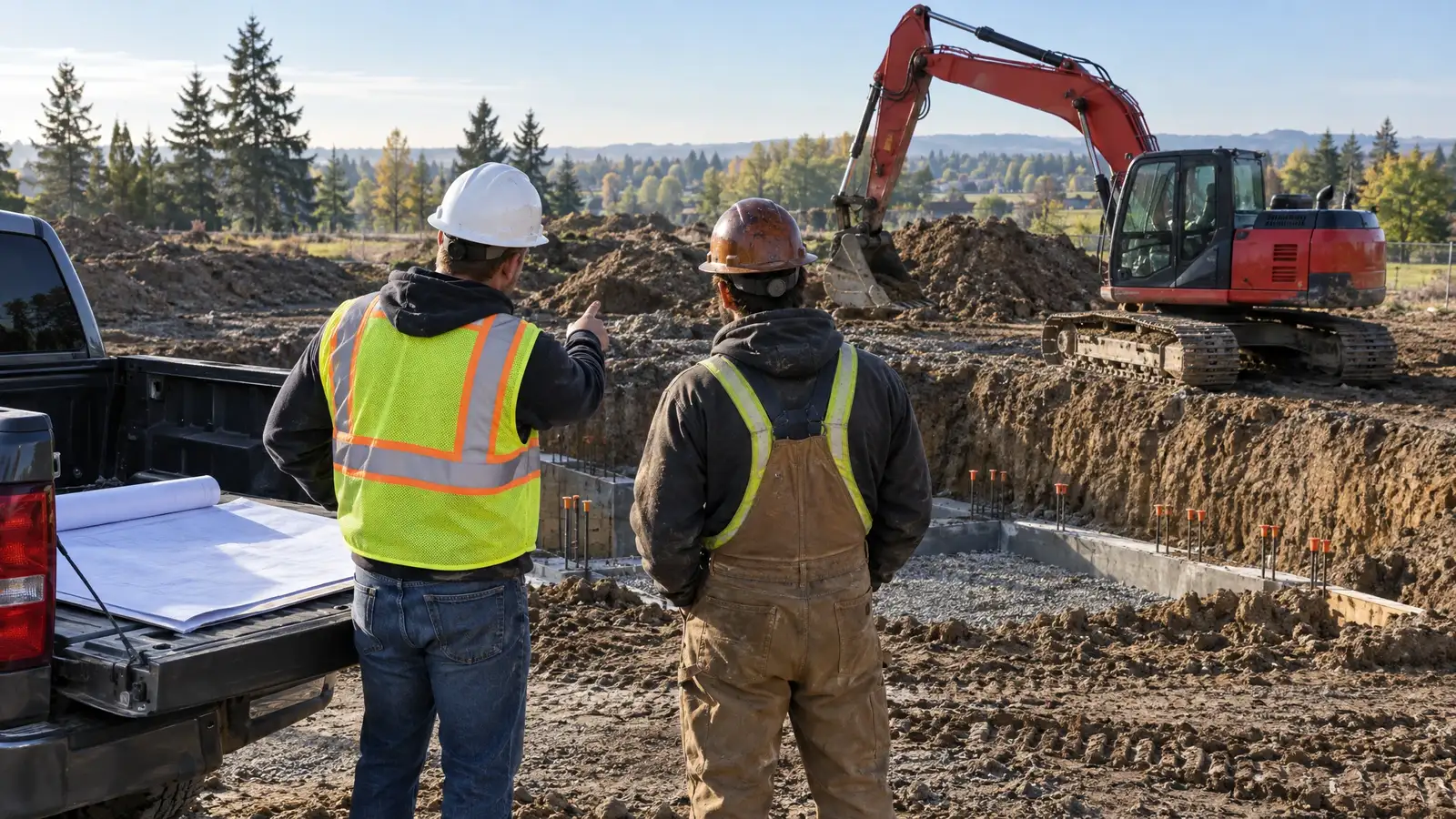
The early stages are information and approvals: site visit, scope, estimate, locate request and permits. Permits and utility approvals can take longer than the excavation itself, so start early.
Order of operations matters: apply for permits, call 811 and confirm marks before mobilizing.
The dig and the install
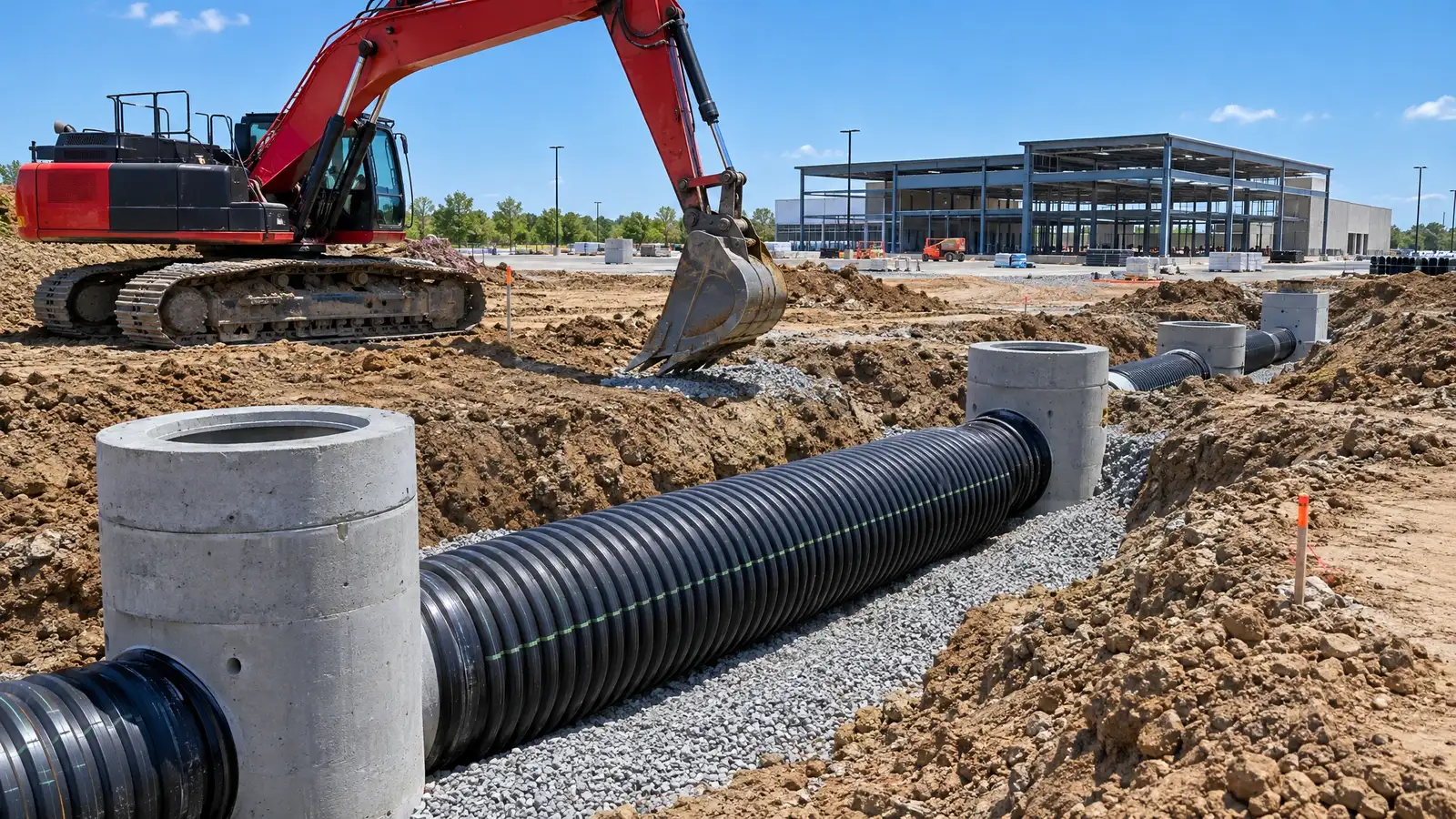
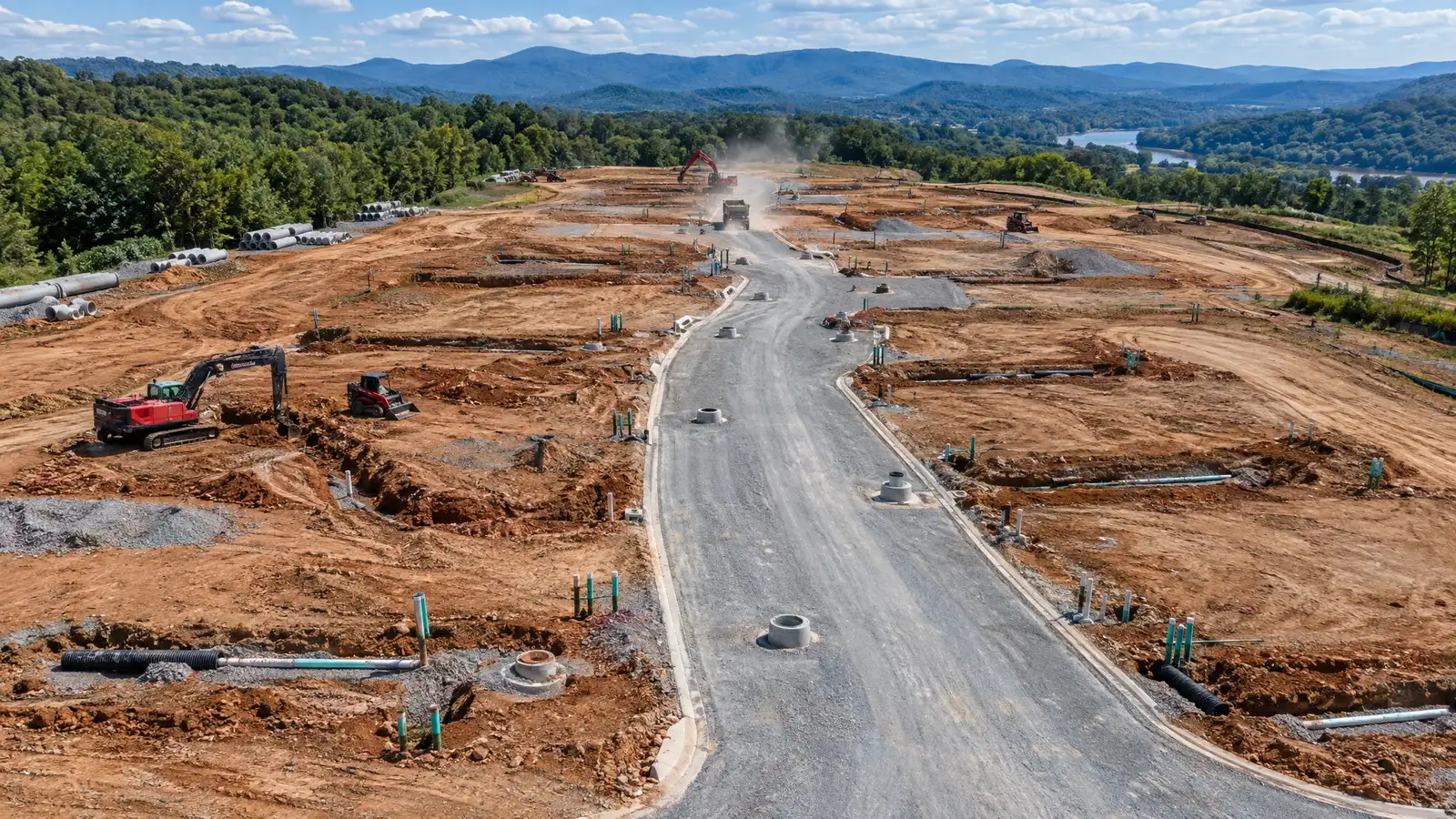
For a single home, trenching, pipe laying and backfill often take days, not weeks. Larger projects take longer in proportion to length, depth and structures. Boring adds setup time but may cut restoration time.
A realistic estimate comes after a site visit and a look at the plans.
Inspection and connection
Inspectors need to see certain steps before backfill, and utilities need to schedule taps and meter sets. Their calendar often controls the finish date. Plan for this and avoid pouring concrete over unconnected lines.
Testing, such as pressure tests, camera checks or air tests, happens in this phase.
Restoration
After backfill, grading, pavement patching and seeding or sodding complete the job. Season affects sod and seed, and temperature affects asphalt. Restoration may be scheduled after other trades finish.
Allow time for settlement before final paving where specified.
General information, not engineering, legal or safety advice. Rules and requirements vary by utility, city and county.