The short version
- Length, depth and diameter drive the quantity
- Rock, water and access change the effort
- Permits, tap fees and restoration are real costs
- Our cost tool uses editable placeholder ranges
Quantity
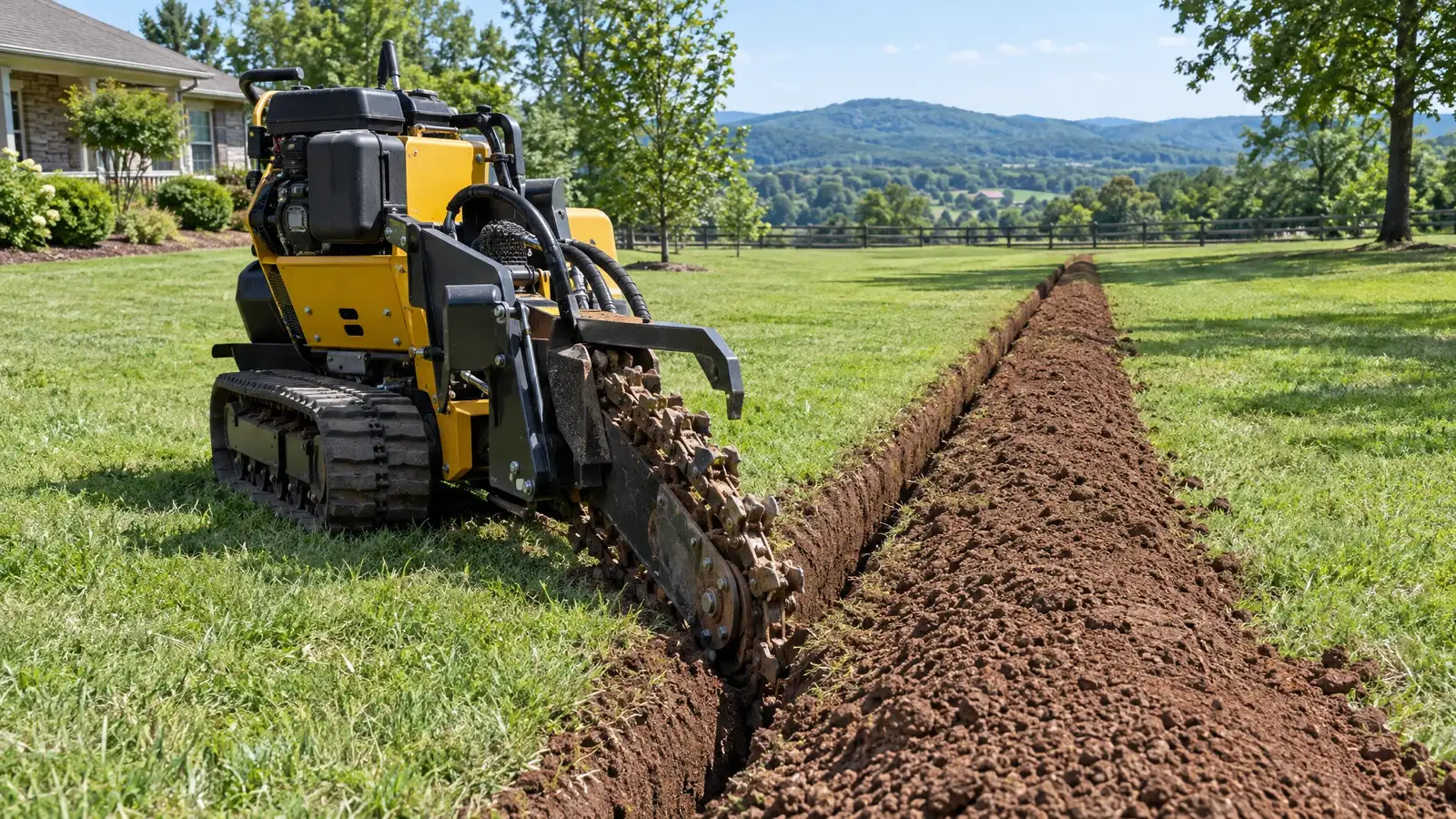
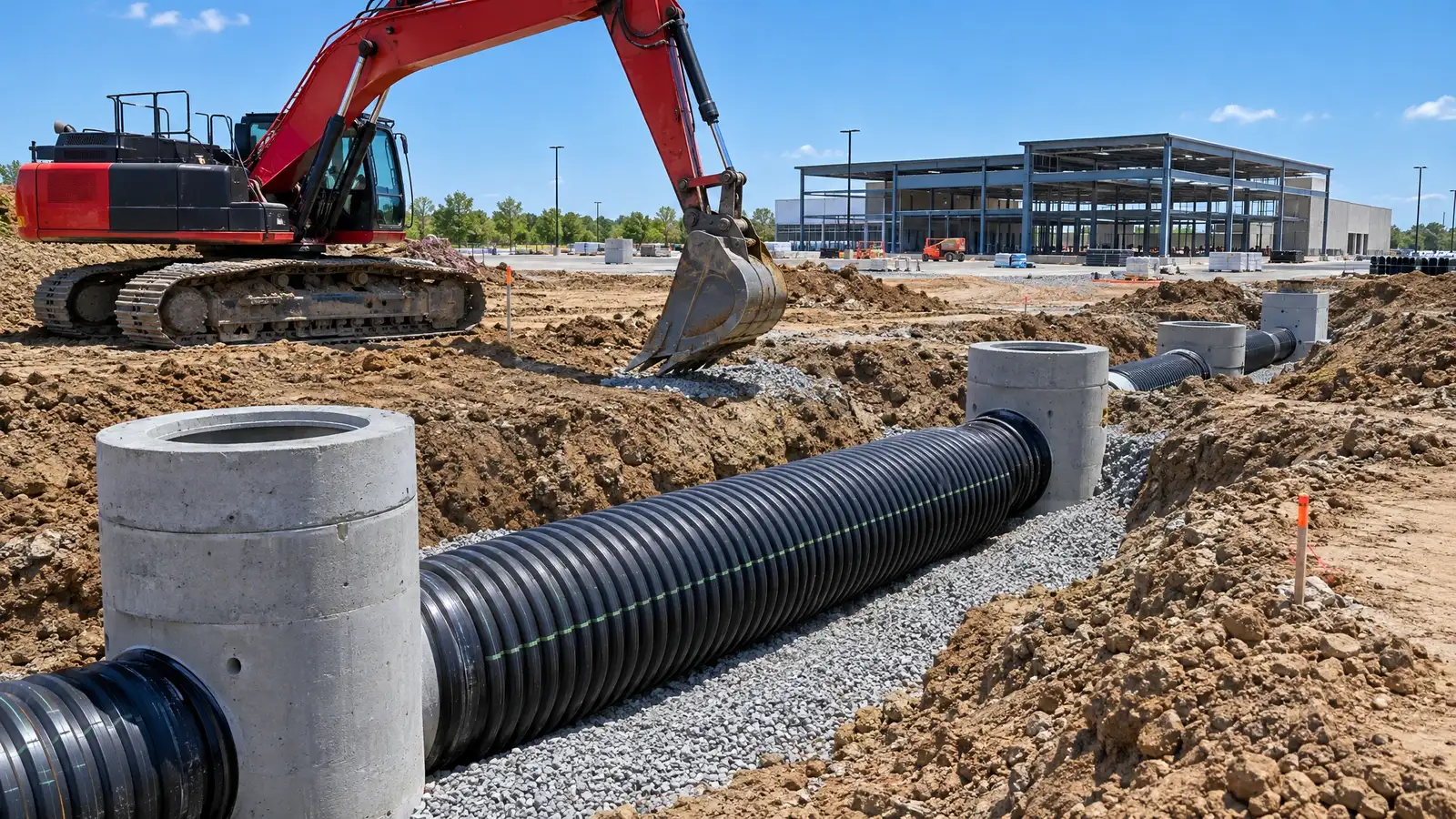
More feet of trench and more depth mean more soil to move, more pipe or conduit and more backfill. Larger pipe needs wider trenches and heavier equipment. Structures such as manholes, inlets and vaults add their own cost.
Measuring correctly is the first step to pricing correctly.
Conditions
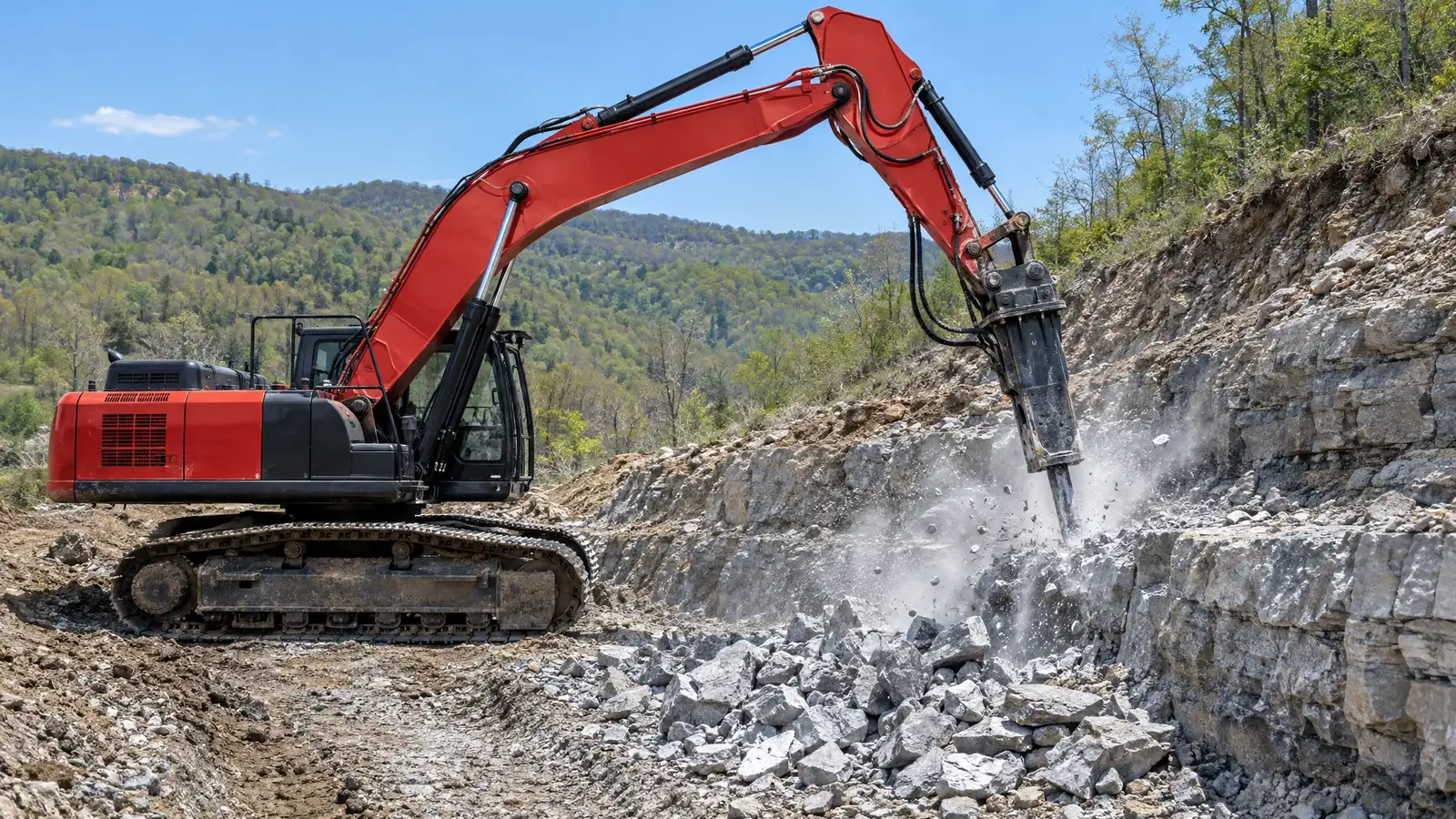
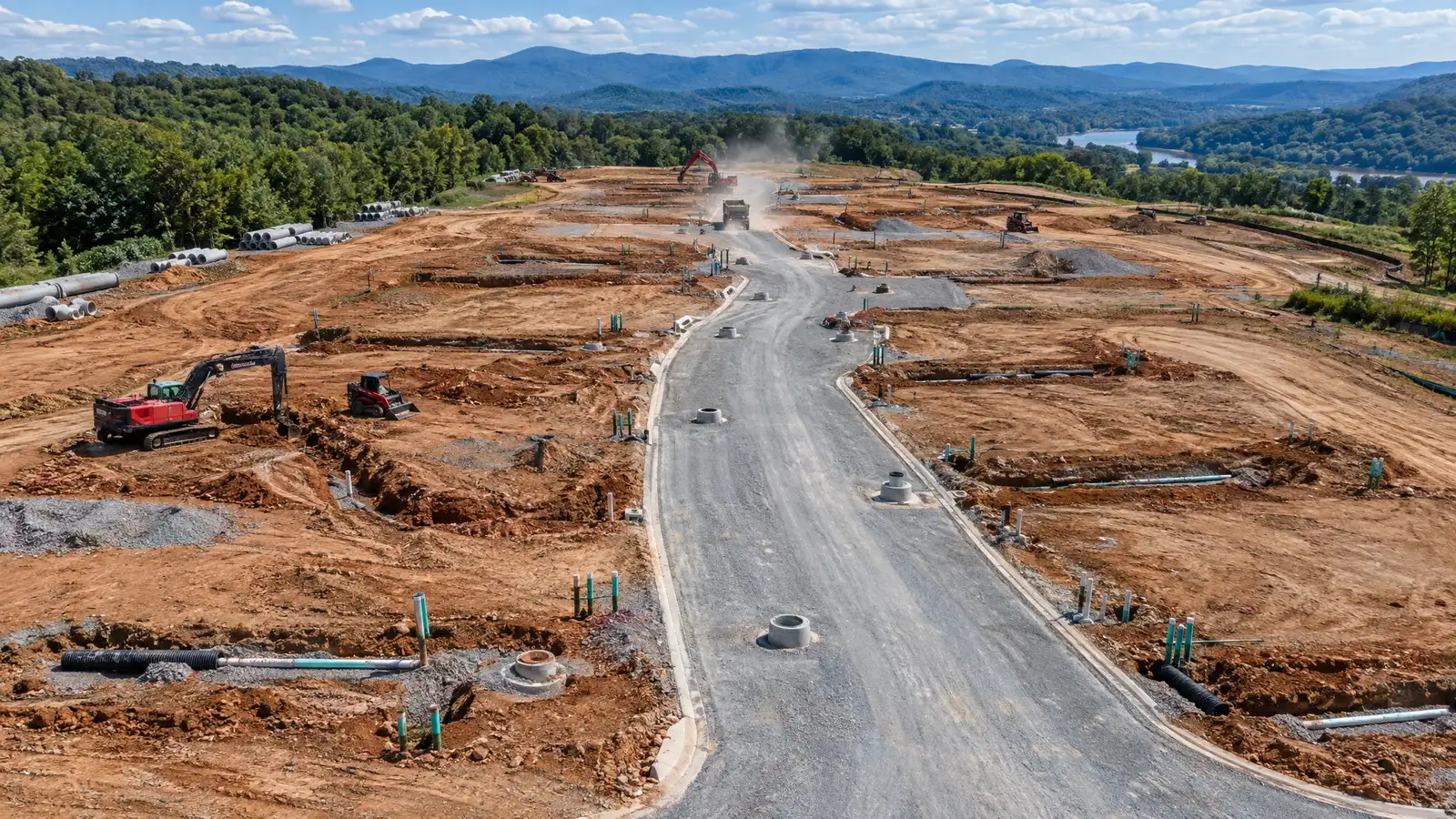
Rock, groundwater, tight access, steep slopes and crowded utilities all slow the work. A route across open lawn costs less than a route along a street with other lines. Trench protection for deeper cuts adds equipment and time.
Weather also matters: wet clay is harder to dig, haul and compact.
Everything around the dig
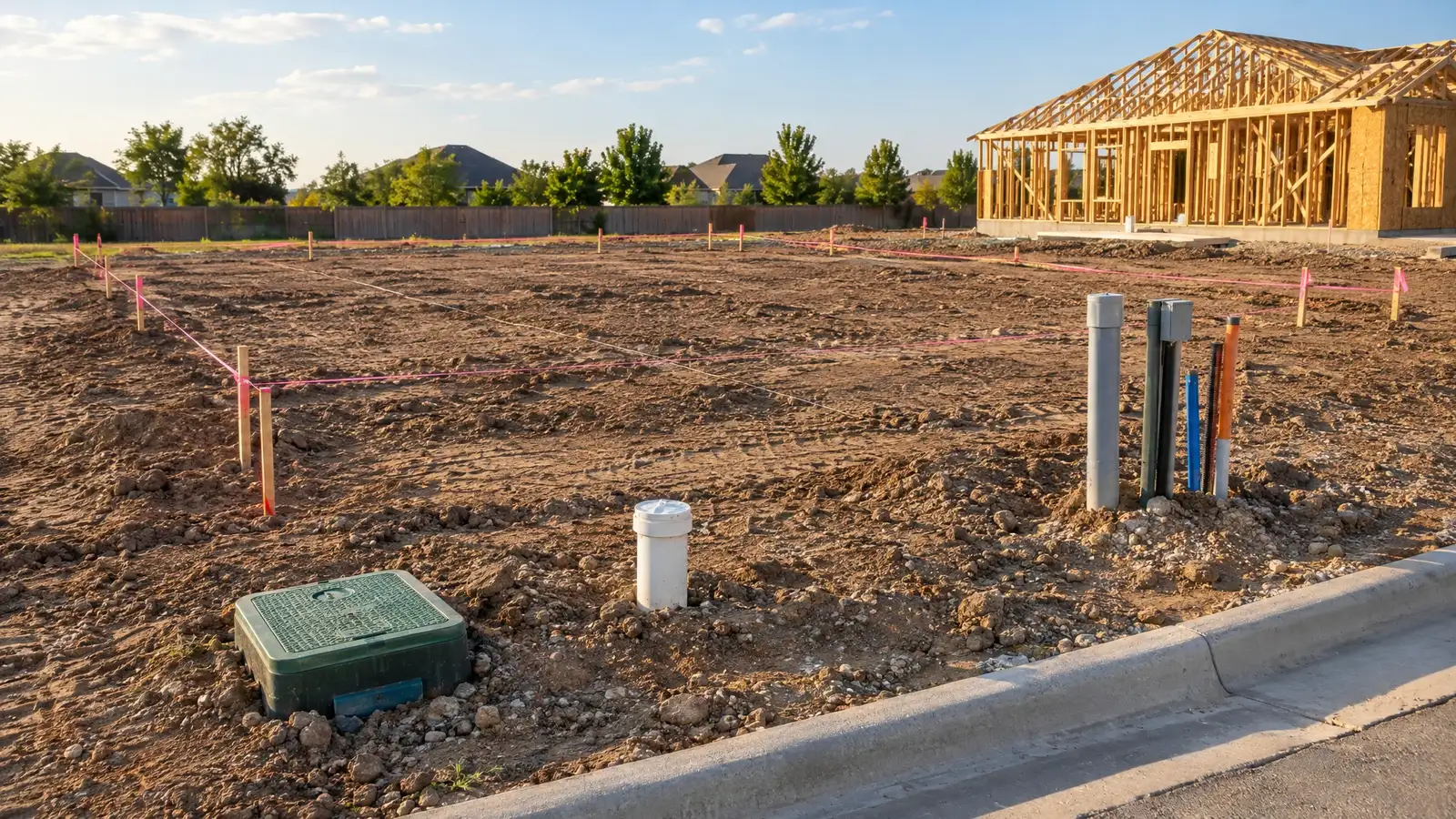
Permits, tap and connection fees, engineering, traffic control, haul-off, stone, tracer wire, inspections and restoration all add cost. A low price that leaves these out is not low.
Surface restoration, including pavement and landscape, can equal or exceed the cost of the dig.
Comparing bids
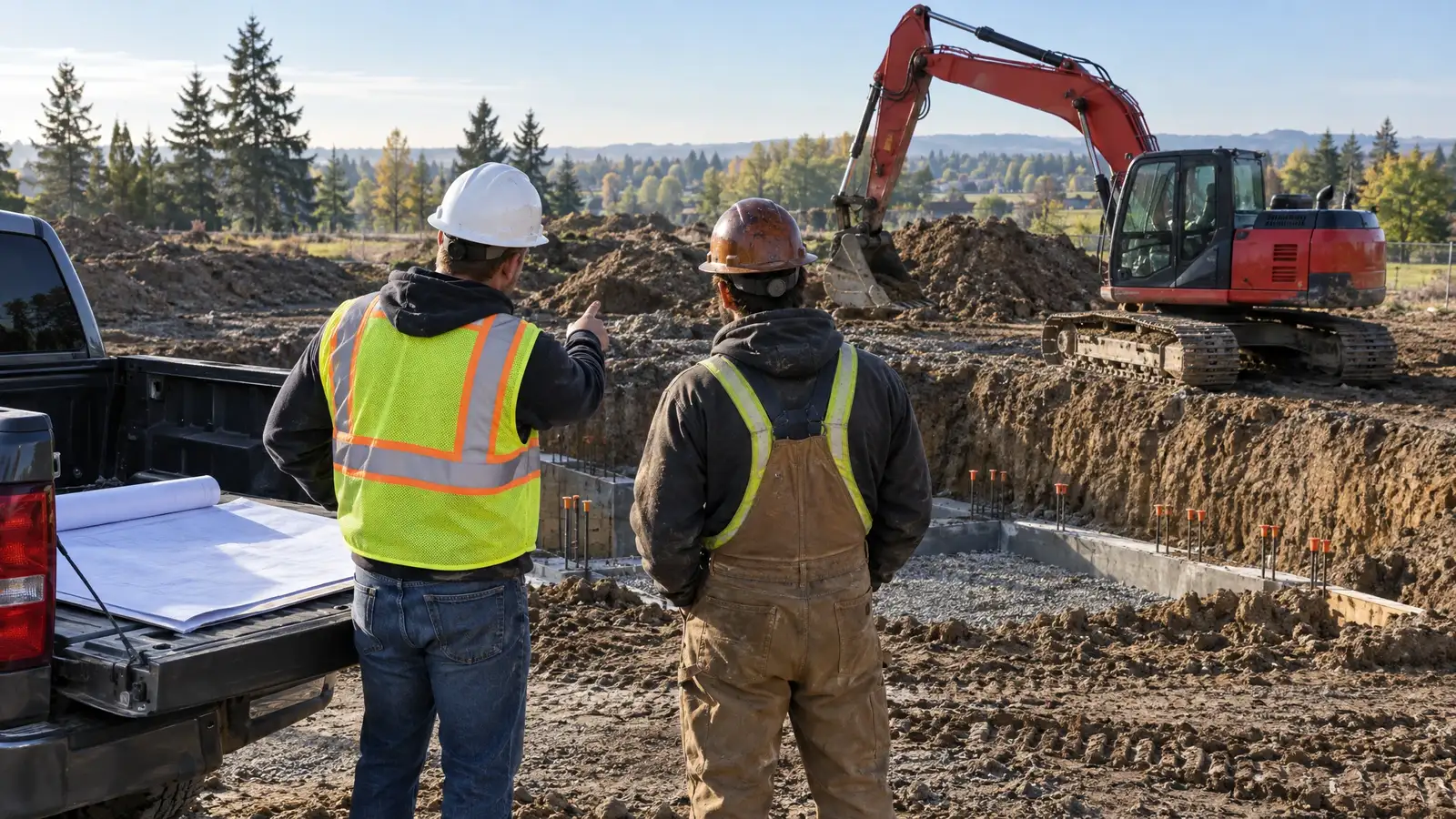
Ask each bidder to price the same scope, with the same assumptions about rock, restoration and permits. List what is excluded. Be wary of a bid that is far below the others.
Our cost planner uses placeholder ranges you can edit. It gives ballpark ideas, never a quote.
General information, not engineering, legal or safety advice. Rules and requirements vary by utility, city and county.