The short version
- Air or water loosens soil and a vacuum removes it
- Holes are small and neat
- Depth and position of the line are measured
- It is the best protection against line strikes
Why pothole
Marks on the surface tell you roughly where a line is, but not how deep, and they can be off by a few feet. A pothole opens a small hole directly on the line so its position and depth can be verified.
That information makes bore paths and trenches safer and more accurate.
How it works
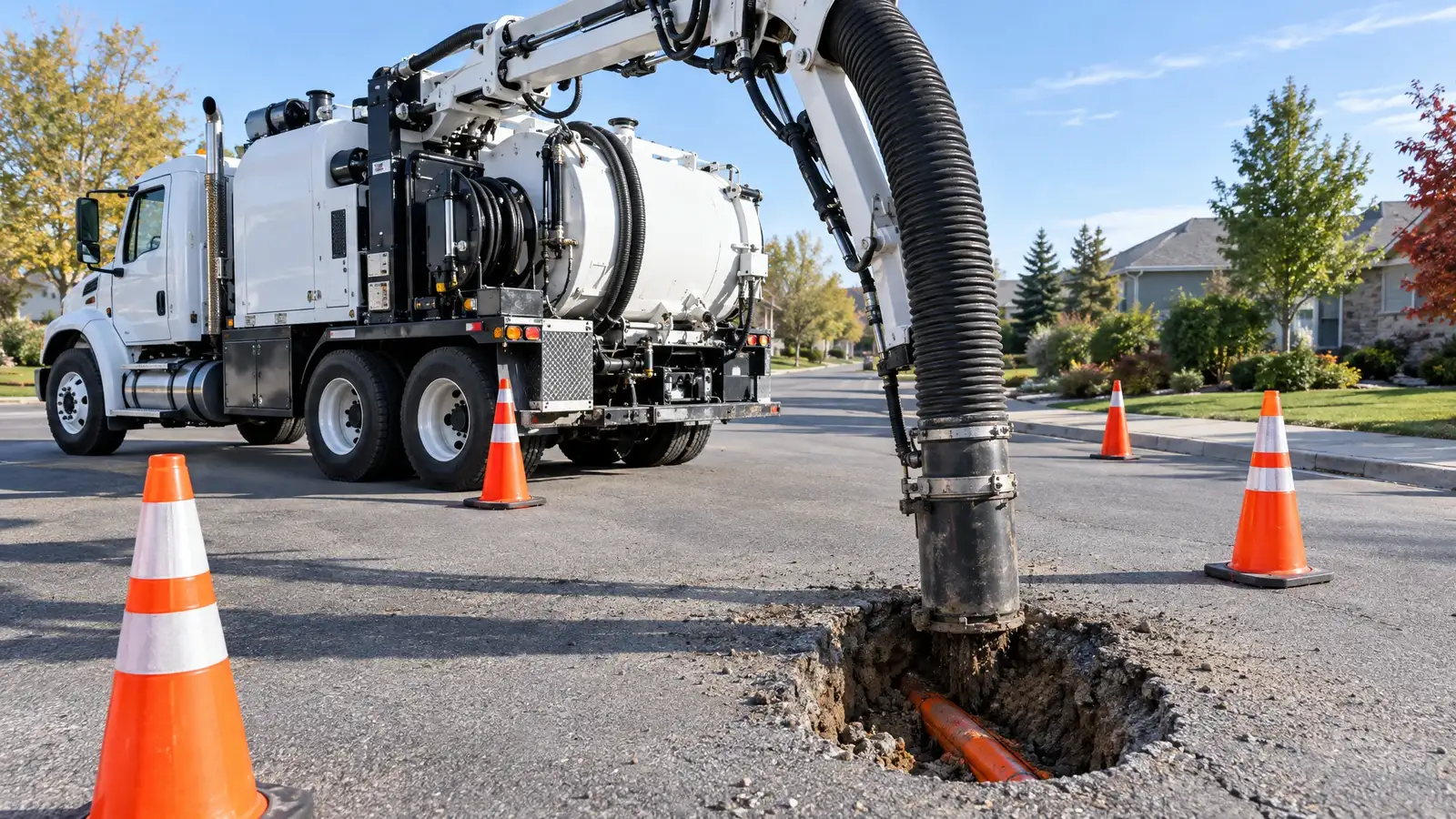
A vacuum truck fitted with a boom and hose uses pressurized air or water to break up soil, while the vacuum pulls the loosened soil into a tank. The tool never touches the pipe the way a shovel or a bucket can.
The result is a clean, round hole with the line visible at the bottom.
When it is used
Before boring, trenching or digging near gas, fiber, electric or critical water lines. At crossings and tie-ins. Where records are poor or the corridor is crowded. When a plan or a utility asks for verification.
It is also useful for finding private lines.
After the hole
The hole is backfilled and compacted, and pavement or lawn is patched. The measurements go into the plan, and the main work proceeds on solid facts.
Small holes cause little disturbance compared with open digging.
General information, not engineering, legal or safety advice. Rules and requirements vary by utility, city and county.