The short version
- Public lines run in streets and easements, private lines run from the meter or tap to the building
- Gravity lines need slope, pressure lines do not
- Lines are separated by distance and depth to protect each other
- Old lines are often not where the plans say they are
A map of the ground
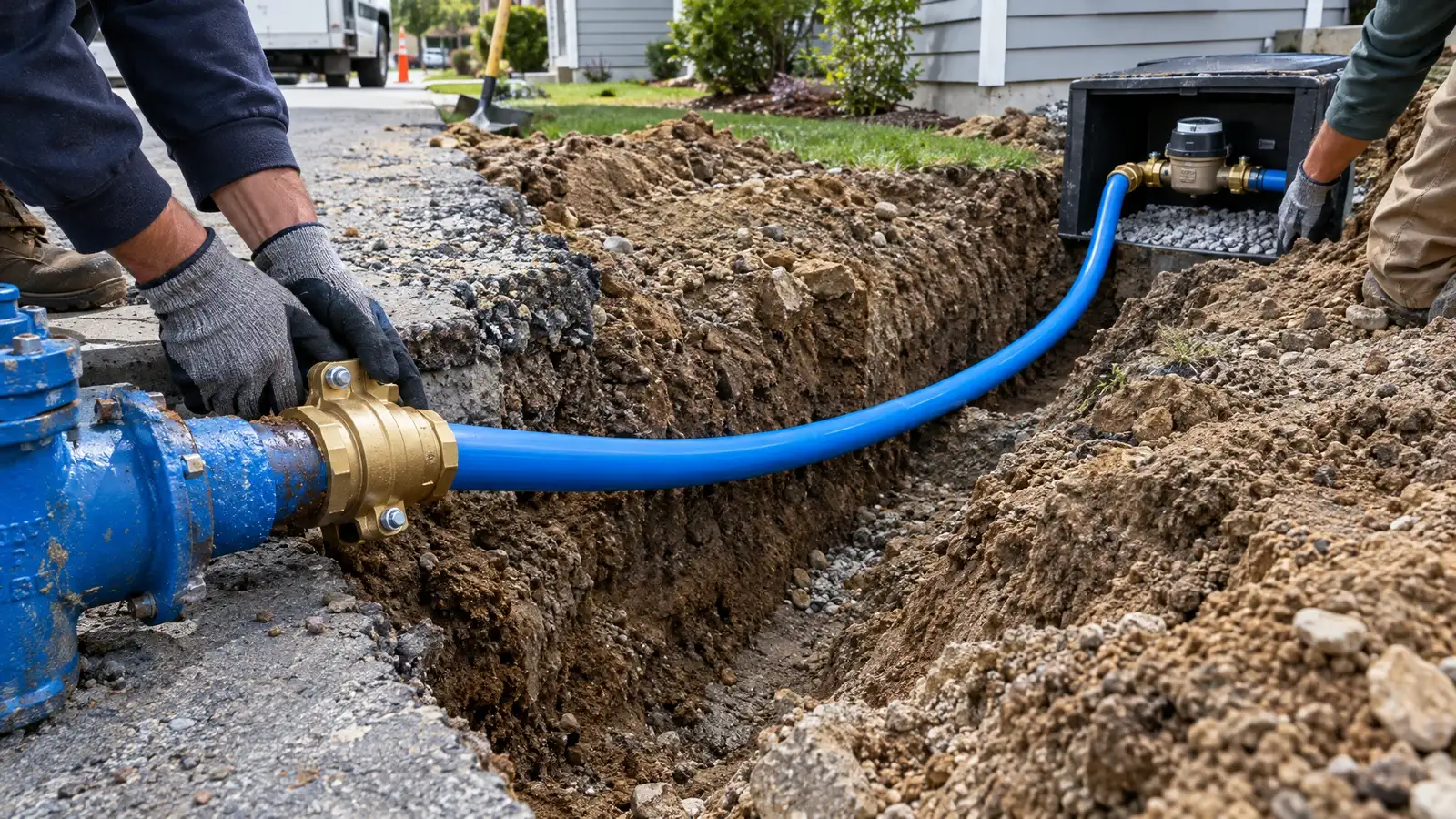
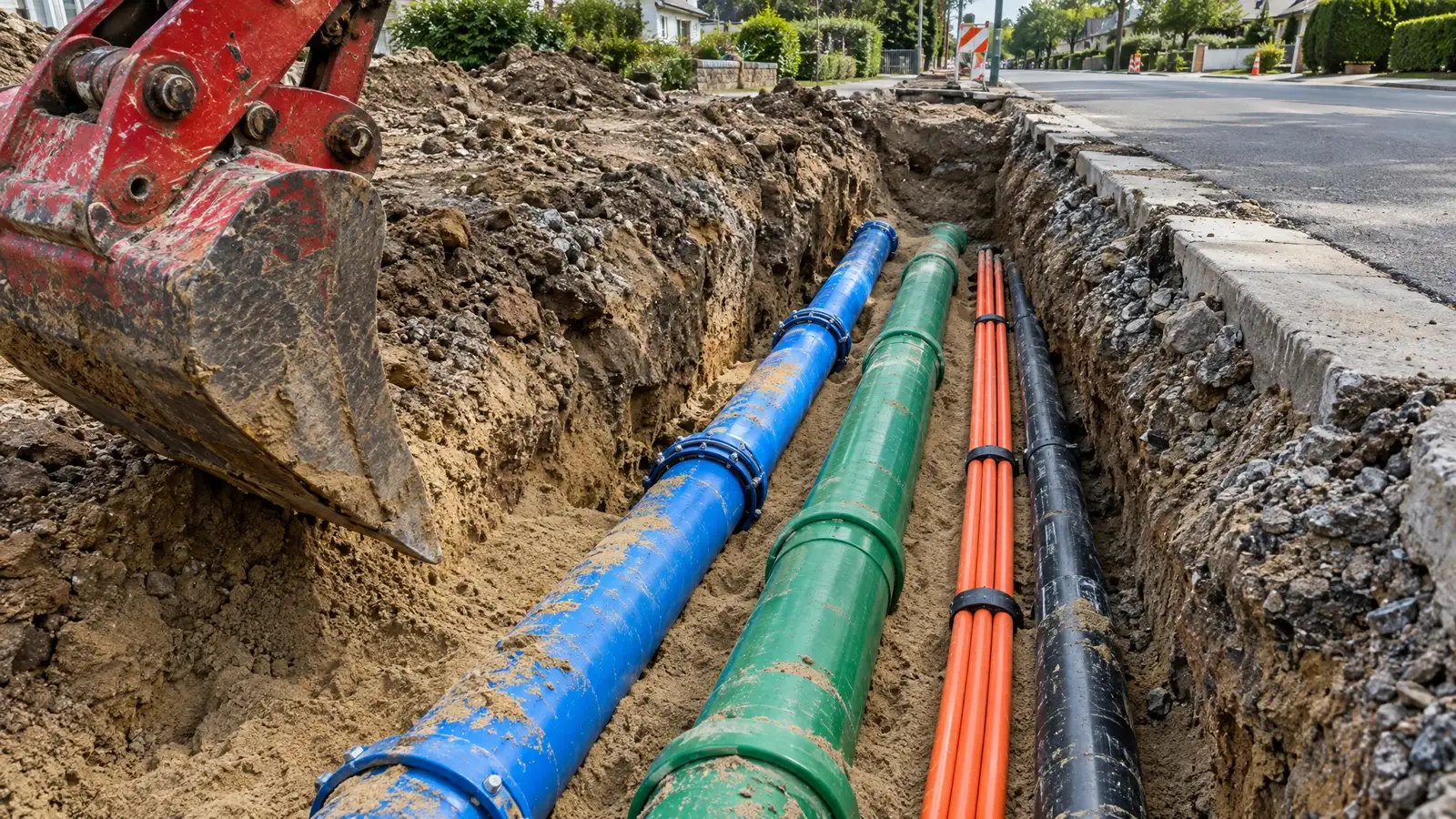
Imagine a street cut open. Beneath it you would find a sewer main, a water main, perhaps a storm drain, a gas main, buried power and communications. From each main, smaller service lines run to the buildings on either side, usually crossing the front yard to a cleanout, a meter or a service entrance.
On the property, the lines are private, and the owner is typically responsible for them from the tap, meter or point of connection on.
Gravity versus pressure
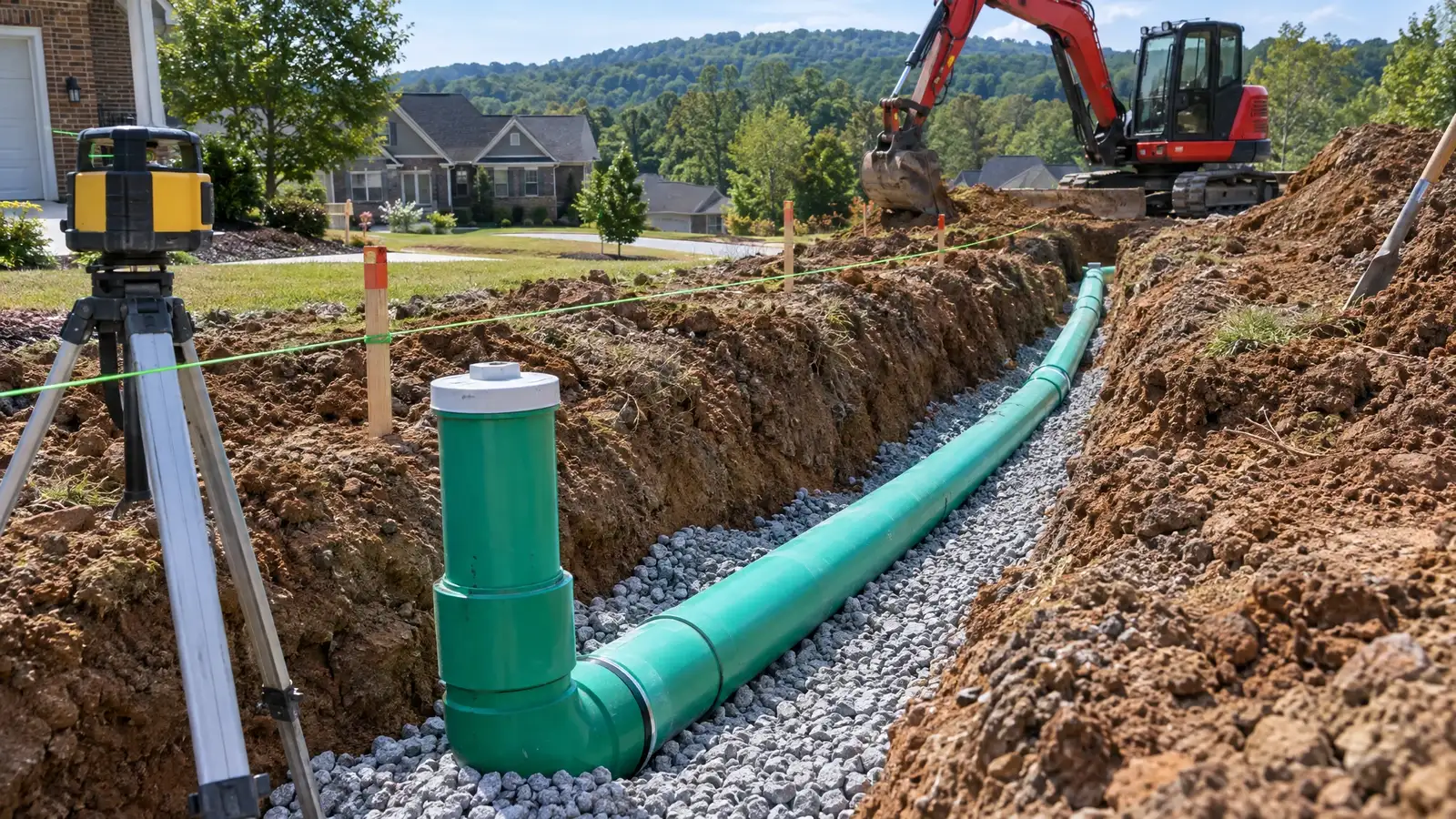
Sewer and storm lines work by gravity, so they have to slope steadily downhill. That is why their depth is set by where they begin and end, and why grade matters so much. Water and gas lines work under pressure, so they can go up and down and are laid at depths chosen for protection and cover.
Electric and communications conduits are laid flexible to the route but with minimum cover and clearances.
Separation and crossings
Rules and good practice keep certain lines apart. Water lines are kept away from sewers to prevent contamination. Gas and electric have separation requirements. When lines must cross, there are clearances and sometimes sleeves.
That is why installing several utilities in one trench is not always allowed, and why plans need to be read carefully.
Why surprises happen
Older lines were sometimes installed without good records, abandoned lines are left in place and private lines were rarely mapped. Locates cover public utilities and may miss private lines.
Potholing, careful digging and a camera inspection all help to fill in the picture before a project begins.
General information, not engineering, legal or safety advice. Rules and requirements vary by utility, city and county.