The short version
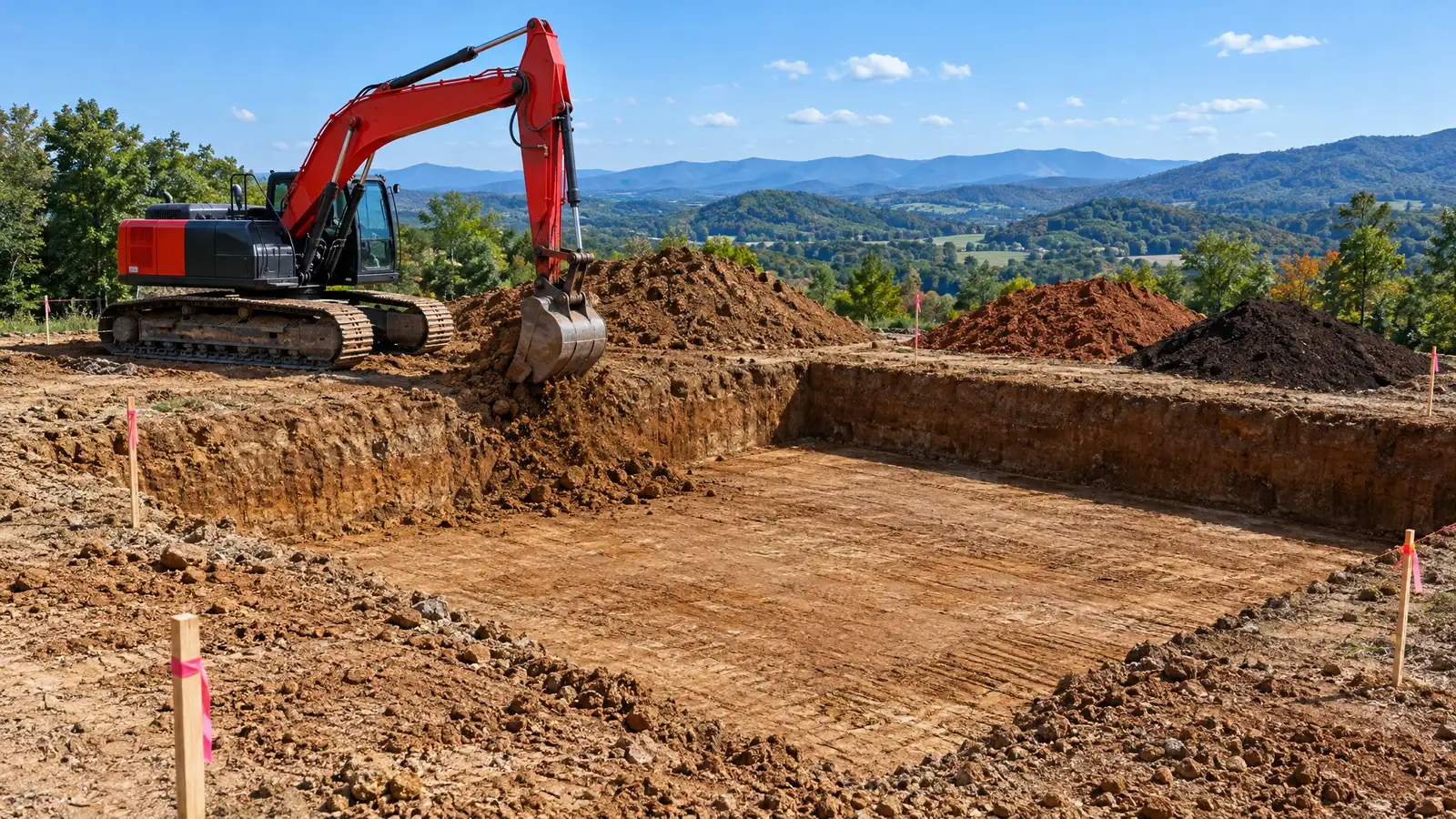
- A good trench has a flat bottom at the right depth
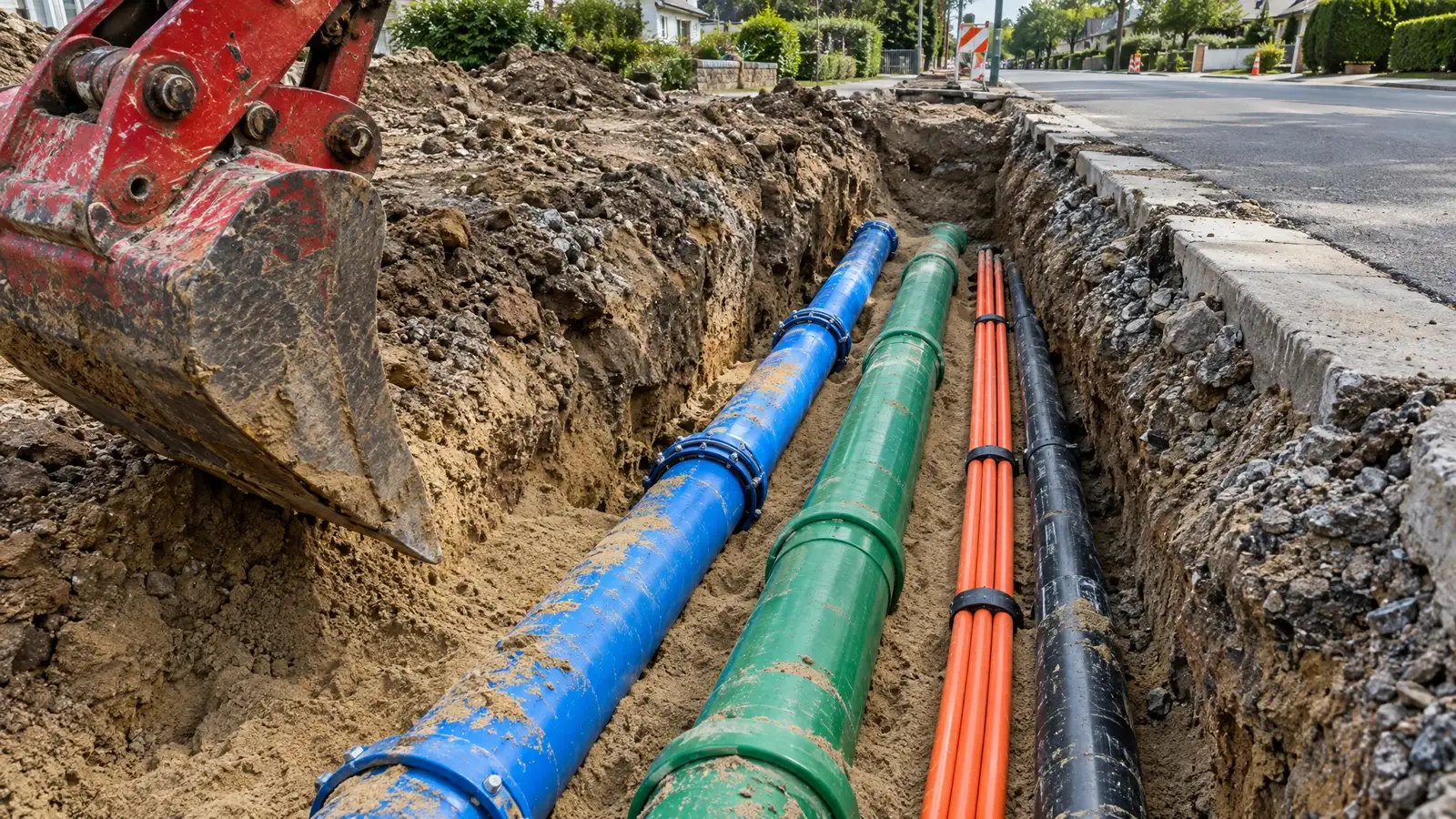
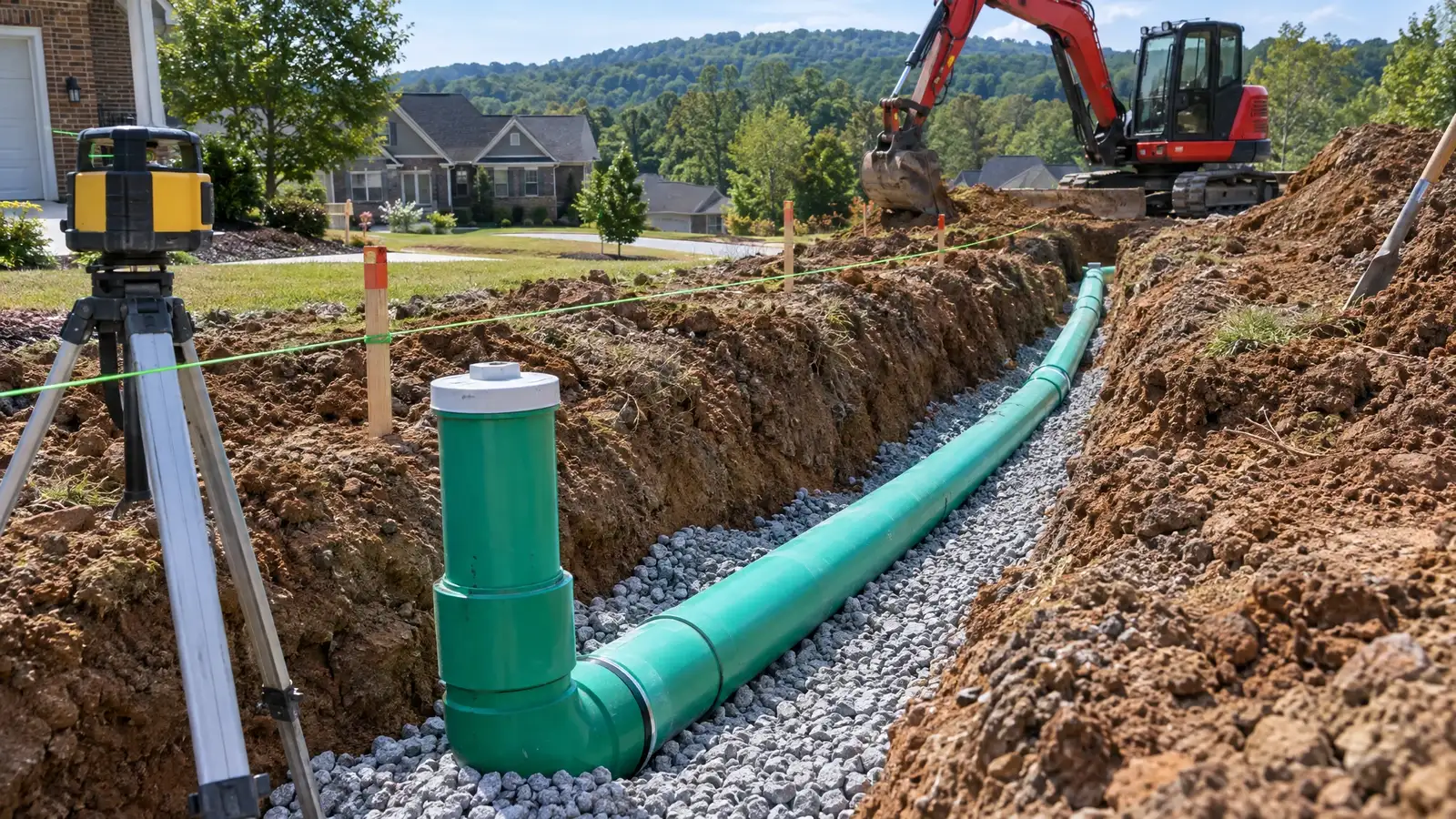
- Bedding supports the pipe and protects it from rock
- Backfill goes in compacted lifts to prevent settling
- Warning tape and tracer wire help future crews
The bottom and the walls
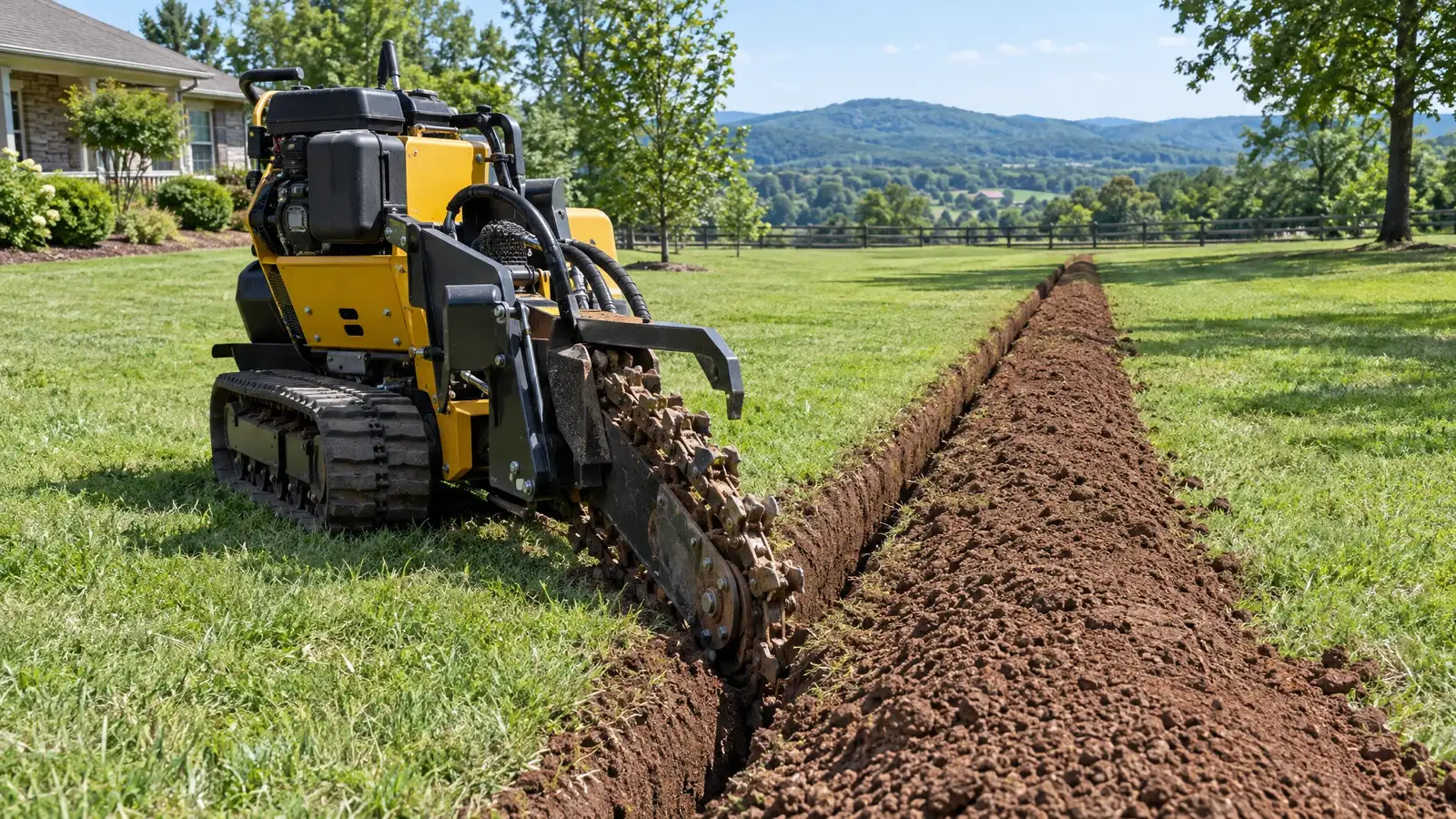
A trench is cut to depth and width set by the pipe, the code and the soil. The bottom is trimmed flat so the pipe is supported along its length rather than on high spots. The walls are sloped, benched or supported when the depth calls for it, to protect workers.
Wide enough to work in and compact around the pipe, but no wider than necessary.
Bedding
Bedding is the layer of sand or crushed stone under and around the pipe. It spreads load, prevents point contact with rock and keeps the pipe in line. For gravity sewers, bedding is crucial to hold grade.
The type and thickness depend on the pipe material and specification.
Backfill and compaction
Above the bedding, backfill is placed in layers, called lifts, and compacted before the next lift goes in. Dumping soil in and driving a machine over it leaves voids that settle for years.
Rock, large clods and trash are kept away from the pipe zone.
Markers and surface
Warning tape is placed above many lines, and tracer wire lets future crews find plastic pipe with a locator. The surface is restored with sod, stone, concrete or asphalt.
The restoration is part of the trench, because that is the part you will see.
General information, not engineering, legal or safety advice. Rules and requirements vary by utility, city and county.