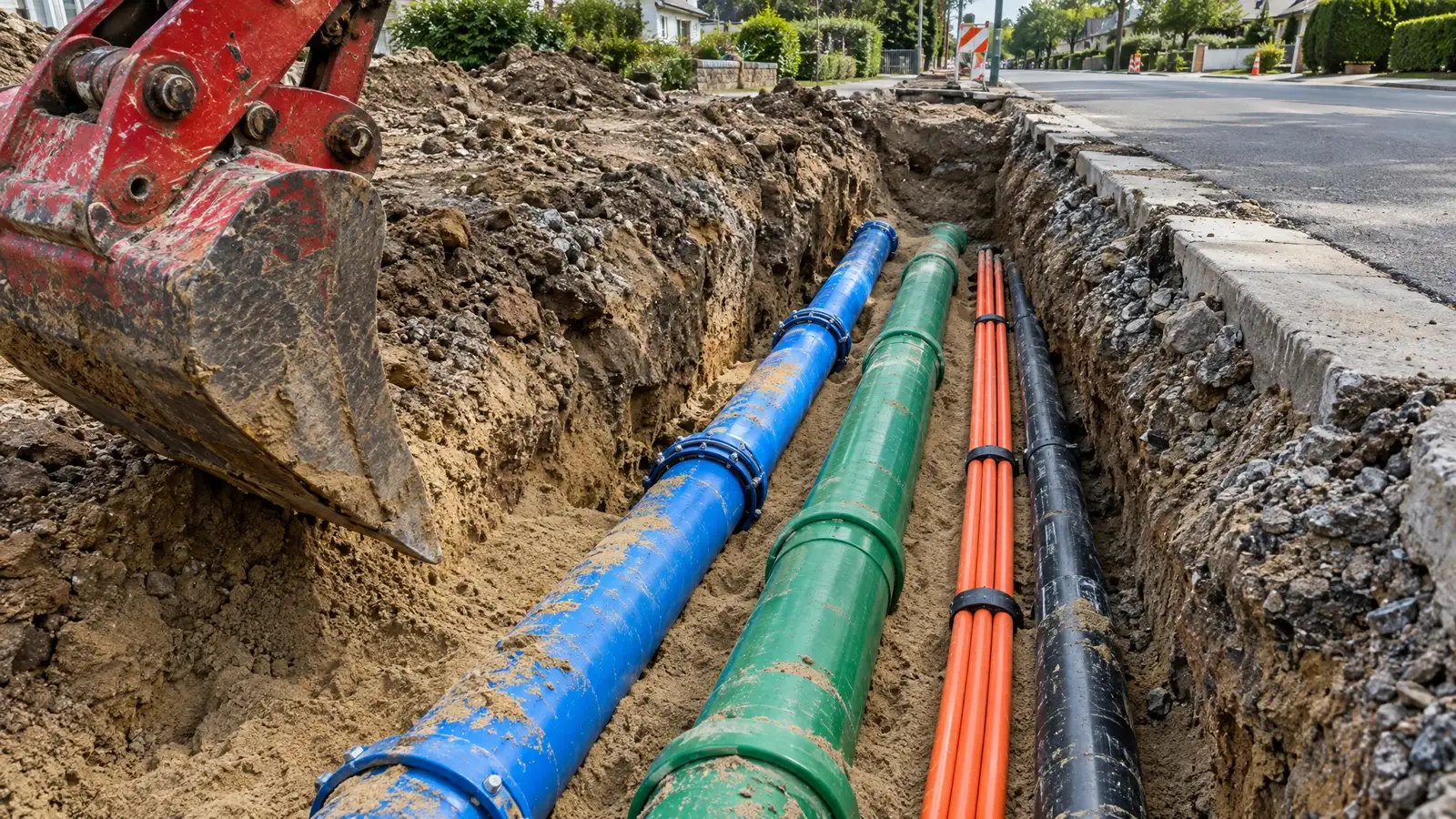
The short version
- Water comes in under pressure, usually through a meter
- Sewer leaves by gravity or by a pumped system
- Gas and electric are installed by the utility or qualified trades
- Fiber and cable run in conduit for protection and future upgrades
Water
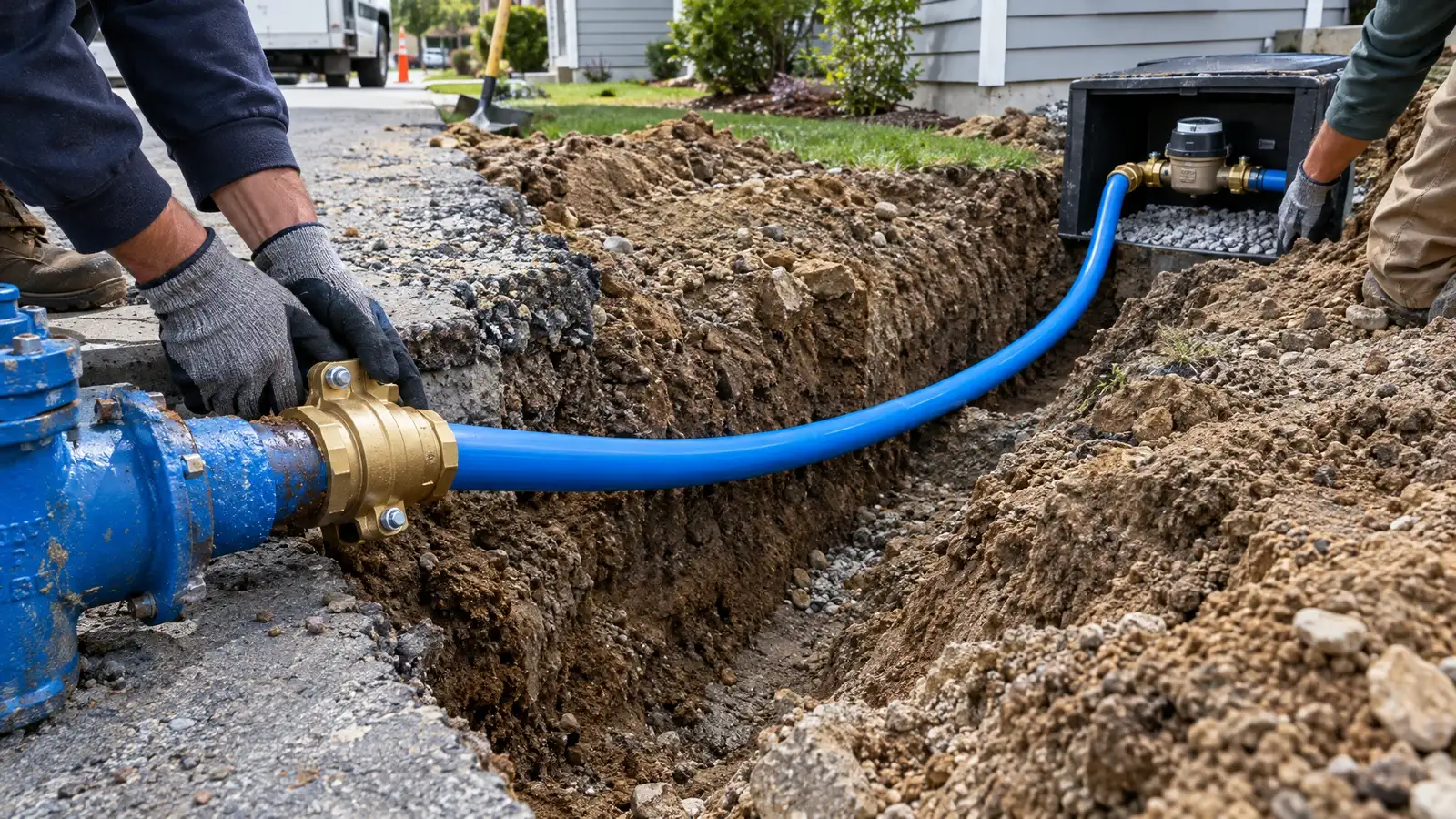
Water arrives from the utility main through a tap, a service line and a meter at or near the property line. From the meter, a private line carries it to the building. Pipe is usually polyethylene, copper or another approved material.
The line’s depth and fittings follow the utility’s specifications and local plumbing rules.
Sewer and septic
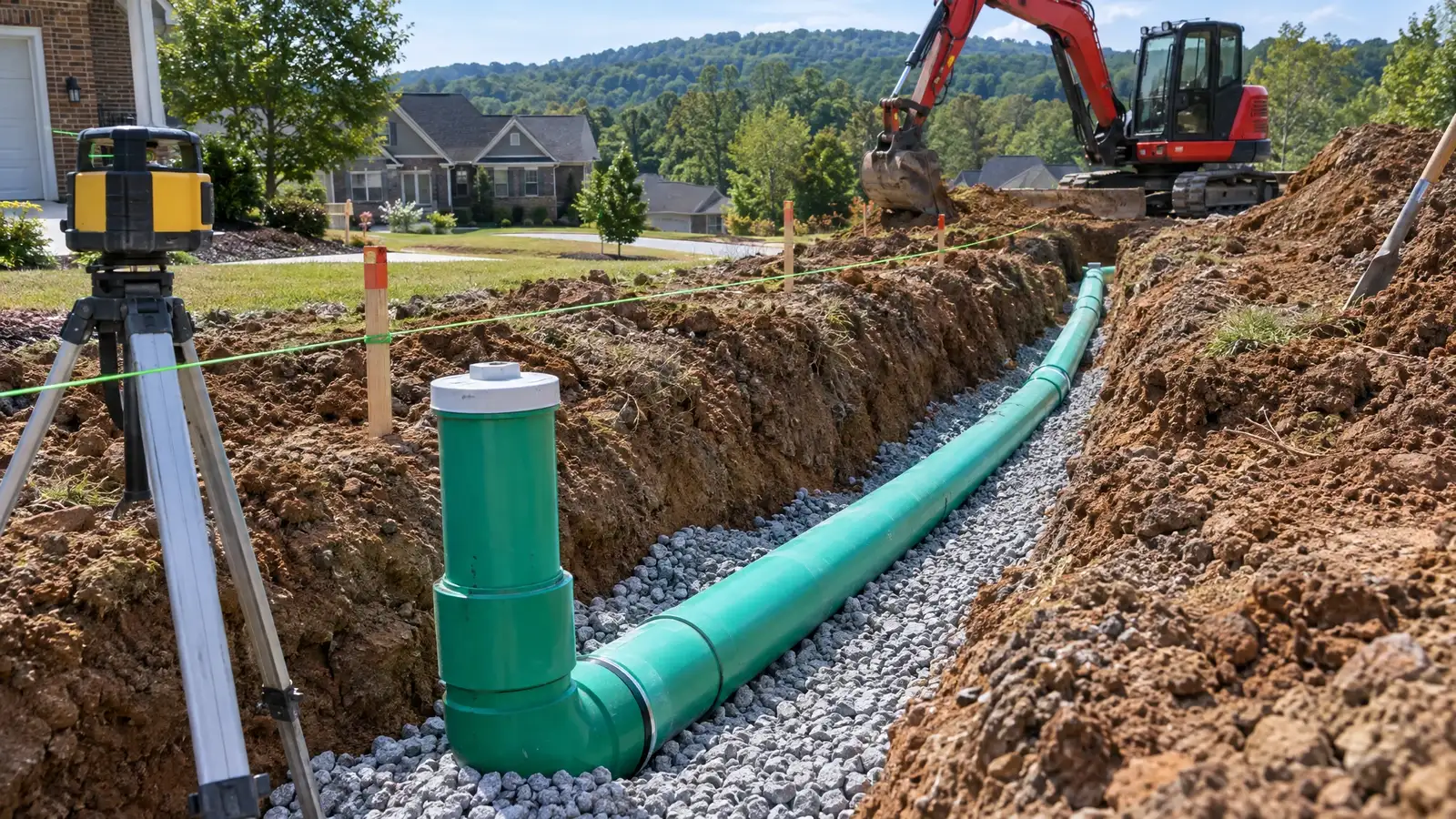
Wastewater leaves the building through a lateral that slopes to the public sewer or to a septic tank. The sewer lateral and its cleanout are generally the owner’s, up to the public main. Where there is no sewer, a permitted septic system treats wastewater on site.
Grade, bedding and joint quality are what make a sewer last.
Gas and electric
Gas service is installed by the gas utility or a qualified contractor, and the trench must be dug to the utility’s requirements. Electric service is installed by the utility, with conduit and trenching often done by a contractor for the customer’s side.
Wiring, gas piping and connections are specialist work and not part of excavation.
Fiber and communications
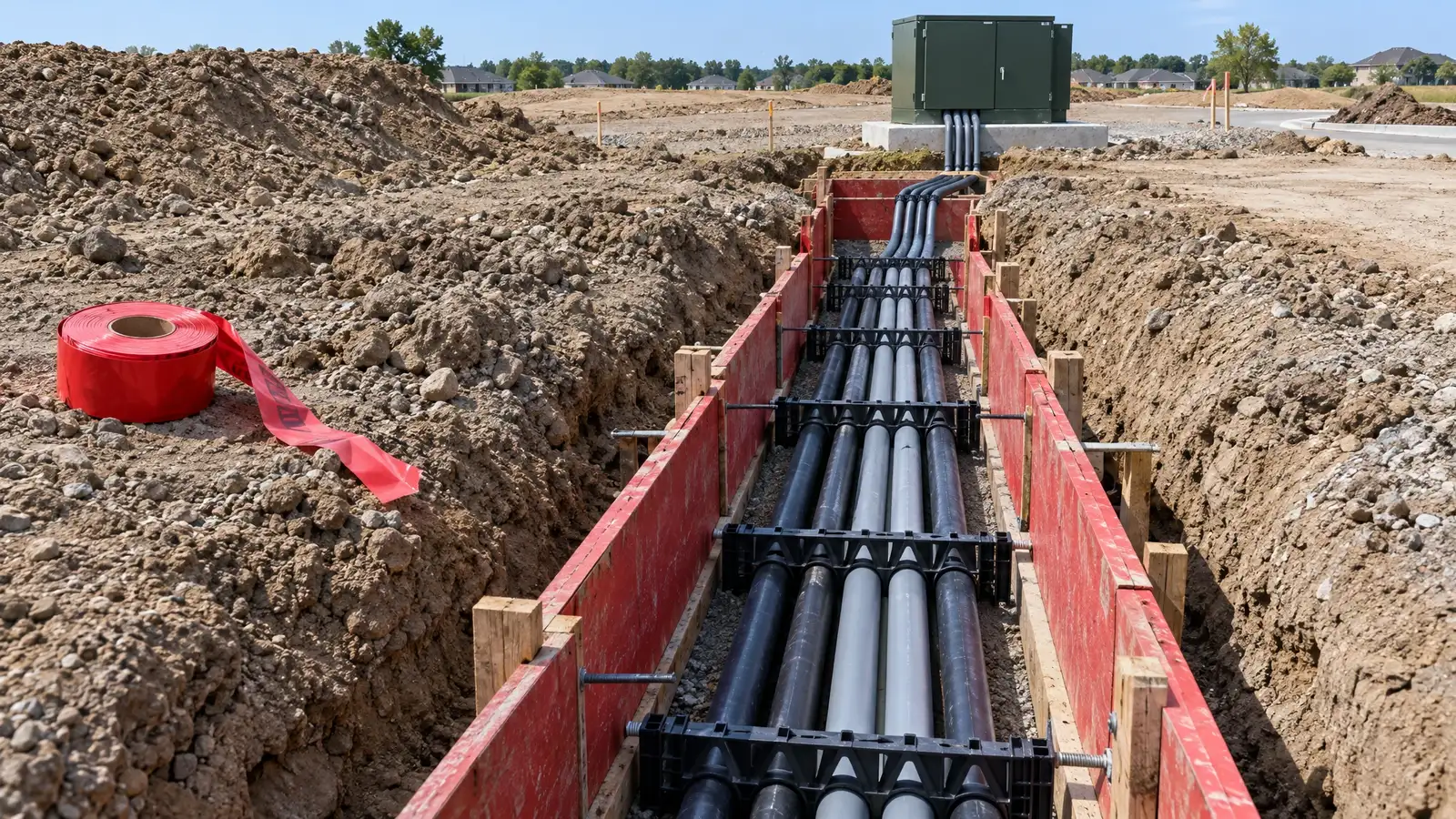
Communications providers lay conduit and innerduct along the route and pull cable through them. Conduit gives the line protection from soil and future digging and allows repair without re-digging.
Boring is common for fiber, because it crosses driveways and landscaping with little disturbance.
General information, not engineering, legal or safety advice. Rules and requirements vary by utility, city and county.