The short version
- Water follows slope, so grading is the first drainage tool
- Ground should slope away from the foundation
- Swales guide surface water around buildings
- Every system needs an outlet
Water follows slope
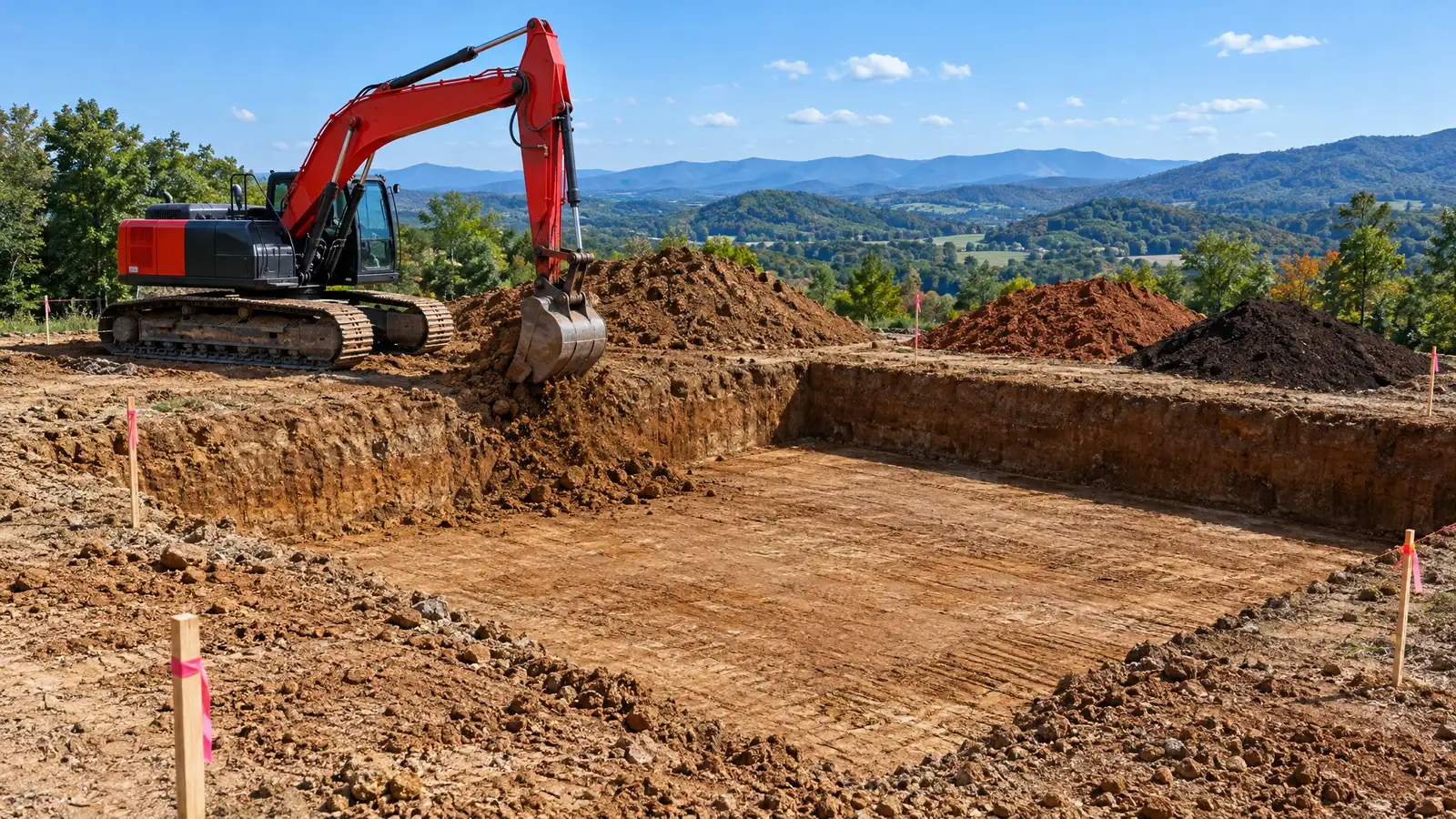
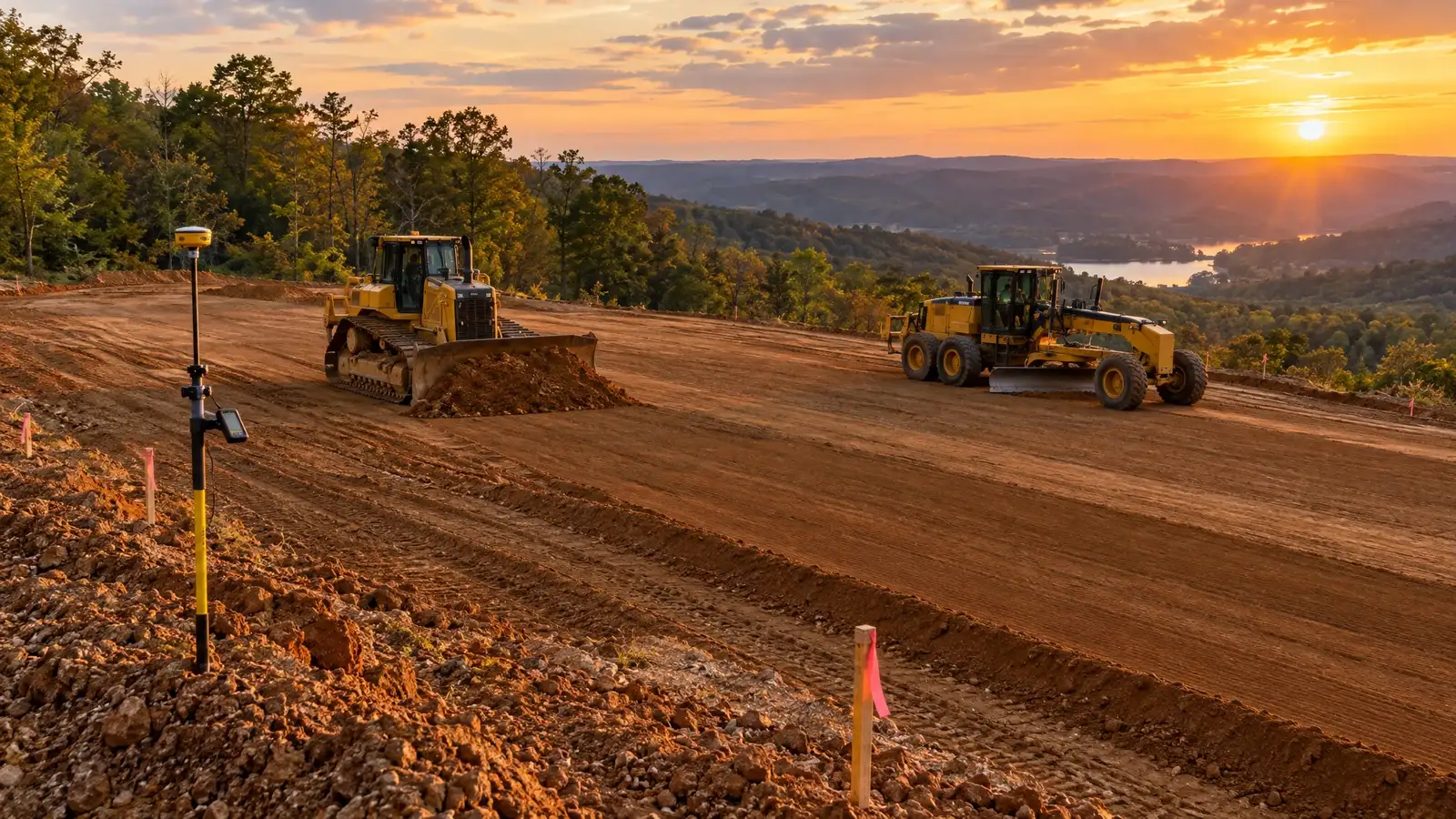
The simplest rule of drainage is that water goes downhill. If a lot slopes toward a house, water goes to the house. Building pads and lots are shaped so the ground falls away from the foundation, and the fall continues to a place where water can leave.
Many building codes ask for a minimum slope away from the foundation for the first several feet.
Swales and berms
A swale is a shallow, wide channel that carries surface water along a safe path, and a berm is a low ridge that turns it. Used together, they can send runoff around a building or a problem area.
Grass-lined swales are gentle on the ground and look natural.
Pipes and basins
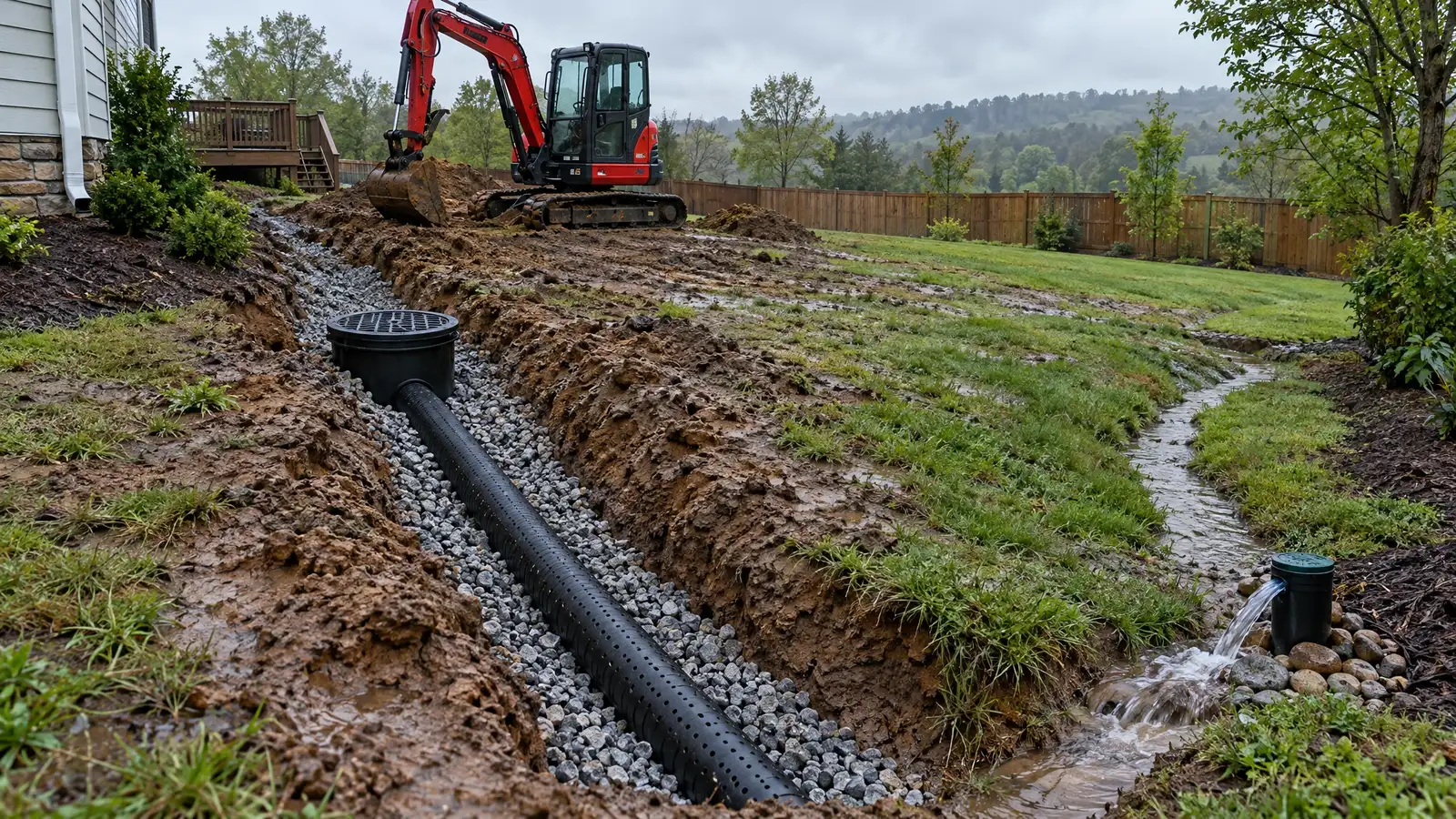
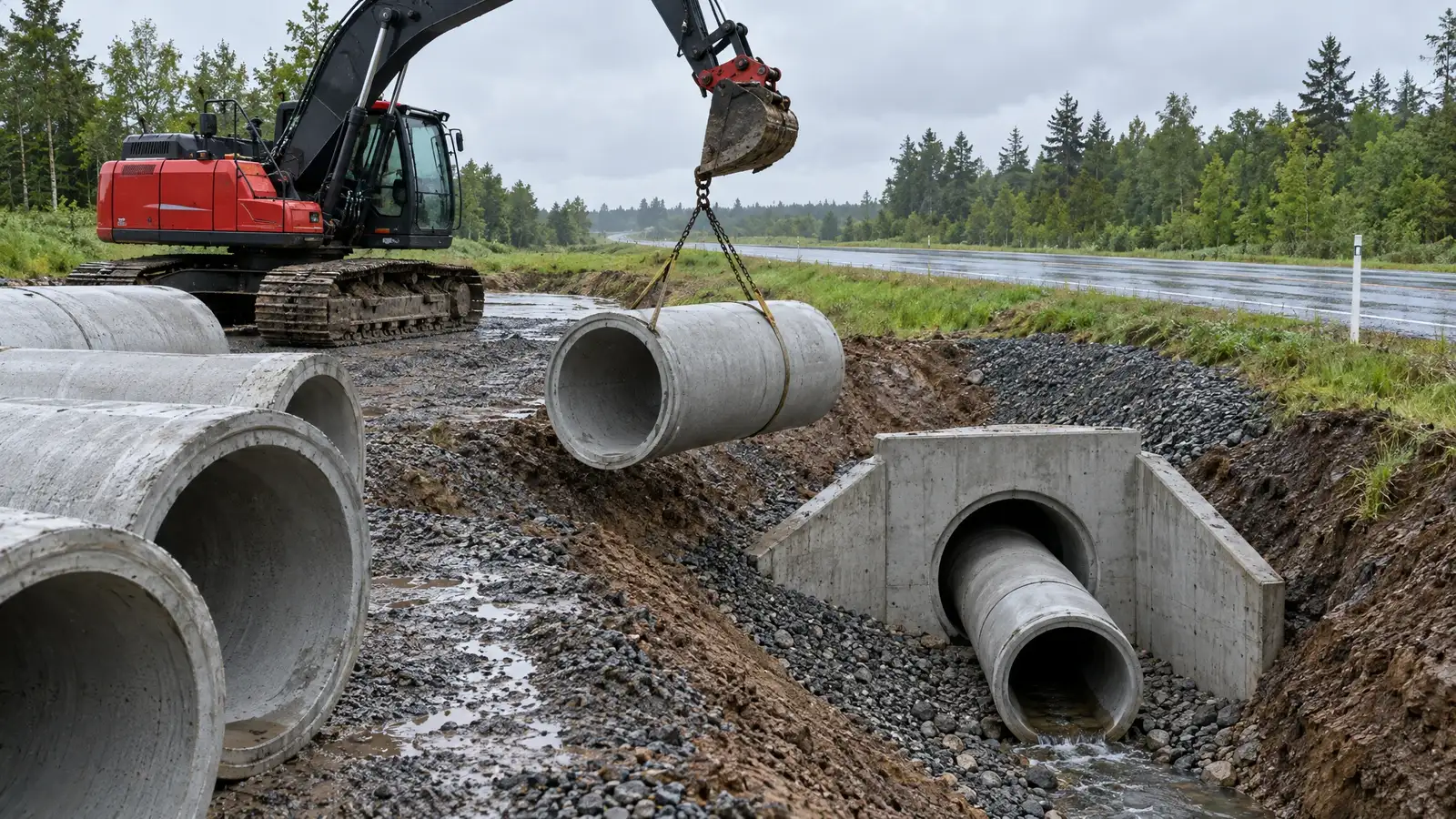
Where open channels will not work, catch basins and pipe move water underground. Downspouts connect to solid pipe that discharges well away from the building, and French drains pick up groundwater.
Pipe has to slope and end somewhere sensible.
Outlets
A drainage system is only as good as its outlet. A pipe that ends in a pocket just creates a pond elsewhere, and discharging onto a neighbor can cause legal problems.
Outlets are planned first, then everything upstream is designed to reach them.
General information, not engineering, legal or safety advice. Rules and requirements vary by utility, city and county.