The short version
- A steerable bit drills a path under the ground
- The hole is enlarged and the pipe is pulled back in
- Only entry and exit pits are dug
- It is used for conduit, water and gas lines
The short version
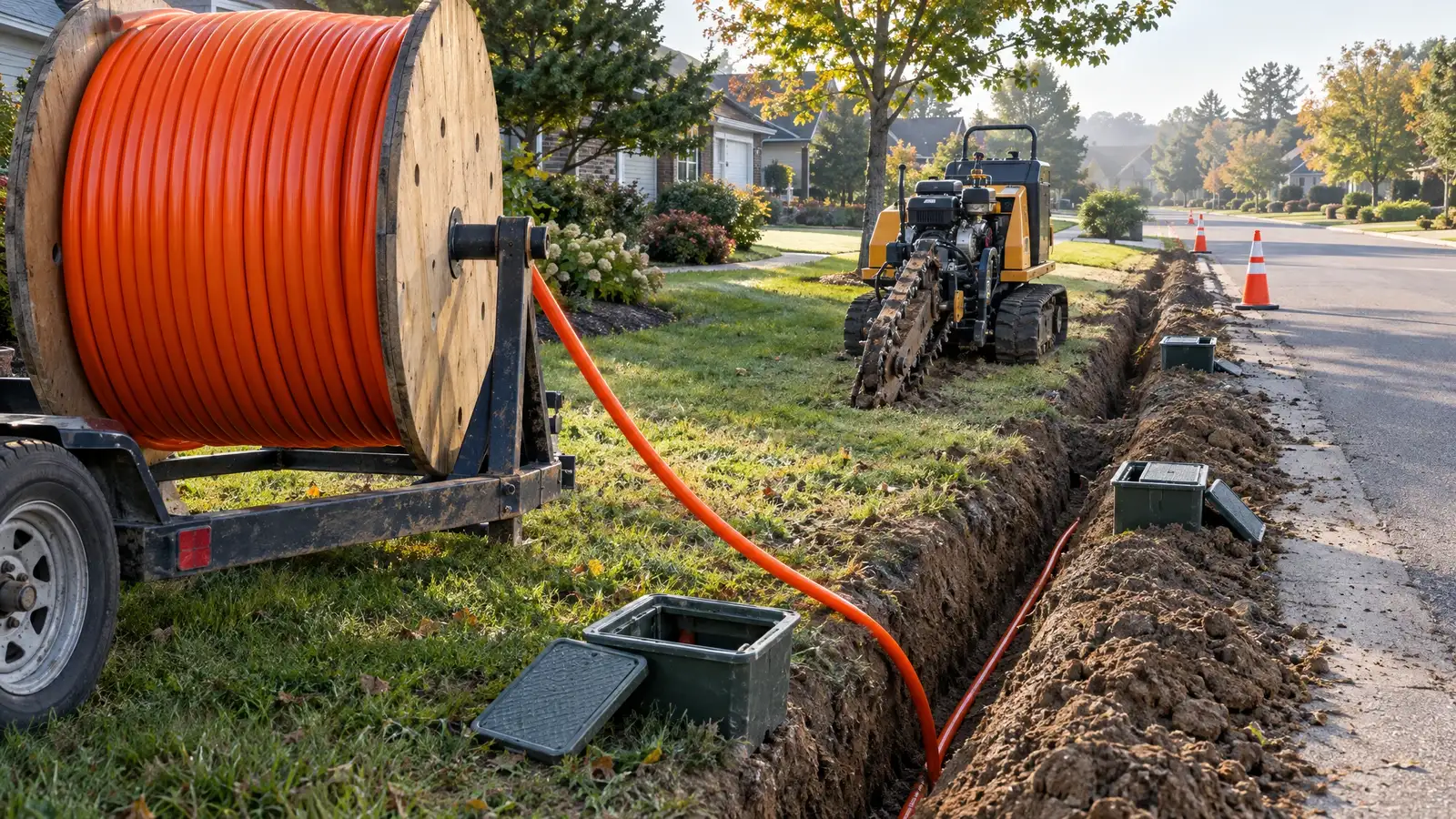
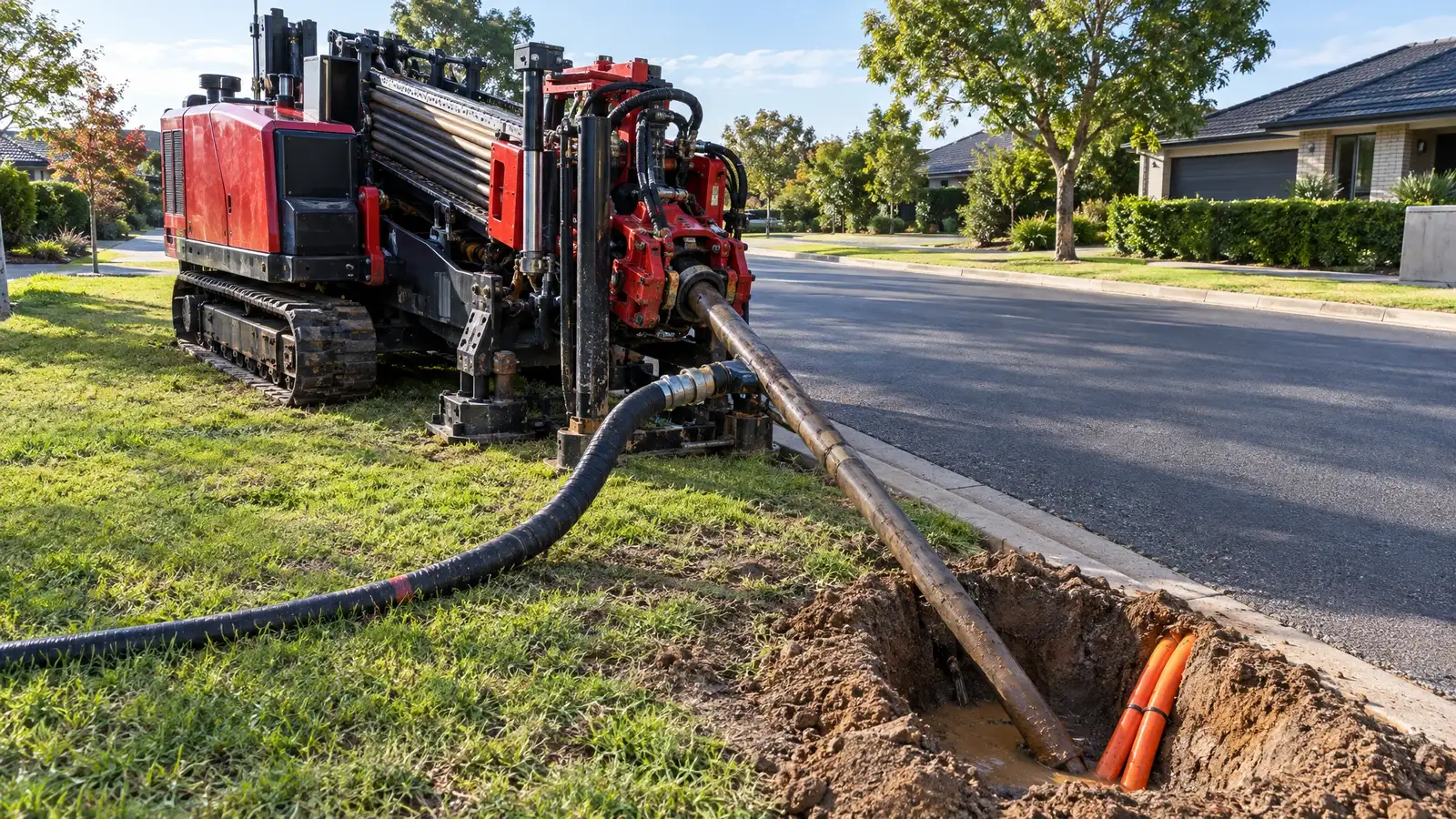
Horizontal directional drilling, or HDD, installs pipe or conduit along a planned underground path without digging a trench. A drill rig starts at an entry pit and steers a small bit along an arc. A locator on the surface or a wireline in the hole tracks it.
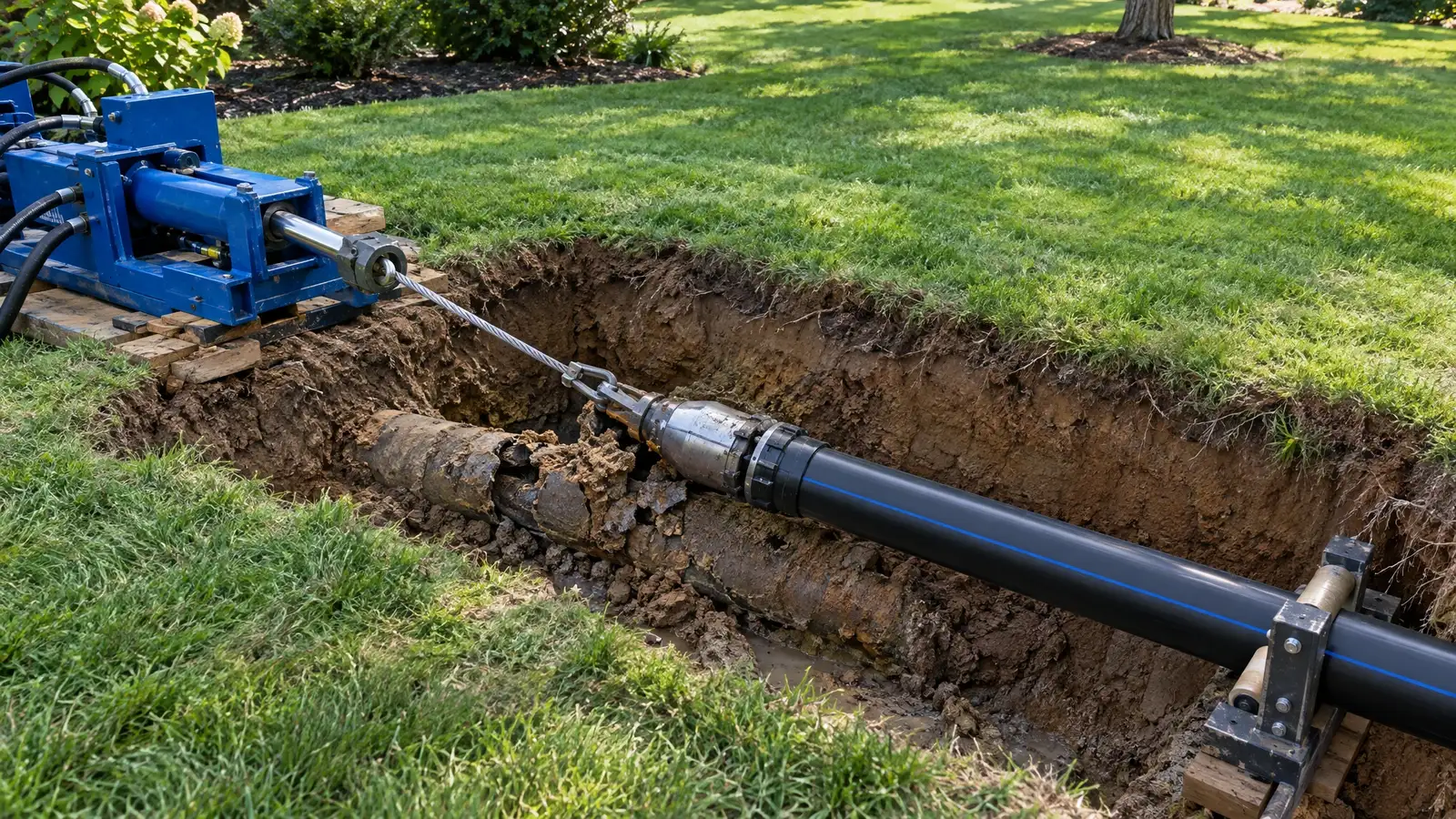
When the bit reaches the exit point, a reamer is attached and pulled back, enlarging the hole while the product pipe is pulled behind it.
Drilling fluid
A fluid, usually water with bentonite clay, is pumped through the drill string. It cools the bit, carries cuttings out of the hole and stabilizes the bore so it does not collapse.
The fluid is collected at the pits and recycled or hauled away.
What it installs
HDD installs flexible pipe such as HDPE for water, gas and conduit, and fiber innerduct. It does not suit gravity sewer where exact grade is needed, and it is not used for rigid pipe.
Lengths can range from a short driveway crossing to thousands of feet for larger rigs.
Where it works and where it does not
HDD works well in clay, silt and sand. It struggles in solid rock, heavy cobbles and loose gravels, where the bit can stall or the hole can collapse.
A soil review and potholing at crossings help decide whether it fits.
General information, not engineering, legal or safety advice. Rules and requirements vary by utility, city and county.