The short version
- Volume is length times width times depth, divided by 27 for cubic yards
- Soil swells when dug, so it takes more room than it did in the ground
- A tandem dump truck carries only some of that volume
- Our calculator does the math for you
The basic math
Multiply the trench length, width and depth, all in feet, to get cubic feet. Divide by 27 to get cubic yards. A trench 100 feet long, 2 feet wide and 4 feet deep is 800 cubic feet, which is about 30 cubic yards in place.
Pipe takes up some of the volume, so backfill is slightly less.
Swell
Soil that has been dug is looser than it was in the ground and takes up more space. Depending on the soil, the swell is often somewhere around 15 to 40 percent. The 30 cubic yards in place might become 35 to 40 cubic yards of loose soil.
Compacted backfill, on the other hand, can shrink back toward the original volume.
Trucks and loads
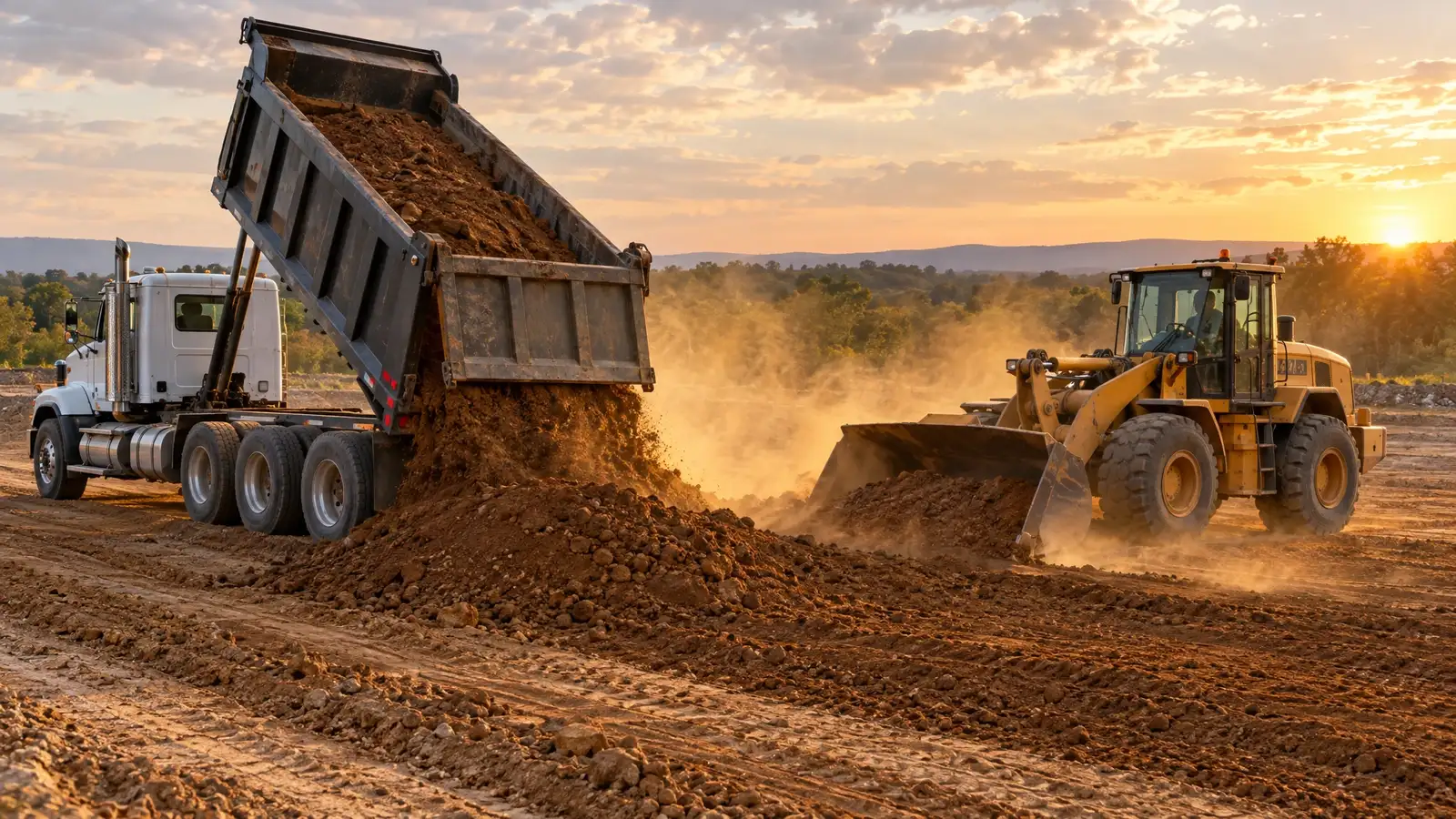
A tandem dump truck typically carries roughly 10 to 14 cubic yards depending on the truck and the material, though weight limits can reduce the load for heavy, wet soil. Our example could be three or four loads.
Haul distance and dump fees add to the cost.
Stone and bedding
For bedding stone, estimate the width, depth and length of the bedding layer and convert the same way. Stone is heavy, so truck capacity is often limited by weight, not volume.
Use the calculator on this site to estimate soil, stone and loads for a simple trench or pit.
General information, not engineering, legal or safety advice. Rules and requirements vary by utility, city and county.