The short version
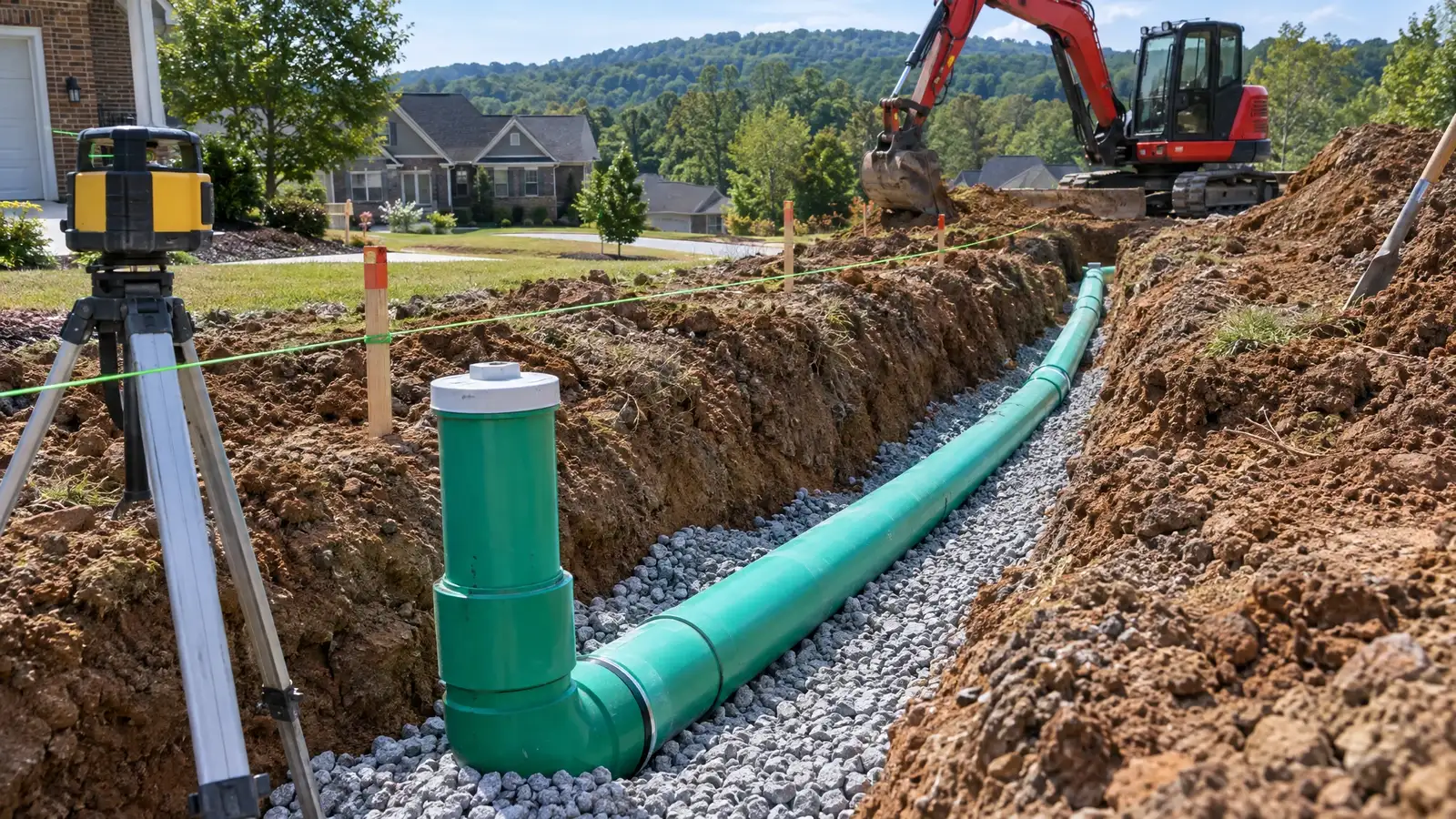
- Bedding is the supporting layer under and beside the pipe
- Crushed stone or sand is chosen to suit the pipe and the soil
- Backfill is placed and compacted in layers
- Rock and debris must be kept off the pipe
What bedding does
Bedding supports the pipe evenly, so loads from soil, traffic and settling are spread along its length. It also keeps the pipe at the planned slope and protects it from sharp rock.
A pipe laid directly on the native soil of a rocky trench is a pipe waiting to crack.
Choosing the material
Sand, pea gravel and crushed stone are all used. Stone that locks together offers strong support and drains water, which is why it is common for sewer and storm pipe. Sand is easy to place but can wash out in wet ground.
Specifications from the engineer, utility or pipe manufacturer decide the material and thickness.
Backfill in lifts
After bedding comes backfill. It is placed in layers of limited thickness and compacted with plate compactors, rammers or rollers. Each layer must be moist enough and dense enough before the next.
Compaction near the pipe is done carefully, so equipment does not damage or shift it.
Common mistakes
Skipping bedding, burying rock against the pipe, dumping backfill in one pass and leaving voids under driveways are all common mistakes.
They cause cracks, bellies and settlement, often long after the contractor has left.
General information, not engineering, legal or safety advice. Rules and requirements vary by utility, city and county.