The short version
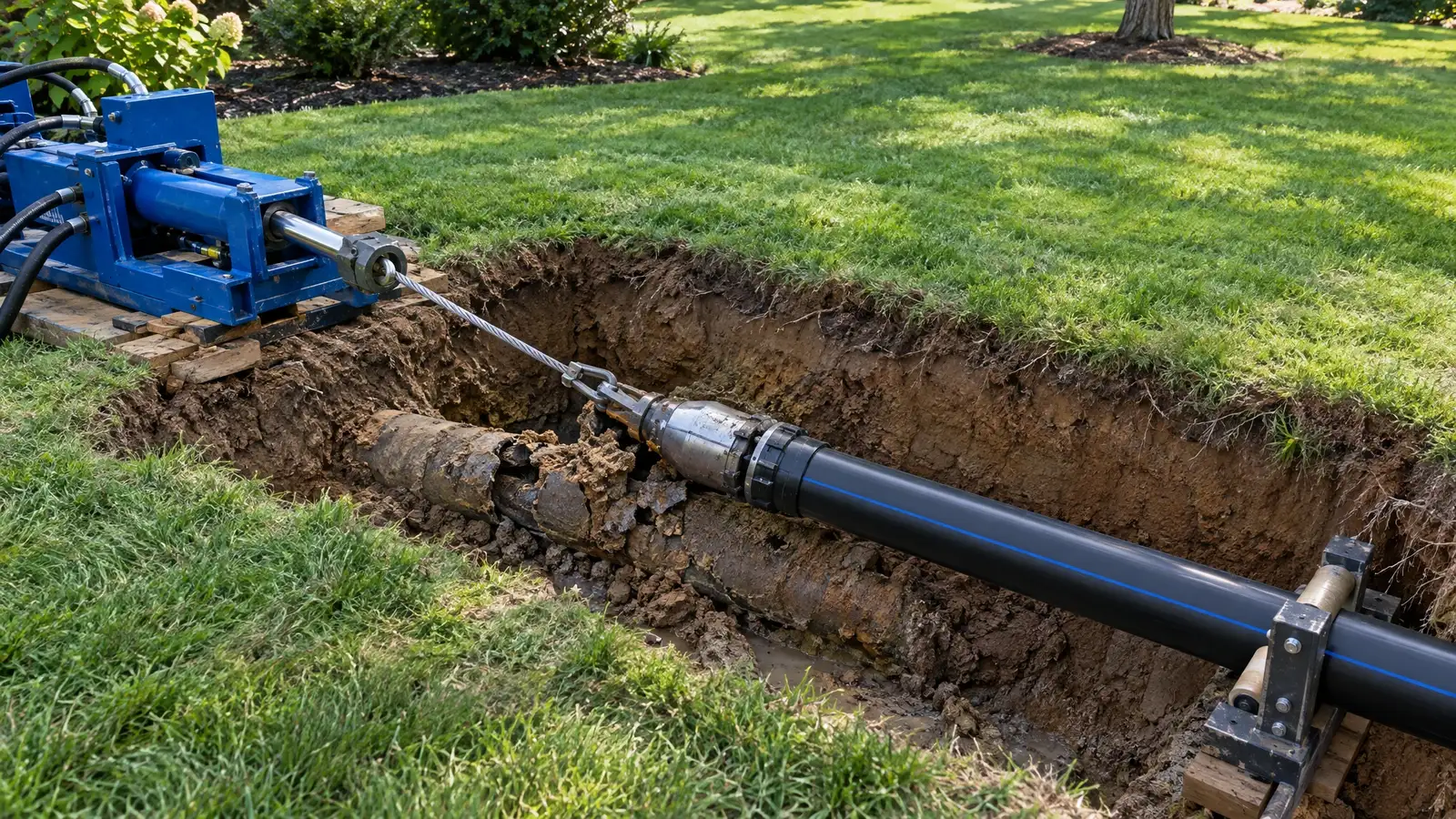
- A bursting head breaks the old pipe outward
- New pipe is pulled in behind it
- Entry and receiving pits are required
- Nearby utilities must be located and protected
The process
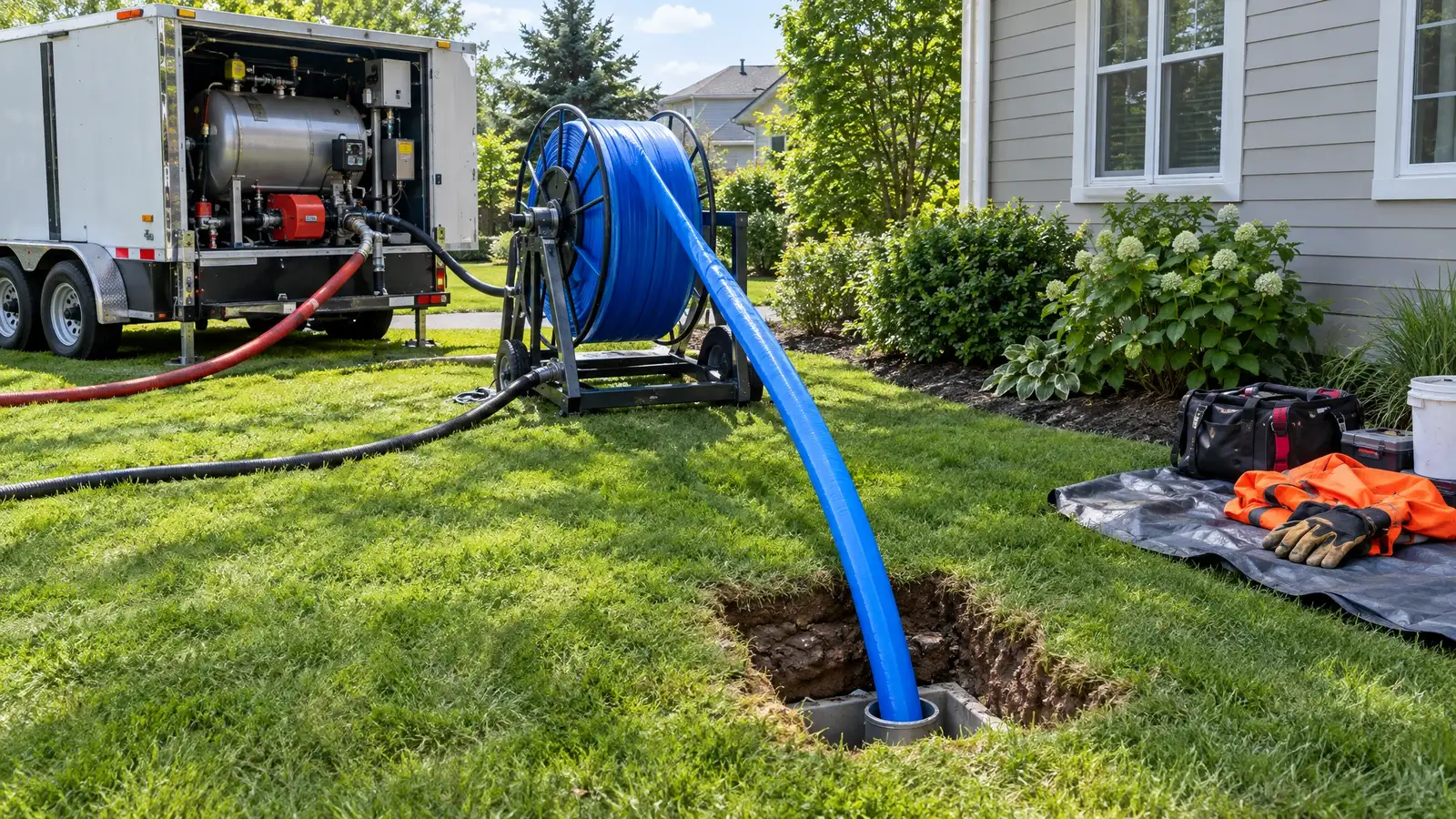
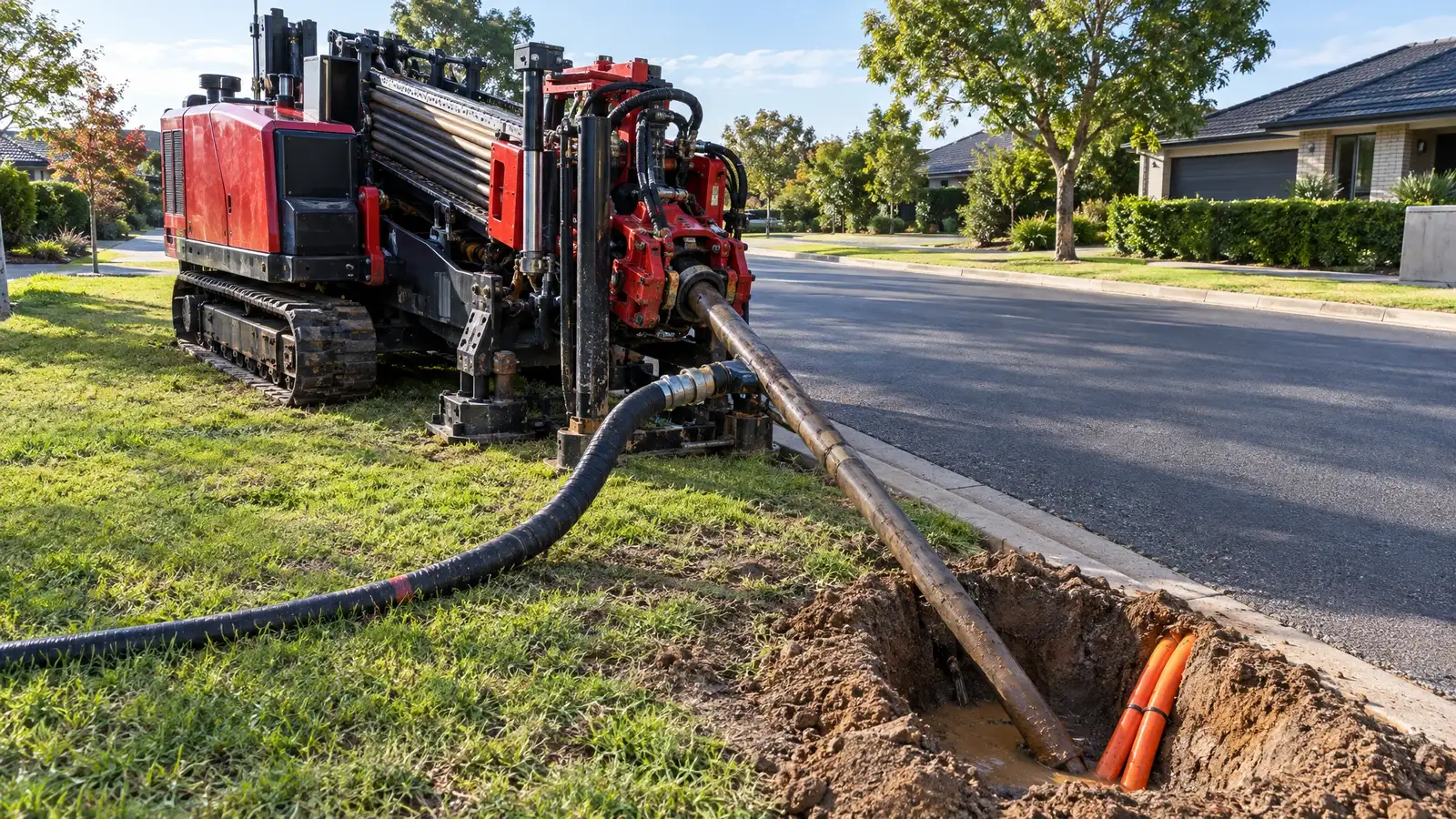
A cable or rod is run through the old pipe and connected to a bursting head and the new pipe. A hydraulic pulling machine in a pit draws the assembly through. The head cracks the old pipe outward into the soil and the new pipe follows in its place.
Services are reconnected from small pits at the connection points.
What it is good for
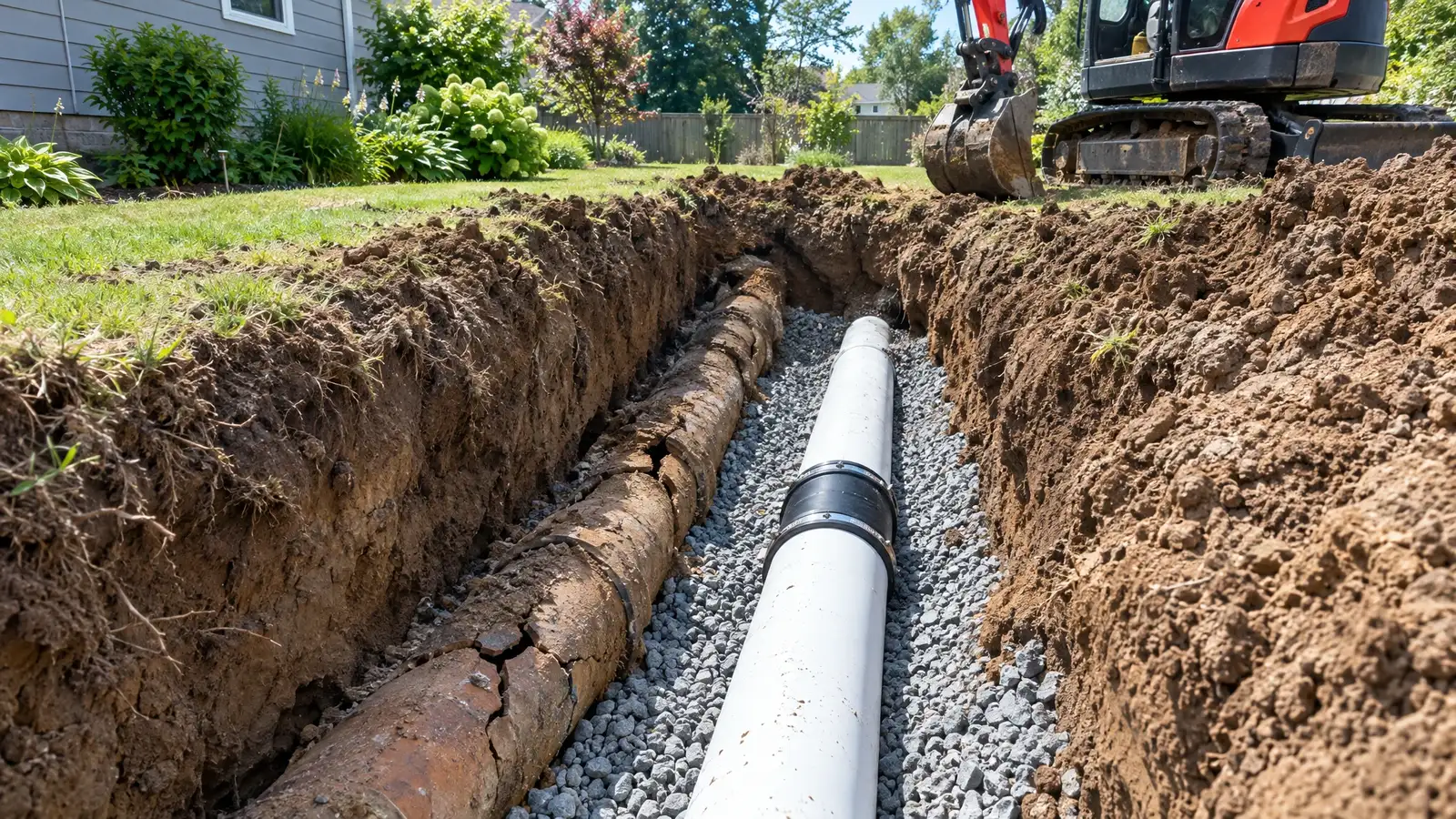
Bursting replaces pipe that is too damaged to line, including collapsed, offset or severely cracked lines. It can replace clay, cast iron, fiber and many other materials with new HDPE or similar pipe, often at the same or a larger size.
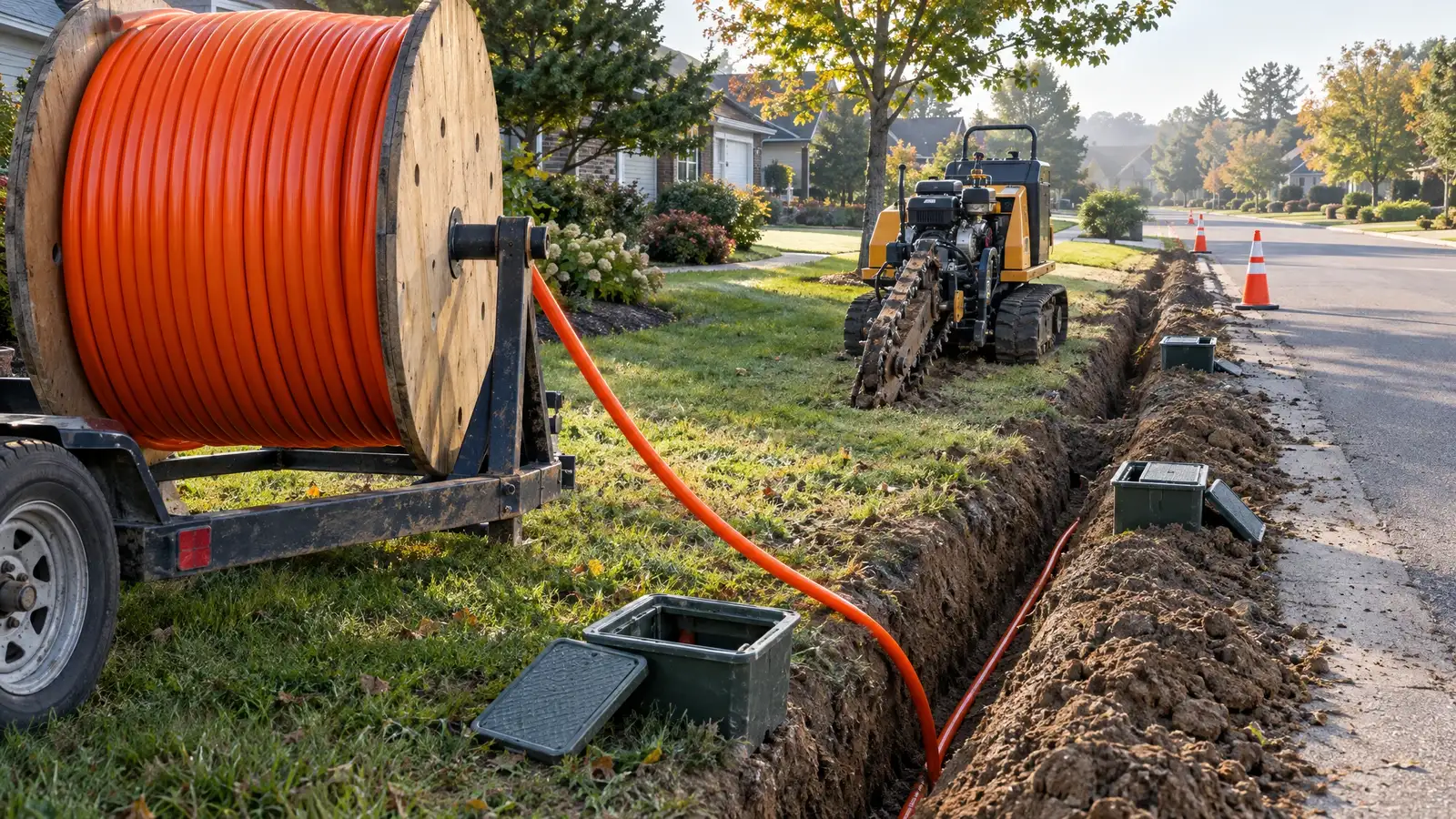
It is used for sewer laterals, water lines and gas lines in different forms.
Limits
Because the head pushes soil outward, nearby utilities and structures need clearance. Pipe encased in concrete or with other lines wrapped around it may not burst well. Heavily bellied pipe will follow the old path with the same sag.
A camera and locate help decide whether it will work.
Compared with lining and digging
Lining keeps the old pipe and coats it from inside, so it fits pipe that is still round and in line. Digging replaces anything but disturbs the surface. Bursting sits in between, giving a new pipe with a small disturbance.
The camera inspection findings decide.
General information, not engineering, legal or safety advice. Rules and requirements vary by utility, city and county.